Lumbini, lieu de naissance du Bouddha
Lumbini, the Birthplace of the Lord Buddha
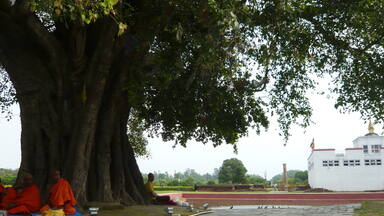
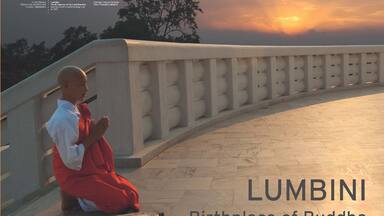
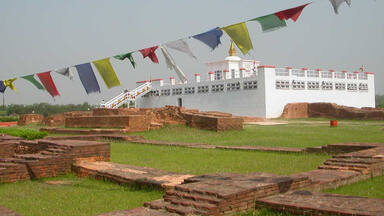
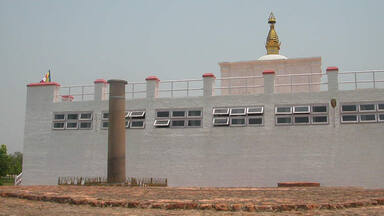
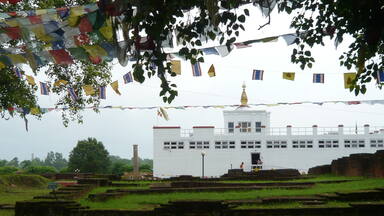
Siddhartha Gautama, the Lord Buddha, was born in 623 B.C. in the famous gardens of Lumbini, which soon became a place of pilgrimage. Among the pilgrims was the Indian emperor Ashoka, who erected one of his commemorative pillars there. The site is now being developed as a Buddhist pilgrimage centre, where the archaeological remains associated with the birth of the Lord Buddha form a central feature.
La description est disponible sous licence CC-BY-SA IGO 3.0
Lumbini, lieu de naissance du Bouddha
Siddharta Gautama, le Bouddha, est né en 623 av. J.-C. dans les célèbres jardins de Lumbini et son lieu de naissance est devenu un lieu de pèlerinage. Parmi les pèlerins se trouvait l'empereur indien Asoka qui a fait édifier à cet endroit l'un de ses piliers commémoratifs. Le site est maintenant un foyer de pèlerinage centré sur les vestiges associés au début du bouddhisme et à la naissance du Bouddha.
La description est disponible sous licence CC-BY-SA IGO 3.0
لومبيني، مكان ولادة بوذا
ولد سيدهرتا غوتاما أي بوذا في العام 623 ق.م. في حدائق لومبيني الشهيرة التي أصبحت مكانًا للحج. وكان من بين الحجاج الامبراطور الهندي اسوكا الذي شيد في هذا المكان إحدى دعائمه التذكارية. ويُعتبر هذا الموقع اليوم مركزًا للحج يتضمَّن بشكلٍ أساسي الآثار المرتبطة ببداية البوذية و بولادة بوذا.
source: UNESCO/CPE
La description est disponible sous licence CC-BY-SA IGO 3.0
佛祖诞生地兰毗尼
释迦牟尼佛祖于公元前623年诞生于兰毗尼一座著名的花园,后来该处就成为朝圣之地。印度的阿育王也是朝拜者之一,并在此建立了一个他的纪念碑。这里现在已逐渐成为佛教徒的朝圣中心,以考古遗迹和佛祖诞生地为主要特色。
source: UNESCO/CPE
La description est disponible sous licence CC-BY-SA IGO 3.0
Лумбини, место рождения Будды
Сиддхартха Гаутама – великий Будда, был рожден в 623 г. до н.э в знаменитых садах Лумбини, ставших вскоре местом паломничества. Среди паломников был индийский император Ашока, который установил здесь одну из своих памятных колонн. Сейчас в Лумбини функционирует центр паломничества буддистов, где главная достопримечательность – археологические находки, ассоциируемые с рождением великого Будды.
source: UNESCO/CPE
La description est disponible sous licence CC-BY-SA IGO 3.0
Lumbini, lugar de nacimiento de Buda
Sidharta Gautama, Buda, nació el año 623 a.C. en los famosos jardines de Lumbini, que pronto se convertirían en un lugar de peregrinación. Un ilustre peregrino, el emperador indio Asoka, ordenó erigir en ellos uno de sus pilares conmemorativos. Hoy en día, este sitio sigue siendo un centro de peregrinación, en el que los vestigios arqueológicos vinculados al nacimiento de Buda y los comienzos del budismo constituyen uno de sus principales centros de interés.
source: UNESCO/CPE
La description est disponible sous licence CC-BY-SA IGO 3.0
仏陀の生誕地ルンビニ
source: NFUAJ
Lumbini, geboorteplaats van de Boeddha
Source : unesco.nl


Valeur universelle exceptionnelle
Le site de Lumbini, dans la plaine du Teraï, au sud du Népal, a vu naître le Bouddha en 623 av. J.-C., ainsi qu’en atteste l’inscription portée sur un pilier érigé par l’empereur Asoka de la dynastie Maurya en 249 av. J.-C. Lumbini est un lieu sacré de la plus haute importance pour l’une des grandes religions du monde et ses vestiges constituent un témoignage de la nature des centres de pèlerinage bouddhistes depuis une époque aussi ancienne que le IIIe siècle av. J.-C.
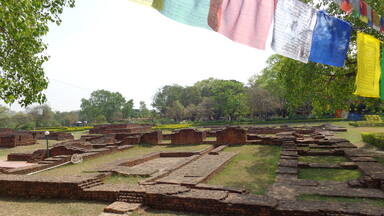
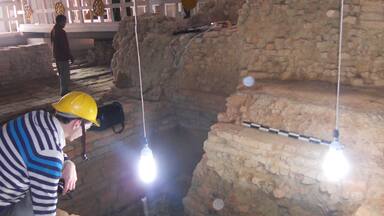
La zone archéologique protégée comprend le bassin Sakya, les restes de murs de refend en briques du temple de Maya Devi construits entre le IIIe siècle av. J.-C. et le siècle présent, et le pilier en grès d’Asoka portant des inscriptions pâli en écriture brahmi. Sur cette zone ont également été mis à jour les vestiges de viharas (monastères bouddhistes) datant du IIIe siècle av. J.-C. au Ve siècle et de stupas (tombeaux commémoratifs bouddhistes) datant du IIIe siècle av. J.-C. au XVe siècle. Le site est actuellement un centre de pèlerinage bouddhiste, organisé autour des vestiges archéologiques liés à la naissance du Bouddha.
Critère (iii) : En tant que lieu de naissance du Bouddha, attesté par l’inscription figurant sur le pilier d’Asoka, la zone sacrée de Lumbini est l’un des lieux saints les plus importants de l’une des grandes religions du monde.
Critère (vi) : Lumbini présente des vestiges archéologiques de viharas (monastères bouddhistes) et de stupas (tombeaux commémoratifs bouddhistes) datant du IIIe siècle av. J.-C. au XVe siècle, qui fournissent un important témoignage sur la nature des centres de pèlerinage bouddhistes depuis une époque très ancienne.
IntégritéL’intégrité de Lumbini est assurée par la préservation des vestiges archéologiques présents sur le périmètre du bien et qui lui confèrent sa valeur universelle exceptionnelle. Les attributs et éléments du bien ont été conservés. La zone tampon lui apporte une protection supplémentaire. La réalisation de fouilles archéologiques supplémentaires et la protection des vestiges découverts restent hautement prioritaires pour l’intégrité du bien. Cependant, son périmètre n’inclut pas la totalité de la zone archéologique, dont une partie se trouve dans la zone tampon. Le bien et sa zone tampon appartiennent tous deux au gouvernement du Népal et sont gérés par le Lumbini Development Trust : il y a donc peu de risque de négligence ou de développement inconsidéré. Les effets du développement industriel de la région ont été identifiés comme menaces pour l’intégrité du bien.
AuthenticitéL’authenticité des vestiges archéologiques présents sur le bien a été confirmée par une série de fouilles menées depuis la découverte du pilier d’Asoka en 1896. Les ruines de viharas et de stupas et les nombreuses strates de structures en briques étagées entre le IIIe siècle av. J.-C. et l’époque actuelle sur l’emplacement du temple de Maya Devi sont la preuve que Lumbini a été très tôt un lieu de pèlerinage. Ces vestiges archéologiques demandent une conservation et une surveillance actives afin de maîtriser l’impact de la dégradation naturelle, de l’humidité et du passage des visiteurs. Le site maintient sa valeur universelle exceptionnelle grâce à ses vestiges archéologiques. Un équilibre délicat est à assurer entre la conservation de ceux-ci et la poursuite des pèlerinages.
Eléments requis en matière de protection et de gestion
Le bien est protégé par la loi sur la préservation des monuments anciens de 1956. Il est géré par le Lumbini Development Trust, organisme indépendant à but non lucratif. Il appartient dans sa totalité au gouvernement du Népal. Il entre dans le cadre d’un schéma directeur établi conjointement avec les Nations Unies, mis au point par le professeur Kenzo Tange entre 1972 et 1978.
Les défis à long terme de la protection et de la gestion du bien seront de maîtriser l’impact des visites, des facteurs naturels, notamment de l’humidité, et du développement industriel de la région. Le plan de gestion à l’étude vise à garantir la sauvegarde à long terme des vestiges archéologiques tout en permettant au bien de continuer à recevoir des pèlerins et des touristes du monde entier.
Liens
 Découvrez les photos de OUR PLACE the World Heritage Collection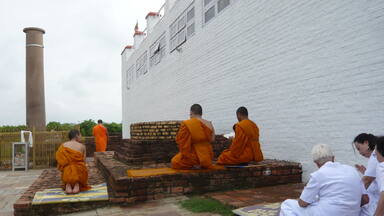

 12
12


 5
5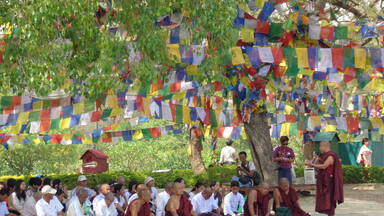



Les dossiers de proposition d’inscription produits par les États parties sont publiés par le Centre du patrimoine mondial sur son site Internet et/ou dans des documents de travail afin de garantir la transparence, l’accès à l’information et de faciliter la préparation d’analyses comparatives par d’autres États parties soumissionnaires.
Le contenu de chaque dossier de proposition d’inscription relève de la responsabilité exclusive de l'État partie concerné. La publication d’un dossier de proposition d’inscription, y compris les cartes et les noms, ne saurait être interprétée comme exprimant une prise de position de la part du Comité du patrimoine mondial ou du Secrétariat de l'UNESCO à propos de l’histoire ou du statut juridique d'un pays, d'un territoire, d'une ville ou d'une zone, ou de ses frontières.