Central Africa
World Heritage Forest Initiative
(CAWHFI)
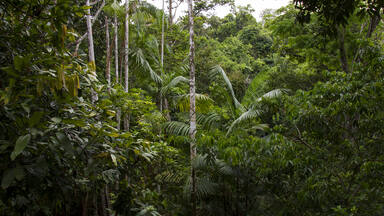
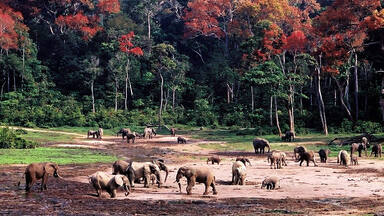
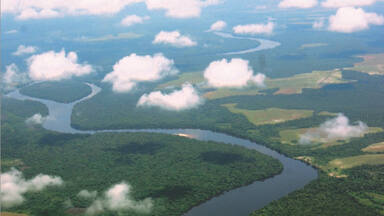
Covering an area estimated at 1.62 million km2, the forests of Central Africa are home to vital biodiversity for the planet and play a central role in climate regulation and carbon sequestration.
The presence of eleven natural World Heritage sites in this region testifies to the exceptional importance of these forests for global biodiversity and ecosystem conservation. A living space for more than 30 million inhabitants, the region faces various threats such as poaching, deforestation by agro-industry (oil palm and rubber), illegal exploitation of natural resources (timber, minerals, wildlife, etc.) and infrastructure projects (dams, roads).
The conservation, sustainable exploitation and management of forest sites in Central Africa, and in particular in Cameroon, Congo, Gabon and the Central African Republic, have since 2004 benefited from the activities of the Central Africa World Heritage Forest Initiative (CAWHFI), which aims to strengthen the management of protected areas while improving their integration within the region's various ecological landscapes.
Site intervention
CAWHFI's major successes
Using the World Heritage Convention as a tool to strengthen international cooperation in the field of cultural and natural heritage conservation in Central Africa, CAWHFI has implemented various activities since 2004 to improve the representativity of Central Africa's natural heritage on the World Heritage List and promote the protection, surveillance and monitoring of a cross-border network of World Heritage sites and protected areas in three transboundary ecological landscapes:
- Gamba-Mayumba-Conkouati Landscape (Congo, Gabon)
- Dja-Odzala-Minkébé Tri-national Landscape (TRIDOM) (Cameroon, Congo, Gabon)
- Sangha Trinational (TNS) (Cameroon, Congo, Central African Republic)
Inscription of new World Heritage sites
CAWHFI efforts have led to the inscription of three of the eight Congo Basin forest sites on the World Heritage List:
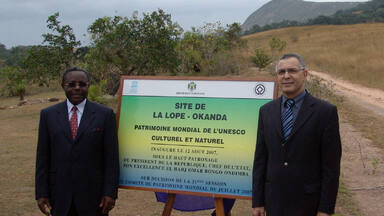
- Ecosystem and Relict Cultural Landscape of Lopé-Okanda in Gabon in 2007 - the first mixed site (nature/culture) in Central Africa,
- Sangha Trinational (TNS) in Cameroon, Congo, Central African Republic in 2012 - the first transboundary tripartite nature site,
- Ivindo National Park in Gabon in 2021.
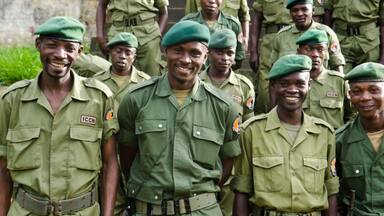
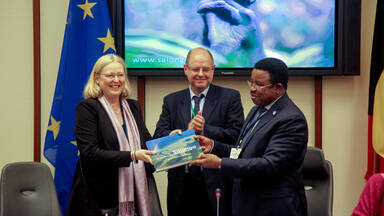
Between 2016 and 2020, funding from the European Commission enabled CAWHFI to strengthen the monitoring of the TRIDOM and TNS landscapes, an area of more than 225,000 km2, by increasing anti-poaching patrol efforts (more than 3,500 patrols and 300,000km travelled), the use of innovative technologies (SMART, trap cameras, drones and remote sensing, etc.) and the training of more than 350 eco-guards.
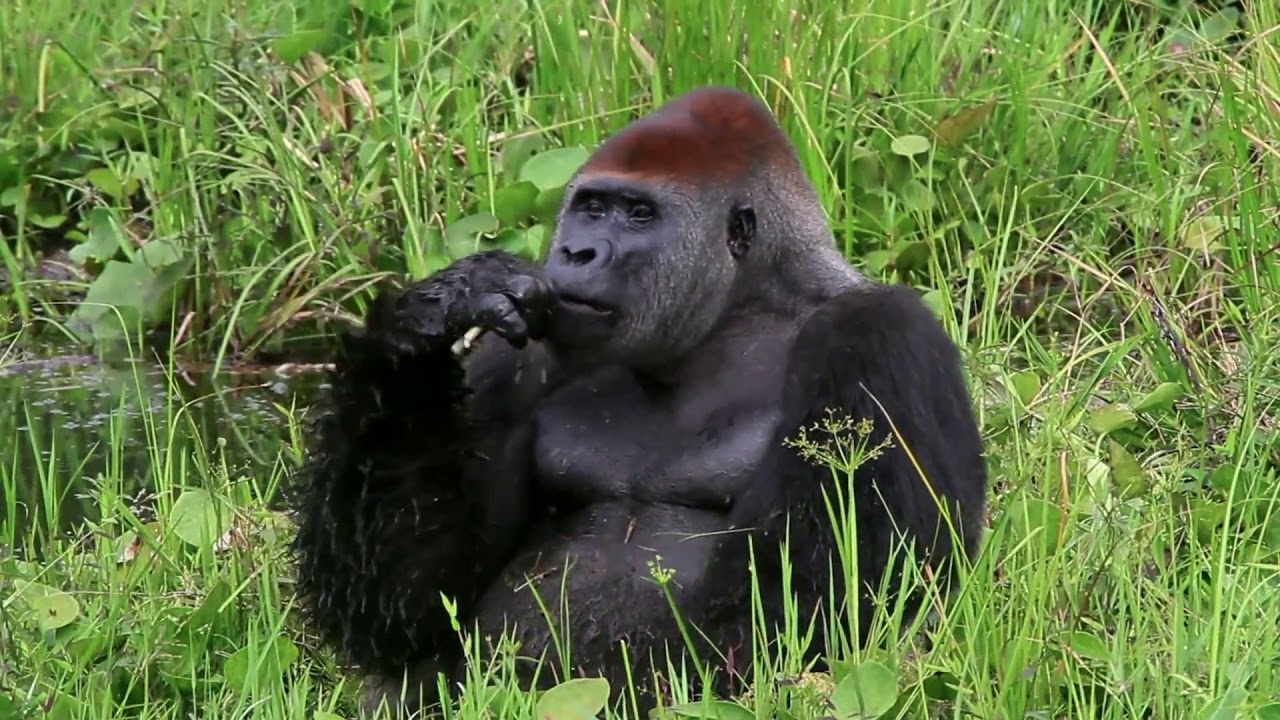
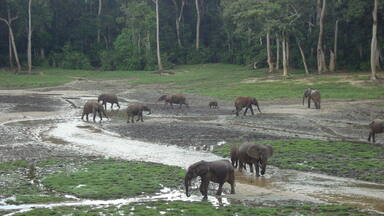
CAWHFI's support has also improved site management through the rehabilitation of infrastructure, the promotion of eco-tourism, the involvement and training of local communities (more than 3000 people) and the updating/production of wildlife inventories (e.g. elephants, gorillas and chimpanzees). In addition, CAWHFI provided technical support to the Congolese and Gabonese authorities for the preparation of nomination dossiers for Odzala-Kokoua and Ivindo National Parks, respectively.

Resources
- Conservation of biodiversity in the Congo Basin: the Central Africa World Heritage Forest Initiative (CAWHFI) (2016-2020)
- Patrimonito at Dja, World Heritage Centre, UNESCO, 2018.
- CAWHFI results, challenges and perspectives (2004-2013)
- Event organized in March 2013 in Douala, Cameroon, to present the technical results and regional benefits of CAWHFI’s first phase.
- World Heritage Resource Manual, Managing Natural World Heritage, World Heritage Centre, UNESCO, 2012.
- World Heritage Review n°61, “Congo Basin forests. Common Heritage of Humanity”, 2011.
- World Heritage in the Congo Basin. World Heritage Centre, UNESCO, 2010
- Natural World Heritage in Central Africa. Brazzaville workshop’s report, 12-14 March 2008 World Heritage Centre, UNESCO, 2008.
- Business Plan for World Heritage Natural Sites and Protected Areas, Methodology Guide, published in collaboration with Shell Foundation and UNESCO, 2004-2007.
CAWHFI's 4 phases




 Cameroon
 Central African Republic
 Congo
Congo
 Gabon
Gabon