Parc national Wood Buffalo
Wood Buffalo National Park
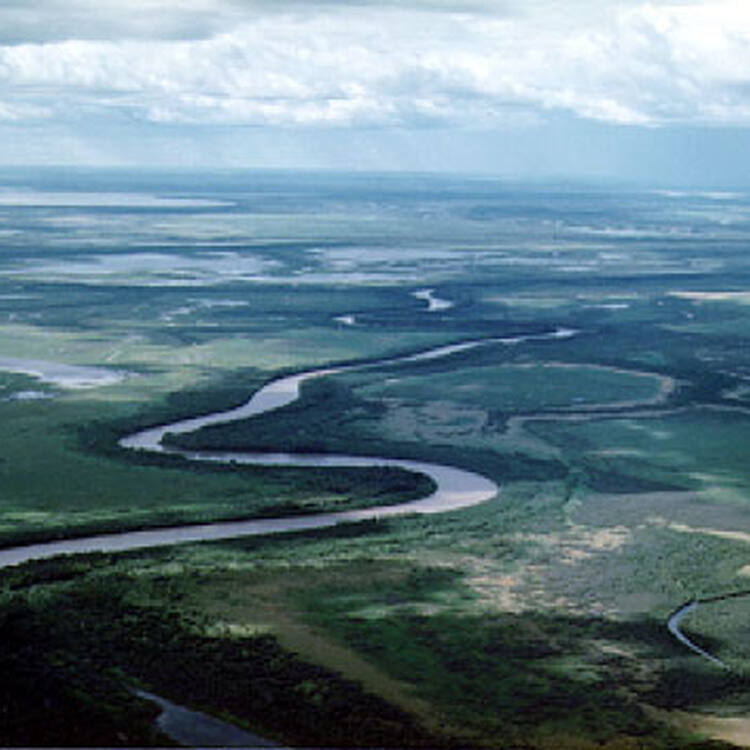
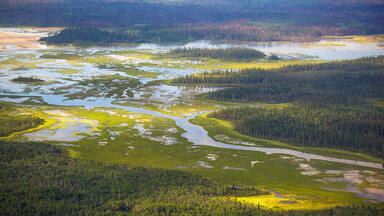
Situated on the plains in the north-central region of Canada, the park (which covers 44,807 km2) is home to North America's largest population of wild bison. It is also the natural nesting place of the whooping crane. Another of the park's attractions is the world's largest inland delta, located at the mouth of the Peace and Athabasca rivers.
La description est disponible sous licence CC-BY-SA IGO 3.0
Parc national Wood Buffalo
Situé dans les plaines de la région centre-nord du Canada, ce parc abrite la plus grande population américaine de bisons en liberté et est aussi l'aire naturelle de nidification de la grue blanche d'Amérique. Parmi ses beautés naturelles, on peut noter le plus grand delta intérieur du monde, situé à l'embouchure des rivières la Paix et Athabasca. Le parc couvre 44 807 km2 .
La description est disponible sous licence CC-BY-SA IGO 3.0
منتزه وود بافالو الوطني
يقع هذا المنتزه في سهول منطقة وسط شمال كندا على مساحة 44807 كم٢ ويأوي أكبر فصيلة من الجاموس الوحشي(بيزون) الأميركي، كما يشكّل المساحة الطبيعية المؤاتية لبناء أعشاش الكركي الأبيض الأميركي. ومن المناظر الطبيعية الخلابة التي يتميّز بها هذا المنتزه، نذكر أكبر دلتا داخلية في العالم، عند مصبّ نهري السلام وأتاباسكا.
source: UNESCO/CPE
La description est disponible sous licence CC-BY-SA IGO 3.0
伍德布法罗国家公园
这个公园位于加拿大中北部的平原上(占地44,807平方公里),是北美数量最多的野牛的栖息地,同时也是美洲鹤的天然巢穴。公园另一个引人入胜的景点是皮斯河(Peace river)和阿萨巴斯卡河(Athabasca river)之间世界上最大的内陆三角洲。
source: UNESCO/CPE
La description est disponible sous licence CC-BY-SA IGO 3.0
Национальный парк Вуд-Баффало
В парке, площадью около 4,5 млн. га, расположенном посреди равнин в срединной части Канады, охраняется крупнейшее на континенте дикое стадо американских бизонов. Здесь также гнездятся ставшие очень редкими американские журавли. Еще одна природная достопримечательность – самая обширная в мире внутренняя речная дельта, образованная реками Атабаска и Пис-Ривер.
source: UNESCO/CPE
La description est disponible sous licence CC-BY-SA IGO 3.0
Parque Nacional de Wood Buffalo
Situado en las llanuras de la región central del norte del Canadá, este parque alberga la mayor población de bisontes salvajes de América y es el área natural de anidación de la grulla blanca americana. Entre sus bellezas naturales destaca el mayor delta interior del mundo, que se halla en la desembocadura del Río de la Paz y del Atabasca. El parque tiene una superficie de 44.807 km2.
source: UNESCO/CPE
La description est disponible sous licence CC-BY-SA IGO 3.0
ウッド・バッファロー国立公園
source: NFUAJ
Nationaal park Wood Buffalo
Source : unesco.nl


Valeur universelle exceptionnelle
Brève synthèse
Le parc national Wood Buffalo est un exemple exceptionnel de phénomènes écologiques et biologiques permanents qui comprend certaines des plus vastes et des dernières prairies d’herbe et de carex vierges en Amérique du Nord, et qui abrite le plus gros troupeau de bisons des bois du monde, une espèce menacée. Les vastes étendues de forêt boréale constituent également un habitat vital pour une grande diversité d’autres espèces, dont la grue blanche, en voie de disparition. L’évolution continue d’un vaste delta intérieur d’eau douce, de plaines salées et de karsts gypseux ajoute aux valeurs exceptionnelles du parc.
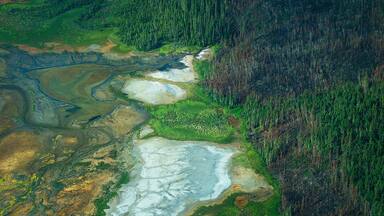
Critère (vii) : Les grandes concentrations d’oiseaux migrateurs sauvages ont une importance mondiale et les phénomènes naturels rares et incomparables que constituent le grand delta intérieur, les plaines salées et les karsts gypseux ont également une valeur sur le plan international.
Critère (ix) : Le parc national Wood Buffalo est l’exemple le plus complet sur le plan écologique et le plus important de tout l’écosystème des grandes plaines et prairies boréales d’Amérique du Nord, le seul lieu où le rapport prédateur-proie entre le loup et le bison des bois s’est maintenu, sans s’interrompre, au fil du temps.
Critère (x) : Le parc national Wood Buffalo contient le seul habitat de reproduction au monde de la grue blanche, espèce menacé en danger qui a été sauvée de l’extinction grâce à une gestion attentive du petit nombre de couples reproducteurs dans le parc. La superficie du parc (4,5 millions d’hectares), les écosystèmes complets et la protection sont essentiels à la conservation de la grue blanche sur le site.
Intégrité
Le parc national Wood Buffalo chevauche les limites de la province de l’Alberta et des Territoires du Nord‑Ouest et couvre une superficie de 4,5 millions d’hectares de forêts, de milieux humides et de prairies, ce qui inclut la majeure partie du delta des rivières de la Paix et Athabasca. La taille du parc permet la protection d’écosystèmes entiers et des caractéristiques de ces écosystèmes sur lesquelles repose la valeur universelle exceptionnelle du parc. La taille, l’éloignement et la faible densité de population humaine du parc ainsi que l’absence d’activités de prélèvement des ressources réduisent au minimum le stress d’origine anthropique dans la propriété, ce qui lui confère un haut niveau d’intégrité. La brucellose et la tuberculose bovines sévissent dans la population de bisons des bois à l’intérieur du parc et autour. L’incidence réelle et potentielle sur le delta que peuvent avoir les facteurs de stress provenant de l’extérieur du parc, comme la régulation du débit, les prélèvements d’eau, les rejets industriels et le changement climatique, est surveillée par le personnel du parc et dans le cadre d’une collaboration avec un réseau de partenaires aux fins de surveillance et de gestion des effets du développement en amont.
Eléments requis en matière de protection et de gestion
La Loi sur les parcs nationaux du Canada fournit au parc une protection légale efficace. Conformément à cette loi, un plan directeur a été approuvé en juin 2010 et oriente la protection des caractéristiques du parc sur lesquelles est fondée la valeur universelle exceptionnelle; ce plan oriente également des occasions d’expérience et d’apprentissage pour les visiteurs du parc. Les deux plus vastes milieux humides du parc (le delta des rivières de la Paix et Athabasca et l’aire de nidification de la grue blanche) ont également été déclarés zones humides d’importance internationale en vertu de la convention de Ramsar.
Les gestionnaires du parc travaillent de façon coopérative à la gestion de l’aire protégée avec onze groupes autochtones, pour qui le parc national Wood Buffalo est une région a une valeur culturelle importante, chacun de ces groupes exerçant des activités traditionnelles de récolte et d’autres activités culturelles dans les limites du parc. Des espèces en voie de disparition et leur habitat essentiel, y compris les sites de reproduction de la grue blanche, sont protégés en vertu de la Loi sur les espèces en péril. Le personnel du parc travaille également avec Environnement Canada, des groupes internationaux de préservation de la grue blanche et des organismes gouvernementaux américains pour assurer la viabilité à long terme de la colonie de grues blanches du parc.
Le personnel du parc surveille de près le développement en amont des grandes rivières qui traversent le parc et travaille en étroite collaboration avec des partenaires autochtones de la région, d’autres organismes gouvernementaux, des intervenants et des représentants des industries afin de préserver l’intégrité écologique du parc national Wood Buffalo. Le plan directeur exige que les gestionnaires du parc élaborent un plan de gestion de la région du delta des rivières de la Paix et Athabasca afin de mieux surmonter les difficultés que pose la gestion des valeurs écologiques et culturelles du delta, en collaboration avec les partenaires et les intervenants. Le programme de surveillance écologique du delta des rivières de la Paix et Athabasca, administré par un groupe multilatéral formé de représentants des Autochtones et d’organisations gouvernementales et non gouvernementales, est la pierre angulaire de l’élaboration et de la mise en œuvre de ce plan.
À long terme, une attention particulière sera accordée à la surveillance et à l’adoption de mesures appropriées en lien avec un grand nombre de facteurs, tant à l’intérieur de la propriété qu’à proximité. Il s’agit en particulier des effets réels et potentiels du développement en amont et du changement climatique.



Les dossiers de proposition d’inscription produits par les États parties sont publiés par le Centre du patrimoine mondial sur son site Internet et/ou dans des documents de travail afin de garantir la transparence, l’accès à l’information et de faciliter la préparation d’analyses comparatives par d’autres États parties soumissionnaires.
Le contenu de chaque dossier de proposition d’inscription relève de la responsabilité exclusive de l'État partie concerné. La publication d’un dossier de proposition d’inscription, y compris les cartes et les noms, ne saurait être interprétée comme exprimant une prise de position de la part du Comité du patrimoine mondial ou du Secrétariat de l'UNESCO à propos de l’histoire ou du statut juridique d'un pays, d'un territoire, d'une ville ou d'une zone, ou de ses frontières.
Protections
par d'autres instruments de conservation
1 protection / 2 éléments
RAMSAR (2 elements)