Parc national de Huascarán
Huascarán National Park
Situated in the Cordillera Blanca, the world's highest tropical mountain range, Mount Huascarán rises to 6,768 m above sea-level. The deep ravines watered by numerous torrents, the glacial lakes and the variety of the vegetation make it a site of spectacular beauty. It is the home of such species as the spectacled bear and the Andean condor.
La description est disponible sous licence CC-BY-SA IGO 3.0
Parc national de Huascarán
Dans la Cordillera Blanca, chaîne montagneuse tropicale la plus élevée du monde, le mont Huascaran culmine à 6 768 m. Les ravins profonds, aux nombreux torrents, les lacs glaciaires, la variété de la végétation, en font un ensemble d'une beauté spectaculaire où l'on rencontre des espèces animales telles que l'ours à lunettes et le condor des Andes.
La description est disponible sous licence CC-BY-SA IGO 3.0
منتزه هواسكاران الوطني
في أعلى سلسلة جبال استوائية في العالم، الكوردييرا بلانكا يبلغ ارتفاع قمة جبل هواسكاران 6768 مترًا. فالوديان العميقة حيث تكثر السيول الجارفة والبحيرات الجليدية وتنوع النبات تشكّل، مجتمعة، منظرًا رائعًا، كما نجد فيها أجناس الحيوانات المختلفة كالدببة ذات النظارات ونسر الانديز.
source: UNESCO/CPE
La description est disponible sous licence CC-BY-SA IGO 3.0
瓦斯卡兰国家公园
海拔6768 米的瓦斯卡兰山地处布兰卡山脉世界上最高的热带山脉之中。在那里,湍急的河流和冰河造成的幽谷以及种类繁多的植被使得这个地方美丽异常,并且成为眼镜熊和安第斯秃鹫的家。
source: UNESCO/CPE
La description est disponible sous licence CC-BY-SA IGO 3.0
Национальный парк Уаскаран
Гора Уаскаран, расположенная на Кордильера-Бланка – самом высокогорном хребте из всех, попадающих в границы тропического пояса Земли, - достигает высоты 6768 м. Особенную красоту местности придают глубокие ущелья, по которым протекают многочисленные горные реки, ледниковые озера и разнообразная растительность. Здесь обитают такие виды как очковый медведь и андский кондор.
source: UNESCO/CPE
La description est disponible sous licence CC-BY-SA IGO 3.0
Parque Nacional de Huascarán
En la Cordillera Blanca, la cadena montañosa tropical más alta del mundo, se alza a 6.768 metros sobre el nivel del mar el monte Huascarán, que da su nombre a este parque. Sus profundas quebradas surcadas por numerosos torrentes, sus lagos glaciares y su vegetación variada forman un conjunto de belleza espectacular. Este sitio alberga especies animales como el oso de anteojos y el cóndor andino.
source: UNESCO/CPE
La description est disponible sous licence CC-BY-SA IGO 3.0
ワスカラン国立公園
source: NFUAJ
Nationaal park Huascarán
Source : unesco.nl


Valeur universelle exceptionnelle
Brève synthèse
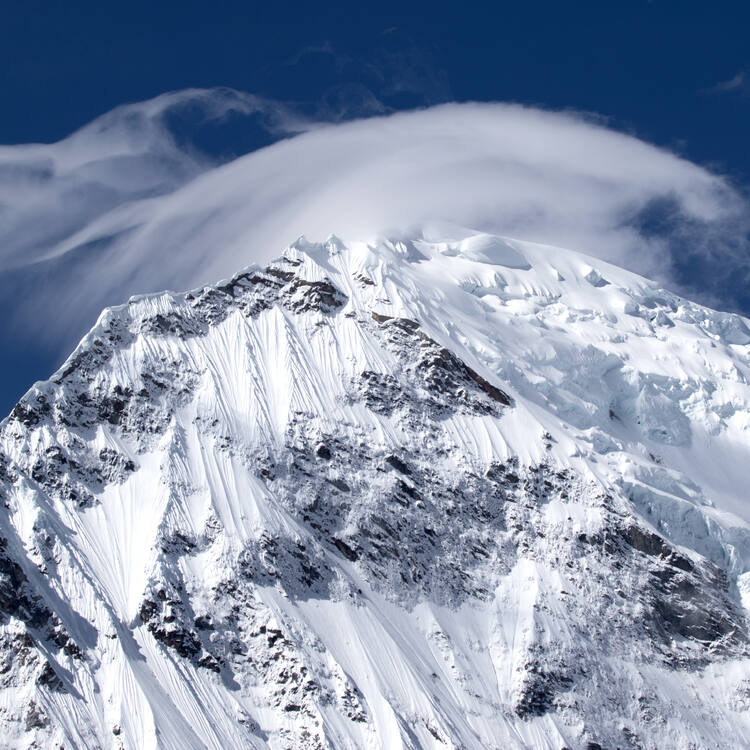
Situé dans la Cordillera Blanca (« cordillère blanche ») qui porte bien son nom, le Parc national de Huascarán protège le cœur du massif montagneux tropical le plus haut du monde dans les Andes centrales péruviennes. Le bien de 340 000 hectares couvre un paysage de montagne varié à partir de 2 500 mètres d’altitude environ, dont les 27 pics enneigés culminent à plus de 6 000 mètres. Il comprend le spectaculaire Nevado Huascarán (le mont Huascarán, 6 768 m), point culminant du Pérou, du nom de Huascar, chef inca du XVIe siècle. Les sommets enneigés, les nombreux glaciers tropicaux et lacs glaciaires, les hauts plateaux entrecoupés de profonds ravins avec des torrents et la variété des types de végétation forment un paysage spectaculaire d’une rare beauté.
En appréciant la géomorphologie et la beauté saisissante du paysage, il est facile de sous-estimer les valeurs de biodiversité et les écosystèmes remarquables que possède aussi le bien. Dans la gamme étendue d’écosystèmes et de types de végétation se présentent de petites poches de forêts tropicales de montagne à basse altitude et dans quelques vallées. Les prairies et les buissons du Paramo et de la Puna sont les types de végétation dominants à l’intérieur du bien avant leur transition dans les hauteurs vers la toundra tropicale. Le parc national de Huascarán est le lieu de vie de l’emblématique vigogne qui était proche de l’extinction dans les années 1960 mais qui s’est redressée depuis, ce qui a été l’une des réussites les plus spectaculaires de la conservation en Amérique du Sud. Les autres mammifères charismatiques sont le cerf des Andes du Nord, le puma, l’ours à lunettes vulnérable et le chat des Andes en danger. L’avifaune compte plus de 100 espèces répertoriées, dont le condor des Andes et le colibri géant. Quelques 800 espèces végétales ont été documentées, la plus célèbre étant la reine des Andes en danger, connue pour sa hampe florale géante. La région entière est habitée depuis des millénaires, comme l’attestent les nombreuses manifestations précolombiennes à l’intérieur et autour du bien. Les premiers habitants ont laissé les vestiges de terrasses agricoles et de corrals, ainsi que des routes, des barrages et des chenaux. Par ailleurs, il y a d’intéressantes peintures rupestres, des pierres tombales et d’innombrables artefacts.
Critère (vii) : Le Parc national de Huascarán couvre une part considérable de la Cordillera Blanca, la plus haute chaîne de montagnes des tropiques au monde. L’élément visuel le plus saisissant est l’agrégation de 27 pics enneigés à plus de 6 000 mètres d’altitude, en particulier le Nevado Huascarán ou mont Huascarán, point culminant du Pérou à 6 768 m. Des zones les plus basses autour de 2 500 mètres jusqu’aux sommets, il y a une différence altitudinale étonnante de plus de 4 kilomètres de végétation et de relief variés et accidentés. Les pics enneigés, les glaciers tropicaux et les lacs glaciaires, les hauts plateaux entrecoupés de torrents qui coulent dans des ravins profonds et la variété des types de végétation forment un paysage spectaculaire d’une rare beauté. Dans la flore riche se distingue la fameuse reine des Andes, connue pour son immense inflorescence. La faune variée comprend des mammifères et des oiseaux charismatiques, comme la vigogne, l’ours à lunettes et le puma, ainsi que le condor des Andes et le colibri géant.
Critère (viii) : Huascarán se trouve dans les hautes Andes et est constitué de hauts plateaux de prairies de puna où des glaciers et des pics de 6 000 m forment une région montagneuse globalement remarquable, avec plus de 600 glaciers, près de 300 lacs et 41 affluents de trois importantes rivières : la Santa, la Pativilca et le Maranon. Derrière le paysage exceptionnel du parc national de Huascarán se dessine un large spectre de particularités et de processus géologiques actifs remarquables formant une impressionnante géomorphologie. Les structures et l’histoire géologique de la région sont très complexes, avec des pics dentelés et la topographie accidentée dont l’origine est le soulèvement de sédiments mésozoïques qui ont été fortement plissés et faillés par une activité tectonique complexe à la fin du Crétacé et sujets au volcanisme à l’époque du pliocène et du pléistocène. Il y a aujourd’hui une forte activité sismique dans la région, de gros tremblements de terre, comme ceux de 1945, 1962 et 1970 le rappelant cruellement. La glaciation est un élément primordial dans la géomorphologie et l’hydrologie du bien. On estime qu’un bon quart du volume de la calotte glaciaire de la cordillère a vraisemblablement disparu depuis la fin des années 1960, un phénomène qui risque de modifier encore l’aspect visuel du bien.
Intégrité
Le parc national de Huascarán couvre une grande portion de terrain montagneux accidenté qui présente un vaste éventail de valeurs naturelles de cette partie et cette élévation des Andes tropicales. La réserve de biosphère encore plus étendue dont le bien constitue la zone centrale, couvre presque toute la Cordillera Blanca, donnant ainsi une chance de gérer le bien au niveau du paysage. Les facteurs naturels qui contribuent à l’intégrité du parc national de Huascarán sont la haute altitude, les conditions climatiques extrêmes et la topographie accidentée. Les impacts contemporains résultant des activités et des menaces à l’intérieur du parc sont relativement limités et semblent gérables. Des menaces plus complexes à l’intégrité à long terme du parc national de Huascarán proviennent des vallées environnantes intensivement exploitées en dehors des limites du bien et de l’intérêt de l’extraction minière. S’il est inscrit sur la Liste du patrimoine mondial pour ses valeurs de conservation de la nature, Huascarán est aussi reconnu pour ses valeurs archéologiques. Une bonne partie des vestiges des cultures disparues semble avoir échappé au pillage, bénéficiant de leur isolement géographique et de conditions environnementales difficiles dans de vastes portions du bien. L’intégrité future du parc national de Huascarán dépendra des réponses aux menaces sur les valeurs naturelles et culturelles de cette extraordinaire partie des hautes Andes.
Conditions requises en matière de gestion et de protection
Dans les années 1960, l’extinction imminente de la vigogne, ce camélidé originaire des Andes victime d’une chasse excessive, et les craintes au sujet de l’emblématique reine des Andes, ont déclenché la création d’une zone de surveillance dans ce qui est aujourd’hui une partie du bien. Le parc national de Huascarán a été créé ultérieurement, en 1975, par un décret suprême dans le cadre plus général de la législation nationale sur la forêt et la vie sauvage. Le parc national constitue aussi la zone centrale de la réserve de la biosphère de Huascarán depuis sa reconnaissance par l’UNESCO en 1977. À l’origine sous l’autorité du Ministère de l’Agriculture, le parc national et la réserve de la biosphère de Huascarán beaucoup plus étendue sont gérés aujourd’hui par le Service national des aires protégées (SERNANP) qui relève du Ministère de l’Environnement. Le fait d’avoir une gestion adaptée permet d’avoir une approche exhaustive de la conservation et de la gestion qui englobe les vallées peuplées et intensivement utilisées qui jouxtent le bien. La gestion du bien doit être guidée par un plan directeur et un comité local pour assurer la participation des communautés locales.
Depuis la création du parc national, un obstacle majeur vient de l’insuffisance des budgets et des effectifs, ce qui réduit l’efficacité du parc national. Cela rend difficile de réagir face aux multiples défis que connaît Huascarán. À l’intérieur du bien il y a un petit nombre de résidents, mais leur nombre augmente. Leur présence remonte aux droits coutumiers qui existaient avant le parc national et exige la négociation d’accords concernant leur exploitation des ressources naturelles, en particulier le pâturage du bétail. Les nombreuses communautés près du bien se développent, surtout dans le Callejon de Huaylas, une vallée intensivement exploitée juste à l’ouest du parc national de Huascarán. Malgré une législation apparemment claire interdisant toute extraction de ressources minières dans les parcs nationaux, il n’y a pas seulement l’intérêt des ressources, mais aussi les concessions à l’intérieur du bien et les plans de construction de barrage sur les lieux. Une activité potentiellement moins préjudiciable pourrait être le tourisme, car le paysage spectaculaire et les valeurs archéologiques importantes attirent déjà un nombre important de touristes péruviens et internationaux, y compris des alpinistes hautement chevronnés. Tout en tenant compte du risque d’effets indésirables sur l’environnement et la culture, il y a des possibilités pour l’économie locale, le financement de la conservation et l’éducation des visiteurs. L’enjeu primordial qui demande un suivi et un travail de préparation, c’est la fonte rapide des glaciers, première source de vie dans le bien, et les moyens d’existence dans les vallées voisines intensivement exploitées.
Notes
- Modification dans la numérotation des critères pour les biens inscrits uniquement pour leur valeur géologique, sous le critère N (ii) avant 1994. Le critère N (i) a été remplacé par le critère N(viii). Voir Décision 30.COM 8D.1
Liens



Les dossiers de proposition d’inscription produits par les États parties sont publiés par le Centre du patrimoine mondial sur son site Internet et/ou dans des documents de travail afin de garantir la transparence, l’accès à l’information et de faciliter la préparation d’analyses comparatives par d’autres États parties soumissionnaires.
Le contenu de chaque dossier de proposition d’inscription relève de la responsabilité exclusive de l'État partie concerné. La publication d’un dossier de proposition d’inscription, y compris les cartes et les noms, ne saurait être interprétée comme exprimant une prise de position de la part du Comité du patrimoine mondial ou du Secrétariat de l'UNESCO à propos de l’histoire ou du statut juridique d'un pays, d'un territoire, d'une ville ou d'une zone, ou de ses frontières.
Protections
par d'autres instruments de conservation
1 protection / 1 élément
Les réserves de biosphère (1 element)