Fortifications de la côte caraïbe du Panama : Portobelo, San Lorenzo
Fortifications on the Caribbean Side of Panama: Portobelo-San Lorenzo
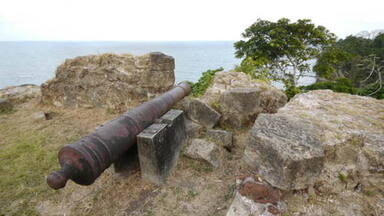
Magnificent examples of 17th- and 18th-century military architecture, these Panamanian forts on the Caribbean coast form part of the defence system built by the Spanish Crown to protect transatlantic trade.
La description est disponible sous licence CC-BY-SA IGO 3.0
Fortifications de la côte caraïbe du Panama : Portobelo, San Lorenzo
Magnifiques exemples de l'architecture militaire des XVIIe et XVIIIe siècles, ces forts de la côte caraïbe du Panamá faisaient partie du système défensif mis en place par la Couronne d'Espagne pour protéger le grand commerce transatlantique.
La description est disponible sous licence CC-BY-SA IGO 3.0
تحصينات الساحل الكاريبي في باناما: بورتوبيلو سان لورينزو
كانت تحصينات الساحل الكاريبي في باناما التي تشكل الامثلة الدقيقة عن الهندسة العسكرية في القرنَيْن السابع عشر والثامن عشر، جزءًا من النظام الدفاعي الذي وضعته العائلة المالكة الاسبانية لحماية التجارة المهمة وراء الاطلسي.
source: UNESCO/CPE
La description est disponible sous licence CC-BY-SA IGO 3.0
巴拿马加勒比海岸的防御工事:波托韦洛-圣洛伦索
作为17世纪和18世纪军事建筑的优美典范,这些加勒比海岸的巴拿马城堡成为西班牙王室保护跨大西洋贸易的防御体系的一个部分。
source: UNESCO/CPE
La description est disponible sous licence CC-BY-SA IGO 3.0
Укрепления на карибском побережье Панамы: Портобело и Сан-Лоренцо
Панамские форты, расположенные на карибском побережье страны представляют собой великолепные примеры военной архитектуры XVII-XVIII вв. Форты являются звеньями единой оборонительной системы, созданной испанцами для защиты трансатлантической торговли.
source: UNESCO/CPE
La description est disponible sous licence CC-BY-SA IGO 3.0
Fortificaciones de la costa caribeña de Panamá: Portobelo y San Lorenzo
Estos fuertes panameños son magníficos prototipos de la arquitectura militar de los siglos XVII y XVIII y para brindar protección al comercio transatlántico. Espléndidos ejemplos de la arquitectura militar de los siglos XVII y XVIII, estos fuertes de la costa caribeña de Panamá formaban parte del sistema defensivo creado por la Corona de España para proteger el comercio transatlántico.
source: UNESCO/CPE
La description est disponible sous licence CC-BY-SA IGO 3.0
パナマのカリブ海沿岸の要塞群:ポルトベロとサン・ロレンソ
source: NFUAJ
Vestingwerken aan de Caribische kant van Panama: Portobelo - San Lorenzo
Source : unesco.nl


Valeur universelle exceptionnelle
Brève synthèse
Les Fortifications de la côte caraïbe du Panama, Portobelo et San Lorenzo, sont situées le long de la côte de la province de Colón. Différents sites de fortifications se trouvent autour de la baie de Portobelo, désignés comme sites de San Fernando: les batteries haute et basse et Hilltop Stronghold; le fort batterie San Jerónimo ; les fortifications de Santiago ; le château de Saint-Jacques de la Gloria, la batterie et Hilltop Stronghold; l'ancienne forteresse de Santiago; les ruines du Fort Farnèse; le site de La Trinchera; la batterie Buenaventura; et le site de San Cristóbal. A quarante-trois kilomètres, à l'embouchure de la Chagres, se dresse le château de San Lorenzo (à l'origine "San Lorenzo el Real del Chagre") avec sa batterie haute comme structure distincte.
Les éléments constitutifs du bien représentent des exemples caractéristiques de l'architecture militaire largement développée par l'empire espagnol dans ses territoires du Nouveau Monde entre les XVIIe et XVIIIe siècles. Les premiers plans pour fortifier l'entrée de la baie de Portobelo et l'embouchure de la Chagres ont été tracés en 1586 par Bautista Antonelli. En application de ses recommandations, la construction des premières fortifications de Portobelo démarra en 1590. Ensemble, ces structures constituent une ligne de défense pour protéger le port de Portobelo et l'embouchure de la Chagres, qui étaient le terminal aux Caraïbes de la route transcontinentale à travers l'isthme de Panama. Le système défensif comprend des fortifications de styles différents, certains d'entre eux habilement intégrés dans le paysage naturel qui est partie intégrante de leur conception militaire défensive. Ils ont également été adaptés à l'évolution des besoins des technologies défensives pendant trois siècles afin de protéger les ressources précieuses envoyées depuis l'Amérique coloniale vers l'Espagne après avoir traversé l'isthme de Panama. Dans les premières constructions, un style militaire avec des caractéristiques médiévales a prévalu, tandis qu’au XVIIIe siècle les structures ont été reconstruites dans le style néo-classique, qui peut être observé dans les forts de Santiago, San Jeronimo et San Fernando, et aussi à San Lorenzo.
A l'échelle régionale, ces éléments militaires appartenaient à un système de défense plus large, incluant Veracruz (Mexique), Cartagene (Colombie), et La Havane (Cuba), pour protéger la route commerciale entre les Amériques et l'Espagne. Portobelo, où de célèbres foires avaient lieu, était l'un des principaux ports des Caraïbes et jouait un rôle de premier plan pour le contrôle du commerce impérial dans les Amériques.
Le site est un élément clé pour la compréhension de l'adaptation des modèles de bâtiments européens et leur impact sur la transformation du Nouveau Monde à l'époque moderne. Ce bien montre l'organisation stratégique du territoire et représente un concept important du développement de la défense et de la technologie principalement entre le XVIIe et XVIIIe siècle.
La ville de San Felipe de Portobelo fut fondée le 20 mars 1597, comme terminal des Caraïbes de la route à travers l'isthme de Panama, pour remplacer Nombre de Dios, port de transit et de transbordement. La nécessité de faciliter le chemin de terre le long de l'isthme pendant la saison des pluies appelait une route alternative. Le chemin Chagres– las Cruces, un mixte de chemin fluvial et de sentier terrestre, était la contrepartie du Camino Real de la ville de Panama à Portobelo, construit en réponse à cette nécessité.
Critère (i): Les Fortifications de la côte caraïbe du Panama, Portobelo, San Lorenzo, sont un chef-d'œuvre du génie créateur humain. Portobelo est un exemple remarquable de ville fortifiée ouverte, détruite et reconstruite plusieurs fois. San Lorenzo a subi le même processus de rénovation au long de l'ère coloniale.
Critère (iv): Les Fortifications de la côte caraïbe du Panama, Portobelo, San Lorenzo, un groupe de fortifications de la fin du XVIe, du XVIIe et du XVIII siècles, sont parmi les exemples les plus caractéristiques d’adaptation de l'architecture militaire espagnole à un climat tropical et aux particularités du paysage, et représentent l'évolution structurelle et technologique des structures militaires dans les Caraïbes.
Intégrité
Les principaux éléments constitutifs de la valeur universelle exceptionnelle du bien sont situés dans les limites d'origine. Ces caractéristiques illustrent encore aujourd’hui l'évolution de l'architecture militaire développée par l'empire colonial espagnol pour protéger la route commerciale qui reliait l'Amérique du Sud avec l'Espagne à travers l'isthme de Panama. Les principaux éléments du système fortifié sont encore visibles à Portobelo, où la plupart des forteresses coloniales continuent de ressembler aux originaux ; il en va de même de la baie où les forts sont situés. De même, à San Lorenzo, le fort et l'embouchure de la Chagres sont demeurés inchangés.
Cependant, l'intégrité du bien est compromise à des degrés divers par des facteurs environnementaux, par l'expansion urbaine et le développement incontrôlés, et par le défaut d'entretien et de gestion. Un certain nombre de mesures, y compris des travaux de conservation, l'application des réglementations et la mise en place d'une unité de gestion du site, devront être prises durablement pour empêcher la poursuite de la dégradation des conditions d'intégrité, en particulier des éléments situés à Portobelo.
Authenticité
En termes de forme, de conception, de matériaux et de situation, les éléments constitutifs du bien sont restés essentiellement inchangés au fil du temps, exprimant les principes du système fortifié et l'évolution des modèles européens d'architecture militaire de la fin du XVIe au XVIIIe siècle dans les Amériques. Les structures militaires ont conservé en grande partie leur forme originale d'ensemble, bien que la plupart des finitions architecturales, des éléments décoratifs et certaines des sections de mur aient été perdus du fait du délitement. La vulnérabilité aux facteurs de délitement devra être l'objet d'actions de conservation soutenues, menées conformément aux principes et normes scientifiques de conservation.
Eléments requis en matière de protection et de gestion
Les Fortifications de la côte caraïbe du Panama, Portobelo, San Lorenzo, sont protégées par la législation générale du Panama sur le patrimoine (loi 14/1982, mise à jour par la loi 58/2003) et par des instruments juridiques spécifiques pour chaque site. Les vestiges historiques sous-marins sont protégés au niveau national par la Loi 32/2003.
La législation en vigueur met l’accent sur la protection de Portobelo (loi 91/1976 et décret exécutif 43/1999). L’ordonnance municipale 32/2005 porte sur les questions de propriété foncière dans le centre historique de Portobelo et dans le parc national qui l’entoure. Le 27 décembre 2011, la Direction du patrimoine national a établi de nouvelles lignes directrices pour les projets d'architecture dans les monuments et sites historiques pour l’ensemble du pays, qui s'appliquent également aux Fortifications de la côte caraïbe du Panama (Résolution 172-11/DNPH). Dans le cas de San Lorenzo, la protection est assurée par la loi 61/1908, la loi 68/1941, et la législation générale sur le patrimoine mentionnée ci-dessus. Toutefois, en raison de sa récente incorporation à l'administration panaméenne après 83 ans sous la gestion du gouvernement des États-Unis, les politiques pour sa protection doivent être renforcées.
Le Plan de protection et de développement de la région interocéanique approuvé par la loi 21/1997 inclut également des normes de conservation pour San Lorenzo. En avril 2005, l'Autorité nationale de l'environnement (ANAM) a publié un plan de gestion pour le parc national de Chagres qui comprend des mesures de conservation pour San Lorenzo.
Les deux ensembles de fortifications sont sous l'administration de l'Institut national de la Culture (Instituto Nacional de Cultura - INAC) par l’intermédiaire de la Direction nationale du patrimoine et, depuis 2007, également le Patronato Portobelo San Lorenzo, une organisation mixte publique-privée actuellement responsable de la gestion, de la conservation, de la sensibilisation des communautés et de la collecte de fonds. Ses principaux objectifs sont de protéger les vestiges architecturaux et de rendre ce patrimoine accessible aux communautés nationales et internationales.
La mise en place d’un plan directeur pour guider toutes les actions et stratégies à court et à long terme sur les deux sites fait partie des besoins identifiés pour la protection adéquate du bien. Les mécanismes de protection à San Lorenzo doivent être mis à jour par une loi spécifique au site (y compris des mesures de protection détaillées, l'élargissement des limites et la création d’une zone tampon); la composante San Lorenzo a été récemment séparée du parc national de Chagres et est en train d'être transférée à l’autorité de l'INAC. À Portobelo, la désignation, la protection et la gestion efficaces de zones tampons pour chaque structure fortifiée est indispensable pour garantir leur protection contre les pressions dues à la croissance urbaine.
Liens
 Découvrez les photos de OUR PLACE the World Heritage Collection

Liste du patrimoine mondial en péril
Année d'inscription du bien sur la Liste du patrimoine mondial en péril
2012 - présentLes dossiers de proposition d’inscription produits par les États parties sont publiés par le Centre du patrimoine mondial sur son site Internet et/ou dans des documents de travail afin de garantir la transparence, l’accès à l’information et de faciliter la préparation d’analyses comparatives par d’autres États parties soumissionnaires.
Le contenu de chaque dossier de proposition d’inscription relève de la responsabilité exclusive de l'État partie concerné. La publication d’un dossier de proposition d’inscription, y compris les cartes et les noms, ne saurait être interprétée comme exprimant une prise de position de la part du Comité du patrimoine mondial ou du Secrétariat de l'UNESCO à propos de l’histoire ou du statut juridique d'un pays, d'un territoire, d'une ville ou d'une zone, ou de ses frontières.