Lviv – ensemble du centre historique
L'viv – the Ensemble of the Historic Centre
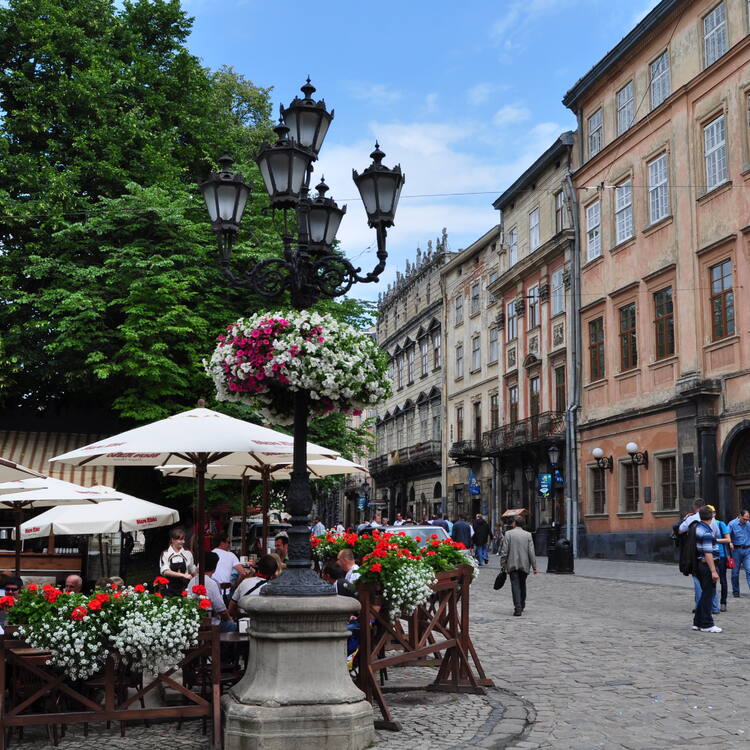
The city of L''viv, founded in the late Middle Ages, was a flourishing administrative, religious and commercial centre for several centuries. The medieval urban topography has been preserved virtually intact (in particular, there is evidence of the different ethnic communities who lived there), along with many fine Baroque and later buildings.
La description est disponible sous licence CC-BY-SA IGO 3.0
Lviv – ensemble du centre historique
La ville de Lviv, fondée à la fin du Moyen Âge, s''est épanouie en tant que centre administratif, religieux et commercial pendant plusieurs siècles. Elle a conservé virtuellement intacte sa topographie urbaine médiévale, et en particulier la trace des communautés ethniques distinctes qui y vivaient, ainsi que de magnifiques bâtiments baroques et plus tardifs.
La description est disponible sous licence CC-BY-SA IGO 3.0
لفيف - مجمع الوسط التاريخي
ازدهرت مدينة لفيف التي تأسست في نهاية القرون الوسطى كمركز اداري وديني وتجاري على مدى عصور عدة. وقد حافظت على طوبوغرافيتها المدنية العائدة الى القرون الوسطى ولا سيما على آثار المجتمعات الإثنية المختلفة التي كانت تسكنها، كما أبقت على أبنية رائعة من الحقبة الباروكية وما بعدها.
source: UNESCO/CPE
La description est disponible sous licence CC-BY-SA IGO 3.0
里沃夫历史中心
里沃夫建于中世纪后期,作为政治、宗教和商业中心繁荣了好几个世纪。中世纪的城市地形被完好无缺地保存下来,特别是反映不同的民族在此居住的证据。这里还有许多精巧的巴洛克风格建筑及其后的建筑。
source: UNESCO/CPE
La description est disponible sous licence CC-BY-SA IGO 3.0
Ансамбль исторического центра Львова
Львов, основанный в позднем средневековье, на протяжении нескольких веков являлся процветающим административным, религиозным и торговым центром. Средневековая планировка города сохранилась до наших дней практически без изменений (в частности, сохранились свидетельства о живших здесь различных этнических общинах). Также уцелело множество прекрасных барочных и более поздних зданий.
source: UNESCO/CPE
La description est disponible sous licence CC-BY-SA IGO 3.0
Lvov – Conjunto del centro histórico
Fundada a finales de la Edad Media, la ciudad de Lvov llegó a ser un importante centro administrativo, religioso y comercial, cuya influencia iba a perdurar en los siglos posteriores. La ciudad ha preservado prácticamente intacta su topografía urbana medieval y, en particular, la huella de las diferentes comunidades que la han habitado. También ha conservado magníficos edificios del periodo barroco y de épocas posteriores.
source: UNESCO/CPE
La description est disponible sous licence CC-BY-SA IGO 3.0
リヴィフ歴史地区
中世後期に建設されたリヴィフは、数世紀の間、行政・宗教・商業の中心地として繁栄し、東欧やイタリア、ドイツの建築や芸術の伝統が融合した中世期の都市の姿をそのままの姿で残している。また、様々な文化や宗教を持った多くの民族が、リヴィフの恵まれた政治・経済に魅せられて集まった。そうした諸民族の文化が、独自にあるいは相互に影響し合いながら築き上げた居住域の姿が、見事なバロック建築とともに現在の街並みに認められる。source: NFUAJ
Historisch centrumgedeelte van L’viv
De stad L’viv werd opgericht in de late middeleeuwen en was gedurende enkele eeuwen een bloeiend administratief, religieus en commercieel centrum. De middeleeuwse stedelijke topografie is vrijwel helemaal intact gebleven, samen met mooie gebouwen uit de Barok en latere periodes. Er is ook bewijs van de etnische gemeenschappen die er woonden. De politieke en commerciële rol van L'viv trok Oekraïense, Armeense, Joodse , Duitse, Poolse, Italiaanse en Hongaarse groepen. Vanwege hun verschillende culturele en religieuze tradities vestigden ze zich afzonderlijk van elkaar, maar waren onderling afhankelijk. Het resultaat is een modern stadsbeeld met architectonische en artistieke meesterwerken waarin Oost-Europese tradities samensmelten met Duitse en Italiaanse.
Source : unesco.nl


Valeur universelle exceptionnelle
Brève synthèse
La ville de Lviv a été fondée à la fin du Moyen Âge à l’emplacement d’un site de peuplement des Ve et VIe siècles. Elle s’est épanouie en tant que centre administratif, religieux et commercial en raison de sa situation géographique favorable au développement commercial et politique. Aujourd’hui, le patrimoine architectural et artistique qui subsiste témoigne d’une synthèse de traditions d’Europe de l’Est influencées par celles d’Italie et d’Allemagne. Le bien de « Lviv – ensemble du site historique » comporte deux éléments : la zone principale, constituée du château, de l’espace qui l’entoure et du centre-ville, et vers le Sud-Est, une plus petite zone sur la colline de Saint-Georges pour l’ensemble de la cathédrale Saint-Georges.
Le centre historique de Lviv comprend différentes parties distinctes qui représentent diverses étapes de son développement. Le Haut Château (Vysokyi Zamok) et la zone qui l’entoure (Pidzamtche) sont les parties principales et les plus anciennes de la ville, datant du Ve siècle. Cette ville a conservé sa topographie et sa colline surmontée d’un château, ainsi que ses plaines où s’est développé un réseau de rues et de places entre le XIIIe et le XVIIe siècle. On trouve encore des témoignages d’occupation de différentes communautés ethniques dans les bâtiments qui subsistent, dont une mosquée, une synagogue et tout un ensemble de bâtiments religieux des Églises orthodoxes, arméniennes et catholiques.
La Seredmistia, cœur de la cité, s’est développée au XIVe siècle et présente des bâtiments urbains d’Europe de l’Est bien préservés, dont beaucoup de monastères et de résidences de style Renaissance et baroque, des parcs créés sur le site originel des fortifications médiévales, et des bâtiments plus récents des XIXe et XXe siècles.
C’est sur un plateau montagneux au sud-ouest de la cité médiévale qu’est situé l’Ensemble de Saint-Georges. Siège du métropolite de l’Église de Galicie, il est essentiellement constitué de bâtiments de style baroque d’une grande valeur artistique.
Critère (ii) : Par son tissu urbain et son architecture, Lviv est un exemple exceptionnel de la fusion des traditions architecturales et artistiques de l’Europe de l’Est avec celles de l’Italie et de l’Allemagne.
Critère (v) : Le rôle politique et commercial de Lviv a attiré un certain nombre de groupes ethniques aux traditions culturelles et religieuses différentes, qui ont établi des communautés distinctes et pourtant interdépendantes au sein de la ville, comme le montre encore le paysage urbain.
Intégrité
Les deux parties intégrantes de l’Ensemble du centre historique de Lviv possèdent tous les éléments nécessaires pour en justifier la valeur universelle exceptionnelle. Les bâtiments qui subsistent et l’ancien tracé des rues permettent de retracer l’histoire de Lviv et ses diverses influences ethniques et religieuses.
Les menaces pour l’intégrité du bien sont connues: circulation excessive des poids lourds, exode des résidents vers les banlieues et développement non planifié pour différentes raisons dont le manque de fonds, l’absence de sensibilisation des propriétaires et utilisateurs des monuments historiques, et le manque d’application de la réglementation en vigueur.
Authenticité
Ce bien présente un haut degré d’authenticité. Son cadre a conservé ses caractéristiques topographiques avec ses collines, ses plateaux et ses vallées fluviales. Le paysage continue à témoigner des relations traditionnelles entre le château défensif édifié sur une colline et la ville en contrebas. Qui plus est, le plan urbain subsiste avec le tracé médiéval des rues, les places, les principales églises et les communautés ethniques. Le système des parcelles dans le centre-ville historique a été préservé malgré de nombreux incendies (en 1527 et 1571).
L’authenticité de conception se retrouve dans la préservation de nombreuses résidences anciennes, comme l’attestent leur agencement intérieur, les matériaux d’origine utilisés dans la décoration intérieure, les peintures murales, les fenêtres à vitraux et l’ornementation extérieure. Les briques extérieures et les gros blocs de pierre utilisés dans la construction en sont aussi des preuves visibles.
La structure urbaine a perdu quelques éléments au fil du temps, surtout pendant la Seconde Guerre mondiale. Toutefois, l’ajout ponctuel de bâtiments plus tardifs – datant de l’époque de la Sécession ukrainienne et du Modernisme – s’est fondu naturellement dans l’ensemble préexistant.
Eléments requis en matière de protection et de gestion
La surface du territoire de Lviv - ensemble du site historique est incluse dans la zone plus vaste, d’une surface de 3 000 ha, classée Réserve nationale historique et architecturale le 12 juin 1975 par la résolution NQ 297 du Conseil des Ministres de la RSS d’Ukraine en vertu des dispositions de la loi sur les Monuments historiques et culturels (1970). La loi ukrainienne sur la Protection du patrimoine culturel (2000) est le principal document législatif au niveau national régissant la protection du bien. Le Conseil des Ministres a classé 209 monuments historiques en tant que Monuments nationaux exceptionnels à l’intérieur du territoire inscrit au patrimoine mondial et un certain nombre d’autres monuments sont déclarés d’importance locale par résolution des autorités régionales. Cette législation impose un contrôle strict à toutes les activités prévues dans la zone protégée qui seraient susceptibles d’impact négatif sur la valeur universelle exceptionnelle du bien.
Les bâtiments appartiennent à différents propriétaires, que ce soit l’État, la municipalité ou des propriétaires privés. C’est le Département du Patrimoine culturel et des Monuments culturels du Ministère ukrainien de la Culture qui est chargé de la supervision générale en la matière. Au niveau local, la gestion est déléguée au Conseil de direction du Conseil municipal de Lviv pour la Protection de l’Environnement historique. C’est le Bureau consultatif scientifique, associé au Département du Patrimoine culturel, qui est l’instance de conseil pour les projets de construction et de restauration. Ce Bureau est constitué de professionnels de la restauration du patrimoine culturel et de représentants d’organisations communautaires concernées (l’organisation caritative Préservation du Patrimoine historique et architectural de Lviv, et l’Union internationale des Architectes). Il a été récemment mis un terme à certaines activités de construction dans le périmètre du bien et de sa zone tampon car elles risquaient d’avoir une incidence sur la valeur universelle exceptionnelle.
La gestion et la protection du bien sont assurées conformément au Plan de Développement stratégique pour la Ville de Lviv (2011-2025), qui fait partie d’une Approche intégrée du Développement du Centre-ville de Lviv (2011-2020) et qui définit le zonage de protection de la zone historique. Un plan de gestion du bien du patrimoine mondial est en cours d’élaboration.
Au niveau local, un Plan de restauration des monuments est approuvé chaque année, en veillant au bien-être des habitants des lieux concernés et au rétablissement de réseaux d’ingénierie pour les bâtiments. Différents programmes existent au niveau municipal. Par exemple, un financement est assuré pour la restauration des portes et fenêtres historiques. Par ailleurs, le Projet conjoint germano-ukrainien contribue par ses séminaires de formation à améliorer les savoir-faire des artisans locaux. Le problème de la circulation trop importante dans le centre historique est traité en limitant la circulation des véhicules dans certaines zones et en modifiant l’itinéraire des bus et des cars. Une infrastructure réservée aux cyclistes est également en préparation.
Liens
-
Département de la protection de l'environnement historique (en ukrainien seulement)
-
Bureau du patrimoine du LKP à Lviv (en ukrainien seulement)
-
Page Facebook Département de la protection de l'environnement historique (only in Ukrainian)
-
Page Facebook Bureau du patrimoine à Lviv (only in Ukrainian)
-
Compte Instragram Bureau du patrimoine à Lviv (only in Ukrainian)
-
Lviv City Council (en anglais)
-
Lviv City Council (en ukrainien)
-
All About L'viv (seulement an anglais)





Liste du patrimoine mondial en péril
Année d'inscription du bien sur la Liste du patrimoine mondial en péril
2023 - présent