Bassin d’Ubs Nuur
Uvs Nuur Basin
The Uvs Nuur Basin (1,068,853 ha), is the northernmost of the enclosed basins of Central Asia. It takes its name from Uvs Nuur Lake, a large, shallow and very saline lake, important for migrating birds, waterfowl and seabirds. The site is made up of twelve protected areas representing the major biomes of eastern Eurasia. The steppe ecosystem supports a rich diversity of birds and the desert is home to a number of rare gerbil, jerboas and the marbled polecat. The mountains are an important refuge for the globally endangered snow leopard, mountain sheep (argali) and the Asiatic ibex.
La description est disponible sous licence CC-BY-SA IGO 3.0
Bassin d’Ubs Nuur
Le Bassin d’Ubs Nuur, qui couvre une surface de plus de un million d’hectares, est le bassin fermé le plus septentrional d’Asie centrale. Il tire son nom de l’Ubs Nuur, un grand lac peu profond et très salé, qui joue un rôle important dans la vie des oiseaux migrateurs, tant aquatiques que marins. Le site, divisé en douze aires protégées, comprend une vaste gamme d’écosystèmes qui représentent les principaux biomes de l’Eurasie orientale. L’écosystème steppique entretient une riche diversité d’oiseaux et le désert un certain nombre de gerbilles, gerboises et putois marbrés rares. Les montagnes sont d’importants refuges pour le léopard des neiges (une espèce menacée), l’argali et le bouquetin d’Asie.
La description est disponible sous licence CC-BY-SA IGO 3.0
حوض أوبس نور
يغطي حوض أوبس نور مساحة أكثر من مليون هكتار وهو الحوض المغلق الواقع إلى أقصى الشمال في آسيا الوسطى. ويشتق اسمه من أوبس نور وهي بحيرة كبيرة قليلة العمق وشديدة الملوحة وتؤدي دوراً مهمّاً في حياة العصافير المهاجرة المائيّة كما البحريّة. ويضمّ الموقع الموزّع على اثنتي عشرة مساحة محميّة، طيفاً من النظم البيئيّة التي تمثل أبرز ثروات أوراسيا الشرقيّة. وتحتفظ النظم البيئيّة المكوّنة من سهول واسعة بثروة وتنوّع من العصافير كما تحوي الصحراء عدداً من الجربيل واليربوع وابن العرس الرخامي النادر. وتشكّل الجبال موئل فهد الثلوج (وهو صنف مهدد) والكبش البرّي والوعل الآسيوي.
source: UNESCO/CPE
La description est disponible sous licence CC-BY-SA IGO 3.0
乌布苏盆地
乌布苏盆地面积1 068 853公顷,是中亚最北部的封闭性盆地,它得名于乌布苏湖。乌布苏湖是一个巨大的浅咸水湖,它是候鸟、水鸟和海鸟的重要栖息地。该地区由12个保护区组成,这些保护区内拥有亚欧大陆东部的主要生物群系。西伯利亚大草原生态系统为各种各样的鸟类提供了栖息地,沙漠地区里生活着许多珍稀动物,如沙鼠、跳鼠和斑纹臭鼬,而山区地带则是一些世界濒危动物的避难所,比如雪豹、高山山羊(盘羊)和亚洲野生山羊。
source: UNESCO/CPE
La description est disponible sous licence CC-BY-SA IGO 3.0
Убсунурская котловина
Объект наследия (площадью 1069 тыс. га) находится в границах самой северной из всех бессточных котловин Центральной Азии. Его наименование происходит от названия обширного мелководного и очень соленого озера Убсунур, в районе которого скапливается масса перелетных, водоплавающих и околоводных птиц. Объект состоит из 12 разрозненных участков (в т.ч. в России семь участков, площадью 258,6 тыс. га), которые представляют все основные типы ландшафтов, характерных для Восточной Евразии. В степях отмечено большое разнообразие пернатых, а на пустынных участках обитают редкие виды мелких млекопитающих. В высокогорной части отмечены такие животные, редкие в глобальном масштабе, как снежный барс и горный баран аргали, а также сибирский козерог.
source: UNESCO/CPE
La description est disponible sous licence CC-BY-SA IGO 3.0
Cuenca de Ubs Nuur
Esta cuenca cerrada de más de un millón de hectáreas es la más septentrional del Asia Central y recibe su nombre del gran lago de Ubs Nuur. Poco profundo y muy salado, este lago desempeña un papel muy importante en la vida de las aves migratorias, tanto fluviales y lacustres como marinas. El sitio está dividido en doce zonas protegidas y posee una amplia gama de ecosistemas representativos de los principales biomas de Eurasia Oriental. El ecosistema estepario alberga una gran variedad de aves y en las zonas desérticas viven jerbos, jerbillos y una especie rara de turones jaspeados. Las zonas montañosas sirven de refugio a una especie en peligro de extinción, el leopardo de las nieves, así como a ovejas montesas (argalis) e íbices asiáticos.
source: UNESCO/CPE
La description est disponible sous licence CC-BY-SA IGO 3.0
オヴス・ヌール盆地
source: NFUAJ
Uvs Nuur bekken
Source : unesco.nl


Valeur universelle exceptionnelle
Partagé entre la Mongolie et la République de Touva dans la Fédération de Russie, le Bassin d’Ubs Nuur est un bien transnational du patrimoine mondial au cœur de l’Asie. Ce bien en série comprend sept éléments en Mongolie et cinq dans la République de Touva, répartis autour du lac d’Ubs Nuur, peu profond et très salé. Certains sont contigus à la frontière internationale, tandis que d’autres constituent des unités distinctes. Inscrit en 2003 sur la Liste du patrimoine mondial, le bassin couvre une surface totale de quelque 898 064 ha dont 87 830 ha appartiennent au groupe russe et 810 234 ha au groupe mongol. L’aire centrale intégralement protégée d’Ubs Nuur en Mongolie représente près de la moitié de la surface totale du bien. Même si aucune zone tampon n’a été formellement reconnue lors de l’inscription du bien pour ses éléments du côté mongol, cinq des sept éléments de la Fédération de Russie ont des zones tampons, en tout 170 790 ha.
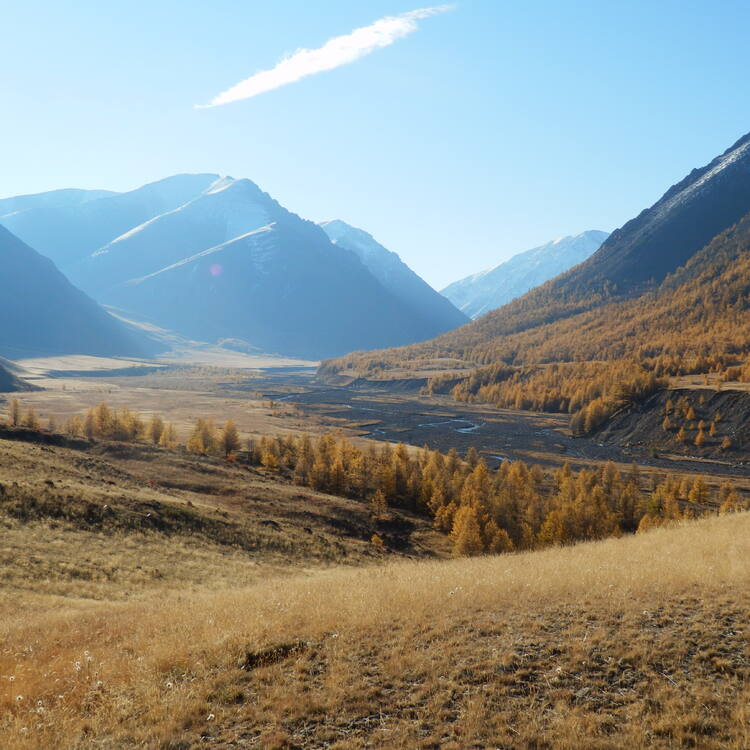
L’ancien bassin lacustre et ses environs offrent une extraordinaire diversité de paysage qui va du désert froid à la steppe désertique et à la steppe, des forêts de conifères, de feuillus et de plaines d’inondation à diverses zones humides et marécageuses, de systèmes d’eau douce et d’eau salée, de dunes de sable mobiles et fixées et même de toundra. Le bien présente des pics qui s’élèvent à plus de 4 000 m d’altitude, surplombant le lac d’Ubs Nuur à environ 800 m au-dessus du niveau de la mer. Il contient les vestiges de glaciers provenant de nappes glaciaires du Pléistocène et de nombreux lacs glaciaires, et est particulièrement riche sur le plan scientifique pour étudier l’évolution des conditions depuis la période glaciaire jusqu’à nos jours. Reflétant la diversité du paysage, il y a une formidable diversité d’espèces parmi lesquelles figurent des plantes endémiques et des espèces localement menacées, comme le léopard des neiges. L’ensemble du bassin n’a jamais été soumis à l’exploitation de ressources à grande échelle et entretient une longue tradition de pastoralisme nomade. L’importance historique, culturelle et spirituelle du paysage et bon nombre de ses caractéristiques se reflètent à travers toutes sortes d’artefacts et de sites archéologiques, comme dans la vie contemporaine, les connaissances, l’exploitation des ressources, les chants et les légendes des communautés locales et autochtones.
Critère (ix): Le système lacustre fermé et éloigné de l’Ubs Nuur, fort de son caractère naturel, est d’une importance scientifique internationale de par ses phénomènes et ses régimes climatique, hydrologique et écologique à grande échelle intacts. En raison de l’utilisation pastorale passée et contemporaine relativement stable des pâturages et de l’absence de conversion ou d’impacts humains majeurs depuis des milliers d’années, il constitue un lieu d’étude unique pour une grande variété de sujets, y compris les recherches en cours sur le développement de l’Ubs Nuur et d’autres lacs plus petits se trouvant dans le bassin, ainsi que les processus de salinisation et d’eutrophication du lac à long terme encore intacts. Outre d’importants efforts de recherche passés et présents des deux côtés de la frontière et compte tenu de ses caractéristiques géophysiques et biologiques uniques, le Bassin d’Ubs Nuur a également été choisi comme site d’étude pour le Programme international Géosphère-Biosphère (PIGB), une initiative planétaire visant à comprendre et maîtriser le changement global.
Critère (x): Le bien en série conserve les zones les plus précieuses représentant toute l’étendue du Bassin d’Ubs Nuur à travers une vaste gamme d’écosystèmes et d’habitats, tout en suivant une forte dénivellation. La diversité représente les principaux biomes d’Asie centrale auxquels correspond la diversité de la flore et de la faune. Il y a d’importantes zones de différents types de forêts et de végétation extrêmement spécialisée à haute altitude, dans les systèmes de toundra et les écosystèmes de région sèche, y compris des espèces et des communautés adaptées aux conditions de salinité. Parmi plus de 550 plantes supérieures figurent des espèces reliques et un certain nombre de plantes endémiques de Mongolie et de la République de Touva, avec cinq espèces endémiques du bassin lacustre. Les différents écosystèmes alimentent une riche diversité faunique : l’argali, le bouquetin de Sibérie, le chat de Pallas et l’insaisissable léopard des neiges aujourd’hui menacé. Parmi tous les rongeurs qui ont une grande importance écologique, il y a deux espèces vulnérables de gerboises et de gerbilles. Les nombreuses niches écologiques sont occupées par une impressionnante densité de rapaces d’élevage. Le bien a non seulement une grande importance pour les oiseaux d’eau, mais il sert aussi de relais lors de la migration des oiseaux entre la Sibérie et les aires d’hivernage en Chine et en Asie du Sud.
Intégrité
Le bassin d’Ubs Nuur offre un paysage qui se caractérise par une nature variée et simultanément distincte, entourée de plusieurs grandes et hautes chaînes de montagnes. Au nord, il marque une transition avec la chaîne Tannu-Ola, à l’est se dressent les Sangilen et Bolnai ; à l’ouest les massifs du Tsagaan Shuvuut et de Shapshaskee constituent des frontières naturelles, tandis que les chaînes de Turgen Uul et Hanhohee sont adjacentes au sud. Tous les éléments et le zonage ont été sélectionnés en tenant compte de la biodiversité à tous les niveaux, de la connectivité et de l’intégrité globale. Il y a d’excellents moyens de gérer le bassin au niveau du paysage entre les limites nationales du bien protégé par la Convention du patrimoine mondial. Toutefois, il est important de saisir toute l’étendue du bassin d’Ubs Nuur dont seule une petite partie est protégée et reconnue en tant que bien du patrimoine mondial. Les bergers nomades coexistent depuis des milliers d’années avec une flore et une faune variées dans un milieu hostile sans avoir dégradé la productivité, la résilience et la diversité du bassin. Cependant, suite à l’évolution passée et présente de la situation macroéconomique et politique, d’aucuns redoutent la pratique du braconnage, l’exploitation illégale du bois et le surpâturage dans certaines parties du bassin qui risquent de nuire à l’intégrité du bien à long terme.
Éléments requis en matière de protection et de gestion
Le bien transnational du Bassin d’Ubs Nuur inscrit sur la Liste du patrimoine mondial représente des terres publiques officiellement et entièrement protégées dans les deux pays. Tous les éléments sont protégés aux plus hauts niveaux de la législation nationale des deux pays concernés, les Lois sur les aires protégées spéciales (1994) et sur les zones tampons (1998) dans le cas de la Mongolie, et la Loi fédérale sur les aires protégées spéciales (1995) en Russie. Cela inclut l’élément mongol de la rivière Tes, dont le statut a été revalorisé suite à la décision du Comité du patrimoine mondial d’inscrire le bassin. Beaucoup de zones actuellement protégées coïncident avec des montagnes traditionnellement sacrées, des cours d’eau, des lacs et autres éléments vénérés du paysage. Le bien est non seulement un excellent exemple de coopération à la conservation d’un écosystème partagé aux confins d’une frontière internationale, mais encore d’une coopération entre des institutions gouvernementales, scientifiques et non gouvernementales. Plusieurs accords bilatéraux à l’échelon des ministères responsables et des administrations d’aires protégées soutiennent officiellement la coopération et la planification conjointe de la gestion. Le personnel de protection frontalière veille à la protection permanente du bien des deux côtés de la frontière. L’éducation environnementale et les activités d’information contribuent aussi à renforcer la conservation du bien.
En s’appuyant sur la participation actuelle des communautés locales et autochtones, il est envisagé de promouvoir le bien du patrimoine mondial comme un modèle de conservation et de développement intégré durable. Un point d’entrée important est la reconnaissance et la revitalisation des croyances de conservation traditionnelles. Étant donné la longue interaction entre le bétail, la nature sauvage et la végétation, le pastoralisme nomade est un élément intégral de l’écosystème contemporain. Toutefois, le pastoralisme n’est pas durable en soi, car le surpâturage peut entraîner une érosion et une productivité réduite des prairies aux dépens des troupeaux, de la nature sauvage et de la population. Comme ailleurs dans la région, il y a des signes de pression croissante sur les pâturages, les forêts et la vie sauvage, ainsi qu’une recrudescence des feux. L’enjeu principal pour l’avenir du bien et l’ensemble du bassin d’Ubs Nuur sera de maintenir l’équilibre entre exploitation et conservation au niveau du paysage, inclus mais non limité aux douze composantes du bien. Le contrôle des activités illégales sur le site, comme le braconnage et l’exploitation illicite du bois, nécessite un équipement adéquat, des effectifs et un financement pour l’application de la loi, ainsi qu’une coopération transfrontalière à titre permanent. La recherche a un important rôle à jouer pour mieux faire comprendre l’écologie et le patrimoine culturel du bassin afin d’accompagner la conservation et la gestion.
Liens



Les dossiers de proposition d’inscription produits par les États parties sont publiés par le Centre du patrimoine mondial sur son site Internet et/ou dans des documents de travail afin de garantir la transparence, l’accès à l’information et de faciliter la préparation d’analyses comparatives par d’autres États parties soumissionnaires.
Le contenu de chaque dossier de proposition d’inscription relève de la responsabilité exclusive de l'État partie concerné. La publication d’un dossier de proposition d’inscription, y compris les cartes et les noms, ne saurait être interprétée comme exprimant une prise de position de la part du Comité du patrimoine mondial ou du Secrétariat de l'UNESCO à propos de l’histoire ou du statut juridique d'un pays, d'un territoire, d'une ville ou d'une zone, ou de ses frontières.
Protections
par d'autres instruments de conservation
1 protection / 1 élément
RAMSAR (1 element)