Forêts vierges de Komi
Virgin Komi Forests
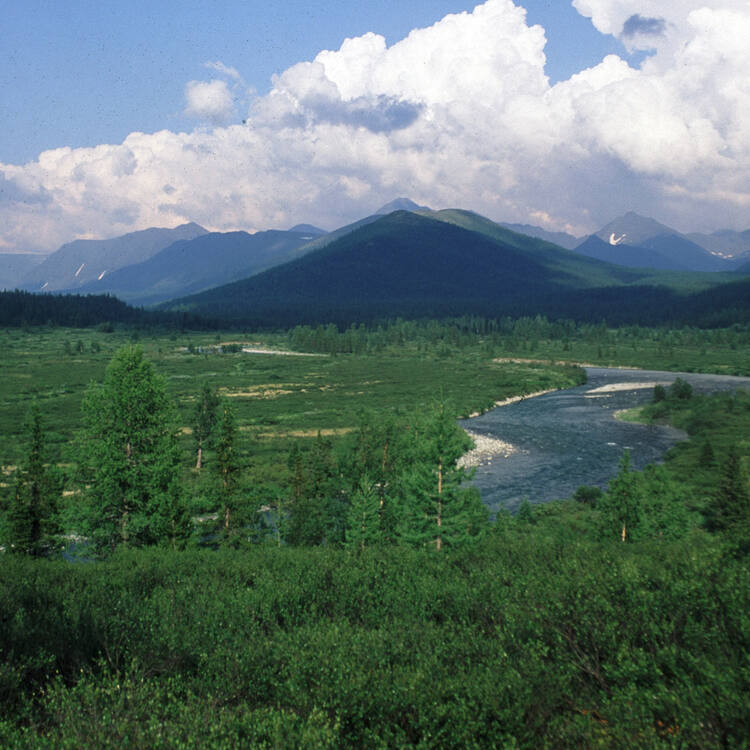
The Virgin Komi Forests cover 3.28 million ha of tundra and mountain tundra in the Urals, as well as one of the most extensive areas of virgin boreal forest remaining in Europe. This vast area of conifers, aspens, birches, peat bogs, rivers and natural lakes has been monitored and studied for over 50 years. It provides valuable evidence of the natural processes affecting biodiversity in the taiga.
La description est disponible sous licence CC-BY-SA IGO 3.0
Forêts vierges de Komi
Les forêts vierges de Komi couvrent 3,28 millions d'hectares de toundra et de toundra alpine dans l'Oural, ainsi qu'une des zones les plus vastes de forêts boréales encore vierges en Europe. Ces immenses étendues de conifères, trembles, bouleaux, tourbières, rivières et lacs sauvages, surveillées et étudiées depuis plus de cinquante ans, sont les précieux témoins des processus naturels composant la biodiversité de la taïga.
La description est disponible sous licence CC-BY-SA IGO 3.0
غابات كومي العذراء
تغطي غابات كومي العذراء مساحة 3.28 هكتار من السهول الجرداء والسهول الجرداء الجبليّة في بحر الأورال كما تشكّل إحدى أكبر مساحات الغابات الشماليّة العذارء في أوروبا. وهذه المساحات الهائلة من الصنوبريّات وحور الرجراج وخشب البتولا والأنهر والبحيرات المتوحشة التي جرت مراقبتها ودراستها منذ أكثر من خمسين سنة هي الشاهد الثمين على عمليّات طبيعيّة تكوّن التنوّع البيولوجي في هذه الغابة الشماليّة.
source: UNESCO/CPE
La description est disponible sous licence CC-BY-SA IGO 3.0
科米原始森林
科米原始森林位于乌拉尔地区和乌拉尔山脉的冻土地带,占地328万公顷,是欧洲北部现存面积最大的一片原始森林。这一广袤区域范围内的针叶树、白杨、白桦、泥炭沼、河流以及天然湖泊已经被监控和研究了50多年,为针叶树林地带的自然发展对生物多样性的影响提供了宝贵的资料。
source: UNESCO/CPE
La description est disponible sous licence CC-BY-SA IGO 3.0
Девственные леса Коми
В состав объекта наследия, покрывающего территорию 3,28 млн. га, включаются равнинные тундры, горные тундры Урала, а также один из самых крупных массивов первичных бореальных лесов, уцелевших в Европе. Обширная территория с болотами, реками и озерами, где произрастают хвойные породы, береза и осина, изучается и охраняется более 50 лет. Здесь можно проследить ход естественных природных процессов, определяющих биоразнообразие таежной экосистемы.
source: UNESCO/CPE
La description est disponible sous licence CC-BY-SA IGO 3.0
Bosques vírgenes de Komi
Este sitio abarca 3.280.000 hectáreas de tundra y tundra alpina en la región de los Montes Urales, así como una de las zonas de bosques boreales vírgenes más grandes de Europa. Esta vasta extensión de coníferas, álamos, abedules, turberas, ríos y lagos naturales, está siendo observada y estudiada desde hace más de cincuenta años 50 años, lo cual ha permitido acopiar datos muy valiosos sobre los procesos naturales que influyen en la biodiversidad en la taiga.
source: UNESCO/CPE
La description est disponible sous licence CC-BY-SA IGO 3.0
コミ原生林
ウラル北部のタイガ、ツンドラ、高山ツンドラ帯の328万haにおよぶ原生林。ヨーロッパに残る亜寒帯林ではもっとも広い地域の一つ。トウヒ、マツ、ポプラ、カンバに覆われ、泥灰地、河川、湖がある。気候の変化がタイガの生物多様性に与える影響が、50年以上も科学的に調査されている。source: NFUAJ
Ongerepte Komi bossen
De Komi bossen bedekken 3,28 miljoen hectare toendra en bergtoendra in de Oeral en zijn een van de meest uitgestrekte gebieden van maagdelijk bos dat nog over is in Europa. Het bos strekt zich uit van de moerassen en uiterwaarden aan de voet van het gebergte en wordt vervolgens afgewisseld met subalpiene struikbossen, weiden, toendra's en rotsformaties. De vegetatie bestaat onder meer uit coniferen, espen en berken. De veengebieden, rivieren en natuurlijke meren worden al meer dan 50 jaar lang onderzocht en bestudeerd. Zo zijn er belangrijke inzichten verworven in de natuurlijke processen die van invloed zijn op de biodiversiteit van de taiga.
Source : unesco.nl


Protections
par d'autres instruments de conservation
1 protection / 1 élément
Les réserves de biosphère (1 element)