Palais de Westminster et l'abbaye de Westminster incluant l'église Sainte-Marguerite
Palace of Westminster and Westminster Abbey including Saint Margaret’s Church
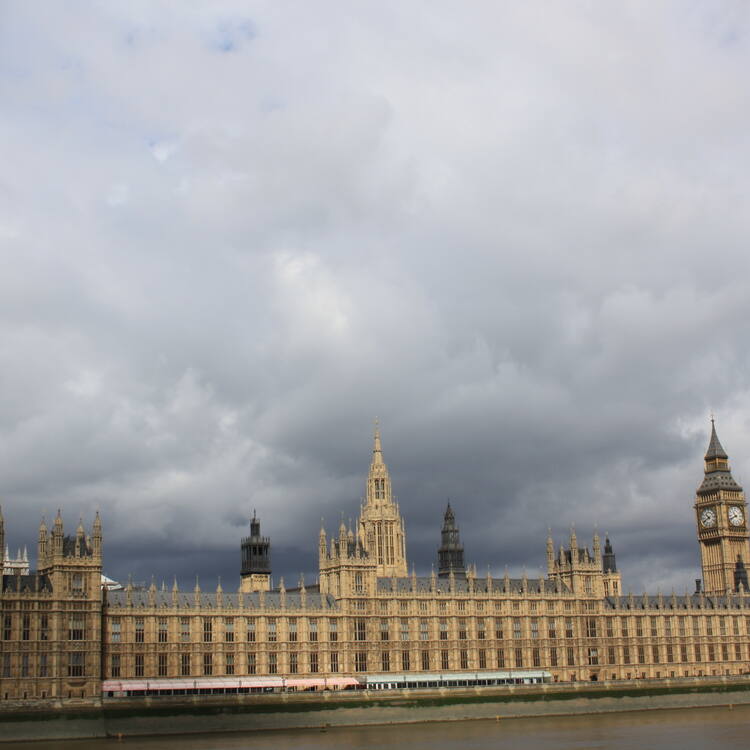
Westminster Palace, rebuilt from the year 1840 on the site of important medieval remains, is a fine example of neo-Gothic architecture. The site – which also comprises the small medieval Church of Saint Margaret, built in Perpendicular Gothic style, and Westminster Abbey, where all the sovereigns since the 11th century have been crowned – is of great historic and symbolic significance.
La description est disponible sous licence CC-BY-SA IGO 3.0
Palais de Westminster et l'abbaye de Westminster incluant l'église Sainte-Marguerite
Reconstruit à partir de 1840 autour de remarquables vestiges médiévaux, le palais de Westminster est un exemple éminent, cohérent et complet du style néogothique. Avec la petite église Sainte-Marguerite, de style gothique perpendiculaire, et la prestigieuse abbaye dans laquelle furent couronnés tous les souverains britanniques depuis le XIe siècle, il présente une signification historique et symbolique importante.
La description est disponible sous licence CC-BY-SA IGO 3.0
قصر ويستمنستر
أعيد بناء قصر ويستمنستر منذ عام 1840 حول آثار رائعة من القرون الوسطى، وهو مثال هام ومتكامل للطراز القوطي الجديد، كما انه يحمل معنى تاريخي ورمزي هام بفضل كنيسة سانت مارغريت الصغيرة ذات الطراز القوطي العمودي الخطوط والدير الرائع الذي كلّل فيه مجمل الملوك البريطانيين منذ القرن الحادي عشر.
source: UNESCO/CPE
La description est disponible sous licence CC-BY-SA IGO 3.0
威斯敏斯特宫殿和教堂以及圣玛格丽特教堂
在重要的中世纪遗迹原址上于1840年重建的威斯敏斯特宫殿是新哥特式建筑的典型。这里还包括圣玛格丽特教堂,这是一座小型的直角哥特式风格的中世纪教堂。威斯敏斯特教堂具有重要的历史意义和象征意义,从11世纪起历代国王都在此举行加冕仪式。
source: UNESCO/CPE
La description est disponible sous licence CC-BY-SA IGO 3.0
Вестминстерский дворец, Вестминстерское аббатство и церковь Cент-Маргарет (Лондон)
Вестминстерский дворец, возводившийся начиная с 1840 г. на месте значительных более ранних сооружений средневековья, стал выдающимся примером неоготической архитектуры. Объект также включает находящуюся рядом маленькую средневековую церковь Сент-Маргарет, построенную в стиле перпендикулярной готики, а также Вестминстерское аббатство – место коронации всех монархов Англии начиная с XI в. Аббатство имеет большое историческое и символическое значение.
source: UNESCO/CPE
La description est disponible sous licence CC-BY-SA IGO 3.0
Palacio de Westminster, abadía de Westminster incluyendo la iglesia de Santa Margarita
Reconstruido a partir de 1840 en torno a importantes vestigios medievales, el palacio de Westminster es un ejemplo eminente, coherente y completo del estilo neogótico. Este monumento forma un conjunto de gran significado histórico y simbólico con la célebre abadía de su mismo nombre –en la que han sido coronados todos los soberanos británicos desde el siglo XI– y la pequeña iglesia medieval de Santa Margarita, de estilo gótico perpendicular.
source: UNESCO/CPE
La description est disponible sous licence CC-BY-SA IGO 3.0
ウェストミンスター宮殿、ウェストミンスター大寺院及び聖マーガレット教会
source: NFUAJ
Paleis van Westminster, Westminster Abbey en Saint Margaret’s-kerk
Source : unesco.nl


Valeur universelle exceptionnelle
Brève synthèse
Le Palais de Westminster, l’abbaye de Westminster et l’église Sainte-Marguerite sont situés près de la Tamise, au cœur de Londres. Leurs silhouettes très élaborées symbolisent la monarchie, la religion et le pouvoir depuis qu’Édouard le Confesseur a construit son palais et son église sur Thorney Island au XIe siècle. Par leur évolution commune au fil des siècles, ils témoignent du parcours d’une société féodale à une démocratie moderne et attestent de l’histoire intimement liée de l’Église, de la monarchie et de l’État.
Le Palais de Westminster, l’abbaye de Westminster et l’église Sainte-Marguerite ont conservé leurs fonctions d’origine et jouent un rôle fondamental dans la société et le gouvernement, l’abbaye étant le lieu de couronnement, de mariage et d’inhumation des souverains. C’est aussi le centre des mémoriaux nationaux pour ceux qui ont servi leur pays, qu’ils soient célèbres ou représentés – comme en témoigne la tombe du Soldat inconnu. L’abbaye est un lieu de culte depuis plus de 1000 ans et maintient le cycle quotidien du culte. Elle reste l’église où se tiennent les grandes célébrations nationales et d’importants événements culturels. Le Palais de Westminster demeure le siège du Parlement.
La Westminster School remonte à 1178 et a été refondée par la reine Élisabeth I en 1560. Elle est située près de Little Dean’s Yard.
La silhouette emblématique de l’ensemble de Westminster fait partie intégrante de son identité, qui est internationalement reconnue, le son de « Big Ben » étant régulièrement radiodiffusé à travers le monde.
Le Palais de Westminster, l’abbaye de Westminster et l’église Sainte-Marguerite résument ensemble l’histoire de l’une des plus anciennes monarchies parlementaires de l’époque actuelle, ainsi que l’évolution des institutions constitutionnelles et parlementaires.
L’abbaye de Westminster représente une séquence étonnante des phases successives de l’art et de l’architecture gothiques anglais et a été une source d’inspiration pour les travaux de Charles Barry et de Augustus Welby Pugin dans le Palais de Westminster.
Le Palais de Westminster illustre dans des proportions colossales la grandeur de la monarchie constitutionnelle et le principe bicamériste du système parlementaire selon la conception du XIXe siècle, sa construction visant à manifester, par une référence à l’architecture anglaise, le caractère national du monument.
Le Palais est l’un des plus importants monuments de l’architecture néogothique, en faisant un exemple éminent, cohérent et complet du style néogothique. Le Westminster Hall est un monument essentiel du style perpendiculaire et son admirable toiture de chêne est l’une des grandes réussites de la construction médiévale en bois. Westminster a été le théâtre de grands événements historiques qui ont formé la nation anglaise et britannique.
L’église Sainte-Marguerite, charmante construction de style perpendiculaire, reste l’église du Palais de Westminster et le lieu de culte de la Chambre des Communes et de son Président depuis 1614 ; elle fait partie intégrante de l’ensemble.
Critère (i) : L’abbaye de Westminster est une réalisation artistique unique présentant en une séquence frappante les phases successives de l’art gothique anglais.
Critère (ii) : L’abbaye, outre son influence sur l’architecture anglaise du Moyen Âge, a joué au second degré, grâce aux choix opérés par Charles Berry et Augustus Welby Pugin au Palais de Westminster, un rôle déterminant dans le « Gothic Revival » du XIXe siècle.
Critère (iv) : L’abbaye, le Palais et Sainte-Marguerite illustrent concrètement les spécificités de la monarchie parlementaire sur une longue période de neuf siècles. Qu’il s’agisse des tombeaux royaux de l’abbatiale, de la salle du chapitre, du remarquable espace de Westminster Hall, de la Chambre des Lords ou de la Chambre des Communes, l’art est toujours présent et harmonieux et en fait un véritable musée historique du Royaume-Uni.
Intégrité
Le bien contient les attributs essentiels nécessaires à l’expression de sa Valeur universelle exceptionnelle. En 2008, une modification mineure des limites a été approuvée pour réunir les éléments constitutifs du bien en un seul ensemble, en incluant la partie de la route qui les séparait. Certains attributs associés sont situés en dehors de la limite et l’on pourrait envisager de les inclure à l’avenir ; cela sera étudié lors de la prochaine révision du plan de gestion.
L’emplacement et le cadre instantanément reconnaissables du bien au centre de Londres, au bord de la Tamise, constituent une part essentielle de son importance. Ce lieu est un centre de gouvernement et un centre religieux depuis l’époque du roi Édouard le Confesseur au XIe siècle et son importance historique est encore soulignée par la taille et l’aspect imposant des bâtiments. Leur forme architecturale très élaborée se détache bien contre le ciel et contribue de manière unique à embellir la ligne des toits de Londres.
La silhouette caractéristique des bâtiments qui se détache sur le ciel est toujours aussi imposante et reconnaissable malgré la présence de plusieurs bâtiments de grande hauteur qui font partie du bien. Le plus visible d’entre eux, Millbank Tower, et dans une certaine mesure Centre Point – maintenant protégés à titre individuel – existaient déjà lors de l’inscription. D’importantes perspectives visuelles du bien sont toutefois vulnérables aux projets d’aménagement de hauts bâtiments. Des débats sont engagés sur la manière de garantir la préservation de la silhouette du bien et de sa prééminence générale, et le maintien des perspectives visuelles essentielles vers le bien, ainsi qu’à l’intérieur et depuis celui-ci. Le principal problème est de convenir d’un mécanisme pour en définir et en protéger le cadre élargi. Jusqu’à ce que l’on soit parvenu à un accord à ce sujet, l’intégrité du site sera menacée.
Les bâtiments ont tous conservé leur usage initial et sont extrêmement bien entretenus. Ils ont subi peu de changements depuis l’inscription, bien que des réparations extérieures aient été effectuées et que des mesures de sécurité aient été mises en place au Palais de Westminster.
L’importance de la circulation routière autour du bien n’a pas d’incidence négative sur sa cohérence interne ni sur son intégrité en tant qu’entité unique.
Authenticité
La puissance et la domination de la religion d’État, de la monarchie et du système parlementaire sont représentées concrètement par la situation des bâtiments au cœur de Londres au bord de la Tamise, par leur taille, leur conception architecturale étroite et leur ornementation très élaborées, ainsi que par la haute qualité des matériaux utilisés. Le Palais de Westminster, la tour de l’horloge et le carillon caractéristique de Big Ben sont devenus à travers le monde des symboles reconnus de la Grande-Bretagne et de la démocratie. Tous les bâtiments conservent un haut niveau d’authenticité dans leurs matériaux comme dans leur substance, ainsi que dans leur forme et leur conception.
Le bien conserve effectivement ses principaux usages historiques et ses fonctions. L’abbaye gothique de Westminster, église toujours en service, continue à être utilisée comme lieu de culte au quotidien. Elle reste pour le pays l’église du couronnement et de nombreux offices marquent les grands événements nationaux, les mariages et enterrements royaux et les grands services nationaux. De nombreux écrivains, artistes, politiciens et savants britanniques y sont inhumés ou commémorés. Le Palais de Westminster continue à être utilisé comme siège du système de démocratie bicamériste britannique. L’église Sainte-Marguerite, qui fait maintenant partie de l’abbaye de Westminster, reste au fond une église paroissiale médiévale, aux offices de laquelle assistent les membres des deux Chambres du Parlement.
Éléments requis en matière de protection et de gestion
Le gouvernement britannique protège de deux façons les biens du patrimoine mondial situés en Angleterre. Tout d’abord, les différents bâtiments, monuments et paysages sont classés selon le Planning (Listed Buildings and Conservation Areas) Act de 1990, l’Ancient Monuments and Archaeological Areas Act de 1979, et ensuiteselon le UK Spatial Planning system, selon les dispositions des Town and Country Planning Acts. Les différents sites à l’intérieur du bien sont classés en tant que « Listed Buildings » et « Scheduled Ancient Monuments ».
Les directives gouvernementales en matière de protection de l’environnement historique et du patrimoine mondial figurent dans le National Planning Policy Framework et la Circulaire 07/09. Les orientations concernant la protection, la promotion, la conservation et la mise en valeur des biens du patrimoine mondial, de leur cadre et de leurs zones tampons figurent également dans des documents statutaires de planification. Ces documents sont revus et font l’objet d’une consultation publique selon un cycle régulier.
Le Mayor’s London Plan présente un cadre stratégique social, économique, de transports et environnemental pour Londres et son aménagement futur sur 20 à 25 ans. Ce cadre fait l’objet d’une révision régulière. Il inclut des politiques de protection et de mise en valeur de l’environnement historique, y compris des biens du patrimoine mondial. On trouve également des orientations dans London’s World Heritage Sites – Guidance on Setting, et dans The London View Management Framework Supplementary Planning Guidance qui donne des directives sur la protection d’importantes perspectives visuelles classées. Il inclut 10 perspectives du bien du patrimoine mondial de Westminster, dont une depuis Parliament Square vers le Palais de Westminster.
La Cité de Westminster a aussi ses orientations dans sa Core Strategy, afin de protéger l’environnement historique en général et le bien en particulier. Ses directives générales traitent de la gestion de l’environnement historique et de la protection de perspectives visuelles, bâtiments et espaces importants, et plus particulièrement du bien du patrimoine mondial de Westminster. Malgré le fait que le bien soit situé dans la Cité de Westminster, une grande partie de son cadre couvre des districts limitrophes. Les districts voisins de Lambeth et Wandsworth disposent également d’orientations dans leur Plan local pour protéger le cadre du bien du patrimoine mondial de Westminster.
L’abbaye et le Palais de Westminster ont tous deux des plans de conservation qui ont mis en place un régime général d’entretien de la conservation basé sur des programmes d’inspections régulières. Le plan de gestion du site du patrimoine mondial de Westminster a été publié par le Groupe de direction du bien en 2007. Il n’y a pas de coordonnateur. La mise en œuvre des principaux objectifs est réalisée par les principaux acteurs concernés – le Palais de Westminster, l’abbaye de Westminster et le Conseil de la Cité de Westminster – travaillant dans le cadre du Groupe de direction.
Il existe des pressions permanentes de développement et de régénération dans la zone qui entoure le bien et l’on a autorisé la construction de bâtiments de grande hauteur qui pourraient avoir un impact négatif sur ses importantes perspectives visuelles. Les orientations qui figurent dans le Mayor’s Supplementary Planning Guidance on London’s World Heritage Sites – Guidance on Setting, ainsi que dans le London View Management Framework, dans les English Heritage’s Conservation Principles et dans Seeing the History in the View définissent des méthodes utilisables pour évaluer les impacts sur les perspectives visuelles, sur le cadre du bien du patrimoine mondial et sur sa valeur universelle exceptionnelle. Toutefois, aucun mécanisme unique et spécifique n’est mis en place pour protéger le cadre du bien.
En tant que l’un des plus célèbres sites de Londres et l’une de ses principales attractions touristiques, le bien accueille de très nombreux visiteurs. Cela exige une gestion proactive pour limiter la foule, et une gestion soigneuse des visiteurs pour protéger le tissu et le cadre du bien. La protection et la mise en valeur de l’espace public, ainsi qu’une meilleure gestion de la circulation – notamment dans les zones calmes adjacentes au bien – sont également importantes pour protéger le cadre du bien. Pour traiter ces questions, il faudrait disposer d’une stratégie générale de gestion des visiteurs et d’une stratégie de gestion de la circulation qui compléteraient les stratégies de gestion des visiteurs des différents acteurs concernés, ainsi qu’une meilleure protection du cadre du bien et de ses perspectives visuelles essentielles. Les différents moyens d’y parvenir seront étudiés lors des révisions du plan de gestion.
Liens
 Découvrez les photos de OUR PLACE the World Heritage Collection



Les dossiers de proposition d’inscription produits par les États parties sont publiés par le Centre du patrimoine mondial sur son site Internet et/ou dans des documents de travail afin de garantir la transparence, l’accès à l’information et de faciliter la préparation d’analyses comparatives par d’autres États parties soumissionnaires.
Le contenu de chaque dossier de proposition d’inscription relève de la responsabilité exclusive de l'État partie concerné. La publication d’un dossier de proposition d’inscription, y compris les cartes et les noms, ne saurait être interprétée comme exprimant une prise de position de la part du Comité du patrimoine mondial ou du Secrétariat de l'UNESCO à propos de l’histoire ou du statut juridique d'un pays, d'un territoire, d'une ville ou d'une zone, ou de ses frontières.