Sian Ka'an
Sian Ka'an
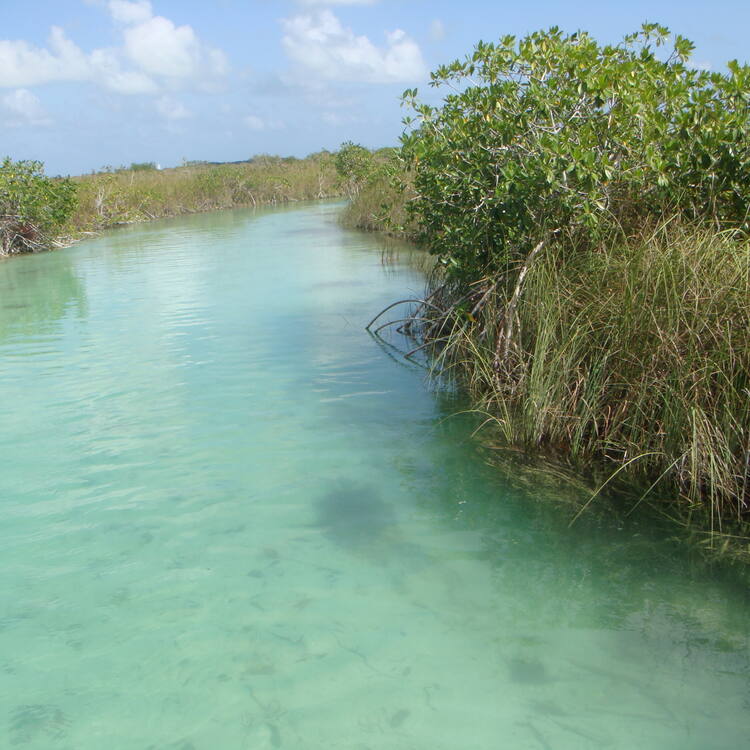
In the language of the Mayan peoples who once inhabited this region, Sian Ka'an means 'Origin of the Sky'. Located on the east coast of the Yucatán peninsula, this biosphere reserve contains tropical forests, mangroves and marshes, as well as a large marine section intersected by a barrier reef. It provides a habitat for a remarkably rich flora and a fauna comprising more than 300 species of birds, as well as a large number of the region's characteristic terrestrial vertebrates, which cohabit in the diverse environment formed by its complex hydrological system.
La description est disponible sous licence CC-BY-SA IGO 3.0
Sian Ka'an
Dans la langue des Indiens Mayas qui peuplaient autrefois la région, Sian Ka'an signifie « origine du ciel ». Située sur la côte est du Yucatán, cette réserve de la biosphère comprend des forêts tropicales, des mangroves et des marais, ainsi qu'une vaste étendue marine traversée par une barrière de récifs. Elle abrite une flore remarquablement riche et une faune qui comprend plus de 300 espèces d'oiseaux, ainsi qu'une grande partie des vertébrés terrestres caractéristiques de la région, qui cohabitent dans la diversité des milieux formés par son système hydrologique complexe.
La description est disponible sous licence CC-BY-SA IGO 3.0
سيان كعان
في لغة هنود المايا الذين كانوا يسكنون المنطقة في الماضي، سيان كعان تعني "أصل السماء". فمحمية المحيط الحيوي هذه التي تقع على الساحل الشرقي ليوكاتان، تضمّ غابات مدارية وأشجار المنغروف ومستنقعات، بالاضافة الى مساحةٍ بحريةٍ واسعةٍ يجتازها حاجزٌ من الشُعب المرجانية. كما تحتوي على تشكيلة نباتات غنيّة للغاية وعلى مجموعة من الحيوانات تتألّف من أكثر من 300 نوع من العصافير، بالاضافة إلى جزءٍ كبيرٍ من الفقاريات الأرضية الخاصّة بتلك المنطقة والتي تتعايش مع تنوّع البيئات الذي يبتكره نظام المياه المعقّد فيها.
source: UNESCO/CPE
La description est disponible sous licence CC-BY-SA IGO 3.0
圣卡安
古代玛雅人曾在这个地区居住过,在他们的语言里,圣卡安是“天之源”的意思。这一生物保护区位于尤卡坦半岛东岸,内有热带森林、红树林和沼泽地,还有被礁石分割开的海产区。这个自然保护区为大量的动物和植物提供了生活场所,其中包括300多种鸟类,以及大量当地特有的陆地脊椎动物,这些动物在这个多样性的环境里共同生活,形成了一个复杂的水文学系统。
source: UNESCO/CPE
La description est disponible sous licence CC-BY-SA IGO 3.0
Биосферный резерват Сиан-Каан
На языке индейцев майя, которые в давние времена населяли этот район, Сиан-Каан означает «Там, где начинается небо». Биосферный резерват расположен на восточном побережье полуострова Юкатан, где произрастают тропические леса, есть мангры и болота, а также - значительная морская акватория с участком барьерного рифа. Местные флора и фауна отличаются большим разнообразием, здесь обитает свыше 300 видов птиц, встречается большое число типичных для региона наземных позвоночных, которые существуют во взаимосвязи со своеобразными местными гидрогеологическими условиями.
source: UNESCO/CPE
La description est disponible sous licence CC-BY-SA IGO 3.0
Sian Ka'an
En la lengua de los mayas que poblaban antaño la región, Sian Ka’an significa “origen del cielo”. Situada en la costa oriental de la península de Yucatán, esta reserva de biosfera abarca bosques tropicales, manglares, marismas y una vasta zona marina atravesada por un arrecife de barrera. Alberga una flora de gran riqueza y su fauna comprende más de 300 especies de pájaros y un gran número de vertebrados terrestres característicos de la región, que coexisten en el medio diversificado resultante del complejo sistema hidrológico del sitio.
source: UNESCO/CPE
La description est disponible sous licence CC-BY-SA IGO 3.0
シアン・カアン
source: NFUAJ
Sian Ka'an
Sian Ka’an betekent ‘Oorsprong van de Hemel’ in de taal van de Maya volkeren die ooit deze regio bewoonden. Het reservaat ligt aan de oostkust van het schiereiland Yucatán en omvat tropische bossen, mangrovebossen, moerassen en een zeegebied dat doorkruist wordt door een rif. Sian Ka’an vormt een habitat voor een opmerkelijk rijke flora en fauna. Die laatste bestaat uit meer dan 300 vogelsoorten en een groot aantal karakteristieke gewervelde landdieren uit de regio. Er zijn 103 soorten zoogdieren, waaronder vijf katachtigen: de jaguar, poema, ocelot, margay en jaguarondi. De dieren leven samen in de gevarieerde omgeving, gevormd door een complex hydrologisch systeem.
Source : unesco.nl


Valeur universelle exceptionnelle
Brève synthèse
Il y a des milliers d'années, les premiers habitants, les Mayas, appréciaient la beauté naturelle exceptionnelle de cette partie de la côte, qu’ils avaient appelée Sian Ka'an, ou «origine du ciel». Situé sur la côte orientale de la péninsule du Yucatan, dans l'État de Quintana Roo, Sian Ka'an est l'une des plus vastes aires protégées du Mexique, établie pour gérer 528, 148ha des écosystèmes marins, côtiers et terrestres inextricablement liés entre eux. Le long de ses quelque 120 kilomètres de côtes, Sian Ka’an couvre plus de 400.000 hectares de terres allant du niveau de la mer à seulement une dizaine de mètres au-dessus. Le site abrite différentes forêts tropicales, des palmiers savanes, l’une des zones humides les plus préservées de la région, des lagunes, de larges zones de mangrove, ainsi que des plages de sable fin et des dunes. Les 120.000 hectares marins protègent une partie importante de la Barrière de corail méso-américaine et des herbiers dans les eaux peu profondes. Le vert luxuriant des forêts et les nombreuses nuances de bleu des lagunes et de la mer des Caraïbes, sous un grand ciel, offrent des visions spectaculaires.
La diversité biologique à Sian Ka'an est exceptionnelle. Les forêts tropicales abritent des mammifères charismatiques tels que le jaguar, le puma, l'ocelot et tapir d’Amérique centrale. Le site sert également d’habitat à un grand nombre d'espèces d'oiseaux résidents et migrateurs. On y trouve une grande diversité de vie marine, y compris le lamantin des Antilles, quatre espèces de tortues marines et des centaines d'espèces de poissons. Environ un tiers du site contient des communautés de mangroves très diversifiées et productives, qui sont d'importance vitale pour la pêche dans l'ensemble de la région. Des centaines d'îles boisées, connues localement comme "Petenes", émergent des marais inondés, certaines atteignant plus d'un kilomètre de diamètre. Les "cenotes" sont de profonds gouffres naturels qui constituent une particularité géologique, biologique et culturelle et abritent des formes de vies fascinantes, dont beaucoup sont endémiques. Ce phénomène karstique résulte de l'effondrement de roches calcaires dans les eaux souterraines.
Critère (vii) :L'esthétique et la beauté de Sian Ka'an viennent de l’interface relativement peu perturbée entre la mer et la terre, le long d'une côte bien conservée. La mosaïque d'éléments du paysage presente des formes et des couleurs diverses et offrent des vues et des impressions fascinantes. Des phénomènes naturels remarquables et rares comprennent les "cenotes", gouffres naturels remplis d'eau qui abritent des communautés de vie spécialisées, et les «Petenes", îles boisées qui émergent des marais. Les deux sont reliées par des systèmes d'eau douce souterraine, et constituent un trésor fragile et inestimable pour les générations futures.
Critère (x) :L'échelle et l'état de conservation de Sian Ka'an et la diversité de ses écosystèmes permettent une variété fascinante de formes de vie. Plus de 850 plantes vasculaires, dont 120 espèces ligneuses, ont été répertoriées dans ce qui est considéré comme un inventaire encore incomplet. En ce qui concerne la la faune, parmi les plus de 100 mammifères répertoriés, on notera des espèces menacées comme le singe araignée à main noire, le singe hurleur noir du Yucatan et le tapir d'Amérique centrale. Une petite population de lamantins des Antilles, espèce vulnérable, se trouve dans les eaux côtières. Quelque 330 espèces d'oiseaux ont été répertoriées, dont 219 se reproduisent à Sian Ka'an. Les amphibiens et les reptiles sont représentés par plus de 40 espèces répertoriées, parmi lesquelles le crocodile américain, espèce vulnérable et quatre des six espèces de tortues que l’on trouve le long de la côte mexicaine. L'isolement de certains des «cenotes» a conduit à l'évolution de plusieurs espèces localement endémiques. Avec près de 80 espèces de corail répertoriées, la partie de la barrière de corail des Caraïbes presente dans le site est l'une des plus riches du Mexique. Avec les autres habitats aquatiques, elle abrite plus de 400 espèces de poissons et une luxurieuse vie marine.
Intégrité
Le site couvre une vaste zone humide, des forêts tropicales, un littoral varié, des mangroves et une aire marine avec des coraux et des herbiers marins remarquables, le tout dans un bon état général de conservation. Les vastes étendues de forêts denses, les mangroves et les marais sont difficiles d'accès, et la pauvreté des sols, la vulnérabilité aux tempêtes et aux inondations ont contribué à préserver cette mosaïque d'écosystèmes. Beaucoup des limites du site coïncident avec les caractéristiques du paysage, comme le bord naturel des marais au sud-est ou les limites du bassin versant Espiritu Santo Bay au sud. Dans l'océan, une profondeur de 50 mètres a été définie comme la limite est de Sian Ka'an. Le site joue un rôle important dans le maintien de la continuité des liens complexes entre les écosystèmes terrestres, marins et d'eau douce et de leur riche faune et flore. Sian Ka'an présente un système d'autoprotection caractéristique de la côte du Yucatan: la Barrière de corail méso-américaine protège les mangroves et les herbiers marins, tandis que les mangroves piègent les sédiments, filtrent la pollution et servent de lieu de reproduction à de nombreux vertébrés et invertébrés. En d'autres termes, les principales caractéristiques du paysage terrestre et marin sont d'une importance vitale les unes pour les autres. A Sian Ka'an, il est donc indispensable de concevoir globalement leur gestion et leur conservation. La contiguïté avec l’Aire de protection de Uaymil Flora and Fauna qui couvre quelque 90.000 hectares au sud et la proximité avec d’autres zones protégées terrestres et marines contribuent à l'intégrité de Sian Ka'an.
Eléments requis en matière de protection et de gestion
Après l'abandon historique de la région, l'inaccessibilité, les inondations fréquentes et la pauvreté des sols ont permis une régénération naturelle pendant des siècles, jusqu'à ce que des plans gouvernementaux encouragent, au 20e siècle, l'exploitation du bois et le défrichement des terres pour les pâturages de bovins. Les effets indésirables d’un développement incontrôlé ont conduit à la création d'une réserve naturelle en 1982, renforcée en 1986 lorsque la zone a été classée réserve de biosphère nationale par décret présidentiel et reconnue internationalement par l’UNESCO. Plus récemment, Sian Ka'an a également été reconnue comme faisant partie d'une vaste zone humide d'importance internationale par la Convention de Ramsar. Ce grand site est propriété du gouvernement fédéral, à l'exception d’une parcelle de l'ordre de un pour cent de la superficie totale sur la côte nord. Aujourd'hui, l’Agence nationale mexicaine des aires protégées (CONANP) qui dépend du Ministère de l’environnement (SEMARNAT) est en charge de la gestion et coopére avec des partenaires à tous les niveaux de gouvernement. Un plan de gestion guide toutes les activités et le zonage. Un Conseil consultatif permet aux communautés locales, aux représentants gouvernementaux, des universités et des organisations non gouvernementales de participer à la gestion.
Sian Ka'an est sujet à de fréquentes et fortes tempêtes tropicales. La barrière de corail offre une protection naturelle de la côte, exemple éloquent du rôle de la conservation dans la prévention des catastrophes En ce qui concerne les impacts humains, leur inaccessibilité protège de grandes étendues du site. A part les villages côtiers de pêcheurs de Punta Allen et Punta Herrero, il y a peu de résidents permanents sur le site. La chasse, la pêche et la cueillette des produits forestiers sont cependant très répandues. La pêche sportive et la pêche commerciale pour approvisionner les centres touristiques situés à proximité ont entraîné des baisses notables de certaines espèces, notamment la langouste. Des réponses en matière de gestion sont nécessaires. L’agriculture au nord du site comporte des risques de pollution et les feux allumés pour défricher les terres ont à maintes reprises atteintes le site. Des espèces exotiques envahissantes sont signalées, principalement le long des pistes mais aussi dans l'océan. Le principal secteur économique qui a un impact direct et indirect sur le site, cependant, est le tourisme. Les camps de pêche et les clubs, les petits hôtels, les chalets et les caravanes en sont les manifestations visibles à l’intérieur du site. Le tourisme a atteint des proportions de tourisme de masse dans certaines parties de la côte du Yucatan et le site est à proximité de Tulum et de Cancun, deux des principales attractions touristiques du Yucatan. L’urbanisation côtière qui en découle, avec par exemple des problèmes de déchets et d’eaux usées qui sont bien connus, requiert une surveillance continue et des réponses adaptées en matière de gestion. Il convient également de considérer les moyens d’encourager sur le site des formes de tourisme à faible impact et de favoriser la sensibilisation du public et l'éducation des visiteurs, mais aussi d’envisager le tourisme comme une source de financement pour la conservation.
 Découvrez les photos de OUR PLACE the World Heritage Collection


 1
1
Protections
par d'autres instruments de conservation
2 protections / 2 éléments
Les réserves de biosphère (1 element)RAMSAR (1 element)