Centre historique de la ville de Yaroslavl
Historical Centre of the City of Yaroslavl
Situated at the confluence of the Volga and Kotorosl Rivers some 250 km north-east of Moscow, the historic city of Yaroslavl developed into a major commercial centre from the 11th century. It is renowned for its numerous 17th-century churches and is an outstanding example of the urban planning reform Empress Catherine the Great ordered for the whole of Russia in 1763. While keeping some of its significant historic structures, the town was renovated in the neoclassical style on a radial urban master plan. It has also kept elements from the 16th century in the Spassky Monastery, one of the oldest in the Upper Volga region, built on the site of a pagan temple in the late 12th century but reconstructed over time.
La description est disponible sous licence CC-BY-SA IGO 3.0
Centre historique de la ville de Yaroslavl
La ville historique de Yaroslavl est située au confluent de la Volga et de la Kotorosl, à quelque 250 km au nord-est de Moscou. À partir du XIe siècle, elle devint un centre de commerce très important. Elle est célèbre pour ses nombreuses églises du XVIIe siècle. Yaroslav est un exemple remarquable du programme de rénovation urbaine ordonné en 1763 par l’impératrice Catherine la Grande pour l’ensemble de la Russie. Tout en conservant certaines de ses structures historiques importantes, la ville fut rénovée dans le style néoclassique suivant un plan directeur urbain en étoile. On trouve également des éléments datant du XVIe siècle dans le monastère Spassky, l’un des plus anciens de la région de la Haute Volga, bâti à l’origine sur le site d’un temple païen à la fin du XIIe siècle, mais reconstruit au fil des siècles.
La description est disponible sous licence CC-BY-SA IGO 3.0
وسط مدينة ياروسلافل الوطني
تقع مدينة ياروسلافل التاريخيّة عند ملتقى نهري فولغا وكوتورسول على بعد 250 كلم شمال شرق موسكو. ومنذ القرن الحادي عشر أصبحت مركزاً تجاريّاً مهمّاً. وهي مشهورة بكنائسها العديدة التي ترقى إلى القرن الثامن عشر. وياروسلافل هي خير مثال عن برنامج التطوّر الحضري الذي أمرت به الإمبراطورة كاترين الكبيرة لروسيا قاطبةً. وبينما حافظت المدينة على بعض الهيكليّات التاريخيّة المهمّة جرى تطويرها على النسق الكلاسيكي الجديد انطلاقاً من خطّة توجيهيّة حضريّة تتخذ شكل نجمة. وفيها أيضاً عناصر ترقى إلى القرن السادس عشر في دير سباسكي، وهو من بين الأقدم في منطقة نهر فولغا العليا وقد بنيت أولاّ على أنقاض مبعد وثني أواخر القرن الثاني عشر ولكن أُعيد بناؤها على مرّ القرون.
source: UNESCO/CPE
La description est disponible sous licence CC-BY-SA IGO 3.0
雅罗斯拉夫尔城的历史中心
雅罗斯拉夫尔城位于伏尔加河与科特罗斯河交汇处,离莫斯科东北部约250公里,在11世纪发展成为一个主要的商业中心。雅罗斯拉夫尔城以其大量的17世纪教堂而闻名,在1763年成为凯萨琳皇后为整个俄罗斯下令的城市计划改革的典范。在保存其中的一些有重大历史意义的建筑的同时,雅罗斯拉夫尔城根据放射状的城市总体规划,以新古典主义的风格进行了修复,它仍然保持16世纪斯帕斯基修道院的风格。该修道院是伏尔加河上游地区最古老的建筑之一,在12世纪晚期建在异教教堂遗址上,但后来被改建。
source: UNESCO/CPE
La description est disponible sous licence CC-BY-SA IGO 3.0
Исторический центр Ярославля
Исторический город Ярославль, расположенный приблизительно в 250 км к северо-востоку от Москвы при впадении реки Которосль в Волгу, был основан в ХI в. и впоследствии развился в крупный торговый центр. Он известен своими многочисленными церквями ХVII в., и как выдающийся образец осуществления реформы городской планировки, проведенной по указу императрицы Екатерины Великой в 1763 г. по всей России. Хотя город и сохранил ряд замечательных исторических построек, в дальнейшем он был реконструирован в стиле классицизма на основе радиального генерального плана. В нем также сохранились относящиеся к ХVI в. сооружения Спасского монастыря – одного из старейших в Верхневолжском регионе, возникшего в конце ХII в. на месте языческого храма, но со временем перестроенного.
source: UNESCO/CPE
La description est disponible sous licence CC-BY-SA IGO 3.0
Centro histórico de la ciudad de Yaroslavl
Situada en la confluencia de los ríos Volga y Kotorosl, a unos 250 km al nordeste de Moscú, la histórica ciudad de Yaroslavl se convirtió en un centro comercial de primera importancia en el siglo XI. Es famosa por sus iglesias del siglo XVII y constituye además un ejemplo excepcional de la reforma urbanística impuesta en 1763 por la emperatriz Catalina la Grande en el conjunto de Rusia. Aunque siguió conservando una parte de sus estructuras antiguas importantes, la ciudad se renovó en estilo neoclásico y con arreglo a un plan de ordenación urbana en forma de estrella. Yaroslavl conserva también elementos arquitectónicos del siglo XVI en el Monasterio Spassky, uno de los más antiguos de la región del Alto Volga, que fue objeto de numerosas reconstrucciones desde su fundación a finales del siglo XII en el emplazamiento de un templo pagano.
source: UNESCO/CPE
La description est disponible sous licence CC-BY-SA IGO 3.0
ヤロスラヴル市街の歴史地区
source: NFUAJ
Historisch centrum van Yaroslavl
Source : unesco.nl


Valeur universelle exceptionnelle
Brève synthèse
La ville de Yaroslavl est située au confluent de la Volga et de la Kotorosl, à quelque 250 km au nord-est de Moscou. Fondée par le prince de la Rus’ de Kiev, Yaroslav le Sage (988-1010), elle consiste en une petite forteresse en bois. Jusqu’au XIIIe siècle, elle appartient au territoire de la principauté de Rostov avant de devenir, en 1218, capitale de la principauté de Yaroslavl. La cité commence à se développer en 1463 lorsque le grand-duché de Yaroslavl rejoint le puissant État de Moscou. Après plusieurs incendies, la ville d’origine construite en bois sera progressivement rebâtie en pierre à partir du XVIe siècle.
Le centre historique de la ville de Yaroslavl est la partie la plus ancienne et le noyau de développement d’une des villes russes les plus anciennes, riches et bien conservées. Le centre historique est un exemple représentatif du développement des structures d’aménagement des anciennes villes russes soumises à un programme régulier de rénovation dans le cadre de la réforme urbaine unique entamée par l’impératrice Catherine la Grande à la fin du XVIIIe siècle. Les solutions conçues et mises en œuvre à Yaroslavl ont assuré la préservation du cadre historique et de l’intégrité spatiale du centre de la ville. Le centre historique de la ville de Yaroslavl est devenu un modèle reconnu dans l’art urbanistique de l’ère néoclassique, montrant la synthèse des éléments anciens dans la structure historique de la ville.
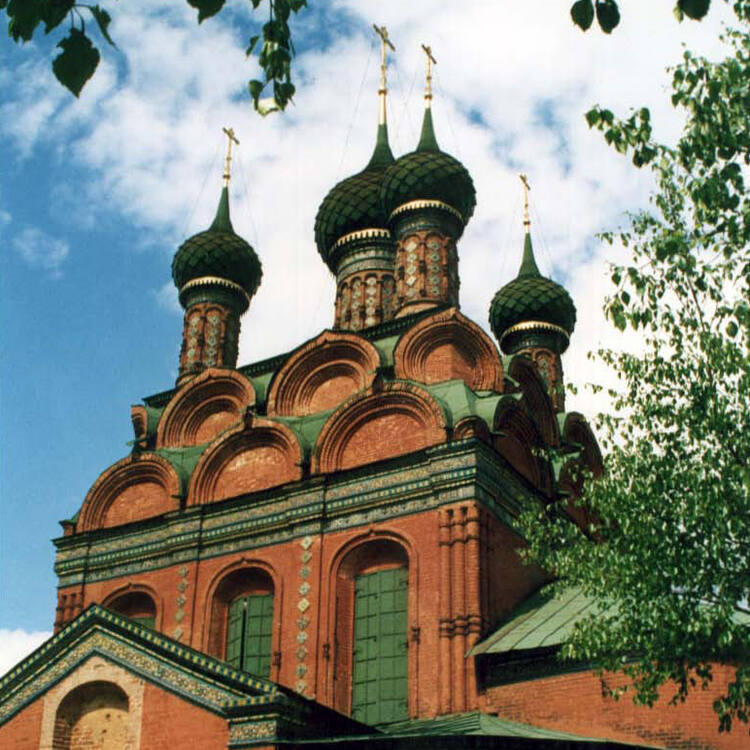
Le centre historique de Yaroslavl compte un grand nombre d’éléments urbanistiques qui illustrent l’évolution de l’architecture russe du XVIe au XVIIIe siècle. Le bien se compose du centre historique de la ville, le « Slobody », qui forme en gros un demi-cercle d’où les rues partent en étoile. Son style essentiellement néoclassique offre un paysage urbain uniforme et harmonieux. Les immeubles résidentiels et publics, pour la plupart de deux ou trois étages, bordent de larges rues ponctuées de grandes places. Yaroslavl doit sa spécificité et son caractère unique à l’existence de nombreuses églises et ensembles monastiques des XVIe et XVIIe siècles qui recèlent de précieuses peintures murales et iconostases, remarquables dans leur architecture comme éléments d’urbanisme et de composition dominants. Les principaux mérites du plan urbain et de l’architectonique du centre-ville de Yaroslavl sont l’approche rationnelle de l’activation des valeurs artistiques du passé dans le réseau urbain et la subordination de nouvelles réalisations architecturales à ces valeurs, en jouant sur le contraste entre les anciennes églises pittoresques et les constructions classiques à la composition parfaitement symétrique, régulière, des périodes ultérieures.
Une autre particularité de la ville tient à son harmonieuse intégration dans le riche paysage naturel, au confluent de deux fleuves, avec leurs berges pittoresques et leurs vastes étendues d’eau. Ils révèlent de merveilleuses vues des rives bien équipées avec les plus beaux bâtiments.
Critère (ii): Le centre historique de la ville de Yaroslavl, avec ses églises du XVIIe siècle, son plan néoclassique en étoile et son architecture civile, est un exemple exceptionnel de l’échange d’influences culturelles et architecturales entre l’Europe de l’Ouest et l’empire russe.
Critère (iv): Le centre historique de la ville de Yaroslavl est un exemple exceptionnel de la réforme urbaine qui fut ordonnée par l’impératrice Catherine la Grande et mise en œuvre de 1763 à 1830 dans toute la Russie.
Intégrité
La vaste majorité des attributs et des éléments qui expriment la valeur universelle exceptionnelle du bien se trouvent dans son périmètre de démarcation. Il couvre une surface adéquate (110 ha) pour assurer la représentation complète des caractéristiques et des processus qui en montrent l’importance. La zone tampon de 580 ha apporte également la protection nécessaire au maintien des conditions d’intégrité.
Tous les attributs du bien sont encore présents et en bon état, et les fonctions dynamiques qu’ils partagent sont préservées. Les monuments du patrimoine culturel les plus remarquables du centre historique de la ville sont les ensembles architecturaux des rues, des places et des rives du centre-ville. En outre, parmi les plus importantes réalisations architecturales du centre de Yaroslavl figurent le monastère Spaso Preobrazhensky fondé au XIIe siècle avec les murs et les tours des XVIe au XIXe siècles, et l’église de l’Épiphanie du XVIIe siècle.
Les conditions d’intégrité sont menacées par la violation de la ligne d’horizon historique avec des éléments dominants, en particulier les sérieuses modifications du plan d’urbanisme dues à l’édification de la cathédrale Uspenskiy. Parmi les autres facteurs qui requièrent l’attention figurent l’évolution progressive de la structure urbaine, les nouveaux projets de construction et les projets de restauration qui s’adaptent aux fonctions contemporaines.
Authenticité
Du point de vue urbanistique, le bien inscrit a gardé son authenticité. Il convient de noter qu’à la différence de beaucoup d’autres projets de rénovation de l’ère soviétique, les rives et les îles de la Kotorosl ont été préservées, en conservant à la ville historique son cadre naturel unique. Même le port fluvial aménagé sur la Volga dans les années 1980 n’interfère pas outre mesure avec la composition urbanistique de la ville. À l’époque stalinienne, des milliers d’églises ont été démolies surtout dans les plus grandes villes de Russie. Du côté de Yaroslavl, sur environ 80 églises et chapelles, 56 sont restées intactes. Ce nombre est sans égal ailleurs en Russie. Même si quelques églises ont servi d’ateliers ou d’entrepôts, elles ont en général gardé leurs ornementations artistiques. Seul un minimum de restauration s’impose, ce qui a déjà commencé sur plusieurs édifices. Les travaux exécutés jusqu’à présent sont considérés comme répondant aux normes en vigueur. Les bâtiments résidentiels construits entre le XVIIIe et le début du XXe siècle sont demeurés presque intacts. Une partie des murs de fortification ont aussi été préservés au nord et au nord-est de la ville, ainsi que les tours de la Vierge et d’Uglic et les portes de la Volga.
Éléments requis en matière de protection et de gestion
Le système de gestion de l’État pour le bien se divise entre le niveau fédéral représenté par le Ministère russe de la Culture, le niveau régional représenté par le Gouvernement de la région de Yaroslavl (Département de la Culture de la région de Yaroslavl) et le niveau municipal représenté par l’Administration de la ville de Yaroslavl (Département de l’Architecture et de l’Aménagement des territoires de la ville de Yaroslavl).
Les instances administratives, en coopération avec les autres parties prenantes, exécutent toutes les opérations selon les normes en vigueur suivantes : la Loi fédérale du 25 juin 2002, N°73-FZ « Sur les biens du patrimoine culturel (monuments d’histoire et de culture) des peuples de la Fédération de Russie » ; le Plan directeur de la ville de Yaroslavl (approuvé par la décision de la Municipalité de Yaroslavl du 6 avril 2006, N°226) ; la décision du Gouvernement de la région de Yaroslavl du 22 juin 2011, N°456-p « Sur l’approbation du projet sur les zones protégées des biens du patrimoine culturel (monuments d’histoire et de culture) de la ville de Yaroslavl » (le projet comprend la description du territoire du centre historique de la ville de Yaroslavl avec sa zone tampon et la réglementation des territoires nommés) ; l’ordre du Ministère russe de la Culture du 17 octobre 2012, « Sur l’approbation de l’objet de protection du bien du patrimoine culturel d’importance fédérale du Centre historique de la ville de Yaroslavl » et autres.
Dans le système de gestion, le processus de délivrance de permis de construction et de travaux de restauration dans les limites du bien et sa zone tampon est établi conformément aux instruments juridiques et aux règlements officiels.
Le centre historique de la ville de Yaroslavl est inclus dans la Liste de biens du patrimoine d’importance fédérale dont s’occupe le Ministère russe de la Culture.
Les principales difficultés de gestion qui exigent l’attention sont le développement d’une méthodologie pour l’évaluation et l’exploration du contexte historique de la ville, ainsi que la préservation méticuleuse de l’intégrité architecturale et urbanistique. En outre, les procédures d’évaluation et d’autorisation de nouveaux projets de développement et de construction susceptibles d’avoir un impact sur le bien devront être clarifiées. Les mécanismes pour la mise en place d’évaluations d’impact sur le patrimoine préalables à l’approbation des projets seront à définir. Enfin, l’entrée en vigueur de règlements qui garantissent la préservation de la ligne d’horizon de la ville, ainsi que le contrôle rigoureux de la qualité de conception, des échelles, des matériaux et du volume des projets de nouveaux bâtiments et constructions à l’intérieur des limites du bien et de sa zone tampon devront aussi être abordés de manière appropriée.



Les dossiers de proposition d’inscription produits par les États parties sont publiés par le Centre du patrimoine mondial sur son site Internet et/ou dans des documents de travail afin de garantir la transparence, l’accès à l’information et de faciliter la préparation d’analyses comparatives par d’autres États parties soumissionnaires.
Le contenu de chaque dossier de proposition d’inscription relève de la responsabilité exclusive de l'État partie concerné. La publication d’un dossier de proposition d’inscription, y compris les cartes et les noms, ne saurait être interprétée comme exprimant une prise de position de la part du Comité du patrimoine mondial ou du Secrétariat de l'UNESCO à propos de l’histoire ou du statut juridique d'un pays, d'un territoire, d'une ville ou d'une zone, ou de ses frontières.