Srebarna Nature Reserve
Factors affecting the property in 1993*
- Livestock farming / grazing of domesticated animals
- Surface water pollution
- Water (extraction)
- Water infrastructure
- Other Threats:
Loss of biodiversity
Factors* affecting the property identified in previous reports
- Upstream Iron Gates dam
- Deterioration of the water quality
- Impact of upstream pig farms
- Loss of biodiversity
International Assistance: requests for the property until 1993
Total amount approved : 0 USD
Missions to the property until 1993**
1992: 2 IUCN missions
Information presented to the Bureau of the World Heritage Committee in 1993
As requested by the Bulgarian authorities, the Committee at its last session included this site in the List of World Heritage in Danger. The Committee noted that a series of upstream interferences, including the Iron Gates Dam, have permanently altered the natural hydrology of the Danube River in the region and that of Srebarna located downstream along the river. Prevention of seasonal flooding has led to a decrease in the size and productivity of Srebarna and agricultural and residential use of surrounding areas have led to decline or disappearance of water and passerine bird populations. The Committee recalled that two IUCN missions to the site in early 1992 had concluded that although Srebarna's importance as a Ramsar site could still be retained by the implementation of specific remedial measures, its World Heritage status can no longer be justified because it has deteriorated to a state where it has irretrievably lost the characteristics which merited its inclusion in the World Heritage List.
The Bureau at its sixteenth session, held in Paris in July 1992, had recommended that the Committee consider deleting this property from the World Heritage List and had requested the Bulgarian authorities to submit all observations and comments they may wish to make to the Committee. The Observer from Bulgaria who participated at the last session of the Committee, was of the view that the measures taken by the Bulgarian Government will restore the World Heritage values of Srebarna. These measures included the construction of two canals to increase and regulate water delivery to Srebarna, addition of 200ha of surrounding area to the Reserve and halting all agricultural and residential activities which impacted the lake. The Observer from Bulgaria also informed the Committee that his Government was preparing a comprehensive assessment of the state of conservation of Srebarna and an ecosystem restoration plan, which would be available in the first quarter of 1993.
As recommended by the Committee, the Centre has i) indicated to the Bulgarian authorities that scientific evidence available to date suggests that the site may no longer possess the natural habitat values for which it was inscribed, and that a full restoration of a naturally functioning ecosystem appears to be highly problematic and may be impossible, and ii) invited the Bulgarian authorities to submit the results of the on-going project to prepare a comprehensive assessment of the state of conservation of the site, including an analysis of available data to monitor biological populations and environmental quality, and a plan for ecosystem restoration, not later than 1 May 1993. The Bulgarian authorities, by their letter of 29 April 1993, transmitted a project document the the Centre entitled 'Environmental Recovery and Restoration of the Biosphere Reserve "Srebarna"'. The document mainly describes the measures that the Bulgarian authorities foresee undertaking in the future in order to ensure the 'maximal restoration of the natural conditions in the Reserve'and has been transmitted to IUCN for review. The Centre is contacting the Bulgarian authorities once again to request a comprehensive assessment of the state of conservation of the site, including an analysis of available data to monitor biological populations and environmental quality.
IUCN has informed the Centre that it will have additional information on the state of conservation of Srebarna after the conclusion of an international conference on the Ramsar Convention to be held in Kushiro, Japan, from 9-16 June 1993, and that one of its members who is presently carrying out studies in Srebarna will be present at the Bureau meeting to make a presentation on the state of conservation and the feasibility of restoring a self-sustaining wetland ecosystem in Srebarna.
Conservation issues presented to the World Heritage Committee in 1993
The Bureau recalled that the Committee at its sixteenth session included this site in the List of World Heritage in Danger. Prevention of seasonal flooding has led to a decrease in the size and productivity of Srebarna and agricultural and residential use of surrounding areas have led to decline or disappearance of migratory and passerine bird populations. The Bureau recalled that IUCN, on the basis of two missions to the site in 1992, had concluded that Srebarna's World Heritage status may no longer be justified because it has deteriorated to a state where it may have irretrievably lost the characteristics which merited its inclusion in the World Heritage List.
The Bureau at its sixteenth session, held in Paris in July 1992, had recommended that the Committee consider deleting this property from the World Heritage List and had invited the Bulgarian authorities to submit their observations and comments to the committee. At its last session, the Committee was informed by the Representative of Bulgaria that the Bulgarian Government, in order to restore the World Heritage values of Srebarna, was preparing a comprehensive assessment of the state of conservation of Srebarna and an ecosystem restoration plan. The Committee had indicated to the Bulgarian authorities that available scientific evidence suggested that the site may no longer possess the natural habitat values for which it was inscribed, and that a full restoration of a naturally functioning ecosystem might be impossible. However, the Committee invited the Bulgarian authorities to submit, before 1 May 1993, to the World Heritage Centre, the results of the on-going project to prepare a comprehensive assessment of the state of conservation of the site, including an analysis of available data to monitor biological populations and environmental quality, and a plan for ecosystem restoration.
The Bureau noted that the Bulgarian authorities have submitted to the World Heritage Centre, a project document entitled 'Environmental Recovery and Restoration of the Biosphere Reserve "Srebarna"'and had indicated that a report on the comprehensive assessment of the state of conservation of Srebarna will be sent to the Centre as soon as its translation into French is finalized.
A representative of IUCN made a detailed presentation on the state of conservation of Srebarna and the Bulgarian plan for its restoration, and emphasized the fact that most small wetlands like Srebarna (600 ha) are inherently unstable and their ecological integrity is easily threatened by changes occurring outside their boundaries. The Bureau noted that the restoration plans currently being implemented by the Bulgarian authorites could restore the hydraulic regime of Srebarna, and hence have the potential to restore the ecosystem which existed at the time of Srebarna's inscription on the World Heritage List. Furthermore, the Bureau learnt that the Bulgarian authorities were introducing a system to issue permits to local people for hunting wild boar and foxes which threaten the population of Dalmation Pelicans in Srebarna. The Bureau, however, noted that the Pelican population of Srebarna comprised only about 10% of the global population of the species, and continued to breed in sites outside of Srebarna, including some sites in Romania, where they were hunted.
Analysis and Conclusion by World Heritage Centre and the Advisory Bodies in 1993
The Bureau recommended to the Committee to:
- retain Srebarna on the List of World Heritage in Danger;
- defer its decision on whether or not to delete Srebarna from the World Heritage List for a period of two years and
- request IUCN, in co-operation with the Ramsar Convention, to monitor the extent to which the project(s) implemented by the Bulgarian authorities are restoring the ecological integrity of Srebarna.
Furthermore, the Bureau requested that the proposal for the restoration of Srebarna, and the comprehensive assessment of its state of conservation be made available to members of the Committee for review, and that the Bulgarian and Romanian authorities co-operate in protecting the populations of Dalmatian Pelicans in the region. The Bureau requested IUCN and the Centre to co-operate with the Ramsar Convention and the Bulgarian authorities.
Summary of the interventions
Decisions adopted by the Committee in 1993
17 BUR VIII.2
Srebarna Biosphere Reserve (Bulgaria)
The Bureau recalled that the Committee at its last session included this site in the List of World Heritage in Danger. Prevention of seasonal flooding has led to a decrease in the size and productivity of Srebarna and agricultural and residential use of surrounding areas have led to decline or disappearance of migratory and passerine bird populations. The Bureau recalled that IUCN, on the basis of two missions to the site in 1992, had concluded that Srebarna's World Heritage status may no longer be justified because it has deteriorated to a state where it may have irretrievably lost the characteristics which merited its inclusion in the World Heritage List.
The Bureau at its sixteenth session, held in Paris in July 1992, had recommended that the Committee consider deleting this property from the World Heritage List and had invited the Bulgarian authorities to submit their observations and comments to the Committee. At its last session, the Committee was informed by the Representative of Bulgaria that the Bulgarian Government, in order to restore the World Heritage values of Srebarna, was preparing a comprehensive assessment of the state of conservation of Srebarna and an ecosystem restoration plan. The Committee had indicated to the Bulgarian authorities that available scientific evidence suggested that the site may no longer possess the natural habitat values for which it was inscribed, and that a full restoration of a naturally functioning ecosystem might be impossible. However, the Committee invited the Bulgarian authorities to submit, before 1 May 1993, to the World Heritage Centre, the results of the on-going project to prepare a comprehensive assessment of the state of conservation of the site, including an analysis of available data to monitor biological populations and environmental quality, and a plan for ecosystem restoration.
The Bureau noted that the Bulgarian authorities have submitted to the World Heritage Centre, a project document entitled 'Environmental Recovery and Restoration of the Biosphere Reserve "Srebarna"'and had indicated that a report on the comprehensive assessment of the state of conservation of Srebarna will be sent to the Centre as soon as its translation into French is finalized. A representative of IUCN made a detailed presentation on the state of conservation of Srebarna and the Bulgarian plan for its restoration, and emphasized the fact that most small wetlands like Srebarna (600 ha) are inherently unstable and their ecological integrity is easily threatened by changes occurring outside their boundaries. The Bureau noted that the restoration plans currently being implemented by the Bulgarian authorites could restore the hydraulic regime of Srebarna, and hence have the potential to restore the ecosystem which existed at the time of Srebarna's inscription on the World Heritage List. Furthermore, the Bureau learnt that the Bulgarian authorities were introducing a system to issue permits to local people for hunting wild boar and foxes which threaten the population of Dalmatior- Pelicans in Srebarna. The Bureau, however, noted that the Peli_in population of Srebarna comprised only about 10% of the global population of the species, and continued to breed in sites outside of Srebarna, including some sites in Romania, where they were hunted.
The Bureau recommended to the Committee to: (a) retain Srebarna on the List of World Heritage in Danger; (b) defer its decision on whether or not to delete Srebarna from the World Heritage List for a period of two years and (c) request IUCN, in co-operation with the Ramsar Convention, to monitor the extent to which the project(s) implemented by the Bulgarian authorities are restoring the ecological integrity of Srebarna. Furthermore, the Bureau requested that the proposal for the restoration of Srebarna, and the comprehensive assessment of its state of conservation be made available to members of the Committee for review, and that the Bulgarian and Romanian authorities co-operate in protecting the populations of Dalmation Pelicans in the region. The Bureau requested IUCN and the Centre to co-operate with the Ramsar Convention and the Bulgarian authorities and report to its eighteenth session on the extent to which the restoration efforts implemented by the Bulgarian authorities are helping to restore Srebarna.
No draft Decision
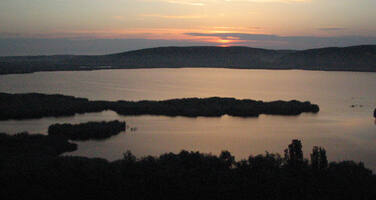
 Bulgaria
Exports
* :
The threats indicated are listed in alphabetical order; their order does not constitute a classification according to the importance of their impact on the property.
Furthermore, they are presented irrespective of the type of threat faced by the property, i.e. with specific and proven imminent danger (“ascertained danger”) or with threats which could have deleterious effects on the property’s Outstanding Universal Value (“potential danger”).
** : All mission reports are not always available electronically.