Ashur (Qal'at Sherqat)
Ashur (Qal'at Sherqat)
The ancient city of Ashur is located on the Tigris River in northern Mesopotamia in a specific geo-ecological zone, at the borderline between rain-fed and irrigation agriculture. The city dates back to the 3rd millennium BC. From the 14th to the 9th centuries BC it was the first capital of the Assyrian Empire, a city-state and trading platform of international importance. It also served as the religious capital of the Assyrians, associated with the god Ashur. The city was destroyed by the Babylonians, but revived during the Parthian period in the 1st and 2nd centuries AD.
Description is available under license CC-BY-SA IGO 3.0
Assour (Qal'at Cherqat)
La cité antique d’Assour se trouve sur les rives du Tigre, dans le nord de la Mésopotamie, dans une zone géo-écologique particulière, à la frontière séparant l’agriculture avec système d’irrigation de celle qui n’en possède pas. La ville est née au troisième millénaire avant J.-C. Du XIVe au IXe siècle avant J.-C., en tant que première capitale de l’Empire assyrien, elle fut une ville-État et un carrefour commercial international. Elle fut aussi la capitale religieuse des Assyriens, associée au dieu Assour. La ville fut détruite par les Babyloniens mais renaquit de ses cendres à l'époque parthe, aux Ie r et IIe siècles.
Description is available under license CC-BY-SA IGO 3.0
آشور (قلعة الشرقاط)
تقع مدينة آشور العتيقة على ضفاف نهر دجلة، شمال بلاد ما بين النهرين، في منطقة جغرافية بيئية مميزة، على الحدود التي تفصل الزراعة بنظام ريّ عن الزراعة التي لا أنظمة ريّ فيها. وقد نشأت المدينة في الألفية الثالثة ق.م. وبين القرنين الرابع عشر والتاسع ق.م.، أصبحت هذه المدينة بصفتها العاصمة الأولى للامبراطورية الأشورية مدينة دولة ومفترقًا تجاريًا دوليًا. وكانت أيضًا العاصمة الدينية للأشوريين، تيمّنًا بالإله آشور. ثم دمِّرت المدينة على يد البابليين ولكنها نهضت من الرماد في الحقبة البارثيّة في القرنين الأول والثاني.
source: UNESCO/CPE
Description is available under license CC-BY-SA IGO 3.0
亚述古城
亚述古城位于美索不达米亚北部底格里斯河的特殊地带上,处于雨水灌溉农业和人工灌溉农业的交界处,其历史可以追溯到公元前3000年。公元前14世纪到公元前9世纪,亚述古城是城市国家亚述帝国的第一个都城,是重要的国际贸易平台。古城同时也是帝国的宗教都城,与阿舒尔神紧密相连。亚述古城最后被巴比伦人摧毁,但在公元1世纪和2世纪帕提亚时代经历过短暂的复兴。
source: UNESCO/CPE
Description is available under license CC-BY-SA IGO 3.0
Древний город Ашшур (Калат-Шергат)
Древний город Ашшур расположен на реке Тигр в северной Месопотамии в переходной природной зоне, на границе между влажными и засушливыми районами. Город ведет свою историю с 3-го тысячелетия до н.э. В ХIV-IХ вв. до н.э. он был первой столицей Ассирийской империи, городом-государством и центром торговли международного значения. Он также служил религиозной столицей ассирийцев, будучи тесно связанным с культом бога Ашшура. Город был разрушен вавилонянами, но возродился в Парфянский период в I-II вв. н.э.
source: UNESCO/CPE
Description is available under license CC-BY-SA IGO 3.0
Asur (Qal’at Sherqat)
Situada al norte de Mesopotamia, a orillas del Tigris, la antigua ciudad de Asur está emplazada en una zona geoecológica peculiar, donde la agricultura de regadío limita con la de secano. Asur, que se fundó tres mil años antes de la era cristiana, recibió el nombre de su dios protector y fue la capital religiosa de los asirios. Entre los siglos XIV y IX a. C., esta ciudad-estado fue la primera capital del Imperio Asirio y un importante centro internacional de intercambios comerciales. Tras su destrucción a manos de los babilonios, renació de sus cenizas en tiempos del Imperio Parto (siglos I y II d.C.).
source: UNESCO/CPE
Description is available under license CC-BY-SA IGO 3.0
アッシュール(カラット・シェルカット)
古代都市アッシュール(現在名カラット・シェルカット)は、バグダッドの北約390km、メソポタミアのチグリス川中流域に位置する。シュメール人が建設し、西アジアの通商路として発展。紀元前3000年紀末からアッシリア王国、紀元前14~同9世紀にはアッシリア帝国の首都になり、アッシュール神を戴く宗教的拠点としても繁栄した。紀元前612年にメディア人により破壊されたが、1~2世紀のパルティア時代に再建。20世紀初期に大規模な発掘が行われた。現在、下流のダム建設による浸水の危機に脅かされている。source: NFUAJ
Ashur (Qal'at Sherqat)
De oude stad van Ashur ligt aan de rivier de Tigris in het noorden van Mesopotamië, in een specifieke geo-ecologische zone op de grens tussen regenwater- en irrigatie landbouw. De stad dateert uit het 3e millennium voor Christus. Van de 14e tot de 9e eeuw voor Christus was het de eerste hoofdstad van het Assyrische Rijk en daarmee een stadstaat en handelsplaats van internationaal belang. Ashur diende ook als religieuze hoofdstad van de Assyriërs, geassocieerd met de god Ashur. De stad werd verwoest door de Babyloniërs, maar nieuw leven ingeblazen tijdens de Parthische periode in de 1e en 2e eeuw na Christus.
Source: unesco.nl


Outstanding Universal Value
Brief synthesis
The ancient city of Ashur is located on the Tigris River in northern Mesopotamia in a specific geo-ecological zone, at the borderline between rain-fed and irrigation agriculture. The site is surrounded to the east by the Tigris, to the north by a plain with a wadi (valley) corresponding to a former branch of the Tigris and to the west and south by hilly landscapes.
The city dates back to the 3rd millennium BC. From the 14th to the 9th centuries BC, it was the first capital of the Assyrian Empire, a city-state and trading platform of international importance. It also served as the religious capital of the Assyrians, associated with the god Ashur. The city was destroyed by the Babylonians, but revived during the Parthian period in the 1st and 2nd centuries AD.
The area of the entire archaeological site of Ashur (70 ha) includes temples, three ziggurats, palaces, graves and private houses within the city walls, as well as the area of the Assyrian New Year’s festival building to the north-west. In addition, a 100-ha buffer zone has been defined 500 m from the western and southern boundaries of the archaeological site.
It gained its reputation because it was the city of the god Ashur, the national deity of the Assyrians. Before the Assyrians, that is from the first half of the 3rd millennium BC, the existence of substantial cultic buildings is attested. This means that the site was already a developed and organized urban system, the only one of this size known in the entire area.
It was also the place where the Assyrian kings were crowned and buried. As one of the few archaeological multi-period sites in Assyria of its kind, the remains of its buildings and their furnishings have been extensively excavated. The architectural and artistic record is accompanied by a large corpus of cuneiform texts which attest a leading role of Ashur in religion and scholarship, especially during the Middle- and Neo-Assyrian periods.
Within the framework of the other three Assyrian capitals (Nimrud, Dur-Sharrukin and Nineveh), Ashur is the only example of an urban site where continuity and change of the Assyrian civilization pertaining to religious, public and domestic architecture, artistic production, urban planning, religious and political systems, economic subsistence and social patterns is revealed by the archaeological and textual evidence throughout the recorded archaeological periods.
At Ashur, the early steps towards a systematic shaping of Assyrian cities could be observed for the first time within the limits of an extremely restricted space and a grown urban system, this in contrast to all the later Assyrian capitals.
The tight and complex cultural identity is expressed by the fact that the land, the god and the city bore the same name: Ashur. It is clear that, already during pre-Assyrian periods, the site played an important role in the land of Subartu, since it was a desired place for foreign control over the region during the Akkad and Ur III periods (last quarter of the 3rd millennium BC).
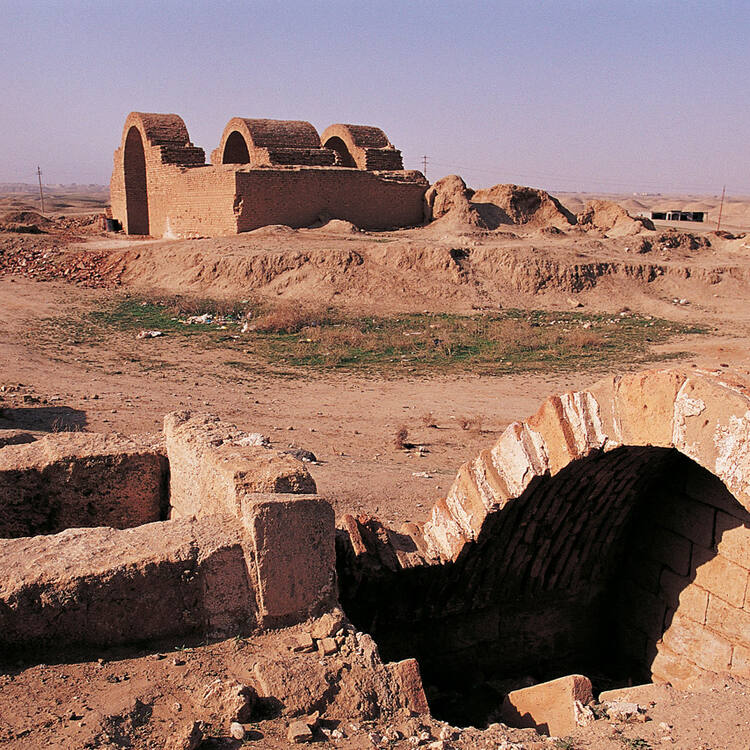
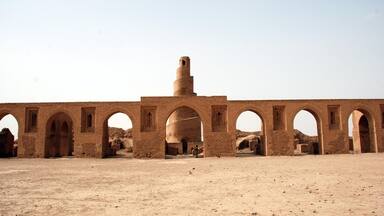
Ashur has an outstanding density of excavated architectural remains from different parts of the Assyrian periods without comparison. The ensemble of public buildings (temples, palaces, city walls) finds its counterpart in several areas of domestic architecture. As for the religious architecture, the presence of three ziggurats erected of mud bricks and two double temples should be mentioned as well as the temple of the national god Ashur. Of them, the impressive ziggurat of the god Ashur is still standing today and is a visible landmark. Whereas these buildings embody the Assyrian architectural tradition, the temple of Ishtar alone features a different building tradition (bent axis), which has its origin possibly in the area southeast of Assyria. At two places, a sequence of royal palaces was observed, one of them saved later as burial place for Assyrian kings.
Hellenistic remains and those of the Arab Hatrene kings are attested. The surface of the site is partly covered by the excavation debris from several generations of archaeological excavations.
More than 1,000 inhumations in graves and tombs from the Parthian period, mainly located inside the buildings, provide important information on aspects of burial rites and funerary culture. The Parthian palace and a temple close to the ziggurat are architectural testimonies of this period. Presently, residential areas of the Parthian period are being excavated.
Criterion (iii): Ashur, founded in the 3rd millennium BC, is an exceptional testimony to succeeding civilizations from the Sumerian period in the 3rd millennium BC to the Assyrian empire from the 14th to 9th centuries, and, later, the Parthian revival in the 2nd century BC. Its most important role was from the 14th to 9th century BC when it was the first capital of the Assyrian empire, the religious capital of Assyrians, and the place for crowning and burial of its kings.
Criterion (iv): The excavated remains of the public and residential buildings of Ashur provide an outstanding record of the evolution of building practice from the Sumerian and Akkadian period through the Assyrian empire, as well as including the short revival during the Parthian period.
Integrity
Ashur contains all the attributes that express its Outstanding Universal Value, such as the archaeological monuments and elements of urban planning within its boundaries and its integrity is fundamentally unimpaired. These attributes are though vulnerable or potentially vulnerable to threats or to the impacts of restoration and reconstruction.
Authenticity
The site of Ashur had been abandoned at the end of the Parthian period (2nd century BC), and, in contrast to many other sites in the region, there was no further occupation. Therefore, the authenticity of the remains is unquestionable and the attributes clearly and fully reflect Outstanding Universal Value. There are two major structures built in the 19th and 20th centuries: Ottoman military barracks at the north-eastern edge of the site, used until 1991 as the site museum, and the excavation house, erected by the German expedition and restored by the State Board of Antiquities and Heritage. There are also two small guard houses at the site. As for restoration works, traditional techniques and materials (mudbricks and plaster) have been applied in the 1980s for partial reconstruction of the Old Palace, the temple of Anu and Adad and parts of the city wall, based on the excavated evidence. The walls stand up to a height of ca. 2 m. Baked bricks have been used for the Tabira gate, the temple of Ishtar and parts of the Parthian palace. Gypsum and as little concrete as possible served as mortars.
Protection and management requirements
The city of Ashur is the property of the State of Iraq, and it is taken care of by the staff of the State Board of Antiquities and Heritage, within the Ministry of Culture. It had been protected under the 1937 Law of Antiquities and its further amendments, and is now protected, as well as its buffer zone, under the Law of Antiquities and Heritage No 55, dated October 2002.
The protection and management of the site is the responsibility of the State Board of Antiquities and Heritage (former Directorate General of Antiquities). Locally, the archaeological site is under the responsibility of the Inspector of Antiquities in the province of Salah Addin. Excavations are conducted by the Department of Excavations and Archaeological Investigation of the State Board of Antiquities and Heritage, Ministry of Culture. The site has 10 guards in charge of its protection.
Excavations by the Iraqi expedition are financed annually from the central budget of the State Board of Antiquities and Heritage, Government of Iraq. The Deutsche Forschungsgemeinschaft has financed the German expedition.
In the late seventies of the 20th century, the State Board of Antiquities and Heritage started a scientific programme in order to resume work in the city by archaeological excavations and some restoration to maintain and consolidate what had been exposed. This is at the city wall (NW), the Tabira Gate, some private houses, the temple of Anu and Adad, the Old Palace and the royal burial. However, since the restored and partly reconstructed buildings and walls are equally exposed to erosion, they need continuous care. In view of the present situation and in continuation of the work which began in the late 70s, it is planned to develop a detailed restoration and conservation programme for the site and its monuments.
The threat to the property from the construction of a Makhool Dam has now been removed by the cancellation of the dam project. The Iraqi Ministry of Water Resources released a formal decision to abandon the idea of building Makhool dam permanently and will provide the official notification to confirm that the project’s plan will never be put on the table again. There is therefore no need to construct a retaining wall or any protective measures.



List of World Heritage in Danger
Inscription Year on the List of World Heritage in Danger
2003 - PresentThe Nomination files produced by the States Parties are published by the World Heritage Centre at its website and/or in working documents in order to ensure transparency, access to information and to facilitate the preparations of comparative analysis by other nominating States Parties.
The sole responsibility for the content of each Nomination file lies with the State Party concerned. The publication of the Nomination file, including the maps and names, does not imply the expression of any opinion whatsoever of the World Heritage Committee or of the Secretariat of UNESCO concerning the history or legal status of any country, territory, city or area or of its boundaries.