Îles sub-antarctiques de Nouvelle-Zélande
New Zealand Sub-Antarctic Islands
The New Zealand Sub-Antarctic Islands consist of five island groups (the Snares, Bounty Islands, Antipodes Islands, Auckland Islands and Campbell Island) in the Southern Ocean south-east of New Zealand. The islands, lying between the Antarctic and Subtropical Convergences and the seas, have a high level of productivity, biodiversity, wildlife population densities and endemism among birds, plants and invertebrates. They are particularly notable for the large number and diversity of pelagic seabirds and penguins that nest there. There are 126 bird species in total, including 40 seabirds of which eight breed nowhere else in the world.
La description est disponible sous licence CC-BY-SA IGO 3.0
Îles sub-antarctiques de Nouvelle-Zélande
Le site se compose de cinq archipels (les îles Snares, Bounty, Antipodes, Auckland et Campbell) situés dans l'océan Austral, au sud-est de la Nouvelle-Zélande. Les îles se trouvant entre les convergences antarctique et subtropicale, la productivité marine est très élevée, il y a une riche diversité biologique, de fortes densités de population pour la faune sauvage et un important endémisme des espèces d'oiseaux, de plantes et d'invertébrés. Elles sont particulièrement remarquables pour l'abondance et la diversité des oiseaux pélagiques et des manchots nicheurs. On y trouve 126 espèces d'oiseaux au total, dont 40 d'oiseaux marins parmi lesquelles 8 ne se reproduisent nulle part ailleurs.
La description est disponible sous licence CC-BY-SA IGO 3.0
جزر نيوزيلندا القريبة من القطب الجنوبي
يتألف هذا الموقع من 5 أرخبيلات (جزر سناريس وباونتي وانتبوديس واوكلند وكامبيل) التي تقع في جنوب شرق نيوزيلندا. وتقع هذه الجزر بين تقاربات القطب الجنوبي القريبة من خط الاستواء. وتُعتبر انتاجيّتها البحرية كبيرة جدًا وتتميز بتنوع بيولوجي غني وبكثافة سكانية كبيرة للحيوانات البرية ومستوطنة مهمة لفصائل العصافير وأنواع النباتات والحيوانات اللا فقارية. كما تتميز أيضًا بكثرة العصافير الاوقيانوسية والطراسيح المحضونة وبتنوعها. ونجد أيضًا فيها 126 نوعًا من العصافير من بينها 40 عصفورًا بحريًّا، من بينها 8 أنواع لا تتكاثر سوى في هذه الجزر.
source: UNESCO/CPE
La description est disponible sous licence CC-BY-SA IGO 3.0
新西兰次南极区群岛
新西兰次南极区群岛包括了新西兰南部和东南部海域的五个岛屿(斯内斯群岛、邦提群岛、安提波德斯群岛、奥克兰群岛和坎贝尔岛)。这些岛屿位于南极和亚热带之间的海域,具有富饶的资源和多种多样的生物,包括野生动植物、特殊的鸟类、植物以及无脊椎动物。这里最值得注意的是有大量的、种类繁多的远洋海鸟和在那里筑巢的企鹅。这里共有126种鸟类,包括40种海鸟,其中8种是世界上其他地方所没有的。
source: UNESCO/CPE
La description est disponible sous licence CC-BY-SA IGO 3.0
Субантарктические острова
Пять островных групп – Снэрс, Баунти, Окленд, Антиподов и Кэмпбелл – лежат к юго-востоку от Новой Зеландии. Эти острова, располагаясь между антарктической зоной и зоной южных субтропиков, выделяются большим биоразнообразием, продуктивностью и богатством экосистем, наличием эндемичных видов птиц, растений, беспозвоночных. Острова также примечательны большим количеством и разнообразием морских птиц и пингвинов, которые здесь размножаются. При этом пять из 40 видов морских птиц выводят потомство только в этом месте. Всего же здесь зафиксировано 126 видов птиц.
source: UNESCO/CPE
La description est disponible sous licence CC-BY-SA IGO 3.0
Islas subantárticas de Nueva Zelandia
El sitio comprende los archipiélagos de Snares, Bounty, Antípodas, Auckland y Campbell, situados en el Océano Austral, al sudeste de Nueva Zelandia. Debido a su situación en la confluencia de las aguas antárticas y subtropicales, estos cinco grupos de islas poseen una productividad marina y una diversidad biológica muy ricas, una alta densidad de poblaciones de especies animales salvajes y un elevado índice de endemismo en lo que respecta a las aves, plantas e invertebrados. Son excepcionales tanto la abundancia como la diversidad de aves pelágicas y pingüinos que anidan en las islas. Se han contabilizado 126 especies de aves en total, de las cuales 40 son marinas, y entre éstas hay ocho que sólo se reproducen en este sitio.
source: UNESCO/CPE
La description est disponible sous licence CC-BY-SA IGO 3.0
ニュージーランドの亜南極諸島
source: NFUAJ
Sub-Antarctische eilanden van Nieuw-Zeeland
Source : unesco.nl


Valeur universelle exceptionnelle
Brève synthèse
Le bien sous le nom des Iles subantarctiques de Nouvelle Zélande (NZSAI) se compose de cinq archipels situés entre les latitudes de 47° et 53° Sud, qui comprennent les îles Snares/Tini Heke, Bounty, Antipodes, Auckland/Motu Maha et Campbell/Motu Ihupuku, ainsi que les îles voisines. Le statut de patrimoine mondial s’applique également à l’environnement marin qui s’étend jusqu’à 12 milles marins de chaque groupe d’îles. La superficie terrestre totale est de 76 458 hectares et la zone marine couvre 1 400 000 hectares. Ce bien constitue l’une des zones naturelles protégées les plus reculées de Nouvelle Zélande avec quelques-unes des îles du monde les moins modifiées.
Comme les îles se trouvent entre les convergences antarctique et subtropicale, la productivité marine est très élevée et on y trouve une riche diversité biologique, de fortes densités de population pour la faune sauvage et un important endémisme des espèces d'oiseaux, de plantes et d'invertébrés. Bien qu’ils se trouvent tous sur la plaque tectonique du Pacifique, les archipels diffèrent par l’âge et la géologie ; leur isolement géographique de la Nouvelle Zélande « continentale » et entre les archipels eux-mêmes a façonné une biodiversité remarquable et unique en son genre. Elle comprend des plantes, des oiseaux, des invertébrés, des mammifères marins, des poissons et des assemblages d’algues marines. Le biote contient de nombreux éléments endémiques et/ou rares et quelques exemples extraordinaires d’adaptation.
L’abondance et la diversité des oiseaux de mer pélagiques et des manchots nicheurs sont particulièrement remarquables. Le bien accueille la communauté d’oiseaux de mer nicheurs la plus variée de l’océan Austral. On y trouve 126 espèces d’oiseaux, dont 40 oiseaux marins parmi lesquels huit ne se reproduisent nulle part ailleurs. Les îles accueillent d’importantes populations de 10 des 22 espèces d’albatros et près de 2 millions de puffins fuligineux nichent sur les îles Snares uniquement. On trouve aussi une variété d’oiseaux terrestres surprenante compte tenu de la superficie terrestre limitée et un grand nombre d’oiseaux terrestres endémiques menacés, dont l’un des canards les plus rares du monde. Les îles servent de site de reproduction pour 95% de la population mondiale du lion de mer de Nouvelle-Zélande (anciennement lion de mer «de Hooker») et l’environnement marin fournit à la baleine franche du sud un site de reproduction très important.
La flore des NZSAI est remarquable par sa diversité, avec des espèces particulières et des communautés uniques en leur genre, qui illustrent là encore de manière exceptionnelle les processus biologiques et écologiques significatifs du bien. Les îles Snares et deux des îles Auckland (Adams et Disappointment) présentent de vastes superficies du monde où la végétation n’a été modifiée ni par l’homme ni par des espèces exotiques. Une autre caractéristique importante des NZSAI réside dans l’interface terre/mer et dans l’interdépendance étroite de ces deux milieux pour un grand nombre d’espèces – entérinées par l’inclusion dans le bien inscrit d’un environnement marin de 12 mille marins autour de chaque île.
Critère (ix) : L’isolement, les facteurs climatiques et l’étalement des îles sur sept degrés de latitude ont exercé une influence importante sur leur biote. Ils ont également apporté des connaissances scientifiques sur les processus évolutifs propres aux îles océaniques dispersées, qui comprennent à la fois des formes endémiques assez matures et des taxons relativement immatures, ce qui fait d’elles un passionnant laboratoire d’études de la formation des espèces, ainsi que de la variation et de l’adaptation génétiques, propres à la province biogéographique d’insulantarctique.
Plusieurs processus évolutionnaires tels que l’apparition de l’inaptitude au vol tant chez les oiseaux que chez les invertébrés offrent une excellente occasion de mener des travaux de recherche sur les dynamiques de l’écologie insulaire. L’une des caractéristiques particulières de la biodiversité végétale est la prépondérance de « mégaherbes ». Ces grandes herbes, souvent pourvues de fleurs de couleurs vives, évoluent de manière originale pour s’adapter aux particularités du climat subantarctique – caractérisé par sa couverture nuageuse (et son manque de rayonnement solaire), son manque de gelées, ses vents forts et sa concentration élevée de nutriments (grâce à la transmission de ceux-ci par les oiseaux de mer).
Critère (x) : Les NZSAI, ainsi que l’océan qui les entoure et les relie, accueillent une très grande quantité d’espèces endémiques et menacées d’animaux marins, d’oiseaux terrestres et d’invertébrés. Elles se distinguent des autres archipels par une extrême variété d’espèces indigènes de plantes et d’oiseaux. A signaler en particulier : la plus grande variété d’oiseaux marins du monde, avec huit espèces endémiques propres à la région, dont quatre espèces d’albatros, trois espèces de cormorans (l’un d’eux, le cormoran de l’Ile Bounty, est le plus rare du monde) et une espèce de manchot ; quinze espèces d’oiseaux terrestre endémiques, dont des bécassines, des perruches et des sarcelles ; des sites de reproduction pour l’espèce de lion de mer la plus rare (le lion de mer de Nouvelle-Zélande (ou «de Hooker») ; et un site de reproduction important pour la baleine franche des mers du sud.
Avec l’Ile Macquarie voisine, les NZSAI constituent un Centre de diversité végétale car elles ont la flore la plus riche de toutes les îles subantarctiques avec 35 taxons endémiques. Les « mégaherbes » se trouvent exclusivement aux NZSAI et à l’Ile Macquarie. Les Iles Snares et deux des Iles Auckland ont une importance particulière du point de vue de la conservation de la biodiversité, car elles n’ont été modifiées ni par l’homme, ni par des espèces exotiques.
Intégrité
Les NZSAI ont bénéficié de leur isolement qui leur a assuré un haut niveau de protection naturelle. Grâce à leur éloignement de la Nouvelle Zélande « continentale » et à la distance qui les sépare entre elles, les NZSAI comprennent certaines îles parmi les plus intactes du monde. Les Iles Snares et deux des Iles d’Auckland (Adams et Disappointment) figurent parmi les derniers territoires accueillant une végétation essentiellement non perturbée par des activités anthropiques. Un grand nombre d’îles sont restées relativement intactes : on n’y trouve ni rat, ni chat et elles sont rarement visitées par l’homme. Le groupe des Antipodes n’a subi que de légères modifications bien que des baleiniers y aient été en activité autrefois. Les limites du bien comprennent la totalité de la surface terrestre des archipels et suffisent à assurer la protection des principales valeurs naturelles du bien. L’intégrité biologique et géologique de la composante terrestre des NZSAI est une priorité qui fait actuellement l’objet d’initiatives visant à limiter l’impact des espèces exotiques.
L’un des archipels (les Iles d’Auckland) est entouré d’une zone marine d’interdiction de la pêche et d’un sanctuaire de mammifères marins qui se superposent dans la zone des 12 mille marins alentour. En 2008, un forum a réuni les acteurs concernés afin d’envisager des mesures de protection du milieu marin dans la région subantarctique. Trois nouvelles réserves marines ont été approuvées à l’issue de ce processus et seront mises en œuvre prochainement. Ces réserves protègeront 100% de la mer territoriale des Iles Antipodes, environ 58% de la mer territoriale des Iles Bounty et quelque 39% de la mer territoriale de l’Ile Campbell. Des restrictions relatives aux méthodes de pêche seront en outre mises en place dans les autres zones de la mer territoriale de ces archipels. Ces mesures de protection renforcent considérablement l’intégrité de l’environnement marin des îles et complètent la protection offerte aux îles elles-mêmes. Les prises incidentes de pinnipèdes et d’oiseaux de mer demeurent un problème important pour l’environnement marin subantarctique et l’industrie de la pêche et le gouvernement néo-zélandais et les groupes environnementaux continuent à se pencher sur la recherche de solutions.
Eléments requis en matière de protection et de gestion
Conduite par le Ministère de la conservation au nom du gouvernement et du peuple néo-zélandais, la mise en œuvre intégrale des systèmes juridiques, administratifs et de gestion en place implique que les zones des NZSAI situées au-dessus du niveau moyen des hautes eaux bénéficient du niveau de protection le plus élevé prévu par la législation de Nouvelle Zélande, grâce à leur classement comme Réserves naturelles au titre de la Loi sur les réserves de 1977. De plus, chacun des cinq archipels a été désigné Réserve nationale, un statut qui reconnaît des « valeurs d’importance nationale ou internationale » (Loi sur les réserves de 1977, article 13). Les îles sont également protégées au titre de la Loi sur la faune sauvage de 1953, de la Loi sur le contrôle des animaux sauvage 1977; de la sur la gestion des ressources 1991 ; Loi sur les zones côtières et marines (Takutai Moana) de 2011, de la Loi sur la protection des mammifères marins de 1978 et de la Loi sur la pêche de 1996. La zone marine d’interdiction de la pêche et le sanctuaire de mammifères marins autour des Iles Auckland sont également gérés par le Département de la conservation, tout comme le seront à l’avenir les réserves marines proposées autour des Iles Antipodes, Bounty et Campbell.
A l’article 4 de la Loi sur la conservation de 1987, il est demandé au gouvernement de donner effet aux principes du Traité de Waitangi, ce qui implique en principe un accord de partenariat avec tängata whenua (Iwi ou hapū qui a l’autorité coutumière sur place), qui ont manawhuena (prestige, autorité) sur la région. Des protocoles ont été élaborés dans le cadre de l’accord de la Couronne avec Ngāi Tahu, afin de définir le mode de collaboration entre le Département et Ngāi Tahu sur des questions précises ayant une importance culturelle pour Ngāi Tahu. Ngāi ai Tahu ki Murihiku sont les kaitiaki (gardiens) de la région du Southland qui comprend les îles subantarctiques. Ils ont élaboré un plan de gestion : Te Tangi a Tauira – le Cri des peuples, qui consolide les valeurs, les connaissances et les points de vue de Ngāi Tahu ki Murihiku relatifs aux ressources naturelles et aux questions de gestion environnementale.
L’éventail législatif relatif aux NZSAI a pour objectif la protection et la conservation des espèces et écosystèmes du bien. La Loi sur la gestion des ressources de 1991 exige l’élaboration d’un Plan régional d’aménagement du littoral en vue de promouvoir la gestion durable des ressources naturelles et physiques des îles (juridiction sur la zone allant de la pleine mer de vive eau moyenne jusqu’aux limites de la mer territoriale). Un Plan régional d’aménagement du littoral pour les Iles subantarctiques et les Iles Kermadec (Plan de gestion côtière) a été notifié le 15 janvier 2011. Bien qu’elles ne soient pas encore opérationnelles, les règles ont pris effet dès la date de notification. Les principaux problèmes que ce plan s’efforce de régler sont les rejets pétroliers et les manquements à la biosécurité. Les NZSAI sont gérées conformément à la Stratégie de gestion et de conservation (CMS), document statutaire élaboré dans le cadre de la Loi sur la conservation de 1987, dont l’objet est la gestion intégrée des ressources naturelles et historiques des îles et qui spécifie les activités qui peuvent y être menées.
L’intégrité du domaine maritime et la conservation des ressources marines sont des questions clé pour la gestion du bien. Des études sont en cours pour évaluer l’impact des activités de pêche sur les espèces protégées. Des études ont révélé la situation et l’importance de la population des baleines franche (en péril précédemment) du sud dans les eaux des Iles Campbell et Auckland. Les eaux subantarctiques de Nouvelle Zélande se trouvent également sur les routes migratoires d’autres espèces de baleines, comme les petits rorquals, les rorquals boréals, les rorquals communs, les baleines bleues et les baleines à bosse, ce qui souligne l’importance du milieu marin et renforce les valeurs naturelles du bien.
L’impact des mammifères exotiques, actuellement limités aux cochon, aux chats et aux souris sur l’Ile d’Auckland et souris sur l’Ile Antipodes, ainsi qu’à un ensemble de plantes exotiques et d’espèces d’invertébrés, a été réglé dans la plupart des cas grâce au plan de gestion. Les précédents programmes d’éradication ont débarrassé plusieurs îles de leur bétail, moutons, chèvre, lapins, rats et souris. Les autorités de Nouvelle Zélande envisagent à terme de débarrasser toutes les îles des mammifères exotiques, ce qui pourrait avoir valeur d’exemple pour d’autres îles océaniques.
En raison d’une demande touristique accrue, le nombre des touristes et des activités a connu une augmentation importante et il s’agit de gérer cette demande tout en protégeant l’expérience recherchée par les touristes et, plus important encore, en assurant la protection à long terme des îles et de leur milieu marin immédiat sur. Le CMS et le Plan côtier y travaillent conjointement et préconisent des solutions qui limitent l’impact des activités touristiques tout en permettant de bénéficier de l’accès au bien.
Liens
 Découvrez les photos de OUR PLACE the World Heritage Collection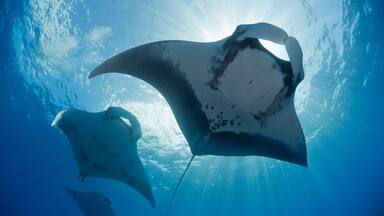


Les dossiers de proposition d’inscription produits par les États parties sont publiés par le Centre du patrimoine mondial sur son site Internet et/ou dans des documents de travail afin de garantir la transparence, l’accès à l’information et de faciliter la préparation d’analyses comparatives par d’autres États parties soumissionnaires.
Le contenu de chaque dossier de proposition d’inscription relève de la responsabilité exclusive de l'État partie concerné. La publication d’un dossier de proposition d’inscription, y compris les cartes et les noms, ne saurait être interprétée comme exprimant une prise de position de la part du Comité du patrimoine mondial ou du Secrétariat de l'UNESCO à propos de l’histoire ou du statut juridique d'un pays, d'un territoire, d'une ville ou d'une zone, ou de ses frontières.