Météores
Meteora
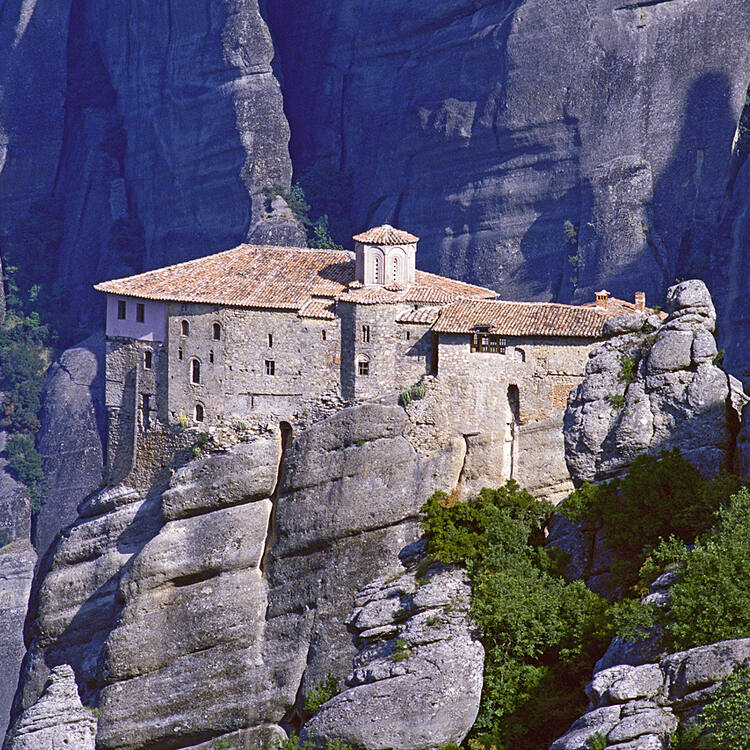
In a region of almost inaccessible sandstone peaks, monks settled on these 'columns of the sky' from the 11th century onwards. Twenty-four of these monasteries were built, despite incredible difficulties, at the time of the great revival of the eremetic ideal in the 15th century. Their 16th-century frescoes mark a key stage in the development of post-Byzantine painting.
La description est disponible sous licence CC-BY-SA IGO 3.0
Météores
Dans un paysage de pitons de grès presque inaccessibles, des moines anachorètes s'installèrent sur les « colonnes du ciel » dès le XIe siècle. Lors du grand renouveau de l'idéal érémitique au XVe siècle, vingt-quatre monastères avaient été bâtis au prix d'incroyables difficultés. Leurs fresques du XVIe siècle marquent une étape fondamentale dans l'histoire de la peinture postbyzantine.
La description est disponible sous licence CC-BY-SA IGO 3.0
الأديرة الأرثوذكسية المعروفة باسم متيورا
عند أمكنة مكونة من نتوء الصخر الصلصالي استقر رهبان متنسكون على "أعمدة السماء" هذه منذ القرن الحادي عشر. وفي القرن الخامس عشر، ومع عودة روح التنسك من جديد، جرى بناء 24 ديراً على الرغم من الصعوبات الجمة. وتدلّ جداريات هذه الأديرة على حقبة بارزة من تاريخ الرسم التي تلت المرحلة البيزنطية.
source: UNESCO/CPE
La description est disponible sous licence CC-BY-SA IGO 3.0
曼代奥拉
从11世纪起,一些修道士就在这个几乎不可抵达的砂岩峰地区定居了下来,住在“天空之柱”上。15世纪,隐士思想大复兴,这些修道士克服了超乎想象的困难,在这里修建了24座修道院。这里的16世纪壁画代表了后拜占庭绘画艺术发展的一个重要阶段。
source: UNESCO/CPE
La description est disponible sous licence CC-BY-SA IGO 3.0
Монастыри Метеоры
Начиная с XI в. на вершинах этих практически недоступных песчаниковых останцов монахи обустраивали скиты и строили монастыри. 24 монастыря из числа построенных были сооружены здесь, несмотря на огромные трудности в период возрождения идеалов монашества XV в. Росписи, датируемые XVI в., знаменуют собой важный этап в развитии поствизантийской живописи.
source: UNESCO/CPE
La description est disponible sous licence CC-BY-SA IGO 3.0
Meteoros
En este sitio emergen del suelo gigantescos pilares de arenisca prácticamente inaccesibles. Fue en estas “columnas del cielo” donde empezaron a asentarse monjes anacoretas desde el siglo XI. El renacimiento del ideal eremítico en el siglo XV tuvo como consecuencia que se edificaran veinticuatro monasterios, pese a las increíbles dificultades que entrañó su construcción. Los frescos del siglo XVI que ornan sus paredes marcaron un hito fundamental en la historia de la pintura posbizantina.
source: UNESCO/CPE
La description est disponible sous licence CC-BY-SA IGO 3.0
メテオラ
ギリシア中部、テッサリア地方の西端に屹立する垂直の岩塊群と、それらの頂きに築かれたいくつかの修道院の総称。その特異な自然景観とトルコによるキリスト教への迫害をのがれるため14~17世紀にかけて建てられた修道院群が、複合遺産として世界遺産リストに登録された。source: NFUAJ
Meteora
Het gebied van de meteora (Grieks voor in de lucht zweven) omvat bijna ontoegankelijke zandsteen pieken (menora), meer dan 400 meter boven de Peneas vallei. Vanaf de 11e eeuw vestigden monniken zich op deze rotspunten, de ‘zuilen van de hemel’. Ondanks grote moeilijkheden werden er vierentwintig kloosters gebouwd ten tijde van de grote herleving van het kluizenaarsideaal in de 15e eeuw. Dit ideaal bracht een eigen type kloosterbouw mee. Hun 16e-eeuwse fresco’s markeren een belangrijke fase in de ontwikkeling van de post-Byzantijnse schilderkunst. De kloosters bloeiden tot de 17e eeuw. Tegenwoordig huisvesten slechts vier kloosters – de Hagia Stephanos, Hagia Trias, Varlaam en Meteron – nog religieuze gemeenschappen.
Source : unesco.nl


 Découvrez les photos de OUR PLACE the World Heritage Collection
Les dossiers de proposition d’inscription produits par les États parties sont publiés par le Centre du patrimoine mondial sur son site Internet et/ou dans des documents de travail afin de garantir la transparence, l’accès à l’information et de faciliter la préparation d’analyses comparatives par d’autres États parties soumissionnaires.
Le contenu de chaque dossier de proposition d’inscription relève de la responsabilité exclusive de l'État partie concerné. La publication d’un dossier de proposition d’inscription ne saurait être interprétée comme exprimant une prise de position de la part du Comité du patrimoine mondial ou du Secrétariat de l'UNESCO à propos de l’histoire ou du statut juridique d'un pays, d'un territoire, d'une ville, d'une zone ou de ses frontières.