Site archéologique de Chavin
Chavin (Archaeological Site)
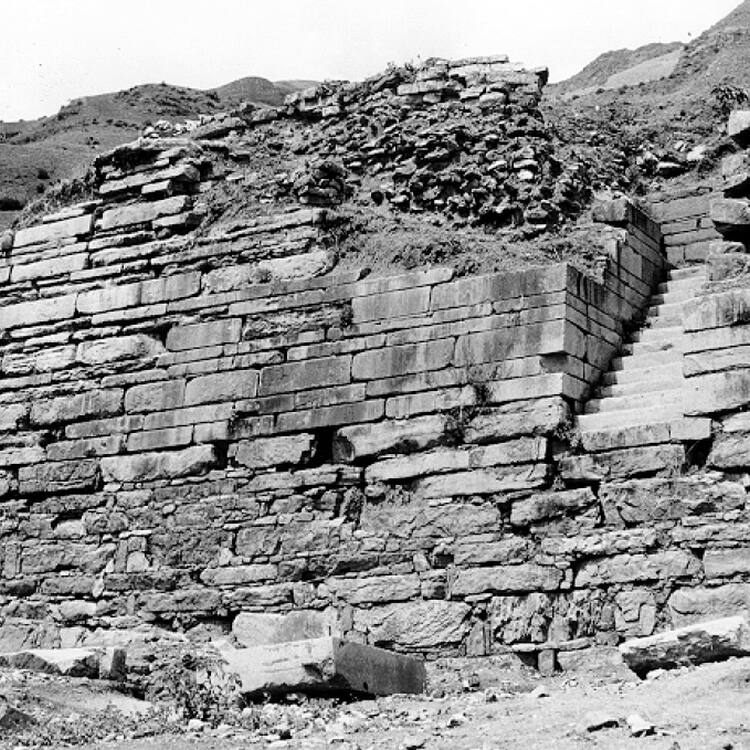
The archaeological site of Chavin gave its name to the culture that developed between 1500 and 300 B.C. in this high valley of the Peruvian Andes. This former place of worship is one of the earliest and best-known pre-Columbian sites. Its appearance is striking, with the complex of terraces and squares, surrounded by structures of dressed stone, and the mainly zoomorphic ornamentation.
La description est disponible sous licence CC-BY-SA IGO 3.0
Site archéologique de Chavin
Ce site archéologique a donné son nom à la culture qui se développa entre 1500 et 300 av. J.-C. dans cette haute vallée des Andes péruviennes. L'architecture de cet ensemble de terrasses et de places entourées de constructions en pierres appareillées ainsi que son ornementation, en grande partie zoomorphique, donnent un aspect saisissant à cet ancien lieu de culte, l'un des sites précolombiens les plus anciennement connus et les plus célèbres.
La description est disponible sous licence CC-BY-SA IGO 3.0
موقع شافين الأثري
أعطى هذا الموقع الأثري اسمه للثقافة التي طوِّرت ما بين 1500 و300 ق.م. في هذا الوادي المرتفع في جبال الأندلز في البيرو. أما هندسة هذه المجموعة من المصطبات والساحات المسيّجة ببناء من الحجارة اضافة الى زخرفتها التي تتخذ أشكالاً حيوانية في قسم كبير منها، فتضفي طابعًا أخّاذًا لمكان العبادة هذا، الذي يُعتبر أحد المواقع الأثريّة التي تعود الى الفترة السابقة لاكتشاف كولومبوس، أي الأقدم والأكثر شهرة.
source: UNESCO/CPE
La description est disponible sous licence CC-BY-SA IGO 3.0
夏文考古遗址
夏文考古遗址的历史可以追溯到公元前1500年到公元前300年,它是在秘鲁安第斯山的高山峡谷中发展起来的一种文化。该遗迹是古代举行宗教仪式的场所,也是哥伦比亚发现新大陆以前出现的最负盛名之地。这里的斜坡和广场周围都是石头建筑,伴有大量兽形装饰物,景物别致多姿。
source: UNESCO/CPE
La description est disponible sous licence CC-BY-SA IGO 3.0
Археологические памятники центра древней индейской культуры Чавин-де-Уантар
Древний культовый комплекс Чавин-де-Уантар, руины которого обнаружены в высокогорной долине в Перуанских Андах, дал имя целой культуре, которая развивалась здесь в 1500-300 гг. до н.э. Это бывшее место поклонения является одним из древнейших и наиболее известных доколумбовых памятников. Поразителен его облик с комплексом террас и площадей, окруженных сооружениями из шлифованного камня с зооморфной орнаментацией.
source: UNESCO/CPE
La description est disponible sous licence CC-BY-SA IGO 3.0
Sitio arqueológico de Chavín
El sitio arqueológico de Chavín ha dado su nombre a la cultura que se desarrolló entre los años 1500 y 300 a.C. en el alto valle de los Andes peruanos en el que se encuentra. La arquitectura de este conjunto monumental de plazas y amplias terrazas rodeadas por construcciones de piedra labrada, así como su ornamentación en gran parte zoomorfa, dan un aspecto impresionante a este lugar de culto, que es uno de los sitios precolombinos más célebres y antiguos.
source: UNESCO/CPE
La description est disponible sous licence CC-BY-SA IGO 3.0
チャビン(古代遺跡)
紀元前1500年ごろから同300年ごろまで発展した、古代アンデス最古のチャビン文化の中心地。アマゾン川の源流部、標高約3200mのアンデス山脈の谷間に石積みの神殿や主神”ランソン”像などの遺構が残っている。「チャビンネコ」と呼ばれる翼を持ったジャガーが、この文化の宗教的シンボルと考えられている。source: NFUAJ
Archeologisch gebied van Chavín
Het dorp Chavín de Huantar ligt in een hooggelegen vallei van de Peruaanse Andes op een hoogte van 3.177 meter. Het archeologisch gebied van Chavín was een voormalige plaats van aanbidding en een van de vroegste en meest bekende precolumbiaanse plekken. Chavín gaf z'n naam aan de Chavín cultuur – een van de oude beschavingen van Zuid-Amerika die vooraf ging aan die van bijvoorbeeld Salinar Maranga en Nasca – die ontwikkelde tussen 1500 en 300 voor Christus. Het uiterlijk van het gebied is opvallend, met een complex van terrassen en pleinen omringd door structuren van bewerkte stenen en de voornamelijk zoömorfische versiering.
Source : unesco.nl

Valeur universelle exceptionnelle
Brève synthèse
Le site archéologique de Chavin a donné son nom à la culture qui s’est développée entre 1500 et 300 av. J.-C. dans cette haute vallée des Andes péruviennes, dans la province de Huari, région d’Ancash. Chavin était un centre cérémoniel et de pèlerinage pour le monde religieux andin, accueillant des populations de différentes latitudes, venues de plus ou moins loin et parlant diverses langues. Il est peu à peu devenu un important point de convergence idéologique, culturelle et religieuse, et de diffusion d’un culte répandu sur un vaste territoire des Andes, depuis les côtes du nord, du centre et du sud, des hauts-plateaux du nord et de la haute jungle du Pérou.
Chavin est l’un des sites précolombiens les plus anciennement connus et les plus célèbres ; il représente la plus importante expression des arts et des techniques décoratives et de construction de cette époque. Le caractère cérémoniel et culturel de ce site est évident dans sa création architecturale, technique et symbolique, caractérisée par des bâtiments en pierre de taille appareillées et des terrasses artificielles autour de places, surplombant un dédale de galeries comportant un réseau compliqué de conduits de ventilation et de canalisations, sans précédent en Amérique du Sud. Les bâtiments et les places étaient décorés d’une iconographie symbolique zoomorphique et anthropomorphique luxuriante, d’une extraordinaire synthèse esthétique, gravée en bas-relief sur des tombes, poutres et sculptures monolithiques en granit. Le Lanzón de Chavin, la stèle Raimondi, l’obélisque Tello, le portique des Faucons, la Place circulaire et les têtes encastrées dans les pierres, entre autres, attestent de l’exceptionnel et monumental art lithique de Chavin. Toutes ces caractéristiques font de ce site archéologique un monument unique d’importance universelle.
Critère (iii) : Le Site archéologique de Chavin, éponyme de l’une des anciennes civilisations d’Amérique du Sud, est un exemple exceptionnel des créations architecturales, techniques et symboliques des premières sociétés précolombiennes des Andes péruviennes. Son apparence est saisissante, avec son ensemble de terrasses et de places, son réseau complexe de galeries intérieures, ses décorations à base d’éléments iconographiques anthropomorphiques et zoomorphiques d’une extraordinaire beauté. Il constituait un important centre de convergence idéologique, culturelle et religieuse et de diffusion d’un culte répandu sur un vaste territoire des Andes.
Intégrité
Les limites du bien inscrit– qui couvre 14,79 ha – incluent tous les éléments, les caractéristiques, ainsi que les valeurs structurelles et symboliques essentielles de l’ensemble architectural et de son évolution historique incarnant sa valeur universelle exceptionnelle. Bien que le site ait été historiquement affecté par des phénomènes naturels et anthropogéniques, la totalité de l’ensemble constitué par les bâtiments, les plateformes et les places, sa planimétrie, sa conception architecturale, les formes et matériaux d’origine de ses différents stades de construction sont toujours préservés ; les structures, galeries, places et espaces architecturaux comportent toujours des éléments et des caractéristiques d’origine, notamment l’iconographie qui en révèle l’usage et la fonction d’origine.
L’ensemble et l’intégrité visuelle du Site archéologique de Chavin et de son paysage n’ont pas subi d’importants changements, comme l’atteste le maintien des activités agricoles traditionnelles à proximité. Les agents environnementaux constituent le principal facteur de risque pour la préservation de l’intégrité du Site archéologique de Chavin, avec la détérioration des structures au cours du temps y compris quelques glissements de terrain dans les galeries, les canalisations et les bouches d’aération intérieures. Les risques les plus importants sont les inondations causées par des glissements de terrain inattendus et les inondations provenant de lacs glaciaires (par exemple, l’inondation de 1945 qui a partiellement enterré le site), et des tremblements de terre de forte magnitude et de grande intensité (comme celui de 1970).
Authenticité
Les conditions d’authenticité du Site archéologique de Chavin, y compris l’aménagement du territoire et la conception architecturale, les formes, les matériaux et la conception iconographique ont été maintenus.
Les éléments qui subsistent sur le site témoignent du caractère exceptionnel de la conception, de l’aménagement et de la synthèse artistique de l’art lithique que l’on peut admirer sur les tombes, les poutres, les colonnes, les sculptures, etc. restés sur place. Ils montrentses connotations religieuses, le symbolisme et la signification rituelle de l’ensemble, ainsi que l’usage et la fonction cérémoniels des espaces, notamment des parties architecturales. Ils décrivent aussi la société de Chavin et le processus de l’évolution historique qui révèle différentes étapes de la construction et les contextes culturels, car les constantes fonctions sociales du site ont finalement façonné ses bâtiments. Les résultats des fouilles révèlent aussi la fonction de ce centre cérémoniel en tant que lieu de pèlerinage pour les populations du nord et du centre du Pérou : les allusions au culte sont clairement visibles dans l’iconographie architecturale et dans les nombreux et divers objets religieux découverts sur le site. Les recherches archéologiques et interventions de conservation menées sur place ont laissé intacts les espaces et les structures de l’ensemble cérémoniel.
Eléments requis en matière de protection et de gestion
Le Site archéologique de Chavin est correctement protégé par la législation nationale : l’article 36 de la loi n° 6634 de la Constitution nationale, datant du 13 juin 1929, précise clairement le droit inaliénable et indéfectible de la nation sur tous les monuments antérieurs à la vice-royauté dans le pays et classe le Site archéologique de Chavin comme Monument national. Parmi les autres outils juridiques de protection, on peut citer la loi n° 28296 – loi générale sur le patrimoine culturel national – qui stipule que le patrimoine culturel de la nation est inaliénable et indéfectible, et la loi n° 13442 qui décide de la création du Parc national et du Centre de la zone de tourisme archéologique du Site archéologique de Chavin dans la province d’Huari, région d’Ancash.
Après l’inondation qui a partiellement enterré Chavin en 1945, des travaux de protection, nettoyage, préservation préventive, recherche et études préparatoires ont été effectués avec la participation de plusieurs institutions et du Ministère de la Culture.
Selon la réglementation nationale, la gestion et la protection du Site archéologique de Chavin sont placées sous la responsabilité du Ministère de la Culture, au nom du gouvernement péruvien.
Le Ministère de la Culture a mis au point un plan de gestion prévoyant les points nécessaires pour répondre aux besoins essentiels et développer des projets pour protéger, préserver et restaurer le site dans le cadre de programmes de fonctionnement institutionnel. De plus, les activités de recherche et de préservation sont soutenues par des institutions privées.
Le Site archéologique de Chavin possède un personnel permanent ; cependant, les ressources allouées sont insuffisantes pour réaliser les travaux nécessaires à la préservation du site.



Les dossiers de proposition d’inscription produits par les États parties sont publiés par le Centre du patrimoine mondial sur son site Internet et/ou dans des documents de travail afin de garantir la transparence, l’accès à l’information et de faciliter la préparation d’analyses comparatives par d’autres États parties soumissionnaires.
Le contenu de chaque dossier de proposition d’inscription relève de la responsabilité exclusive de l'État partie concerné. La publication d’un dossier de proposition d’inscription ne saurait être interprétée comme exprimant une prise de position de la part du Comité du patrimoine mondial ou du Secrétariat de l'UNESCO à propos de l’histoire ou du statut juridique d'un pays, d'un territoire, d'une ville, d'une zone ou de ses frontières.