Monts Matobo
Matobo Hills
The area exhibits a profusion of distinctive rock landforms rising above the granite shield that covers much of Zimbabwe. The large boulders provide abundant natural shelters and have been associated with human occupation from the early Stone Age right through to early historical times, and intermittently since. They also feature an outstanding collection of rock paintings. The Matobo Hills continue to provide a strong focus for the local community, which still uses shrines and sacred places closely linked to traditional, social and economic activities.
La description est disponible sous licence CC-BY-SA IGO 3.0
Monts Matobo
Le site présente une profusion de formes rocheuses remarquables s’élevant au-dessus du bouclier de granit qui couvre la plus grande partie du Zimbabwe. Les grands blocs de roche offrent des abris naturels en abondance et sont associés à l’occupation humaine depuis le début de l’âge de pierre jusqu’au début des temps historiques, et de façon intermittente depuis lors. Ils abritent une collection de peintures rupestres exceptionnelles. Les monts Matobo demeurent un centre important pour la communauté locale qui utilise toujours les lieux sacrés et les sanctuaires en étroite liaison avec leurs activités traditionnelles, sociales et économiques.
La description est disponible sous licence CC-BY-SA IGO 3.0
تلال ماتوبو
يتتضمن هذا الموقع عدداً وافراً من الأشكال الصخرية الملفتة المرتفعة فوق أرض حاتة من الغرانيت تغطي الجزء الأكبر من زمبابوي. وتتضمن الكتل الصخرية الكبيرة ملاجئ طبيعية كثيرة وترتبط بالوجود البشري المستمر منذ بداية العصر الحجري حتى بداية العصور التاريخية والمتقطع مذاك الحين، كما تحتضن مجموعة من اللوحات الرائعة المحفورة في الصخور. وتبقى تلال ماتوبو مركزاً هاماً للمجتمع المحلي الذي لا يزال يؤم الأماكن المقدسة والأضرحة المرتبطة على نحو وثيق بنشاطاته التقليدية الاجتماعية والاقتصادية.
source: UNESCO/CPE
La description est disponible sous licence CC-BY-SA IGO 3.0
马托博山
津巴布韦大部分地区为花岗岩所覆盖,马托博地区具有最丰富的岩石地貌。这些巨石提供了大量的天然石洞,从石器时代早期直到较近的历史时期,断断续续一直与人类居所存在很大联系。这些巨石是岩画艺术的汇聚地。马托博山的神殿和宗教场所一直同当地的传统、社会活动和经济活动紧密相连,成为当地生活的焦点。
source: UNESCO/CPE
La description est disponible sous licence CC-BY-SA IGO 3.0
Холмы Матобо
Для этой местности характерны многочисленные скалистые холмы, возвышающиеся над гранитным щитом, покрывающим основную часть территории Зимбабве. Крупные скальные образования служили для древнего человека естественными укрытиями, с раннего каменного века и вплоть до начала нашей эры. Здесь также обнаружено великолепное собрание наскальной живописи. Холмы Матобо продолжают оставаться важным центром притяжения для местных сообществ, которые все еще используют святилища и священные места, тесно связанные с их традициями и социально-экономическим укладом, как места поклонения.
source: UNESCO/CPE
La description est disponible sous licence CC-BY-SA IGO 3.0
Montes Matobo
Este sitio se distingue por la profusión de formaciones rocosas muy características, que se elevan por encima de la masa granítica que cubre la mayor parte de Zimbabwe. Los grandes bloques de roca ofrecen abundantes refugios naturales que fueron ocupados sin interrupción por el ser humano desde la Edad de Piedra hasta los albores de los tiempos históricos, y luego de forma esporádica. Esos refugios albergan una serie excepcional de pinturas rupestres. Los Montes Matobo son todavía un centro de interés importante para la población local, cuya frecuentación de los lugares sagrados y santuarios existentes en ellos guarda una estrecha relación con sus actividades tradicionales, sociales y económicas.
source: UNESCO/CPE
La description est disponible sous licence CC-BY-SA IGO 3.0
マトボの丘群
ジンバブエ南西部、ブラワヨの南方約35㎞に位置する2050k㎡の遺産と、1050k㎡のバッファーゾーンから成る遺跡群。登録地域は、ジンバブエの大部分を占める花崗岩盾状地の上に隆起した独特の岩石地帯である。巨大な岩石は豊かなロック・シェルター(岩窟)の役割を果たしており、石器時代初期から有史初期までは継続的に、そして、それ以降は断続的に人類が居住したことを証している。また、岩肌には素晴しい壁画も残されている。source: NFUAJ
Matobo heuvels
Dit gebied laat een overvloed aan verschillende rotsvormen zien die uitsteken boven het granieten schild dat een groot deel van Zimbabwe bedekt. De grote keien zorgen voor veel natuurlijke schuilplaatsen en men gaat ervan uit dat ze zijn gebruikt als menselijk onderkomen vanaf de vroege Steentijd. De heuvels herbergen een van de hoogste concentraties rotskunst in zuidelijk Afrika. De tekeningen geven een volledig beeld van hoe naar voedsel zoekende samenlevingen plaats maakten voor agrarische samenlevingen. Tegenwoordig zijn de Matobo heuvels nog steeds belangrijk voor de lokale bevolking; ze gebruiken de heiligdommen en heilige plaatsen die nauw verbonden zijn met de traditionele, sociale en economische activiteiten van deze plek
Source : unesco.nl


Valeur universelle exceptionnelle
Brève synthèseLes monts Matobo, à 35 km au sud de Bulawayo, offrent une profusion de formations granitiques remarquables, disposées sur une zone relativement restreinte, qui s’élèvent pour former une multitude de collines. Leurs formes résultent de la variation des alignements et des compositions des couches granitiques qui ont réagi différemment sous l’action de millions d’années d’érosion naturelle. Ces formations extraordinaires de roches granitiques ont exercé une forte influence sur la totalité de la zone, tant sur le plan naturel que sur le plan culturel.
Les hommes ont eu une interaction avec et ont été inspirés par les formations rocheuses naturelles spectaculaires durant des millénaires. Cette interaction a produit une des collections d’art rupestre les plus remarquables de l’Afrique australe ; elle a aussi favorisé de fortes croyances religieuses qui jouent encore un rôle majeur dans la société locale contemporaine ; elle prouve une association quasi ininterrompue entre l’homme et son environnement au cours des 100 000 dernières années.
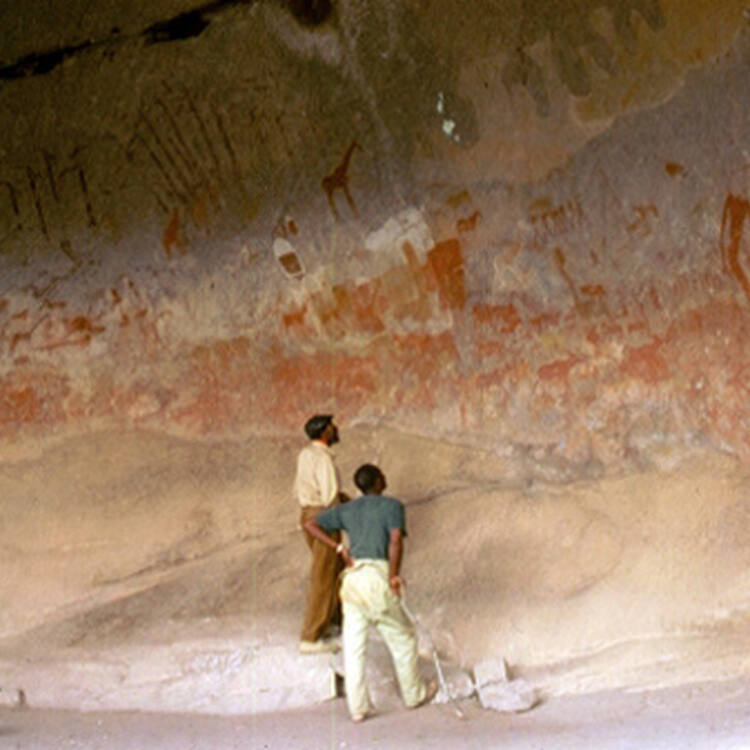
Les monts Matobo possèdent une des plus fortes concentrations d’art rupestre d’Afrique australe, remontant à au moins 13 000 ans. Les peintures illustrent l’évolution des styles artistiques et des croyances socioreligieuses. L’ensemble témoigne d’une riche tradition culturelle aujourd’hui disparue. Les riches témoignages apportés par l’archéologie et l’art rupestre et de Matobo montrent que le site a été occupé pendant au moins 500 000 ans. Ils révèlent aussi la vie des hommes des sociétés de cueilleurs-chasseurs de l’Age de pierre, et comment les sociétés rurales de l’Age du fer les ont supplantées.
La religion Mwari, qui est encore pratiquée dans la région et qui date probablement de l’Age du fer, compte parmi les traditions divinatoires les plus puissantes d’Afrique australe. Les rochers de Matobo sont considérés comme le siège de Dieu et des esprits ancestraux. Les sanctuaires sacrés dans les monts sont des lieux où l’on peut entrer en contact avec le monde des esprits. Les traditions vivantes associées aux sanctuaires représentent une des traditions immatérielles les plus puissantes d’Afrique australe, dont on pourrait même dire qu’elle revêt une signification universelle. Il s’agit d’une réponse communautaire à un paysage plutôt que d’une réponse individuelle. Les qualités naturelles de Matobo, en termes de pouvoir des rochers et de produit de l’environnement naturel, présentent donc de fortes connotations culturelles.
Critère (iii) : Les monts Matobo abritent l’une des plus grandes concentrations d’art rupestre de l’Afrique australe. Les riches témoignages apportés par les fouilles archéologiques et les peintures rupestres de Matobo illustrent parfaitement la vie des sociétés de cueilleurs-chasseurs de l’âge de pierre et la manière dont les sociétés rurales leur ont succédé.
Critère (v) : L’interaction entre les communautés et le paysage se manifeste par l’art rupestre mais aussi par les traditions religieuses qui restent associées aux roches et sont des réponses communautaires à un paysage.
Critère (vi) : La religion Mwari, centrée à Matobo, qui remonte probablement à l’âge du fer, compte parmi les traditions divinatoires les plus puissantes du sud de l’Afrique.
IntégritéPour donner une image cohérente du paysage qui intègre non seulement les peintures rupestres et les batholites, mais aussi les fortes interactions sociales entre les populations locales et ces caractéristiques physiques, la limite englobe le Parc national Rhodes Matopos et deux conseils des districts ruraux de Matobo et Umzingwane. Elle couvre ainsi tous les attributs de Valeur universelle exceptionnelle.
Globalement, les peintures rupestres sont en assez bon état de préservation. La dégradation naturelle est la principale cause de modification ; bien qu’elle entraîne une difficulté d’interprétation de certaines peintures, elle fait partie de la relation entre les images et leur environnement. Les visiteurs contribuent aussi à certains légers dommages. Il y a un seul cas de peintures très abîmées : dans la grotte de Pomongwe, des expériences ont été menées dans les années 1920 en utilisant l’huile de lin comme agent de conservation, ce qui a assombri les images. Les vestiges archéologiques semblent bien protégés dans les grottes, autant dans celles où des fouilles à grande échelle ont été réalisées que dans celles qui sont susceptibles de produire de futures découvertes.
Par un système de tabous et de normes culturelles qui proscrivent la profanation, le vieux patrimoine immatériel de croyances et de pratiques religieuses traditionnelles autochtones contribue toujours à la préservation du patrimoine physique. Autour des deux sanctuaires, il n’y a aucune construction, aucune structure bâtie, aucun mur ou autres traces de présence humaine, hormis une palissade en bois pour démarquer la ligne que l’on ne peut franchir sans l’autorisation des esprits ancestraux qui sont consultés par le gardien et les anciens. Il y a une pression du développement provenant de la demande de visiteurs pour plus de confort et d’équipements. La croissance de la population a un impact négatif sur l’environnement naturel.
La zone est sujette à la sécheresse et aux inondations, et l’érosion des sols devient un sérieux problème. Il y a aussi des menaces dues à l’introduction de plantes exotiques.
AuthenticitéL’authenticité des peintures rupestres des chasseurs-cueilleurs et des quelques peintures rupestres des agriculteurs dans les monts Matobo est amplement confirmée. Les peintures rupestres survivent in situ et sont toujours liées à un paysage qui renvoie à des éléments de traditions pastorales et agricoles que reflètent les images peintes.
Les traditions vivantes et le patrimoine immatériel associés au site, et qui font le lien entre les valeurs culturelles et les valeurs naturelles sont encore vivaces. Le pèlerinage annuel, en août, attire plus d’un millier de pèlerins qui se rassemblent autour des éléments naturels des rochers et des terrasses adjacentes, où les pèlerins dansent, accomplissent des rituels, mangent et dorment lors de cérémonies qui durent trois semaines.
Eléments requis en matière de protection et de gestionLe paysage du Patrimoine mondial des monts Matobo comprend trois types de propriété foncière reconnus par les lois du Zimbabwe, à savoir des zones protégées par l’Etat (Parcs nationaux de Matopo), des terres communales et des terres du domaine de l’Etat sans occupation individuelle (districts de Matobo et d’Umzingwane) et des terres privées avec occupation individuelle (fermes commerciales). Chaque catégorie de terres est régie par les lois suivantes : Rural District Council Act (29 :13), Parks and Wildlife Act (20 :14) et Natural Resources Board Act (20 :13). Le Département des parcs nationaux et de la gestion de la faune et de la flore sauvages s’occupe des ressources naturelles et la gestion des biens culturels relève de la Loi sur les musées et monuments nationaux du Zimbabwe (25 :11) quel que soit le régime foncier.
Un Comité de gestion composé des parties prenantes clés a été établi. Le bien a été guidé par un Plan de gestion quinquennal pour la période 2005-2009. Pour l’expertise technique, le Comité de gestion s’appuie sur un personnel technique fourni par les principales parties prenantes. Les autres organisations et institutions participant à la gestion comprennent le Conseil national des ressources et la Commission des forêts.
Le Plan de gestion a besoin d’être révisé de façon à constituer un document vivant et pertinent qui traite des opportunités offertes par l’inscription. Le Plan doit aussi soutenir la gestion intégrée pour garantir un développement durable qui respecte à la fois les paramètres culturels et les paramètres naturels du paysage culturel et favorise l’intégration des questions liées au patrimoine immatériel dans la gestion et l’interprétation. Il faut aussi qu’il s’attaque aux menaces, telles que celles qui procèdent de l’accès non contrôlé des visiteurs, de l’érosion des sols et des plantes invasives. Il est aussi besoin de plans de conservation pour les aspects clés du site.