Parc national Sangay
Sangay National Park
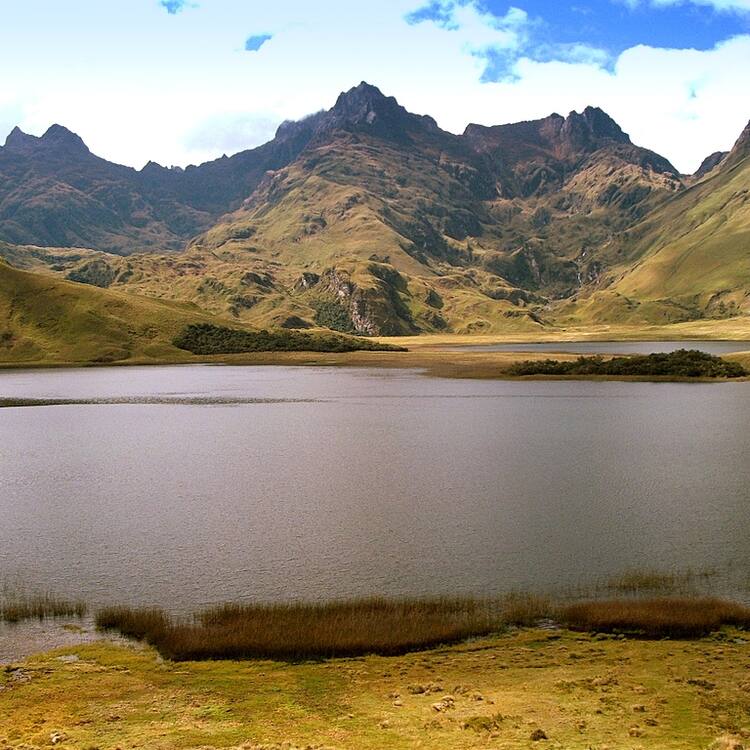
With its outstanding natural beauty and two active volcanoes, the park illustrates the entire spectrum of ecosystems, ranging from tropical rainforests to glaciers, with striking contrasts between the snowcapped peaks and the forests of the plains. Its isolation has encouraged the survival of indigenous species such as the mountain tapir and the Andean condor.
La description est disponible sous licence CC-BY-SA IGO 3.0
Parc national Sangay
D'une beauté naturelle exceptionnelle avec ses deux volcans en activité, ce parc présente toute la gamme verticale des écosystèmes, depuis la forêt tropicale humide jusqu'aux glaciers, avec des contrastes saisissants entre les sommets enneigés et les forêts des plaines. Son isolement protège les espèces menacées qui s'y trouvent, comme le tapir de montagne et le condor des Andes.
La description est disponible sous licence CC-BY-SA IGO 3.0
منتزه سانغاي الوطني
الطبيعة في أبهى حللها تتجلّى في هذين البركانيّن الناشطين ليعكس المنتزه تنوّع النظم البيئيّة منذ الغابة الإستوائيّة الرطبة وحتّى الأنهر الجليديّة في تعارض آسر بين القمم التي تغطيها الثلوج وغابات السهول. ويحمي انعزال البركانيين الأصناف المهددة الموجودة فيها مثل حيوان تابير الجبلي ونسر الآنديز.
source: UNESCO/CPE
La description est disponible sous licence CC-BY-SA IGO 3.0
桑盖国家公园
公园以其独特秀丽的自然风光和两座活火山的壮观景象向人们展现了一个完整系列的生态系统,从热带雨林延到冰川,白雪皑皑的山峰与苍翠的平原森林交相辉映。这种孤立的环境使得当地特有的生物,诸如山貘和安第斯秃鹫等得以幸存。
source: UNESCO/CPE
La description est disponible sous licence CC-BY-SA IGO 3.0
Национальный парк Сангай
Живописный парк, куда входит два активных вулкана, включает широкий спектр экосистем: от предгорных влажно-тропических лесов до заснеженных вершин и ледников, которые ярко контрастируют друг с другом. Изолированность этого района позволила выжить здесь таким аборигенным видам, как горный тапир и андский кондор.
source: UNESCO/CPE
La description est disponible sous licence CC-BY-SA IGO 3.0
Parque nacional Sangay
Este parque de extraordinaria belleza natural posee dos volcanes activos y cuenta con toda la gama vertical de ecosistemas, desde los bosques húmedos tropicales hasta los glaciares. Sus paisajes ofrecen sorprendentes contrastes entre cumbres nevadas y selvas de llanura. Por otra parte, su aislamiento facilita la protección de las especies en peligro de extinción que lo pueblan, como el tapir de montaña y el cóndor de los Andes.
source: UNESCO/CPE
La description est disponible sous licence CC-BY-SA IGO 3.0
サンガイ国立公園
source: NFUAJ
Nationaal park Sangay
Source : unesco.nl


Valeur universelle exceptionnelle
Brève synthèse
D’une beauté naturelle exceptionnelle avec ses deux volcans en activité, le parc national Sangay illustre sur ses 270 000 ha toute la gamme des écosystèmes de l’Equateur. Ceux-là incluent les écosystèmes glaciales et volcaniques, la forêt nébuleuse, la forêt tropicale humide amazonienne, les terres humides, les lacs, le fragile écosystème des landes (páramos) et les prairies des hauts plateaux. D’un point de vue géographique, cette région est particulièrement importante en raison de la présence du volcan Sangay qui, à une altitude de 5 140 m, est l’un des volcans les plus actifs du monde. Le parc national Sangay offre aussi un habitat important pour une flore et une faune riches qui comprennent de nombreuses espèces menacées telles que le tapir de montagne et l’ours à lunettes.
Critère (vii) : Le parc national Sangay contient l’une des series d’habitats écologiques les plus complexes au monde. Avec une amplitude altitudinale allant de 900 à 5 319 mètres au-dessus du niveau de la mer, le parc comprend trois volcans : Tungurahua (5 016m), Sangay (5 230m) et Altar (5 319m). Ces volcans sont d’une extraordinaire beauté et réunissent une rare association de prairies, forêts tropicales humides et d’autres habitats fragiles. Le bien inclut un vaste système de terres humides comprenant 327 lacs et couvrant une superficie de 31,5 km2, que protègent des services environnementaux d’importance locale, régionale et nationale. Le parc contient aussi une des zones de páramo (végétation prairiale de montagne) les plus vastes de l’Equateur.
Critère (viii) : Sangay (volcan en forme de cône parfait) est remarquable au plan mondial pour sa longue période d’activité continue. La région présente une topographie accidentée avec des vallées profondes aux versants abrupts, de nombreuses falaises et de nombreux pics rocheux. Plusieurs grands cours d’eau du bassin versant hydrographique ouest de l’Amazone se caractérisent par des variations rapides et fortes des niveaux d’eau. Le débit est extrêmement rapide en raison des fortes pluies et des pentes abruptes. L’érosion est un danger constant, bien contrôlé par une végétation forestière dense. Il existe de nombreuses chutes d’eau, en particulier dans les vallées glaciaires suspendues le long de la face Est de la Cordillère.
Critère (ix) : La présence d’un volcan actif signifie que la succession primaire est un processus continu qui influence la composition des espèces dans un certain nombres d’écosystèmes particuliers du parc, notamment la forêt pluviale, la forêt nébuleuse, la végétation prairiale et les landes (páramos).Par exemple, de nombreuses espèces de plantes du páramo, en particulier les graminées et les plantes coussinets, se sont adaptées au climat froid et ont évolué vers des structures spécialisées dans le captage de l’eau. Ces régions offrent un excellent exemple de succession en cours, où la cendre volcanique crée un sol fertile et de nouveaux habitats pour la colonisation des plantes. Bien que la flore soit mal connue, au moins 3 000 espèces peuvent être rencontrées dans le parc et, étant donné les conditions particulières, présentent probablement un haut degré d’endémisme. Parallèlement, la faune associée, notamment un grand nombre d’oiseaux et d’insectes, présente probablement un caractère unique. Le parc comprend deux zones d’oiseaux endémiques, les zones humides andines de moyenne altitude (habitat de quelque 11 espèces d’oiseaux de distribution limitée) et les Andes Equateur – Pérou de l’est (habitat de 17 espèces de distribution limitée). Il est important de noter que la grande diversité des écosystèmes et des différents types de végétation du parc augmente les possibilités de modifications biologiques.
Critère (x) : La végétation naturelle a été conservée et couvre environ 84,5% du parc. Avec ses différents écosystèmes, le parc possède la meilleure collection d’espèces endémiques de la région. Au moins 3 000 espèces de plantes à fleurs poussent dans le parc et de récents rapports décrivent 107 mammifères, 430 oiseaux, 33 amphibiens, 14 reptiles et 17 espèces de poissons. Parmi les animaux les plus médiatisés, le tapir de montagne en voie de disparition trouve dans le parc national Sangay l’un de ses derniers refuges. Le parc est aussi l’une des trois zones protégées possédant les plus importantes populations d’ours à lunettes, espèce vulnérable. D’autres espèces emblématiques sont le condor des Andes, le coq de roche péruvien, le jaguar et le fourmilier géant, classé comme espèce vulnérable parce que sa population diminue dans de nombreuses parties de son aire de répartition. Le tapir du Brésil, autre espèce vulnérable des forêts pluviales, ne survit que dans des zones non perturbées.
Intégrité
Cette zone non perturbée est assez vaste (271 925 ha) pour que son écosystème puisse continuer à fournir des services écologiques et connaître des processus biologiques naturels. Située au milieu des Andes équatoriennes, la zone ne comporte aucun établissement humain. Sangay est devenu un parc national en 1979 et a été inscrit sur la Liste du patrimoine mondial en 1983. Le parc fut étendu vers le sud en 1992, avec une augmentation de sa superficie de 245 800 ha, bien que cette extension ne fut pas incluse dans le bien du patrimoine mondial. En outre, 15 651 ha de parc ont été exclus en mai 2004, mais la superficie inscrite au patrimoine mondial n’a pas été réduite. Aujourd’hui, le parc couvre une superfice de 502 105 ha, dont 271 925 ha sont classés au patrimoine mondial. Un plan de gestion approuvé en 2005, régulièrement actualisé, sert d’outil de gestion pour la zone.
Eléments requis en matière de protection et de gestion
Une grande partie de la forêt subtropicale dans les basses terres le long de la limite est du parc a été transformée en prairie pour l’élevage du bétail et l’agriculture ; ces activités, qui constituent les plus fortes menaces pour le bien, notamment le risque d’empiètement et de voir le bétail pénétrer dans le bien, le braconnage et la pêche illégale, causent des inquiétudes. Pour traiter ces problèmes, le ministère de l’environnement surveille la zone en permanence et met en œuvre des actions de gestion locale dans le cadre de programmes de gestion de la zone protégée, avec pour principaux objectifs la réduction et/ou l’élimination des menaces pesant sur la valeur exceptionnelle universelle du bien.
La zone a été placée sur la Liste du patrimoine mondial en péril entre 1992 et 2005, essentiellement en raison de la construction de la route Guamote – Macas ainsi que pour des menaces causées par le braconnage et le pacage illégal. Le parc a été sérieusement affecté par la construction de la route, qui sépare le site du patrimoine mondial de l’extension du parc vers le sud. Parmi les impacts, l’on compte la contamination de la rivière Upano et des lacs voisins, l’utilisation de la dynamite, des changements de microclimats et des effets indirects, dont de nouvelles installations d’habitaitons, l’élevage, le braconnage et la déforestation. Toutefois, en 2005, un nouveau plan de gestion fut adopté qui définissait des stratégies de restauration des zones affectées par la route ainsi que le développement d’une gestion participative du parc afin de réduire les conflits sur l’utilisation des terres et les relations entre la population locale et la vie sauvage. A la suite de cela, le parc a été retiré de la Liste du patrimoine mondial en péril. De nombreux programmes ont été mis en œuvre afin d’améliorer l’efficacité de la gestion, développer la gestion participative de la communauté et augmenter le niveau d’éducation à l’environnement, entre autres.
Le gouvernement équatorien a inscrit les principes environnementaux dans sa Constitution de 2008, stipulant que l’Etat est responsable de la gestion et de l’administration des zones protégées afin de garantir la conservation de la biodiversité et maintenir les fonctions écologiques des écosystèmes. L’Etat travaille avec les gouvernements locaux et provinciaux, d’autres institutions étatiques, des organisations non gouvernementales et des communautés afin d’atteindre ces objectifs.
Notes
- Modification dans la numérotation des critères pour les biens inscrits pour leur valeur géologique et biologique sous le critère naturel N (ii). Le critère naturel N (i) a été ajouté. Voir Décision 30.COM 8D.1
Liens
 Découvrez les photos de OUR PLACE the World Heritage Collection

Liste du patrimoine mondial en péril
Année d'inscription du bien sur la Liste du patrimoine mondial en péril
1992 -2005Les dossiers de proposition d’inscription produits par les États parties sont publiés par le Centre du patrimoine mondial sur son site Internet et/ou dans des documents de travail afin de garantir la transparence, l’accès à l’information et de faciliter la préparation d’analyses comparatives par d’autres États parties soumissionnaires.
Le contenu de chaque dossier de proposition d’inscription relève de la responsabilité exclusive de l'État partie concerné. La publication d’un dossier de proposition d’inscription, y compris les cartes et les noms, ne saurait être interprétée comme exprimant une prise de position de la part du Comité du patrimoine mondial ou du Secrétariat de l'UNESCO à propos de l’histoire ou du statut juridique d'un pays, d'un territoire, d'une ville ou d'une zone, ou de ses frontières.