Chan Chan Archaeological Zone
Factors affecting the property in 2007*
- Crop production
- Identity, social cohesion, changes in local population and community
- Illegal activities
- Management systems/ management plan
- Water (rain/water table)
- Other Threats:
Continuous deterioration of earthen architecture structures and decorated surfaces from lack of conservation and maintenace practices
Factors* affecting the property identified in previous reports
a) Continuous deterioration of earthen architecture structures and decorated surfaces from lack of conservation and maintenace practices;
b) Illegal occupations of the World Heritage property;
c) Unregulated farming activities;
d) Rising water table levels;
e) Delay in implementing protective measures (legislation and regulations already passed by the National authorities).
Threats for which the property was inscribed on the List of World Heritage in Danger
- Fragile state of conservation of earthen structures and decorated surfaces due to extreme climatic conditions (El Niño phenomena) and other environmental factors;
- Inadequate management system in place;
- Insufficient capacity and resources for the implementation of conservation measures;
- Increase in phreatic water table levels.
Desired state of conservation for the removal of the property from the List of World Heritage in Danger
a) Adequate and efficient managent system in place;
b) Functioning institutional arrangements and collaboration with involved stakeholders in the implementation of the management plan;
c) Secure and sustainable funding for implementation of priority conservation and management activities;
d) Macro natural decay factors controlled/mitigated: risk preparedness for El Niño phenomena and monitor and control of phreatic water levels;
e) Control and regulation of activities and development in the buffer zone;
f) Full protection from illegal invasions and other illegal or non regulated activities;
g) Full implementation of protective measures (legislation and regulations already passed by the national government).
Corrective Measures for the property
a) Full and systematic implementation of the management plan: secure sustainable funding, abide by prescribed courses of action and policies, adhere to prescribed institutional arrangements;
b) Enforce legislative and regulatory frameworks already passed by the State Party to address the issues of illegal occupations and activities at the property. Collaborate with pertinent authorities for the relocation of invasors;
c) Broad dissemination of the management plan amongst interest groups to strengthen public and private support in its implementation;
d) Collaboration with allied entities in defining regulatory measures for the management of the buffer zone and of the World Heritage Property. Precise plans of the property and its zoning need to be circulated amongst stakeholders;
e) Physical delimitation of the World Heritage property: vegetation barriers, perimeter walls, etc.;
f) Priority conservation measures: control and mitigation of water table levels, conservation of perimeter walls, reburial / backfilling of fragile areas with decorated surfaces;
g) Development of an emergency and disaster preparedness plan;
h) Continued implementation of course of action prescribed in the management plan for the conservation, presentation and revalorization of the World Heritage Property.
Timeframe for the implementation of the corrective measures
a) Secured funding for the implementation of the management plan in 2008;
b) Functioning institutional arrangements in 2008 (as per management plan);
c) Illegal occupations addressed and activities at the site regulated in 2009 and beyond;
d) Emergency and risk preparedness plan in 2008;
e) Drainage works completed end of 2007;
f) Priority conservation works in 2009;
g) Other conservation and maintenance works 2008 and beyond;
h) Management and coordination of works carried out by other sectors in the buffer zone in 2008 and beyond.
International Assistance: requests for the property until 2007
Total amount approved : 118,700 USD
| 1998 | Master Plan for Chan Chan Archaeological Zone (Approved) | 8,700 USD |
| 1997 | Emergency assistance for the Archaeological Zone of ... (Approved) | 50,000 USD |
| 1997 | Technical advice for the preparation of an Integral ... (Approved) | 20,000 USD |
| 1994 | Regional and International Course on the Conservation ... (Approved) | 20,000 USD |
| 1987 | Consultancy and equipment for the safeguarding of Chan ... (Approved) | 20,000 USD |
Missions to the property until 2007**
ICOMOS mission in 1997; World Heritage Centre/ICOMOS/ICCROM mission in February 2007.
Conservation issues presented to the World Heritage Committee in 2007
The World Heritage Centre received the annual conservation report from the State Party in January 2007, which details actions carried out and progress made on the recommendations of the World Heritage Committee at its 30th session (Vilnius,2006). These range from the continuous work to control the rising water table levels at the property to the clearing of vegetation that has grown as a result of increased humidity. It describes excavations, conservation and restoration interventions to open new areas for the public at the Velarde Palace, and actions for the management of the site, including the creation of a new implementation unit and addressing security concerns and illegal occupations.
A joint World Heritage Centre/ICOMOS/ICCROM mission, carried out in February 2007, observed a variety of decay phenomena and processes caused by both from natural and cultural factors that could threaten the outstanding universal value, authenticity and integrity of the property. As was noted at the time of inscription, the earthen architecture of the site is extremely fragile and systematic and continuous maintenance is needed to comprehensively address these conditions.
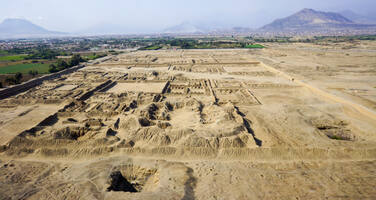
The state of conservation varies in the different sectors; there is more impact in areas adjacent to communities, leading to garbage dumps, destruction of remains for illegal activities, etc. This is also because the prehispanic remains are not palaces or ceremonial complexes, but rather what has been called intermediate architecture. In the nuclear area, decay phenomena are the result of climatic conditions but also of the lack of continuity in conservation and maintenance interventions. Priorities should be set up and criteria for interventions need to be adhered to, as prescribed, in accordance to the significance of the site and respectful of international principles.
Archaeological excavations should be further limited to respond firstly to conservation concerns, and subsequently to the prioritized course of action prescribed in the management plan, where a holistic approach has been defined for the excavation, conservation and presentation of sectors according to the availability of resources, both technical and financial.
Although significant work has been carried out to mitigate the rise of water table levels, research is still needed to understand the hydrology in the site and systems associated with its behaviour, so that a more proactive, rather than reactive, approach is implemented in the future. Farmers are using fields that are land extensions, a practice that brings a variety of problems to the stability of the archaeological remains. Among them, the constant moisture generated by irrigation that affects all archaeological remains that are under and above the surface. Irrigation also brings the need for channels and ducts, and the majority of those are simply cut through the prehistoric adobe walls, destroying other archaeological remains.
Paradoxically, water from a recent irrigation project (Chavi Mochic) created for the benefit of areas of Chan Chan, is promoting the use of the protected area by local people with adverse effects for site conservation. The rise of the water table is suspected to be a result of the Chavi Mochic water project, although technicians from that agency argue different causes and have offered to carry out a technical study on the water behaviour to determine the real source of phreatic level variations. Dumping large amounts of garbage inside the protected area is a common practice by local people; In summary, it is evident that the problematic of destruction of this Protection Area, clearly pointed out in the Master Plan (2000) has not significantly changed and the recent Chavi Mochic water project has had an adverse impact on the site. A control system is urgent, as well as coordinated actions for regional development initiatives.
An important threat to the site continues to be major development projects, or proposals, including the construction of a new site museum. Urban expansion continues towards the property and new constructions are located very close to its boundaries. New infrastructure such as an animal food plant, which impacts the integrity of the landscape and generates pollution, might affect the site. New construction permits and other uses in the buffer zone are to be urgently regulated and collaboration with the concerned municipalities should be a priority for the new management unit created.
The mission also stressed the problems caused by the variety of roads surrounding the site. There are at least ten ways to connect areas of the site, the principal being the Trujillo-Huanchaco highway that cuts the site in two. This situation encourages local people to settle along those roads. It would be important to select a minimal number of roads, and restrict the use of the others for public visits to the site (using them as visit routes). The construction of a highway bypass could solve the problem and help the property to recover its integrity.
A critical course of action is to strengthen institutional capacity for implementing the management plan. To date, there is no formal decision-making, professional team working full time at the site, there is lack of prioritization in implementing actions and some of these continue to be politically driven. Training and capacity development is critical for sustainable long-term implementation of the management plan, but also to disseminate the value of the invested efforts.
Although significant progress has been made, there are still many activities that need to be implemented in order to progressively contribute to mitigating decay problems, to raising awareness on the needs of the site and to enhance public and private collaboration in the conservation endeavours at the World Heritage property.
Summary of the interventions
Decisions adopted by the Committee in 2007
31 COM 7A.30
Chan Chan Archaeological Zone (Peru) (C 366)
The World Heritage Committee,
- Having examined Document WHC-07/31.COM/7A,
- Recalling Decision 30 COM 7A.32, adopted at its 30th session (Vilnius, 2006),
- Notes the efforts made to date to mitigate the rate of decay of earthen structures, particularly in respect to lowering the phreatic levels at the property and the conservation interventions in different sectors;
- Notes with concern the urban development around the site and requests the State Party to strengthen the implementation of protective legislative frameworks and regulatory measures, specially in regard to the creation and funding of institutional arrangements for the implementation of the management plan;
- Endorses the recommendations of the reactive monitoring mission of February 2007 and recommends their implementation by the State Party following the prioritized corrective measures identified to achieve the desired state of conservation for the property and meet the timelines for the removal of the property from the List of World Heritage in Danger;
- Requests the State Party in consultation with the World Heritage Centre and ICOMOS, to develop a draft Statement of Outstanding Universal Value including the conditions of integrity and authenticity, for examination by the Committee at its 32nd session in 2008;
- Also requests the State Party, in consultation with the World Heritage Centre and ICOMOS, to develop a draft statement of desired state of conservation for the property based on its Outstanding Universal Value;
- Requests the State Party to submit to the World Heritage Centre, by 1 February 2008, a report on the progress made on the above points for examination by the Committee at its 32nd session in 2008;
- Decides to retain Chan Chan Archaeological Zone (Peru) on the List of World Heritage in Danger.
31 COM 8C.2
Update of the list of the World Heritage in danger - maintenance
The World Heritage Committee,
1. Following the examination of the state of conservation reports of properties inscribed on the List of World Heritage in Danger (WHC-07/31.COM/7A and WHC-07/31.COM/7A.Add, WHC-07/31.COM/7A.Add.2, WHC-07/31.COM/7A.Add.3),
2. Decides to maintain the following properties on the List of World Heritage in Danger:
- Afghanistan, Minaret and Archaeological Remains of Jam (Decision 31 COM 7A.20)
- Afghanistan, Cultural Landscape and Archaeological Remains of the Bamiyan Valley, (Decision 31 COM 7A.21)
- Azerbaijan, Walled City of Baku with the Shirvanshah's Palace and Maiden Tower (Decision 31 COM 7A.26)
- Central African Republic, Manovo-Gounda St Floris National Park (Decision 31 COM 7A.1)
- Chile, Humberstone and Santa Laura Saltpeter Works (Decision 31 COM 7A.29)
- Côte d'Ivoire, Comoé National Park (Decision 31 COM 7A.2)
- Côte d'Ivoire / Guinea, Mount Nimba Strict Nature Reserve (Decision 31 COM 7A.3)
- Democratic Rep. of the Congo Virunga National Park (Decision 31 COM 7A.4)
- Democratic Rep. of the Congo Kahuzi-Biega National Park (Decision 31 COM 7A.5)
- Democratic Rep. of the Congo Garamba National Park (Decision 31 COM 7A.6)
- Democratic Rep. of the Congo Salonga National Park (Decision 31 COM 7A.7)
- Democratic Rep. of the Congo, Okapi Wildlife Reserve (Decision 31 COM 7A.8)
- Egypt, Abu Mena (Decision 31 COM 7A.16)
- Ethiopia, Simien National Park (Decision 31 COM 7A.9)
- Germany, Dresden Elbe Valley (Decision 31 COM 7A.27)
- India, Manas Wildlife Sanctuary (Decision 31 COM 7A.11)
- Islamic Republic of Iran, Bam and its Cultural Landscape (Decision 31 COM 7A.22)
- Iraq, Ashur (Qal'at Sherqat) (Decision 31 COM 7A.17)
- Jerusalem, Old City of Jerusalem and its Walls (Decision 31 COM 7A.18)
- Niger, Air and Ténéré Natural Reserves (Decision 31 COM 7A.10)
- Pakistan, Fort and Shalamar Gardens in Lahore (Decision 31 COM 7A.24)
- Peru, Chan Chan Archaelogical Zone (Decision 31 COM 7A.30)
- Philippines, Rice Terraces of the Philippine Cordilleras (Decision 31 COM 7A.25)
- Serbia, Medieval Monuments in Kosovo (Decision 31 COM 7A.28)
- United Republic of Tanzania, Ruins of Kilwa Kisiwani and Ruins of Songo Mnara (Decision 31 COM 7A.15)
- Venezuela, Coro and its Port (Decision 31 COM 7A.31)
- Yemen, Historic Town of Zabid (Decision 31 COM 7A.19)
Draft Decision: 31 COM 7A.30
The World Heritage Committee,
1. Having examined Document WHC-07/31.COM/7A,
2. RecallingDecision 30 COM 7A.32, adopted at its 30th session (Vilnius, 2006),
3. Notes the efforts made to date to mitigate the rate of decay of earthen structures, particularly in respect to lowering the phreatic levels at the property and the conservation interventions in different sectors;
4. Commends the State Party for the strenghtening of protective legislative frameworks and regulatory measures, specially in regards to the creation and funding of institutional arrangements for the implementation of the management plan;
5. Endorses the recommendations of the reactive monitoring mission of February 2007 and recommends their implementation by the State Party following the prioritized corrective measures identified to meet established benchmarks and timelines for the removal of the property from the List of World Heritage in Danger;
6. Requests the State Party to submit to the World Heritage Centre, by 1 February 2008, a report on the progress made on the above points for examination by the Committee at its 32nd session in 2008;
7. Decides to retain Chan Chan Archaeological Zone (Peru) on the List of World Heritage in Danger.
 Peru
Peru
Exports
* :
The threats indicated are listed in alphabetical order; their order does not constitute a classification according to the importance of their impact on the property.
Furthermore, they are presented irrespective of the type of threat faced by the property, i.e. with specific and proven imminent danger (“ascertained danger”) or with threats which could have deleterious effects on the property’s Outstanding Universal Value (“potential danger”).
** : All mission reports are not always available electronically.