Liverpool – Maritime Mercantile City
Liverpool – Maritime Mercantile City
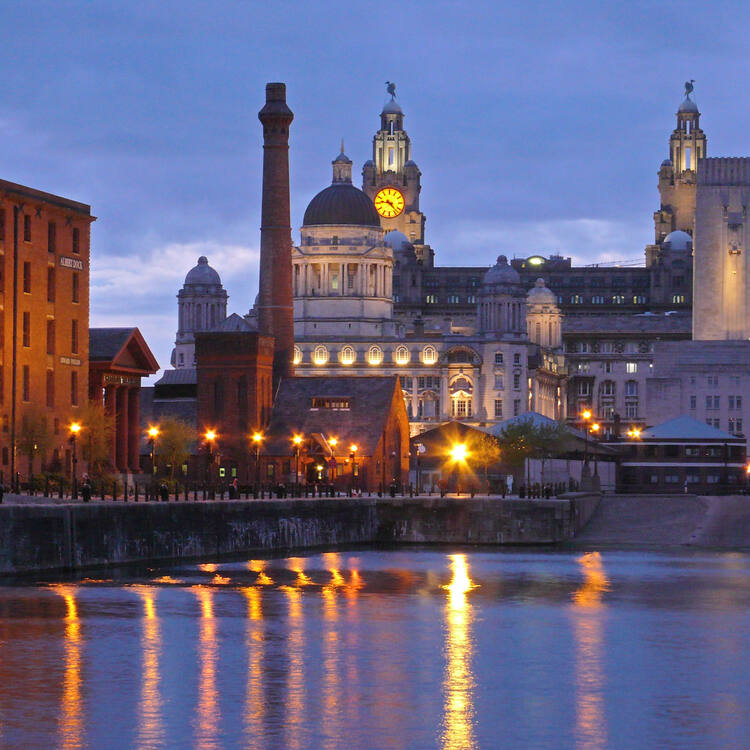
Six areas in the historic centre and docklands of the maritime mercantile City of Liverpool bear witness to the development of one of the world’s major trading centres in the 18th and 19th centuries. Liverpool played an important role in the growth of the British Empire and became the major port for the mass movement of people, e.g. slaves and emigrants from northern Europe to America. Liverpool was a pioneer in the development of modern dock technology, transport systems and port management. The listed sites feature a great number of significant commercial, civic and public buildings, including St George’s Plateau.
Description is available under license CC-BY-SA IGO 3.0
Liverpool – Port marchand
Six zones dans le centre historique et des bassins du port marchand de Liverpool témoignent du développement de l’un des grands centres du commerce mondial aux XVIIIe et XIXe siècles. La ville joua un rôle important dans l’essor de l’Empire britannique et devint le principal point de passage des mouvements migratoires vers l’Amérique, notamment des esclaves et des émigrants. Liverpool fut la pionnière du développement de la technologie portuaire moderne, des systèmes de transport et de la gestion portuaire. Le site comporte un grand nombre d’édifices commerciaux, civils et publics importants, notamment St. George’s Plateau.
Description is available under license CC-BY-SA IGO 3.0
ليفربول – مرفأ تجاري
تشهد ست مناطق من المركز التجاري وعدد من أحواض مرفأ ليفربول التجاري على تطور أحد مراكز التجارة العالمية الكبيرة في القرنين الثامن عشر والتاسع عشر. وقد أدّت المدينة دوراً هاماً في ازدهار الامبراطورية البريطانية واصبحت نقطة المرور الرئيسة لحركات الهجرة الى القارة الأميركية، ولا سيما هجرة العبيد والنازحين. وقد كانت ليفربول رائدة في تطوير تكنولوجيا المرافئ الحديثة وانظمة النقل وادارة المرافئ. ويتضمن هذا الموقع عدداً كبيراً من المباني التجارية والمدنية والعامة الهامة ولا سيما في هضبة سان جورج.
source: UNESCO/CPE
Description is available under license CC-BY-SA IGO 3.0
利物浦海上商城
利物浦海上商城的历史中心分为6个区,见证了18世纪至19世纪世界主要贸易中心的发展历程。利物浦在英联邦的发展史上扮演着重要角色,并成为运送大量人口的主要港口,例如从北欧向美洲运送奴隶和移民。利物浦是现代船舶技术、运输系统和港口管理发展的先驱。这些遗产以大量重要的商业、民用和公用建筑而著称,包括圣乔治高原。
source: UNESCO/CPE
Description is available under license CC-BY-SA IGO 3.0
Ливерпуль – город мореходов и торговцев
Шесть участков в историческом центре и на территории доков Ливерпуля – города мореходов и торговцев - свидетельствуют о развитии одного из крупнейших в мире торговых центров XVIII-XIX вв. Ливерпуль играл важную роль в расширении Британской империи и был главным портом для массового перемещения рабов, а также эмигрантов, направлявшихся из Северной Европы в Америку. Ливерпуль был пионером в развитии современных технологий портового хозяйства, систем транспорта и управления портом.
source: UNESCO/CPE
Description is available under license CC-BY-SA IGO 3.0
Liverpool – Puerto marítimo mercantile
Este sitio comprende seis sectores del centro histórico y la zona portuaria de la ciudad de Liverpool, que patentizan la historia del desarrollo de uno de los centros más importantes del comercio marítimo mundial en los siglos XVIII y XIX. La ciudad de Liverpool no sólo desempeñó un papel de primera importancia en la prosperidad del Imperio Británico, sino que además se convirtió en el principal punto de tránsito de toda una serie de desplazamientos humanos masivos hacia América: comercio de esclavos y emigración de las poblaciones de Europa septentrional. Liverpool fue, además, una ciudad precursora en la creación de tecnologías y métodos de gestión portuarios, así como de sistemas de transporte modernos. El sitio comprende un gran número de importantes edificios comerciales, civiles y públicos, especialmente los del sector de St. George’s Plateau.
source: UNESCO/CPE
Description is available under license CC-BY-SA IGO 3.0
リヴァプール-海商都市
イングランド北部の海商都市・リヴァプールの歴史的中心であり、トック地区でもある6つの登録地は、18~19世紀にかけて世界で最も重要な交易地のひとつとして発展した。リヴァプールは、大英帝国の発展に大きく寄与し、奴隷貿易や北欧からアメリカへの移民など、多くの人々が移動する際の重要な港となった。また、リヴァプールは、現代のドック技術や輸送体系、港湾管理の発展の先駆けともなった。登録された遺産リストには、セント・ジョーンズ・ホールをはじめ、重要な商業施設、民間および公共の建築物などが数多く含まれている。source: NFUAJ
Liverpool – maritieme handelsstad
Zes gebieden in het historische centrum en havengebied van de maritieme handelsstad Liverpool getuigen van de ontwikkeling van een van ’s werelds grootste handelscentra in de 18e en 19e eeuw. Deze gebieden omvatten een groot aantal belangrijke commerciële, civiele en publieke gebouwen, waaronder het Plateau van Sint George, met zijn monumentale culturele en openbare gebouwen. Liverpool speelde een belangrijke rol in de groei van het Britse Rijk en werd de belangrijkste haven voor het vervoer van onder meer slaven en emigranten van Noord-Europa naar Amerika. Liverpool was een pionier qua ontwikkeling van de moderne dock-technologie, transportsystemen en havenbeheer.
Source: unesco.nl


Outstanding Universal Value
Brief synthesis
Located at the tidal mouth of the river Mersey where it meets the Irish Sea, the maritime mercantile City of Liverpool played an important role in the growth of the British Empire. It became the major port for the mass movement of people, including slaves and emigrants from northern Europe to America. Liverpool was a pioneer in the development of modern dock technology, transport systems and port management, and building construction.
Six areas in the historic centre and docklands of Liverpool bear witness to the development of one of the world’s major trading centres in the 18th, 19th and early 20th centuries. A series of significant commercial, civic and public buildings lie within these areas, including the Pier Head, with its three principal waterfront buildings - the Royal Liver Building, the Cunard Building, and Port of Liverpool Building; the Dock area with its warehouses, dock walls, remnant canal system, docks and other facilities related to port activities; the mercantile area, with its shipping offices, produce exchanges, marine insurance offices, banks, inland warehouses and merchants houses, together with the William Brown Street Cultural Quarter, including St. George's Plateau, with its monumental cultural and civic buildings.
Liverpool - Maritime Mercantile City reflects the role of Liverpool as the supreme example of a commercial port at the time of Britain's greatest global influence. Liverpool grew into a major commercial port in the 18th century, when it was also crucial for the organisation of the trans-Atlantic slave trade. In the 19th century, Liverpool became a world mercantile centre for general cargo and mass European emigration to the New World. It had major significance on world trade as one of the principal ports of the British Commonwealth. Its innovative techniques and types of dock, dock facilities and warehouse construction had worldwide influence. Liverpool was instrumental in the development of industrial canals in the British Isles in the 18th century, and of railway transport in the 19th century. All through this period, and particularly in the 19th and early 20th centuries, Liverpool gave attention to the quality and innovation of its architecture and cultural activities. To this stand as testimony its outstanding public buildings, such as St. George's Hall, and its museums. Even in the 20th century, Liverpool has made a lasting contribution, remembered in the success of The Beatles, who were strongly influenced by Liverpool’s role as an international port city, which exposed them to seafarers, culture and music from around the world, especially America.
Criterion (ii): Liverpool was a major centre generating innovative technologies and methods in dock construction and port management in the 18th, 19th and early 20th centuries. It thus contributed to the building up of the international mercantile systems throughout the British Commonwealth.
Criterion (iii): The city and the port of Liverpool are an exceptional testimony to the development of maritime mercantile culture in the 18th, 19th and early 20th centuries, contributing to the building up of the British Empire. It was a centre for the slave trade, until its abolition in 1807, and for emigration from northern Europe to America.
Criterion (iv): Liverpool is an outstanding example of a world mercantile port city, which represents the early development of global trading and cultural connections throughout the British Empire.
Integrity
The key areas that demonstrate Outstanding Universal Value in terms of innovative technologies and dock construction from the 18th to the early 20th century and the quality and innovation of its architecture and cultural activities are contained within the boundaries of the six areas forming the property. The major structures and buildings within these areas are generally intact although some such as Stanley Dock and associated warehouses require conservation and maintenance. The historic evolution of the Liverpool street pattern is still readable representing the different periods, with some alteration following the destruction of World War II.
There has been some re-development on sites previously redeveloped in the mid-late 20th century or damaged during World War II, for example at Mann Island and Chavasse Park, north and east of Canning Dock. All archaeology on these development sites was fully evaluated and recorded; archaeological remains were retained in situ where possible, and some significant features interpreted in the public domain. A new visitor centre has been opened at the north east corner of Old Dock, which has been conserved and exposed after being buried for almost 200 years. The production and adoption of design guidance minimizes the risks in and around the WH property that future development might adversely affect architectural quality and sense of place, or reduce the integrity of the docks.
Authenticity
Within the property, the major dock structures, and commercial and cultural buildings still testify to the Outstanding Universal Value in terms of form and design, materials, and to some extent, use and function. Warehouses at Albert Dock have been skillfully adapted to new uses. Some new development has been undertaken since inscription and has contributed to the city’s coherence by reversing earlier fragmentation. No significant loss of historical authenticity has occurred, as the physical evidence of the City and its great past remain prominent and visible, and in some cases has been enhanced. The main docks survive as water-filled basins within the property and in the buffer zone. The impact on the setting of the property of further new development on obsolete dockland is a fundamental consideration. It is essential that future development within the World Heritage property and its setting, including the buffer zone, should respect and transmit its Outstanding Universal Value.
Protection and management requirements
The property is within the boundary of Liverpool City Council and is protected through the planning system and the designation of over 380 buildings. The six sections of the property are protected as Conservation Areas under the provisions of the Planning (Listed Buildings and Conservation Areas) Act 1990.
The properties within the boundary are in mixed ownership and several institutions have management responsibilities relating to them. The property is subject to different plans and policies, including the Liverpool Unitary Development Plan (2002) and the Strategic Regeneration Framework (July 2001). There are several detailed master plans for specified areas, and conservation plans for the individual buildings. A Townscape Heritage Initiative for Buildings at Risk in the World Heritage site and its buffer zone is successfully encouraging and assisting the restoration of buildings within designated areas of the property. A full Management Plan has been prepared for the property. Its implementation is overseen by the Liverpool World Heritage Site Steering Group, which includes most public bodies involved in the property.
At the time of inscription, the World Heritage Committee requested that the height of any new construction in the property should not exceed that of structures in the immediate surroundings; the character of any new construction should respect the qualities of the historic area, and new construction at the Pier Head should not dominate, but complement the historic Pier Head buildings. There is a need for conservation and development to be based on an analysis of townscape characteristics and to be constrained by clear regulations establishing prescribed heights of buildings.
A Supplementary Planning Document for Development and Conservation in and around the World Heritage site addresses the management issues raised by the World Heritage Committee in 2007 and 2008 and was formally adopted by the Liverpool City Council in October 2009.
 View photos from OUR PLACE the World Heritage collection




List of World Heritage in Danger
Inscription Year on the List of World Heritage in Danger
2012 -2021