Liverpool – Maritime Mercantile City
Factors affecting the property in 2012*
- Commercial development
- Housing
- Interpretative and visitation facilities
- Management systems/ management plan
Factors* affecting the property identified in previous reports
Urban development projects:
a) Lack of overall management of new developments;
b) Lack of analysis and description of the townscape characteristics relevant to the Outstanding Universal Value of the property and important views related to the property and its buffer zone;
c) Lack of clearly established maximum heights for new developments, for the backdrops of the World Heritage areas as well as along the waterfront;
d) Lack of awareness of developers, building professionals and the wider public about the World Heritage property, its Outstanding Universal Value and requirements under the World Heritage Convention.
International Assistance: requests for the property until 2012
Total amount approved : 0 USD
Missions to the property until 2012**
October 2006: joint World Heritage Centre / ICOMOS reactive monitoring mission; November 2011: joint World Heritage Centre / ICOMOS reactive monitoring mission.
Conservation issues presented to the World Heritage Committee in 2012
The State Party submitted a report on the state of conservation of the property on 28 February 2012 responding to the decisions made by the World Heritage Committee at its 35th session (UNESCO, 2011). A joint World Heritage Centre / ICOMOS reactive monitoring mission was carried out from 14 to 16 November 2011. The mission report is available online at the following web address: https://whc.unesco.org/en/list/1150/documents/
a) Proposed development of Liverpool Waters
Liverpool Waters is a major, large scale £5.5 bn development project that will be implemented over a 30-year period. The project has been submitted by the company, Peel Holdings, for outline planning permission. The development site of 60 ha covers part of the inscribed property as well as part of its buffer zone. It stretches 2 km along the waterfront from Princes Dock and the King Edward Triangle, north of Pier Head, up to Bramley Moore Dock, at the northernmost extent of the site and covers 12 docks or former docks. It foresees a total mixed use developmentof 1 278 000 m² (residential, offices, restaurants, cafés, shops, community services) plus 413 000 m² of underground parking, and includes proposals for a cluster of tall buildings within the buffer zone. It also includes a Conservation Management Plan that contains policies and principles for the protection of heritage and an action plan for their repair and conservation.
In 2011, the developer submitted updated planning applications which were considered by the Liverpool City Council; the materials included a new Heritage Impact Assessment, following guidance developed by ICOMOS. As for the impact assessments, the State Party indicates that the ones produced by Peel Holdings, the developer, and Liverpool City Council have come to different conclusions than those from English Heritage (the State Party’s statutory advisor) which noted the significant and damaging negative impact on the Outstanding Universal Value (OUV) of the property. English Heritage supports the need to regenerate the extensive areas of former docks, but considers that the proposals would impact adversely on the historic character of Liverpool as a whole and on the OUV, authenticity and integrity of the property. It noted, among other impacts, that the proposed tall buildings could potentially cause the loss of the links between the docks and the river, an important attribute of the property.
Additional information received from the State Party includes the statutory advice from English Heritage.
Regarding compliance with the World Heritage Management Plan and with the Liverpool Urban Development Plan, the State Party indicates that both Peel Holdings and Liverpool City Council consider that the proposed development is, in principle, in compliance with both planning tools. It states the vision in the Management Plan considers that the Central Docks development should result in a premier residential scheme with improved access and linkages while the area is considered for mixed used developments in the Unitary Development Plan.
Finally, the State Party describes the planning procedures in place to determine whether planning consent should be granted, but states that the UK Government cannot direct that a proposal be rejected.
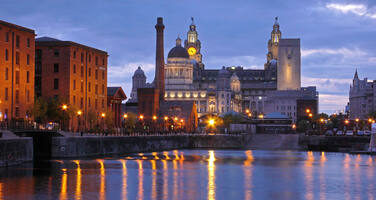
The mission concluded that, in terms of visual perception, the redevelopment scheme will fragment and isolate the different dock areas, instead of integrating them into one continuous historic urban landscape. The mission considers that the development scheme does not reflect, nor evolve from the fragile and subtle yet significant heritage structures present in the dock areas. Instead it treats the inscribed site and its buffer zones very differently (in terms of building height), while introducing the same mass and typology throughout. It also considers that the introduction of a cluster of high-rise buildings, with towers three times the height of the Three Graces, would destroy the more or less symmetrical city profile which is expressed as a three-tiered urban structure including the waterfront, the massing and height of the Three Graces, and the shoulders of the Anglican Cathedral on the ridge overlooking the city, with the historic docklands to the north to complement those to the south, putting the Three Graces centre-stage.
The mission supported the findings of the comprehensive Heritage Impact Assessment commissioned by English Heritage and noted that, in spite of the differing conclusions in terms of the rate and extent of visual and physical impacts on heritage assets, even Peels’ Heritage Impact Assessment indicates that several key views from the north back to the Three Graces will be blocked by the new developments, and the hard-won views of the Three Graces from Albert Dock, over the residential buildings of Mann Island, will disappear against a backdrop of super towers (including the “Shanghai Tower”).
The mission further concluded that, if the proposed Liverpool Waters scheme as outlined were to be implemented, the World Heritage property would be irreversibly damaged due to a serious deterioration of its architectural and town-planning coherence, a serious loss of historical authenticity, and an important loss of cultural significance. It also noted that the proposed development in the buffer zone would result in the modification of the functional hierarchy and morphology expressed by the port circulation system (river – sluices – dock – water basins), as well as by the historical typologies of the port industrial structures and services, thus affecting the conditions of authenticity. It also considered that the possible loss of important archaeological assets and the alterations of the relationship of the different areas of the property would affect its integrity.
The report submitted by the State Party notes the conclusions of the reactive monitoring mission regarding the proposed Liverpool Waters development. It mentions that discussions between the Liverpool City Council, Peel Holdings and English Heritage have, over the past two years, continued to seek a compromise that would allow the development to happen while preserving the status of the property. The application has changed in terms of preparing an Archaeological Deposit Model to provide better protection for below-ground archaeology. The State Party notes that since no physical evaluation has been implemented to test the model, the possibility of developing effective mitigation strategies is limited given that there is no certainty where significant archaeology exists. Overall English Heritage has concluded that the proposed amendments represent adjustments rather than substantive responses to concerns raised.
On 8 March 2012, the State Party informed the World Heritage Centre that Liverpool City Council is inclined to grant consent to the proposals submitted by Peel Holdings. Given that English Heritage has maintained an objection to the proposal, the City Council will now refer the planning application to the Secretary of State for Communities and Local Government who will decide whether the City Council can grant consent, or whether the application should call in for a public inquiry. The State Party considers there is a robust process in place to examine all issues to reach an objective decision.
b) State of conservation of the property
The State Party reports conservation conditions have improved through the concerted actions of the City Council and other stakeholders to develop conservation schemes and to improve the spatial planning system, both at the national level and at the local one through the development of Supplementary Planning Document (SPD, 2009), which expands on the provisions made in the Unitary Development Plan. The criteria are to seek to ensure that no development is allowed that can impact on the OUV of the property. The report also mentions the on-going process to review planning policy guidance to develop a more succinct National Planning Policy Framework (NPPF). The State Party recognizes the concerns about the potential constructions of two secondary clusters of tall buildings that were raised by the mission. The report also notes the proposal for interventions at the Stanley Dock Warehouses that has received planning consent subject to completion of a Section 106 Agreement. As for Wellington Dock, the report indicates that the proposal pertains to the infill of Wellington Dock to extend the wastewater treatment plant at Sandon Dock. English Heritage raised concerns about the impact of the proposals on the integrity and authenticity of the dock and recommended that alternative locations were considered for the treatment works, but recognized that this option would not represent a sustainable solution. Given the exceptional justification, English Heritage withdrew previous objections and consent for the works was granted in January 2012. Works are expected to be finalized by 2016.
The mission noted the significant progress made in the implementation of the recommendations of the 2006 reactive monitoring mission to the site and the positive actions carried out for the conservation of the property as well as the improvement in terms of the management and planning frameworks. The mission reported that the property is in overall good state of conservation.
Analysis and Conclusion by World Heritage Centre and the Advisory Bodies in 2012
The World Heritage Centre and the Advisory Bodies recommend to the World Heritage Committee to express serious concern about the proposed development of Liverpool Waters and the fact that Liverpool City Council is inclined to grant consent to the proposals submitted by Peel Holdings, in spite of the objections that have been expressed by English Heritage.
They are of the view that amendments made to the planning application have not substantially addressed concerns regarding the major negative impacts that have been identified through the Heritage Impact Assessment undertaken by English Heritage.
While acknowledging the need for the regeneration of the historic docklands, the World Heritage Centre and the Advisory Bodies note that this application is an outline, with development foreseen over a period of almost 30 years and with lack of precision in terms of which parameters would be approved and fixed and which would be merely indicative. This blanket approval for development is an additional reason for concern as there are no precise indications on how future proposals might further impact the heritage attributes and the setting of the property.
The World Heritage Centre and the Advisory Bodies are also of the view that the scale and extent of the proposed development would overwhelm the northern dock area and make it extremely difficult for the property to convey its OUV. The proposed development has the potential to irreversibly damage the attributes that sustain the OUV of the property and threaten its authenticity and integrity. They consider that the property meets the criteria of potential danger and recommend to the World Heritage Committee to inscribe it on the List of World Heritage in Danger. Furthermore, the World Heritage Committee might wish to consider deletion of this property from the World Heritage List, should the current project be approved and implemented.
Summary of the interventions
Decisions adopted by the Committee in 2012
36 COM 7B.93
Liverpool – Maritime Mercantile City (United Kingdom of Great Britain and Northern Island) (C 1150)
The World Heritage Committee,
1. Having examined Document WHC-12/36.COM/7B.Add,
2. Recalling Decision 35 COM 7B.118 adopted at its 35th session (UNESCO, 2011),
3. Acknowledges the information provided by the State Party in regard to the state of conservation of the property and welcomes the progress made in the implementation of the recommendations from the 2006 joint World Heritage Centre/ICOMOS reactive monitoring mission;
4. Notes the results of the November 2011 reactive monitoring mission, including the evaluation of the current conditions of the property, and encourages the State Party to implement its recommendations;
5. Also notes that the Liverpool City Council is inclined to grant consent to the application submitted by the developer and expresses its serious concern at the potential threat of the proposed development of Liverpool Waters on the Outstanding Universal Value of the property;
6. Urges the State Party to reconsider the proposed development to ensure that the architectural and town-planning coherence, and the conditions of authenticity and integrity of the property are sustained;
7. Considers that the proposed development of Liverpool Waters constitutes a potential danger to the World Heritage property and, therefore, decides to inscribe Liverpool – Maritime Mercantile City (United Kingdom of Great Britain and Northern Ireland) on the List of World Heritage in Danger, with the possibility of deletion of the property from the World Heritage List, should the current project be approved and implemented;
8. Requests the State Party to develop, in consultation with the World Heritage Centre and the Advisory Bodies, a proposal for the Desired state of conservation for the removal of the property from the List of World Heritage in Danger and a set of corrective measures, for examination by the World Heritage Committee at its 37th session in 2013;
9. Also requests the State Party to submit to the World Heritage Centre, by 1 February 2013, a report on the state of conservation of the property and on the steps taken to implement the above-mentioned recommendations for examination by the World Heritage Committee at its 37th session in 2013.
36 COM 8C.1
Establishment of the World Heritage List in Danger (Inscribed Properties)
The World Heritage Committee,
- Following the examination of the state of conservation reports of properties inscribed on the World Heritage List (WHC-12/36.COM/7B and WHC-12/36.COM/7B.Add) and of proposals for inscription of properties on the World Heritage List (WHC-12/36.COM/8B and WHC-12/36.COM/8B.Add),
- Decides to inscribe the following properties on the List of World Heritage in Danger:
- Mali, Timbuktu (Decision 36 COM 7B.106)
- Mali, Tomb of Askia (Decision 36 COM 7B.106)
- Palestine, Birthplace of Jesus: Church of the Nativity and the Pilgrimage Route, Bethlehem (Decision 36 COM 8B.5)
- Panama, Fortifications on the Caribbean Side of Panama: Portobelo-San Lorenzo (Decision 36 COM 7B.102)
- United Kingdom of Great Britain and Northern Ireland, Liverpool – Maritime Mercantile City (Decision 36 COM 7B.93)
Draft Decision: 36 COM 7B.93
The World Heritage Committee,
1. Having examined Document WHC-12/36.COM/7B.Add,
2. Recalling Decision 35 COM 7B.118 adopted at its 35th session (UNESCO, 2011),
3. Acknowledges the information provided by the State Party in regard to the state of conservation of the property and welcomes the progress made in the implementation of the recommendations from the 2006 joint World Heritage Centre / ICOMOS reactive monitoring mission;
4. Notes the results of the November 2011 reactive monitoring mission, including the evaluation of the current conditions of the property, and encourages the State Party to implement its recommendations;
5. Also notes that the Liverpool City Council is inclined to grant consent to the application submitted by the developer and expresses its serious concern at the potential threat of the proposed development of Liverpool Waters on the Outstanding Universal Value of the property;
6. Urges the State Party to reconsider the proposed development to ensure that the architectural and town-planning coherence, and the conditions of authenticity and integrity of the property are sustained;
7. Considers that the proposed development of Liverpool Waters constitutes a potential danger to the World Heritage property and, therefore, decides to inscribe Liverpool – Maritime Mercantile City (United Kingdom of Great Britain and Northern Ireland) on the List of World Heritage in Danger, with the possibility of deletion of the property from the World Heritage List, should the current project be approved and implemented;
8. Requests the State Party to develop, in consultation with the World Heritage Centre and the Advisory Bodies, a proposal for the Desired state of conservation for the removal of the property from the List of World Heritage in Danger and a set of corrective measures, for examination by the World Heritage Committee at its 37th session in 2013;
9. Also requests the State Party to submit to the World Heritage Centre, by 1 February 2013, a report on the state of conservation of the property and on the steps taken to implement the above-mentioned recommendations for examination by the World Heritage Committee at its 37th session in 2013.
 United Kingdom of Great Britain and Northern Ireland
Exports
* :
The threats indicated are listed in alphabetical order; their order does not constitute a classification according to the importance of their impact on the property.
Furthermore, they are presented irrespective of the type of threat faced by the property, i.e. with specific and proven imminent danger (“ascertained danger”) or with threats which could have deleterious effects on the property’s Outstanding Universal Value (“potential danger”).
** : All mission reports are not always available electronically.