Liverpool – Maritime Mercantile City
Factors affecting the property in 2011*
- Commercial development
- Housing
- Management systems/ management plan
Factors* affecting the property identified in previous reports
Urban development projects:
a) Lack of overall management of new developments;
b) Lack of analysis and description of the townscape characteristics relevant to the Outstanding Universal Value of the property and important views related to the property and its buffer zone;
c) Lack of clearly established maximum heights for new development, for the backdrops of the World Heritage areas as well as along the waterfront;
d) Lack of awareness of developers, building professionals and the wider public about the World Heritage property, its Outstanding Universal Value and requirements under the World Heritage Convention.
International Assistance: requests for the property until 2011
Total amount approved : 0 USD
Missions to the property until 2011**
October 2006: joint World Heritage Centre / ICOMOS reactive monitoring mission
Conservation issues presented to the World Heritage Committee in 2011
On 25 February 2011, the State Party submitted a state of conservation report followed by supplementary information on 5 April 2011, in response to a request from the World Heritage Centre for details on the proposed Liverpool Waters Development. Preliminary information on the proposed Liverpool Waters Development was submitted in 2010, in accordance with Paragraph 172 of the Operational Guidelines.
The proposed development covers 60 ha in the property and its buffer zone to the north of Pier Head. It extends some 2km along the waterfront and covers five docks with open water: Bramley Moore Dock, Nelson Dock, Salisbury Dock, Collingwood Dock, (all protected Grade II), Princes Dock, Princes Half-Tide Dock and East Waterloo Dock, and other former dock areas of West Waterloo Dock and Trafalgar Dock have been subject to earlier in-filling.
The dock site is reclaimed land – a feature of the development of the Liverpool Docks – bounded by the River Mersey in the west and by the Dock Wall and Tobacco Warehouses in the East. The docks are characterized by their monumental construction and materials of granite and sandstone, as is the river wall and the major part of the Dock Wall which is built of cyclopean granite. Some of the original entrances have associated entrance lodges, built of brick and granite, and monumental entrances. The docks originally housed single storey linear transit sheds on the quaysides, with ancillary facilities such as entrance lodges, cranes and an elevated railway. The site historically had the character of a low-rise, utilitarian and industrial area.
An outline planning application for the Master Plan was submitted in October 2010. This includes proposals for 9,152 residential units, 305,499 sqm of commercial business space, 69,735 sqm of hotel and conference space as well as retail, leisure and community facilities and a cruise ship terminal. The scheme proposes a high density of development and incorporates two clusters of tall buildings, with towers up to approximately 195 metres in height, and a series of medium rise blocks, approaching 45 metres high, along the river frontage. Many of the buildings have underground parking. The scheme is planned to be developed over at least a 30 year period.
As the Environmental Impact Assessment submitted by the developer has failed to consider adequately the impact of the proposals on the Outstanding Universal Value (OUV) of the property, and because of the scale of the proposals, the State Party report included a separate, independent Impact Assessment commissioned by English Heritage, the Government‘s adviser on the historic environment. This detailed report was based on the approved Statement of Outstanding Universal Value and considered impact on the attributes of the OUV. The overall conclusion of this assessment is that the proposals will result in an array of negative impacts on the OUV (a number of which will be of major magnitude), and that overall there will be a significantly damaging impact on the OUV.
In detail, the assessment considered that the vital relationship of the property with the river will be severely compromised through mid-rise buildings on the sea wall; the legibility of the Central Docks and the central commercial core of the City will be damaged by the secondary cluster of tall buildings; the cumulative effect of the development will be to overwhelm the defining traditional characteristics of the area with opposing modern ones (in other words, low, horizontal and transverse historic emphases will be replaced by height, verticality and the longitudinal); the underground archaeology will be compromised by the insertion of underground parking across historic dock walls, into the bottoms of dock basins, and into the fill of historic quaysides; and the failure of the development to respect fundamental notions of form and function will damage authenticity. The scheme is also said to be non‐compliant with national and local policies, including Liverpool City Council’s Urban Development Plan.
The Management Plan for the property, parts of which were adopted as supplementary planning guidance following the recommendations of the 2006 mission, has also not been respected. An objective of the plan states that Liverpool City Council will ‘ensure that new development respects the significance of the Site and is appropriate to the historic urban grain and the architectural and townscape context’.
Analysis and Conclusion by World Heritage Centre and the Advisory Bodies in 2011
The World Heritage Centre and the Advisory Bodies observe that the Master Plan has progressed so far although it is not in compliance with the Management Plan for the property nor with the Urban Development Plan. At the time of inscription, the protection for the property was accepted on the basis of adequate planning and development control mechanisms. The 2006 mission highlighted the impressive planning system that had been put in place and stated that it was agreed, that the ‘inscription should call for the introduction of a stricter regime of planning control based on a thorough analysis and description of townscape characteristics and sense of place. These then should be taken as a point of departure to establish consensus upstream over the extent and range of development in and around the World Heritage property, and ways and means to achieve this. Benefits would include more consistency in decision-making and more clarity for the public at large, including developers and local heritage conservation groups, as well as the World Heritage Committee. It also said that “for the moment, no additional statutory controls follow from the inclusion of a site in the World Heritage List although, in accordance with the guidance, the outstanding international importance of a World Heritage site as a key material consideration must be taken into account by local planning authorities in determining planning and listed building consent applications”.
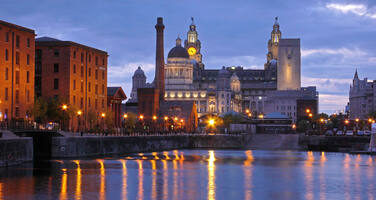
The World Heritage Centre and the Advisory Bodies highlight the fact that that the proposed development has been shown by the independent Impact Assessment to represent a major threat to the property, which will have irreversible consequences. If constructed, the whole area would completely engulf the historic docks and all what would be visible is the water between the buildings. The tobacco warehouses behind would be dwarfed and there would appear to be absolutely no way that the historic docks could be “read” from the river or their association with the warehouses, dock wall, and commercial quarter with its Three Graces (Royal Liver Building, Cunard Building, Port of Liverpool Building) be understood. Both the authenticity and integrity of the property would be severely compromised and the OUV threatened.
Summary of the interventions
Decisions adopted by the Committee in 2011
35 COM 7B.118
Liverpool – Maritime Mercantile City (United Kingdom) (C 1150)
The World Heritage Committee,
1. Having examined Document WHC-11/35.COM/7B.Add,
2. Expresses its extreme concern at the proposed development of Liverpool Waters in terms of the potential impact of its dense, high and mid-rise buildings on the form and design of the historic docks and thus on the Outstanding Universal Value of the property;
3. Notes that the independent Impact Assessment commissioned by English Heritage clearly sets out the significantly damaging negative impact on the Outstanding Universal Value of the property;
4. Also notes that the proposed development is not in compliance with the property Management Plan nor with the Liverpool Urban Development Plan;
5. Urges the State Party to ensure that these proposals are not approved, as failure to do so could lead to consideration of loss of the Outstanding Universal Value of the property;
6. Requests the State Party to invite a joint World Heritage Centre/ICOMOS reactive monitoring mission, as soon as possible, to assess planning procedures and the overall development strategies for the property;
7. Also requests the State Party to submit to the World Heritage Centre, by 1 February 2012, an updated report on the state of conservation of the property and on the implementation of the above, for examination by the World Heritage Committee at its 36th session in 2012.
Draft Decision: 35 COM 7B.118
The World Heritage Committee,
1. Having examined Document WHC-11/35.COM/7B.Add,
2. Expresses its extreme concern at the proposed development of Liverpool Waters in terms of the potential impact of its dense, high and mid-rise buildings on the form and design of the historic docks and thus on Outstanding Universal Value of the property;
3. Notes that the independent Impact Assessment commissioned by English Heritage clearly sets out the significantly damaging negative impact on the Outstanding Universal Value of the property;
4. Also notes that the proposed development is not in compliance with the property Management Plan nor with the Liverpool Urban Development Plan;
5. Urges the State Party to ensure that these proposals are not approved, as failure to do so could lead to consideration of loss of the Outstanding Universal Value of the property;
6. Requests the State Party to invite a joint World Heritage Centre/ICOMOS reactive monitoring mission, as soon as possible, to assess planning procedures and the overall development strategies for the property;
7. Also requests the State Party to submit to the World Heritage Centre, by 1 February 2012, an updated report on the state of conservation of the property and on the implementation of the above, for examination by the World Heritage Committee at its 36th session in 2012, with a view to considering, in the absence of substantial progress, the possible inscription of the property on the List of World Heritage in Danger.
 United Kingdom of Great Britain and Northern Ireland
Exports
* :
The threats indicated are listed in alphabetical order; their order does not constitute a classification according to the importance of their impact on the property.
Furthermore, they are presented irrespective of the type of threat faced by the property, i.e. with specific and proven imminent danger (“ascertained danger”) or with threats which could have deleterious effects on the property’s Outstanding Universal Value (“potential danger”).
** : All mission reports are not always available electronically.