Le centre historique de Bruges
Belgique
Date d'inscription : 2000
Critères : (ii)(iv)(vi) Zone centrale : 410 ha Zone tampon : 168 ha N51 12 32.076 E3 13 30.972 Ref: 996 |
NHK World Heritage 100 Series (en anglais)
Texte narratif (en anglais)
The Flanders region of Western Belgium is connected by canals to the North Sea. The textile trade flourished here during the 13th and 14th centuries. This was the beginning of the Golden Age of Brugge as a trading center.
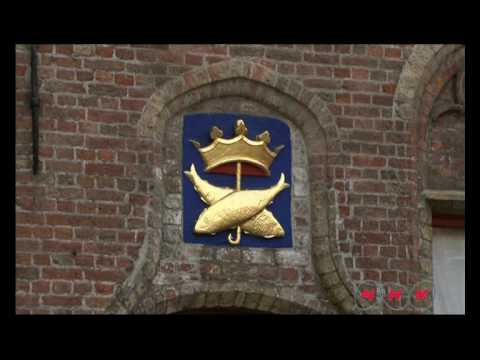
However in the late 15th century, the canals became blocked with mud and the city inaccessible by ship. Trading declined. Flanders used to produce high-class wool fabrics using wool imported from Britain. Merchant houses at the height of their prosperity were called Guild Houses. There are signs above the doorways.
This is a fish shop. The signs were convenient for the many people of the time who couldn’t read. Under this barrel is the face of Bacchus. These signs show the procedures for leather-making. Here hammering an animal hide with a stone after washing. And here tanning leather.
The building on the right used to be the house of a merchant called Bourse. The world’s first stock exchange was founded here. This is "Bourse" in the local language. Bruges became a thriving center for finance and joined the "Hanseatic League". Merchants pioneered the town’s construction. This belfry was built as a watchtower and became a symbol of the town’s independence. In the top part of the Belfry, a set of bells called Carillon tells the time.
The canals, once the pride of the town, silted up and the town declined during the industrial revolution. Time has stopped in this medieval town. Its beautiful reflection unchanged for centuries.


Nations Unies - Copyright © 1992-2008 UNESCO Centre du patrimoine mondial, Tous droits réservés |