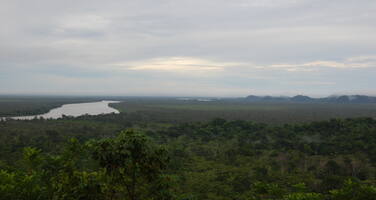
Los Katíos National Park
Factors affecting the property in 2012*
- Civil unrest
- Ground transport infrastructure
- Identity, social cohesion, changes in local population and community
- Illegal activities
- Major linear utilities
- Management systems/ management plan
Factors* affecting the property identified in previous reports
a) Armed conflict;
b) Illegal extraction of natural resources;
c) Threats from major infrastructure projects;
d) Lack of control of management agency.
Threats for which the property was inscribed on the List of World Heritage in Danger
- Illegal logging
- Unauthorized settlements
- Fishing and hunting
- Threats from major infrastructure projects
Desired state of conservation for the removal of the property from the List of World Heritage in Danger
Drafted; proposed for adoption in the draft Decision below
Corrective Measures for the property
A set of interim corrective measures were proposed by the State Party and noted by the Committee in Decision 34COM 7A.14 (see page https://whc.unesco.org/en/list/711/documents ).
A revised set of corrective measures have been drafted by the 2011 monitoring mission and proposed for adoption in the draft Decision below
Timeframe for the implementation of the corrective measures
International Assistance: requests for the property until 2012
Total amount approved : 73,000 USD
| 2009 | Threats mitigation over the outstanding universal ... (Approved) | 30,000 USD |
| 2002 | Management Plan for Los Katios National Natural Park (Approved) | 43,000 USD |
Missions to the property until 2012**
November 2011: Joint WHC/IUCN Mission to Bogota in lieu of visit to the property
Conservation issues presented to the World Heritage Committee in 2012
On 27 February 2012, the State Party submitted a brief state of conservation report to the World Heritage Centre, which included an updated retrospectiveStatement of Outstanding Universal Value (RSOUV), along with a proposed Desired state of conservationfor the removal of the property from the List of World Heritage in Danger, developed in cooperation with the World Heritage Centre during the reactive monitoring mission from 22 to 25 November 2011. The mission was not able to visit the property due to security concerns expressed by the United Nations Department of Safety and Security, but instead held consultation meetings with the State Party and other stakeholders in the capital Bogota. The State Party noted during the mission that for the past three years, due to an agreement with the armed forces of Colombia, there has been more frequent patrols in the area, and that insecurity was no longer a concern of the National Parks Service in carrying out its mandate in the area. The mission report is available online at the following web address: https://whc.unesco.org/en/sessions/36COM.
In Decision 34 COM 7A.14, the Committee requested the State Party to implement a set of interim corrective measures. Based on the State Party report and the information collected by the monitoring mission, the following progress is reported:
a) Complete and implement the control and monitoring Action Plan, including the construction of ranger stations, the provision of equipment and the maintenance of adequate numbers of park personnel
A Local Action Plan for Prevention, Control and Monitoring was adopted in 2011, accompanied by a formal monitoring strategy. The Plan outlines the various management issues on a sector by sector basis along with a detailed threats analysis. It also aims to identify priorities and mechanisms through which management can involve local communities.
The State Party has completed the refurbishment and furnishing of five strategically located ranger stations in and around the property, with another three expected to be completed in 2012. Extensive signage has been installed and, at the time of the mission, 22 persons were reported to be working for the Park, though the February 2012 State Party report indicates only 16. The State Party is aware of the precarious nature of its capacity to manage the property. It indicates that several park staff are currently paid through project financing that comes to an end at the end of 2012. This impermanent nature of park staff puts in doubt the State Party’s long term capacity to ensure effective control and surveillance work in and around the property.
Monitoring of fisheries are a specific target of the monitoring plan as communities living next to the property are highly dependent on freshwater fish for their subsistence, but until recently, the State Party had no information on the sustainability of their catches. A participatory fish catch monitoring programme was established two years ago, and with the information being gathered, the State Party will soon be in the position to draw conclusions on this practice, and adopt corresponding management measures. The perennity of this effort will depend on sustainable financing, which has not yet been secured.
Water pollution, cited in the 2008 State Party report to the Committee, emanates in most part from a community located close to the boundaries of the property. The pollution is mostly made up of human and solid waste. As this community is located on this large river, downstream from the property, any pollution so generated is quickly diluted and washed further out beyond the property boundaries. The State Party indicated that there are reports of fishing practices using toxic chemicals, though there is no information on the extent to which this is taking place.
Based on the State Party’s affirmations, the pollution emanating from the small downstream human settlements does not appear to pose a serious threat to the property, but the use of toxic chemicals for fishing should be strictly prohibited.
b) Prevent illegal logging within the property by establishing the capacity, at site level, to apprehend and bring to justice the instigators of such activities, and by carrying out communication campaigns with the local communities
Dialogue between the National Parks Agency and the pertinent government agencies responsible for forest management is on-going, in an effort to ensure that only legal timber enters the commercial stream. The State Party reported knowing the location of illegal logging sites, and indicated that only a relatively small portion of the property (e.g. several hundred hectares) was affected. It reported that more frequent ranger surveillance has helped reduce this activity, though the newly and legally established Wounaan community (see point d below) within the property raises new concerns over the potential for increased forest clearing for agriculture.
c) Implement alternative and sustainable livelihoods programmes for affected communities surrounding the property in the framework of a wider programme for the reduction of incentives for illegal logging
With support from the United States Agency for International Development (USAID) and international NGOs, the State Party reports being engaged in improving food security in areas of horticulture and fisheries. It is also supporting work on community governance, training in small business development and environmental education. A more systematic approach to helping develop sustainable livelihoods would more likely ensure the perennity and effectiveness of these efforts.
d) Complete the resettlement process for those people who have recently established themselves within the Park boundaries
In 2011, a relatively small group of indigenous Wounaan entered the Park, living in an area of the Park which they consider their ancestral land. Their land claim in the Park was recently recognized by the State Party. Under Colombian law, communities residing within protected areas must negotiate a community Management Plan with the National Government, to ensure that their activities remain sustainable and do not undermine the values for which a protected area is recognized. This process is underway in regards to the Wounaan in Los Katíos National Park, though the State Party has indicated that it could be several years before it is finalized.
e) Resolve the incompatibility between the State Party's obligation to conserve the property's Outstanding Universal Value, and the proposed large infrastructure projects currently under consideration
The State Party reports that the Pan-American Highway proposal did not move beyond the discussion phase and is no longer being seriously proposed. It noted that discussions over this roadway have waxed and waned for several decades. The State Party indicated that highway construction through a National Park was not permitted under the Colombian constitution, nor was the reduction of Park area permitted, providing high level legal protection against further consideration of a road passing through the property, if not nearby.
The State Party report indicates that in 2010, the Ministry of the Environment had denied a licence for the construction of an electrical utilities corridor intended to link Colombia with Panama. However, the World Heritage Centre and IUCN note that various internet news sources, including one belonging to the Government of Colombia (see: http://www.regiones.gov.co/Mesoamerica/Prensa/Paginas/110829a-interconexion-electrica-colombia-panama.aspx), which indicate that a formal agreement had been concluded between the two Governments in August 2011, and that the necessary legal preparations in both countries were underway. The State Party informed the mission that an electrical utilities corridor would be constructed near the property boundary in order to supply communities beyond who did not yet have electricity. In its 2008 report to the Committee, the State Party mentioned the threat arising from the possible construction of an interoceanic canal. Further investigation and discussions with the State Party during the monitoring mission revealed that there are currently no plans at any Governmental level for such infrastructure. Similarly, concerns expressed in the same report over a potential hydroelectric dam in the property were not substantiated in follow-up investigations.
Analysis and Conclusion by World Heritage Centre and the Advisory Bodies in 2012
The World Heritage Centre and IUCN note that there has been progress on several of the concerns raised at the time of inscription of the property on the List of World Heritage in Danger, and that several of these issues have been settled or are close to being settled. They take note that a number of potential major infrastructure projects, including the Pan-American Highway, interoceanic canals and hydroelectric power plants, do not at this time pose a threat to the property. Water pollution appears to be a relatively minor issue though fishing using toxins should be rigorously prohibited. The World Heritage Centre and IUCN wish to draw the Committee’s attention to the fact that the only infrastructure project of immediate concern is the planned electrical utilities corridor near the property and recommend that the Committee request the State Party to undertake an Environmental Impact Assessment on this proposal’s potential effects on the property’s Outstanding Universal Value.
The World Heritage Centre and IUCN also note that the property is subjected to relatively minor levels of illegal logging and associated illegal hunting, and note that while the State Party is confident that with the new field stations, these practices will be better monitored and controlled, this will depend on its capacity to retain a minimum number of staff at the property – which does not appear to be assured at this time.
The World Heritage Centre and IUCN note that the recent indigenous Wounaan settlement within the property is compatible with Colombian legislation and protected area policies and can also be justified according to the Operational Guidelines, provided that conservation objectives are not compromised. Clear negotiated natural resource use agreements are needed, and until these have been finalized and implemented, there is on-going serious concern over how this newly established community may affect the property’s Outstanding Universal Value over time.
Based on the above-mentioned findings, the reactive monitoring mission together with the State Party updated the corrective measures and developed a proposal for the Desired state of conservation for the removal of the property from the List of World Heritage in Danger.
Summary of the interventions
Decisions adopted by the Committee in 2012
36 COM 7A.16
Los Katios National Park (Colombia) (N 711)
The World Heritage Committee,
1. Having examined Document WHC-12/36.COM/7A.Add,
2. Recalling Decision 35 COM 7A.16, adopted at its 35th session (UNESCO, 2011),
3. Endorses the recommendations expressed by the reactive monitoring mission;
4. Welcomes the efforts of the State Party to implement the interim corrective measures adopted by the World Heritage Committee at its 34th session, in particular efforts at providing adequate human resources for the management of the property;
5. Takes note that major infrastructure projects such as canals and highways do not at this time present a threat to the property, however requests the State Party to inform the Committee should such projects be proposed in the future, in line with Paragraph 172 of the Operational Guidelines;
6. Also requests that an Environmental Impact Assessment be duly carried out for the electrical utilities corridor planned near the property’s boundaries, including an evaluation of its potential impacts on the property’s Outstanding Universal Value, in order to inform project design and operations;
7. Urges the State Party to implement the updated technical corrective measures to restore the integrity of the property, and to submit a financial estimation of the costs to implement the updated corrective measures:
a) Illegal logging, hunting and fishing: Control illegal logging, related illegal hunting, and inappropriate use of fishing techniques by investing in monitoring, control and law enforcement to further implement the Action Plan ‘Plan Choque’, while increasing the involvement of local communities in the governance of Los Katios National Park and promoting legal livelihood alternatives for them in the surrounding landscape,
b) Settlements within the property: Finalize and implement comprehensive natural resource use agreements with the Wounaan community within the property,
c) Mega projects: Integrate World Heritage concerns into Environmental Impact Assessments for development projects affecting the property, and ensure that its Outstanding Universal Value is not threatened by mega projects including the planned electrical utilities corridor,
d) Security: Ensure that the National Park’s staff are able to carry out their work without disturbance, guaranteeing a minimum stable number of permanent staff required for the monitoring and surveillance of the property;
8. Considers that the Desired state of conservation indicators intended to measure the restoration of the values and ecological integrity of the property, which were jointly developed by the State Party and the 2011 monitoring mission, should be reached to enable the removal of the property from the List of World Heritage in Danger;
9. Further requests the State Party to submit to the World Heritage Centre, by 1 February 2013, a detailed report on the state of conservation of the property and the implementation of the above, with a particular focus on the advances related to the corrective measures, for examination by the World Heritage Committee at its 37th session in 2013;
10. Decides to retain Los Katios National Park (Colombia) on the List of World Heritage in Danger.
36 COM 8C.2
Establishment of the World Heritage List in Danger (Maintained Properties)
The World Heritage Committee,
1. Following the examination of the state of conservation reports of properties inscribed on the List of World Heritage in Danger (WHC-12/36.COM/7A and WHC-12/36.COM/7A.Add),
2. Decides to maintain the following properties on the List of World Heritage in Danger:
- Afghanistan, Minaret and Archaeological Remains of Jam (Decision 36 COM 7A.25)
- Afghanistan, Cultural Landscape and Archaeological Remains of the Bamiyan Valley (Decision 36 COM 7A.26)
- Belize, Belize Barrier Reef Reserve System (Decision 36 COM 7A.15)
- Central African Republic, Manovo-Gounda St Floris National Park (Decision 36 COM 7A.1)
- Chile, Humberstone and Santa Laura Saltpeter Works (Decision 36 COM 7A.33)
- Colombia, Los Katíos National Park (Decision 36 COM 7A.16)
- Côte d'Ivoire, Comoé National Park (Decision 36 COM 7A.2)
- Côte d'Ivoire / Guinea, Mount Nimba Strict Nature Reserve (Decision 36 COM 7A.3)
- Democratic Rep. of the Congo, Virunga National Park (Decision 36 COM 7A.4)
- Democratic Rep. of the Congo, Kahuzi-Biega National Park (Decision 36 COM 7A.5)
- Democratic Rep. of the Congo, Garamba National Park (Decision 36 COM 7A.6)
- Democratic Rep. of the Congo, Salonga National Park (Decision 36 COM 7A.7)
- Democratic Rep. of the Congo, Okapi Wildlife Reserve (Decision 36 COM 7A.8)
- Egypt, Abu Mena (Decision 36 COM 7A.20)
- Ethiopia, Simien National Park (Decision 36 COM 7A.9)
- Georgia, Bagrati Cathedral and Gelati Monastery (Decision 36 COM 7A.30)
- Georgia, Historical Monuments of Mtskheta (Decision 36 COM 7A.31)
- Honduras, Río Plátano Biosphere Reserve (Decision 36 COM 7A.17)
- Indonesia, Tropical Rainforest Heritage of Sumatra (Decision 36 COM 7A.13)
- Iraq, Ashur (Qal'at Sherqat) (Decision 36 COM 7A.21)
- Iraq, Samarra Archaeological City (Decision 36 COM 7A.22)
- Islamic Republic of Iran, Bam and its Cultural Landscape (Decision 36 COM 7A.27)
- Jerusalem, Old City of Jerusalem and its Walls (Decision 36 COM 7A.23.I)
- Madagascar, Rainforests of the Atsinanana (Decision 36 COM 7A.10)
- Niger, Air and Ténéré Natural Reserves (Decision 36 COM 7A.11)
- Peru, Chan Chan Archaelogical Zone (Decision 36 COM 7A.34)
- Senegal, Niokolo-Koba National Park (Decision 36 COM 7A.12)
- Serbia, Medieval Monuments in Kosovo (Decision 36 COM 7A.32)
- United Rep. of Tanzania, Ruins of Kilwa Kisiwani and Ruins of Songo Mnara (Decision 36 COM 7A.19)
- Uganda, Tombs of Buganda Kings at Kasubi (Decision 36 COM 7A.18)
- United States of America, Everglades National Park (Decision 36 COM 7A.14)
- Venezuela, Coro and its Port (Decision 36 COM 7A.35)
- Yemen, Historic Town of Zabid (Decision 36 COM 7A.24)
Draft Decision: 36 COM 7A.16
The World Heritage Committee,
1. Having examined Document WHC-12/36.COM/7A.Add,
2. Recalling Decision 35 COM 7A.16, adopted at its 35th session (UNESCO, 2011),
3. Endorses the recommendations expressed by the reactive monitoring mission;
4. Welcomes the efforts of the State Party to implement the interim corrective measures adopted by the World Heritage Committee at its 34th session, in particular efforts at providing adequate human resources for the management of the property;
5. Takes note that major infrastructure projects such as canals and highways do not at this time present a threat to the property, however requests the State Party to inform the Committee should such projects be proposed in the future, in line with Paragraph 172 of the Operational Guidelines;
6. Also requests that an Environmental Impact Assessment be duly carried out for the electrical utilities corridor planned near the property’s boundaries, including an evaluation of its potential impacts on the property’s Outstanding Universal Value, in order to inform project design and operations;
7. Urges the State Party to implement the updated technical corrective measures to restore the integrity of the property, and to submit a financial estimation of the costs to implement the updated corrective measures:
a) Illegal logging, hunting and fishing: Control illegal logging, related illegal hunting, and inappropriate use of fishing techniques by investing in monitoring, control and law enforcement to further implement the Action Plan ‘Plan Choque’, while increasing the involvement of local communities in the governance of Los Katios National Park and promoting legal livelihood alternatives for them in the surrounding landscape,
b) Settlements within the property: Finalize and implement comprehensive natural resource use agreements with the Wounaan community within the property,
c) Mega projects: Integrate World Heritage concerns into Environmental Impact Assessments for development projects affecting the property, and ensure that its Outstanding Universal Value is not threatened by mega projects including the planned electrical utilities corridor,
d) Security: Ensure that the National Park’s staff are able to carry out their work without disturbance, guaranteeing a minimum stable number of permanent staff required for the monitoring and surveillance of the property;
8. Considers that the Desired state of conservation indicators intended to measure the restoration of the values and ecological integrity of the property, which were jointly developed by the State Party and the 2011 monitoring mission, should be reached to enable the removal of the property from the List of World Heritage in Danger;
9. Further requests the State Party to submit to the World Heritage Centre, by 1 February 2013, a detailed report on the state of conservation of the property and the implementation of the above, with a particular focus on the advances related to the corrective measures, for examination by the World Heritage Committee at its 37th session in 2013;
10. Decides to retain Los Katios National Park (Colombia) on the List of World Heritage in Danger.
 Colombia
Exports
* :
The threats indicated are listed in alphabetical order; their order does not constitute a classification according to the importance of their impact on the property.
Furthermore, they are presented irrespective of the type of threat faced by the property, i.e. with specific and proven imminent danger (“ascertained danger”) or with threats which could have deleterious effects on the property’s Outstanding Universal Value (“potential danger”).
** : All mission reports are not always available electronically.