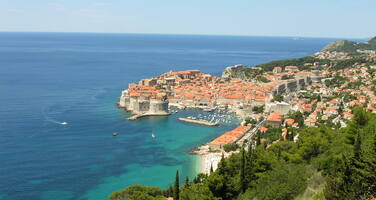
Old City of Dubrovnik
Factors affecting the property in 1992*
- Management systems/ management plan
- War
Factors* affecting the property identified in previous reports
Armed conflict
International Assistance: requests for the property until 1992
Total amount approved : 71,010 USD
| 1992 | Financial contribution to urgent activities for the ... (Approved) | 30,000 USD |
| 1992 | Financial contribution for the organization of a ... (Approved) | 19,000 USD |
| 1988 | Consultation on excavations at Dubrovnik Cathedral (Approved) | 2,000 USD |
| 1985 | Financial contribution to computer equipment for the ... (Approved) | 20,010 USD |
Missions to the property until 1992**
Conservation issues presented to the World Heritage Committee in 1992
The Bureau expressed its concern regarding the resumption of hostilities in the region. It requested the World Heritage Centre to advise the Croatian authorities to create, before the next session of the World Heritage Committee, a buffer zone which would ensure the protection of the ancient fortress and other monuments outside the city walls. The Bureau was informed that a plan of action for the restoration of damaged monuments is being prepared in co-operation with the competent authorities in Croatia and that the plan will be made public and available to funding agencies. The Bureau made an appeal to the parties in conflict for a suspension of hostilities and the protection of cultural heritage. It invited all States Parties to the Convention to participate in the conservation of the site.
The Bureau noted that US$ 19,000 had been provided as emergency assistance from the World Heritage Fund to assist in restoration efforts and that the Director-General of UNESCO had also allocated US$ 200,000 for preliminary operations for the urgent restoration of monuments. At its last session, the Bureau allocated an additional sum of US$ 30,000 for urgent activities to be undertaken for the restoration of Dubrovnik.
The observations and recommendations of the Bureau were transmitted to the Croatian authorities by letter of 10 September 1992.
The Institute for the Protection of Cultural Monuments has established an inventory of cultural properties damaged during the bombardment in 1991, and in May-June 1992:
- 27 public or religious buildings were damaged to various degrees
- stone-paved streets and squares, city walls, towers and fortresses have been damaged by heavy calibre shells.
Within the framework of a plan to safeguard properties damaged by the war, the first meeting of the Consultative Commission of Experts for Restoration of Dubrovnik was held in the old city from 2-4 September 1992. This Commission comprises 11 national and three international experts, nominated by the Croatian authorities with the agreement of UNESCO. During this meeting, activities to safeguard the heritage were resumed; these activities had been temporarily halted due to the renewed bombardment in May-June 1992. The meeting demonstrated the need for UNESCO to maintain close co-ordination with institutions and commissions dealing with the protection of the city from a technical and a fund-raising point of view. The Commission has defined several actions as priorities for 1992:
- replacement of all the damaged roof tiles
- reconstruction of nine buildings
- training of technicians, craftsmen and stone-cutters
- the publicizing of the plan of action among donors.
The sum of US$ 19,000 provided under the World Heritage Fund has been partly used for the' organization of a meeting of experts. The rest of the US$ 19,000 have been used for training two architects. The special allocation of US$ 200,000 made available by the Director-General of UNESCO is used for the following purposes:
- restoration of city walls
- a cadastral survey of the old city of Dubrovnik, and
- the purchase of 270,000 roofing tiles; these tiles will be delivered by truck to Dubrovnik at the end of November 1992.
The sum of US$ 30,000 provided by the Bureau, at its last session will be used for:
- purchase of equipment and materials for restoration of mural paintings in burnt palaces,
- publicizing the plan of action for restoring Dubrovnik and its monuments among donors, and
- for training programmes .
At its last session the Bureau noted the interest expressed by a travel agency of Dubrovnik and the American Society of Travel Agents (ASTA) to fund work to restore Dubrovnik. Subsequently, a proposal for the restoration of city walls in the old city has been submitted to the consideration of ASTA.
The Bureau's recommendation that the Croatian authorities create a buffer zone which would ensure the protection of the ancient fortress and the surrounding areas has been brought to the attention of the Croatian authorities at several meetings held with them, both in Dubrovnik and in Paris. Information on the implementation of this recommendation of the Bureau is still awaited and will be presented to the Committee at its sixteenth session.
Although the World Heritage Fund and UNESCO have already provided substantial financial and technical assistance, the funds that have become available so far are inadequate; the estimated cost of the restoration of the damaged cultural properties in Dubrovnik is US$ 10 millions.
Analysis and Conclusion by World Heritage Centre and the Advisory Bodies in 1992
The Committee is requested to discuss the ways and means by which a part or all of this amount could be raised to restore Dubrovnik.
Summary of the interventions
Decisions adopted by the Committee in 1992
16 BUR VI.48-49
Dubrovnik (Republic of Croatia)
48. The Bureau took note of document CLT-92/CONF.003/02 and commended the efforts of the Director-General of UNESCO for the safeguarding of the cultural heritage of Dubrovnik, particularly:
- his joint appeal together with the United Nations Secretary General for a return to peace and the protection of cultural heritage;
- his appeal to the various UNESCO missions to the different parties involved in the conflict with the aim of enforcing the Convention for the Protection of Cultural Heritage in the Event of Armed Conflict (The Hague, 1954) and the World Heritage Convention;
- the despatch of UNESCO observers to Dubrovnik in December 1991 followed, as of February 1992, by technical missions;
- his decision to allocate a special amount of US$200,000 for preliminary operations for urgent restoration of monuments, and
- the preparation, with the competent authorities, of a plan of action for the restoration of the damaged monuments.
Thanks to an emergency assistance of US$19,000 from the World Heritage Fund, an international expert meeting has already been organized in Dubrovnik and technical training programmes for Croation specialists are foreseen in France.
The Bureau expressed its concern regarding the resumption of hostilities in the region where no military targets justifying armed intervention are located. It requested the World Heritage Centre to advise the Croatian authorities to create, before the next session of the World Heritage Committee, a buffer zone which would ensure the protection of the ancient fortress and other monuments.
The Bureau was informed that the plan of action mentioned above will be made public and available to funding agencies. In this respect, the Bureau was informed that a tourist agency in the United States of America and another one in Dubrovnik have shown interest in the safeguarding operations and proposed to collect funds to this end.
The Bureau made an appeal to the parties in conflict for a suspension of hostilities and the protection of cultural heritage. It invited all States Parties to the Convention to participate in the conservation of the site.
49. The Bureau took note of the information provided by the Secretariat and decided to set aside a sum of US$30,0000 for urgent activities to be undertaken for the restoration of Dubrovnik.
16 BUR VI.49
Monitoring of the state of conservation of cultural World Heritage properties, and related technical problems - Monitoring of the state of conservation of properties in Mediterranean countries
49. The Bureau took note of the information provided by the Secretariat and decided to set aside a sum of US$30,000 for urgent activities to be undertaken for the restoration of Dubrovnik.
16 COM VIII
SOC: Old City of Dubrovnik (Croatia)
Old City of Dubrovnik (Croatia)
The Committee took note of the report on the state of conservation of Dubrovnik, which was inscribed on the List of World Heritage in Danger, in Carthage in 1991, and was also informed of the request received by the World Heritage Centre for the creation of a buffer zone. This request will be submitted to ICOMOS for review.
No draft Decision
 Croatia
Exports
* :
The threats indicated are listed in alphabetical order; their order does not constitute a classification according to the importance of their impact on the property.
Furthermore, they are presented irrespective of the type of threat faced by the property, i.e. with specific and proven imminent danger (“ascertained danger”) or with threats which could have deleterious effects on the property’s Outstanding Universal Value (“potential danger”).
** : All mission reports are not always available electronically.