Sangiran Early Man Site
Factors affecting the property in 2007*
- Interpretative and visitation facilities
- Management systems/ management plan
Factors* affecting the property identified in previous reports
a) Lack of a permanent site management authority to ensure co-ordination between conservation, research and development agencies;
b) Poor site presentation and museum display;
c) Lack of a comprehensive management plan to ensure conservation and development of the site.
International Assistance: requests for the property until 2007
Total amount approved : 40,000 USD
| 2005 | High-Level Technical Mission to Sangiran Early Man Site (Approved) | 15,000 USD |
| 1998 | Technical Co-operation for Sub-Regional Workshop on ... (Approved) | 20,000 USD |
| 1998 | On-site promotion of the Sangiran Early Man Site (Approved) | 5,000 USD |
Missions to the property until 2007**
UNESCO expert monitoring mission of September 2006
Conservation issues presented to the World Heritage Committee in 2007
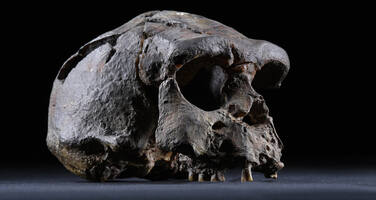
Sangiran is one of the largest fossil sites in the world and contains potentially important data for understanding the general process of human evolution.
At the request of the Department of Culture and Tourism of Indonesia, the Chairperson of the World Heritage Committee approved in March 2005 an amount of USD 15,000 as international assistance to support a National Consultation Workshop for the safeguarding of Sangiran World Heritage property. The Workshop was held from 20 to 25 September 2006 in conjunction with a UNESCO expert mission to the property. The aim of the meeting was to conduct consultations with local stakeholders on the conservation and management of the property, review the progress achieved in the implementation of the recommendations of a previous workshop (held in April 2002) and develop technical guidelines on the site’s infrastructural development in relation to scientific research and tourism development. The proceedings of the workshop were transmitted by the State Party to the World Heritage Centre in February 2007.
Since 2002, the Indonesian Government has been making significant efforts in order to preserve and conserve this property, improve education and empowerment of local communities, promote scientific research at the site as well as develop tourism facilities in and around the site. The participants in the 2006 workshop, indeed, noted some positive changes at the site, including:
a) an increase of police officers at the site;
b) the development, in 2005, of a Master Plan for the Conservation and Management of Sangiran Site;
c) the reinforcement of the law against illegal trafficking of fossils;
d) the training of museum staff; and
e) the improvement of the Sangiran Site Museum.
Despite these positive developments, however, a number of problems persist. it appeared that the Coordinating Board for the Protection and Management of Sangiran World Heritage Site, which had been established in 2002, has not been effective in implementing the recommendations of the 2002 workshop, and has remained mostly non operational. A site management authority with trained staff, therefore, is not yet in place, as personnel responsible for the management of the site currently comes from the Archaeological Office of Central Java Province.
The participants in the 2006 workshop noted as well the threats affecting the property (which extends over 56 square kilometers) from inappropriate land-use within the boundary of the listed site, in the absence of clear regulations based on the heritage significance of the property. These included an extension to the Site Museum building, where laboratories and storage facilities will be located, and the construction of a three storey observation tower; the proposed establishment of a recreational Pleistocene Park within the property; the construction of a bridge across the Cemara River, connecting Sragen and Karanganyar Regents; the digging of artesian wells and the proposal to create a waste dump within the boundaries of the World Heritage site (the latter withdrawn in 2004). These developments may have an adverse impact on the values of the property, in light of the presence of precious archaeological layers very close to the surface, and of the need to ensure the integrity of the landscape. Moreover, recent important archaeological discoveries have been made outside the current boundary of the core area of the World Heritage property.
The participants noted as well the need to improve the presentation and interpretation at the site museum, by emphasizing the values that justified the inscription of the site on the World Heritage List, and to raise the awareness of the local population, which lives within the property, of its heritage significance and the need to protect it.
With respect to the above issues, the participants in the workshop recommended that:
f) The Coordination Board for the Protection and Management of Sangiran Early Man Site, initiated in May 2002, be reactivated and restructured by the national and local authorities to ensure a functioning site management authority;
g) Training activities for local authorities and staff from the archaeological office should be organized to build local capacity in the long-term conservation and management of the site, if necessary by requesting assistance to UNESCO;
h) The 2005 Master Plan for the site be implemented and strengthened in coordination with UNESCO, including by reviewing the boundaries of the core zone, possibly establishing a buffer zone, and the establishment of provisions to assess the impact of infrastructure or tourism development projects within the property, so as to ensure that they do not affect the Outstanding Universal Value of Sangiran;
i) The Sangiran Site Museum should be further improved in its presentation and interpretation, in close consultation with the Coordination Board, to ensure that it conveys the Outstanding Universal Value of the property and to reinforce the involvement of local communities, including young people, in the conservation of the site.
Summary of the interventions
Decisions adopted by the Committee in 2007
31 COM 7B.70
Sangiran Early Man Site (Indonesia)
The World Heritage Committee,
1. Having examined Document WHC-07/31.COM/7B.Add,
2. Expresses its appreciation to the State Party for organizing a Stakeholders Consultation Workshop on the Conservation and Management of Sangiran World Heritage property;
3. Noting however with concern the potential risks associated to the lack of a functioning site management authority as well as of appropriate land-use regulations, combined with on-going development projects within the property, which might have a negative impact on its heritage values,
4. Requests the State Party to review and strengthen the management of the property by:
a) Restructuring and reactivating the Coordinating Board for the Protection and Management of Sangiran World Heritage property;
b) Re-enforcing the effectiveness of the Master Plan in protecting the heritage values of the property, notably by developing appropriate land-use regulations and impact assessment procedures for proposed development projects; by considering the possible revision of the core zone, taking into account recent archaeological discoveries; and by defining an appropriate buffer zone for the property with the relative appropriate legal provisions and land-use regulation for consideration by the Committee;
c) Improving the presentation and interpretation of the property and its Museum, and developing awareness-raising programmes addressed to the community, and particularly the young people.
5. Also requests the State party to invite a joint World Heritage Centre/ICOMOS reactive monitoring mission to the property to assess its state of conservation and assist in addressing the issues raised in paragraph 4;
6. Further requests the State Party to submit to the World Heritage Centre, by 1 February 2008, a report on the state of conservation of the property, including information on the progress made in implementing the actions mentioned above, for examination by the Committee at its 32nd session in 2008.
Draft Decision: 31 COM 7B.70
The World Heritage Committee,
1. Having examined Document WHC-07/31.COM/7B.Add,
2. Expresses its appreciation to the State Party for organizing a Stakeholders Consultation Workshop on the Conservation and Management of Sangiran World Heritage property;
3. Noting however with concern the potential risks associated to the lack of a functioning site management authority as well as of appropriate land-use regulations, combined with on-going development projects within the property, which might have a negative impact on its heritage values,
4. Requests the State Party to review and strengthen the management of the property by:
a) Restructuring and reactivating the Coordinating Board for the Protection and Management of Sangiran World Heritage property;
b) Re-enforcing the effectiveness of the Master Plan in protecting the heritage values of the property, notably by developing appropriate land-use regulations and impact assessment procedures for proposed development projects; by considering the possible revision of the core zone, taking into account recent archaeological discoveries; and by defining an appropriate buffer zone for the property with the relative appropriate legal provisions and land-use regulation for consideration by the Committee;
c) Improving the presentation and interpretation of the site and its Museum, and developing awareness-raising programmes addressed to the community, and particularly the young people.
5. Also requests the State party to invite a joint World Heritage Centre/ICOMOS reactive monitoring mission to the property to assess its state of conservation and assist in addressing the issues raised in point 4 above;
6. Further requests the State Party to submit to the World Heritage Centre, by 1 February 2008, a report on the state of conservation of the property, including information on the progress made in implementing the actions mentioned in point 4 above, for examination by the Committee at its 32nd session in 2008.
 Indonesia
Exports
* :
The threats indicated are listed in alphabetical order; their order does not constitute a classification according to the importance of their impact on the property.
Furthermore, they are presented irrespective of the type of threat faced by the property, i.e. with specific and proven imminent danger (“ascertained danger”) or with threats which could have deleterious effects on the property’s Outstanding Universal Value (“potential danger”).
** : All mission reports are not always available electronically.