Tomb of Askia
Tomb of Askia
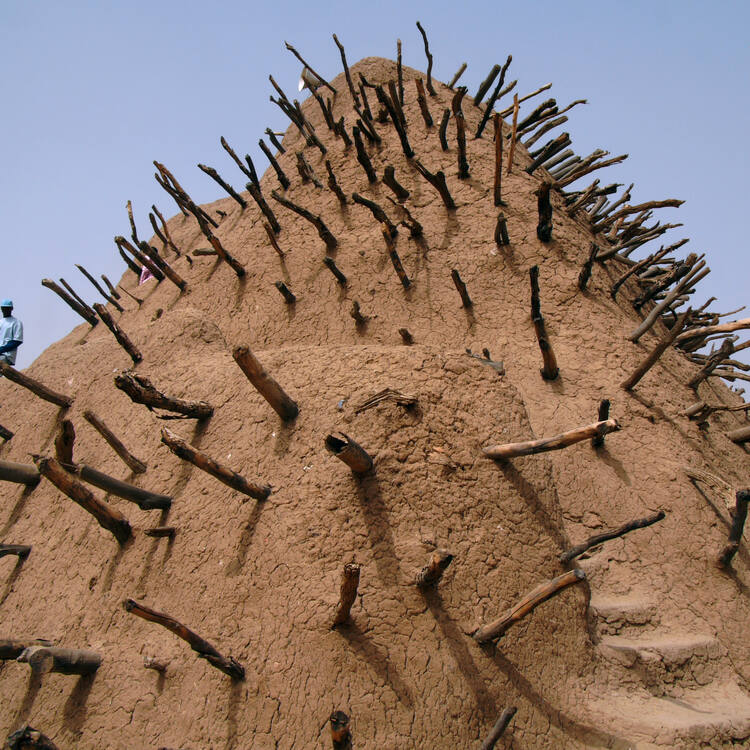
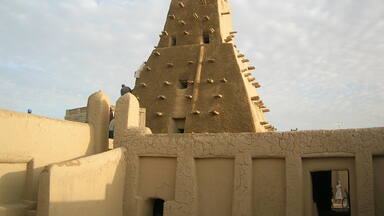
The dramatic 17-m pyramidal structure of the Tomb of Askia was built by Askia Mohamed, the Emperor of Songhai, in 1495 in his capital Gao. It bears testimony to the power and riches of the empire that flourished in the 15th and 16th centuries through its control of the trans-Saharan trade, notably in salt and gold. It is also a fine example of the monumental mud-building traditions of the West African Sahel. The complex, including the pyramidal tomb, two flat-roofed mosque buildings, the mosque cemetery and the open-air assembly ground, was built when Gao became the capital of the Songhai Empire and after Askia Mohamed had returned from Mecca and made Islam the official religion of the empire.
Description is available under license CC-BY-SA IGO 3.0
Tombeau des Askia
La spectaculaire structure pyramidale du tombeau des Askia, édifiée par Askia Mohamed, Empereur du Songhaï, en 1495 dans sa capitale Gao, témoigne de la puissance et de la richesse de l’empire qui s’épanouit aux XVe et XVIe siècles grâce au contrôle du commerce transsaharien, notamment du sel et de l’or. L’ensemble, y compris la tombe pyramidale, les deux mosquées à toit plat, le cimetière de la mosquée et l’espace des assemblées en plein air, fut édifié lorsque Gao devint la capitale de l’Empire songhaï et après qu’Askia Mohamed eut fait de l’islam la religion officielle de l’Empire à son retour de La Mecque.
Description is available under license CC-BY-SA IGO 3.0
مدفن أسكيا
يشهد مدفن أسكيا المميَّز والهرمي الشكل الذي بناه سلطان السونغاي، أسكيا محمد، في العام 1495، في عاصمته مدينة غاو، على سلطة الإمبراطوريّة التي ازدهرت في القرنَيْن الخامس عشر والسادس عشر من جرّاء السيطرة على التجارة التي كانت تُمارَس عبر الصحراء، لا سيّما تجارة الملح والذهب وغناها. فمجموعة الآثار ومن ضمنها القبر الهرمي الشكل والمسجدان المسطّحَا السقف ومقبرة المسجد والمكان حيث كانت تدور الاجتماعات في الهواء الطلق، تمّ تشييدها عندما صارت غاو عاصمة إمبراطورية السونغاي وبعد أن جعل أسكيا محمد من الإسلام الديانة الرسميّة للإمبراطوريّة غداة عودته من مكّة المكرّمة.
source: UNESCO/CPE
Description is available under license CC-BY-SA IGO 3.0
阿斯基亚王陵
阿斯吉亚王陵给人印象深刻的17米高的金字塔形建筑,由桑海帝国国王阿斯基亚·穆罕默德于1495年建于首都加奥。由这个王陵可以看出15世纪至16世纪这个帝国的强大、富裕和繁荣。当时,桑海帝国控制了横跨撒哈拉的贸易,特别是盐和黄金。它也是西非萨赫勒地区具有重要意义的泥土建筑传统的范例。阿斯基亚王陵包括了金字塔形坟墓、两个平顶清真寺建筑、清真寺公墓和露天的聚会场地。这些都是在阿斯基亚·穆罕默德从麦加回来定伊斯兰教为国教并将加奥作为首都后建造的。
source: UNESCO/CPE
Description is available under license CC-BY-SA IGO 3.0
Гробница императора Аския-Мохамеда (город Гао)
Эффектное 17-метровое пирамидальное сооружение-гробница было воздвигнуто в 1495 г. императором Мохамедом I Аския в столице Сонгаи. Этот памятник – свидетельство силы, власти и богатства империи, которая процветала в XV-XVI вв. благодаря контролю над транссахарской торговлей, в основном – солью и золотом. Это также прекрасный пример традиционной монументальной глинобитной постройки на западной окраине Сахары. Комплекс, включающий пирамидальную гробницу, две мечети с плоскими крышами, кладбище при мечети, а также площадь под открытым небом для собраний, был построен, когда столицей империи Сонгаи стал город Гао.
source: UNESCO/CPE
Description is available under license CC-BY-SA IGO 3.0
Tumba de los Askia
La espectacular estructura piramidal de 17 metros de altura de la tumba de la dinastía de los Askia, erigida en 1495 por Askia Mohamed, emperador de Songhai, en su capital de Gao, atestigua la potencia y riqueza de un imperio que cobró auge entre los siglos XV y XVI gracias al control del comercio de la sal y del oro practicado a través del Sahara. Esta tumba es también un magnífico ejemplo de la tradición arquitectónica de construcción de edificios con adobe, característica de la región del Sahel Occidental. El conjunto monumental –que comprende la pirámide funeraria, dos edificios de techo plano de la mezquita, el cementerio de ésta y un ágora al aire libre– fue construido cuando Gao se convirtió en la capital del Imperio Songhai, después del retorno de Askia Mohamed de su peregrinación a La Meca y de la subsiguiente declaración del Islam como religión oficial en sus dominios.
source: UNESCO/CPE
Description is available under license CC-BY-SA IGO 3.0
アスキア墳墓
ピラミッド型をした高さ17mのアスキア墳墓は、アフリカ西部のニジェール川流域に繁栄したソンガイ帝国の首都ガオに、1495年、アスキア・モハメド王によって建てられた。この墳墓は、15世紀から16世紀にかけて、塩と金に代表されるサハラ横断貿易を支配して最盛を誇ったソンガイ帝国の富と権力を象徴している。ピラミッド型の墳墓や、平屋根の2つのモスクとその共同墓地、野外の集会所などが残るが、これらは、ガオがソンガイ帝国の首都となり、アスキア・モハメド王がメッカに巡礼して、イスラム教をソンガイ帝国の宗教に定めた後に建てられたものである。source: NFUAJ
Tombe van Askia
De spectaculaire 17 meter hoge, als piramide gebouwde Tombe van Askia werd in 1495 gebouwd door Askia Mohamed. Het graf getuigt van de macht en de rijkdom van zijn keizerrijk, dat bloeide in de 15e en 16e eeuw vanwege de machtspositie in de trans-Sahara handel, met name in zout en goud. De tombe is een mooi voorbeeld van de West-Afrikaanse Sahel traditie om te bouwen met modder. Het complex bestaat uit het piramidale graf, twee moskeeën, een moskeekerkhof en een openlucht ruimte. Het werd gebouwd toen Gao de hoofdstad werd van het Songhai Rijk en Askia de islam tot de officiële religie van het rijk maakte.
Source: unesco.nl


Outstanding Universal Value
Brief synthesis
The Tomb of Askia is located in the town of Gao. The site comprises the following elements: the pyramidal tower, the two flat-roofed mosques, the necropolis and the white stone square. The spectacular pyramidal structure was built by Askia Mohamed, Emperor of the Songhai Empire in 1495. The Tomb of Askia was built when Gao became the capital of the Empire and Islam was adopted as the official religion.
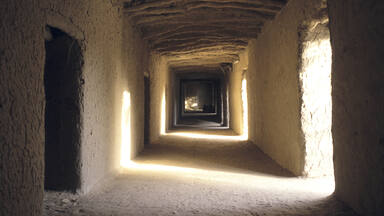
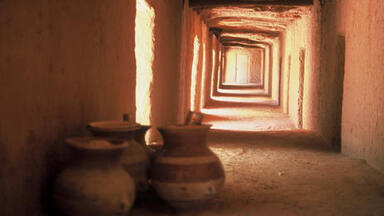
The Tomb of Askia is a magnificent example of how the local traditions have adapted to the exigences of Islam in creating an architectural structure unique across the West African Sahel. The Tomb is the most important and best conserved vestige of the powerful and rich Songhai Empire that extended through West Africa in the 15th and 16th centuries. Its value is also invested in its architectural tomb/minaret shape, its prayer rooms, its cemetery and its assembly space that have survived and are still in use. From the architectural perspective, the Tomb of Askia is an eminent example of Sudano-Sahelian style, characterized by rounded forms resulting in the regular renewal of the layer of plaster eroded each winter by the rare but violent rains. The pyramidal form of the tomb, its function as central minaret as well as the length and shape of the pieces of wood comprising the permanent scaffolding, give the Tomb of Askia its distinctive and unique architectural characteristics.
Criterion (ii) : The Tomb of Askia reflects the way the local building traditions, in response to Islamic needs, absorbed influences from North Africa to create a unique architectural style across the West African Sahel.
Criterion (iii): The Tomb of Askia is an important vestige of the Songhai Empire, which once dominated the Sahel lands of West Africa and controlled the lucrative trans-Saharan trade.
Criterion (iv): The Tomb of Askia reflects the distinctive architectural tradition of the West African Sahel and in particular the way buildings evolve over centuries through regular, traditional maintenance practices.
Integrity
The integrity of the site is fully intact with regard to all its components which remain visually, socially and culturally associated, first in the town of Gao where its elements are integrated into the architectural traditions and in the associated sites (Saneye, Gounzourey, Koima, Kankou Moussa Mosque), important elements for its interpretation.
Authenticity
The monument reflects the constructive culture of the local populations as regards earthen architecture, even if the necessary repairs regularly carried out have engendered some minor alterations. Reversible, these alterations (tin water spouts, cement stairways, other wooden scaffolding than the hasu – Maerua crassifolia) do not however detract from the authenticity of the site.
Protection and management requirements
The site belongs to the State. It was inscribed in 2003 on the National Heritage List of Mali and the buffer zone is officially recognized by municipal decree. The management of the site is the responsibility of an association created by the Prefect of Gao in 2002 and comprises representatives of all the principal stakeholders.
The Conservation and Management Plan of 2002-2007 was prepared in the framework of the Africa 2009 Programme, in cooperation with two experts from CRAterre-ENSAG (International Centre for Earthen Construction, Grenoble, France). Its implementation has enabled the improvement of the state of conservation and authenticity of the site, and the maintenance of its harmony with the urban fabric of Gao.
The long-term specific objectives for the conservation of the Tomb of Askia are the following: redevelop the surrounding wall to include the entire prayer area and assure a better visibility of the site from the Askia Avenue and the prayer area; gradually improve the state of conservation and authenticity of the site while continuing traditional maintenance practices; assure the promotion of the site and its improved use as an educative and tourism resource.
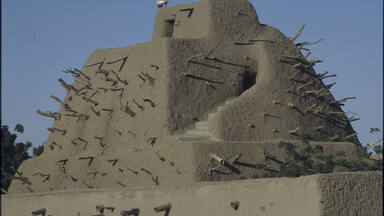
 View photos from OUR PLACE the World Heritage collection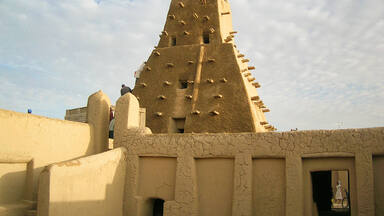

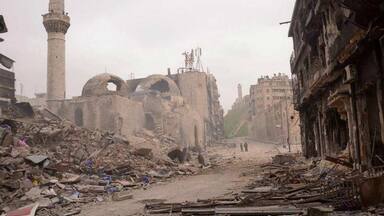






List of World Heritage in Danger
Inscription Year on the List of World Heritage in Danger
2012 - PresentProtections
by other conservation instruments
1 protection / 1 element
Second Protocol to the 1954 Hague Convention for the Protection of Cultural Property in the Event of Armed Conflict (1 element)