Belfries of Belgium and France
Belfries of Belgium and France
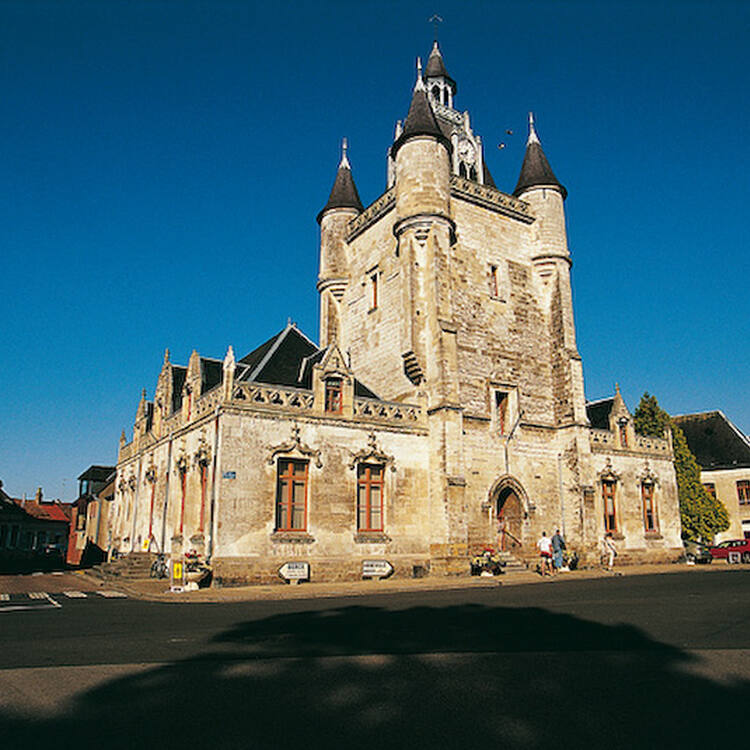
Twenty-three belfries in the north of France and the belfry of Gembloux in Belgium were inscribed in 2005, as an extension to the 32 Belgian belfries inscribed in 1999 as Belfries of Flanders and Wallonia. Built between the 11th and 17th centuries, they showcase the Roman, Gothic, Renaissance and Baroque styles of architecture. They are highly significant tokens of the winning of civil liberties. While Italian, German and English towns mainly opted to build town halls, in part of north-western Europe, greater emphasis was placed on building belfries. Compared with the keep (symbol of the seigneurs) and the bell-tower (symbol of the Church), the belfry, the third tower in the urban landscape, symbolizes the power of the aldermen. Over the centuries, they came to represent the influence and wealth of the towns.
Description is available under license CC-BY-SA IGO 3.0
Beffrois de Belgique et de France
Vingt-trois beffrois, situés dans le nord de la France, et le beffroi de Gembloux, en Belgique, ont été inscrits en 2005, comme une extension des 32 beffrois belges inscrits en 1999 sous le nom de Beffrois de Flandre et de Wallonie. Construits entre le XIe et le XVIIe siècle, ils illustrent les styles architecturaux roman, gothique, Renaissance et baroque. Ils constituent des symboles hautement significatifs de la conquête des libertés civiques. À une époque où la plupart des villes italiennes, allemandes et anglaises s’attachaient surtout à construire des hôtels de ville, dans une partie de l’Europe nord-occidentale, l’accent était mis sur l’édification de beffrois. Par opposition au donjon (symbole des seigneurs) et au clocher (symbole de l’Église), le beffroi, troisième tour du paysage urbain, représentait le pouvoir des échevins. Au fil des siècles, il est devenu le symbole de la puissance et de la prospérité des communes.
Description is available under license CC-BY-SA IGO 3.0
أبراج الكنائس في بلجيكا وفرنسا
أُدرج ثلاثة وعشرون برج كنيسة، في شمال فرنسا، وبرج كنيسة جمبلو، في بلجيكا، على قائمة التراث العالمي كمجموعة واحدة وكامتداد لأبراج الكنائس البلجيكية الإثنين والثلاثين المسجلّة عام 1999 تحت اسم ابراج الكنائس في فلندريا وفالونيا. شُيّدت هذه الأبراج بين القرن الحادي عشر والسابع عشر، وهي تعكس الأساليب الهندسية الرومانية والقوطية والباروكية وأساليب عصر النهضة. وتشكّل هذه الأبراج رموزاً معبّرة عن معركة الحريات المدنية. وفي وقت كانت غالبية المدن الإيطالية والألمانية والإنكليزية تتمسك ببناء دور البلدية، إنصبّ الإهتمام في قسم من شمال غرب أوروبا على تشييد أبراج الكنائس. وخلافاً للبرج الرئيس في حصن معيّن (رمز الأسياد الإقطاعيين) وقبّة الجرس (رمز الكنيسة)، فإنّ برج الكنيسة، وهو البرج الثالث البارز في المنظر الحضري، كان يمثل سلطة قضاة البلدية، ثم ما لبث أن أصبح، على مرّ القرون، رمزاً لنفوذ البلديات وازدهارها.
source: UNESCO/CPE
Description is available under license CC-BY-SA IGO 3.0
比利时和法国钟楼
这些钟楼建于11至17世纪,其中23座位于法国北部,32座位于比利时,它们共同展现了罗马、哥特式、文艺复兴和巴洛克式的建筑风格。钟楼在建立之初是公社通过宪章获得独立的标志,象征着自由。钟楼是城市景观中的第三种塔,可与要塞(封建领主,即封建地主的标志)和钟塔(教堂的标志)媲美,象征着贵族的权力。几个世纪以来,它们已逐渐成为城镇影响力和财富的象征。
source: UNESCO/CPE
Description is available under license CC-BY-SA IGO 3.0
Колокольни городов Бельгии и Франции
23 колокольни на севере Франции и колокольня в городе Жамблу в Бельгии дополняют 30 бельгийских городских башен, внесенных в Список всемирного наследия в 1999 г. как объект «Колокольни Фландрии и Валлонии». Колокольни были построены в ХI-ХVII вв. и относятся по своей архитектуре к романскому и готическому стилям, Возрождению и барокко. Это - яркие символы зарождавшихся гражданских свобод. В то время как в итальянских, германских и английских городах обычно предпочитали строить ратуши, в некоторых странах северо-западной Европы (Франция, Бельгия и Нидерланды) преобладали колокольни. Первоначально колокольни возводились в ознаменование независимости коммуны и получения ею хартии, как символ обретенной свободы. В отличие от замковой башни (символа синьора, т.е. – феодального властителя) и церковной колокольни (символа власти Церкви), городская колокольня – третья доминирующая в ландшафте города башня – символизировала влияние городских властей. В течение столетий такие башни олицетворяли мощь и богатство городов.
source: UNESCO/CPE
Description is available under license CC-BY-SA IGO 3.0
Campanarios municipales de Bélgica y Francia
Veintitrés campanarios situados en el norte de Francia y el campanario belga de Gembloux han sido inscritos en la Lista del Patrimonio Mundial en 2005, ampliando así el sitio formado por 32 campanarios municipales de Flandes y Valonia que ya figuraba en la Lista desde 1999. Construidos entre los siglos XI y XVII, estos campanarios son representativos de diversos estilos arquitectónicos –románico, gótico, renacentista y barroco– y constituyen símbolos muy significativos de la conquista de las libertades cívicas por parte de las poblaciones urbanas. En tiempos en que la mayoría de las ciudades italianas, alemanas e inglesas optaban por construir ayuntamientos, en esta región del noroeste de Europa se prefirió la construcción de campanarios municipales. Entre la tríada de torres que dominaban el paisaje de las ciudades, la del campanario municipal, emblema del poder de los concejales, se erguía frente a la del castillo señorial y la de la iglesia, símbolos respectivos del poder feudal y el eclesiástico. Con el correr de los siglos, llegó a simbolizar el poderío y la riqueza de cada municipio.
source: UNESCO/CPE
Description is available under license CC-BY-SA IGO 3.0
ベルギーとフランスの鐘楼群
登録の対象は、中世に起源をもつフランダース地方とワロン地方の24の鐘楼(アールスト、アントワープ、ブリュージュ、デンデルモンデ、ガン、ルーベン、イーペル、コルトレイクなど)である。現存する鐘楼の形態は多様であるが、その多くはタウン・ホールに、一部は協会に付属するもので、時を経てさらに都市の景観のなかに溶け込み続けてきた。後に、フランス北西部の23の鐘楼群とベルギーの鐘楼が追加され拡大登録。フランス、ベルギーオランダでは、市民憲章で自立・自由を象徴している鐘楼の建設を重視。鐘楼は市議会議員の権力を象徴している。source: NFUAJ
Belforten van België en Frankrijk
De 23 belforten in het noorden van Frankrijk en het belfort van Gembloux in België werden gebouwd tussen de 11e en 17e eeuw en tonen Romaanse, Gotische, Renaissance en Barok architectuurstijlen. Deze inschrijving op de Werelderfgoedlijst is een uitbreiding van de 32 in 1999 ingeschreven belforten van Vlaanderen en Wallonië. Waar Italiaanse, Duitse en Engelse steden er voornamelijk voor kozen donjons, (symbool van de (land)heren) of klokkentorens (symbool van de kerk) te bouwen, werd in een deel van Noordwest-Europa gekozen voor belforten. Belforten symboliseren de macht van de schepenen en de invloed en rijkdom van steden door de eeuwen heen.
Source: unesco.nl


Outstanding Universal Value
Brief synthesis
High towers built in the heart of urban areas, often dominating the principal square, the belfries are essential elements in the organization and representation of the towns to which they belong. The site inscribed on the World Heritage List comprises 33 belfries located in Belgium (26 in Flanders and 7 in Wallonia) and 23 belfries located in northern France.
A symbolic element in the landscape in ancient Netherlands and the north of France, the belfry represents, in the heart of urban areas, the birth of municipal power in the Middle Ages. A practical building housing the communal bells, conserving charters and treasures, where city council meetings were held, serving as a watch tower and a prison, the belfry has, over the centuries, become the symbol of power and prosperity of the communes.
The belfries are, together with the market hall, significant representatives of civil and public architecture in Europe. The evolution from the “seigneurial keep” to the “communal keep” is noteworthy. The church belfries bear witness to the relationship, within the community, between civil and religious power. Closely associated with the expansion and government of European towns in the Middle Ages, the belfries, by the variety of their type and the evolution of their appearance, and the complexes with which they were often associated, represent an essential element in public architecture from the 11th century onwards.
Beyond their architectural structure, the belfries present a wide typology linked both to the history of the communities, the period of construction, the materials used and the personality of their master builders. In the urban configuration, they can be isolated, attached to a market place or to a town hall. In several cases, the civil function is exercised by the church belfry. The period of construction of the belfries extends from the 11th to the 20th century, presenting a wide diversity of style, from Roman art to Art Deco.
Bearing a strong identity, the belfries have suffered much damage from armed conflict but their regular rebuilding, occurring to this day, expresses their exceptional symbolic role and the communities’ attachment to them.
Criterion (ii): The belfries of Belgium and France are exceptional examples of a form of urban architecture adapted to the political and spiritual requirements of their age.
Criterion (iv): The Middle Ages saw the emergence of towns that were independent of the prevalent feudal system. The belfries of Belgium and France symbolize this new-found independence, and also the links within them between the secular and religious powers.
Integrity
The ensemble of belfries, a historical phenomenon unique to one region of Europe, presents a wide variety of examples throughout Flanders, Wallonia and northern France. Types, locations, period of construction, architectural styles and materials used for the belfries inscribed all bear witness to this serial property in its vast diversity.
Authenticity
The boundaries of the belfries are defined to fully include the constructions concerned. The associated elements (dungeons, bells and chimes, battlements, bretèches, etc.) demonstrating the function of the belfry or the communal authority are included in this definition. In addition, the property comprises fifty-six examples of belfries marking the communal movement of independence with its differences and its variants. As major and central elements of the medieval town, the belfries have conserved their importance and played a pivotal role in the development of the urban fabric right up to present times.
The belfry, a major element of the city, was also a weak point; a symbol and sometimes a watchtower, it was regularly destroyed during armed conflict. Furthermore, concerning the number of belfries inscribed (56), it is impossible to consider authenticity in material terms, referring only to their initial period of construction; one can instead consider the permanence of their existence and their symbolic value as authentic. The reconstructions following the world conflicts of the 20th century are therefore exemplary and constitute an element of authenticity of the series.
Protection and management requirements
The integrity of the French edifices making up the serial property falls under the protection of the Heritage Code. As Historical Monuments, they benefit from, amongst others, a protection of their visual field (500 metre radius), the control of which is ensured by the State. Moreover, several belfries are also located within safeguarded sectors or protection zones (ZPPAUP/AVAP).
Although a serial property, the belfries have a classic management system in which the actors work according to their administrative competences or specific regulations (mostly municipalities and State services). The owner communities, users of the edifices, have an important initiative and coordination role. A Committee for the property will be established during the review of the management plans and the enhancement of the elements that are part of the serial nomination.
The belfries in the Flanders region are all listed as monuments. In addition, in some cases, they are located in a listed urban townscape.
At present, the management of the Flanders belfries is the responsibility of the local authorities. In accordance with their protected status, any intervention on the belfries themselves must be approved by the regional heritage services.
The seven belfries located in Wallonia are listed as monuments and are recorded in the list of exceptional heritage of Wallonia (list established by the Wallon Government and recording the most outstanding heritage elements of Wallonia).
Following the decision of the Wallon Government on 25 August 2011 to provide the Wallon sites inscribed on the World Heritage List with a Management Plan, a Steering Committee, a Scientific Committee and a Management Committee were established. A concertation with the representatives of the French and Flanders belfries is foreseen in this framework.
In parallel with the network of belfry towns functioning in France, the Wallon, Flanders and French representatives of the property Belfries of Belgium and France are preparing the establishment of a transboundary network.