Vallée de Mai Nature Reserve
Vallée de Mai Nature Reserve
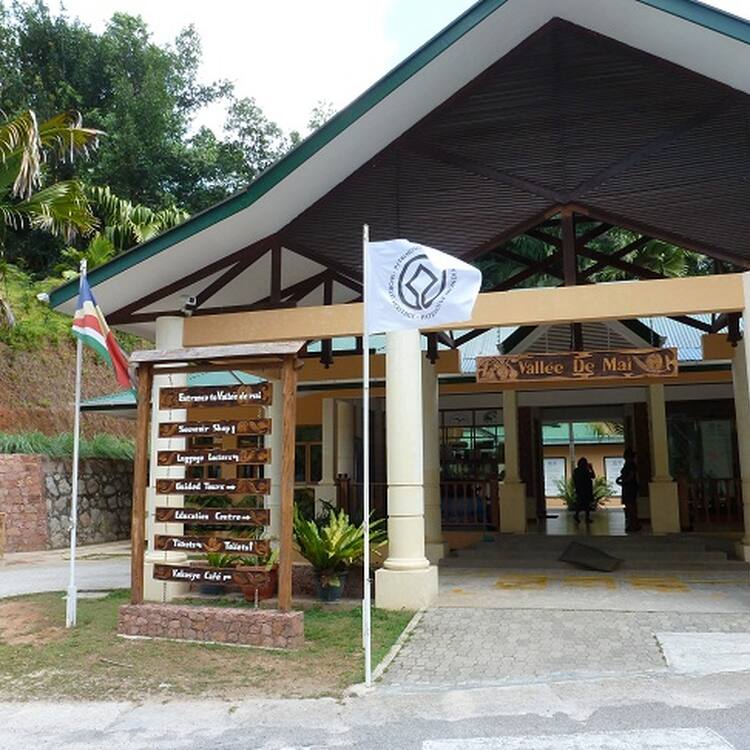
In the heart of the small island of Praslin, the reserve has the vestiges of a natural palm forest preserved in almost its original state. The famous coco de mer, from a palm-tree once believed to grow in the depths of the sea, is the largest seed in the plant kingdom.
Description is available under license CC-BY-SA IGO 3.0
Réserve naturelle de la vallée de Mai
Au cœur de la petite île de Praslin, la réserve abrite les vestiges d'une forêt naturelle de palmiers qui a pour ainsi dire conservé son état d'origine. Le célèbre « coco de mer », fruit d'un palmier dont on pensait autrefois qu'il poussait au fond des mers, est la plus grosse graine du règne végétal.
Description is available under license CC-BY-SA IGO 3.0
المحمية الطبيعية وادي ماي
تحتضن هذه المحمية الواقعة في قلب جزيرة براسلين الصغيرة بقايا غابة طبيعية من النخيل حافظت إن صح التعبير على حالتها الأصلية. ويشكل "جوز الهند البحري" الذي تثمره شجرة نخيل كان يعتقد بأنها تنبت في قاع البحار أكبر بزرة في مملكة النباتات.
source: UNESCO/CPE
Description is available under license CC-BY-SA IGO 3.0
马埃谷地自然保护区
马埃谷地自然保护区位于普拉兰岛的中心地带,有着几乎保持在其原始状态下的天然海椰子林。著名的海椰子是植物王国里最大的种子,曾经被认为是长在深海里的一种棕榈树的果实。
source: UNESCO/CPE
Description is available under license CC-BY-SA IGO 3.0
Природный резерват Валле-де-Мэ
В самом центре небольшого острова Праслен практически в нетронутом виде сохранился пальмовый лес. Орехи сейшельской пальмы – “коко-де-мер”, или морского кокоса, – считаются самыми крупными растительными плодами (вес до 20 кг). Согласно поверьям, морской кокос вырастает прямо в глубинах океана.
source: UNESCO/CPE
Description is available under license CC-BY-SA IGO 3.0
Reserva natural del Valle de Mai
Situada en el corazón de la pequeña isla de Praslin, esta reserva alberga los vestigios de un bosque natural de palmeras que ha conservado prácticamente intacto su estado primigenio. En este sitio se encuentra la mayor semilla del reino vegetal, el célebre “coco de mar”, fruto de una palmera de la que se creyó, en tiempos pasados, que crecía en el fondo del mar.
source: UNESCO/CPE
Description is available under license CC-BY-SA IGO 3.0
メ渓谷自然保護区
source: NFUAJ
Natuurreservaat Vallée de Mai
In het hart van het kleine eiland Praslin ligt het natuurreservaat Vallée de Mai. Het reservaat bevat de overblijfselen van een natuurlijk palmbos dat bijna in de oorspronkelijke staat bewaard is gebleven. De beroemde coco de mer – de vrucht van een palmboom waarvan men zegt dat die groeide in de dieptes van de zee – bevat het grootste zaad in het plantenrijk. In het natuurreservaat groeien nog vijf andere inheemse palmsoorten. Vallée de Mai heeft een aantrekkelijk landschap met een onderscheidende natuurlijke schoonheid. Het gebied omvat 19,5 hectare palmbos dat grotendeels ongewijzigd is gebleven sinds de prehistorie.
Source: unesco.nl


Outstanding Universal Value
Brief synthesis
Located on the granitic island of Praslin, the Vallée de Mai is a 19.5 ha area of palm forest which remains largely unchanged since prehistoric times. Dominating the landscape is the world's largest population of endemic coco-de-mer, a flagship species of global significance as the bearer of the largest seed in the plant kingdom. The forest is also home to five other endemic palms and many endemic fauna species. The property is a scenically attractive area with a distinctive natural beauty.
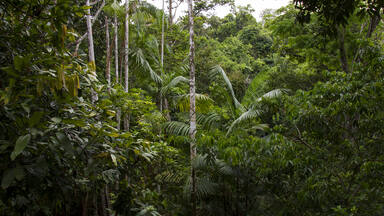
Criterion (vii): The property contains a scenic mature palm forest. The natural formations of the palm forests are of aesthetic appeal with dappled sunlight and a spectrum of green, red and brown palm fronds. The natural beauty and near-natural state of the Vallée de Mai are of great interest, even to those visitors who are not fully aware of the ecological significance of the forest.
Criterion (viii): Shaped by geological and biological processes that took place millions of years ago, the property is an outstanding example of an earlier and major stage in the evolutionary history of the world's flora. Its ecology is dominated by endemic palms, and especially by the coco-de-mer, famous for its distinctively large double nut containing the largest seed in the plant kingdom. The Vallée de Mai constitutes a living laboratory, illustrating of what other tropical areas would have been before the advent of more advanced plant families.
Criterion (ix): The property represents an outstanding example of biological evolution dominated by endemic palms. The property's low and intermediate-altitude palm forest is characteristic of the Seychelles and is preserved as something resembling its primeval state. The forest is dominated by the coco-de-mer Lodoicea maldivica but there are also five other endemic species of palms. Located in the granitic island of Praslin, the Vallée de Mai is the only area in the Seychelles where all six species occur together and no other island in the Indian Ocean possesses the combination of features displayed in the property. The ancient palms form a dense forest, along with Pandanus screw palms and broadleaf trees, which together constitute an ecosystem where unique ecological processes and interactions of nutrient cycling, seed dispersal, and pollination occur.
Criterion (x): The Vallée de Mai is the world's stronghold for the endemic coco-de-mer (Lodoicea maldivica )and the endemic palm species millionaire's salad (Deckenia nobilis ), thief palm (Phoenicophorium borsigianum ), Seychelles stilt palm (Verschaffeltia splendida) latanier millepattes (Nephrosperma vanhoutteanum) and latanier palm (Roscheria melanochaetes), are also found within the property. The palm forest is relatively pristine and it provides a refuge for viable populations of many endemic species, including the black parrot (Coracopsis nigra barklyi), restricted to Praslin Island and totally dependent on the Vallée de Mai and surrounding palm forest. Other species supported by the palm habitat include three endemic species of bronze gecko, endemic blue pigeons, bulbuls, sunbirds, swiftlets, Seychelles skinks, burrowing skinks, tiger chameleons, day geckos, caecilians, tree frogs, freshwater fish and many invertebrates.
Integrity
The ecological integrity of the Vallée de Mai is high, but the 19.5 ha that constitutes the property's size is relatively small and its present status is due to some replanting of coco-de-mer undertaken in the past. The property is embedded within the Praslin National Park (300 ha) which provides a sufficiently large area to ensure the natural functioning of the forest ecosystem. To enhance the property's integrity, the World Heritage Committee has recommended extending the property to include the rest of the Praslin National Park, thus providing an appropriate buffer zone.
Protection and management requirements
The property is legally protected under national legislation and is managed by a public trust, the Seychelles Islands Foundation. The management of the property has been enhanced with the adoption of a management plan in 2002. Fire is considered the most significant threat to the property, and fire response and contingency plans are essential. Tourism, as managed by the public trust, makes a significant financial contribution to the protection and management of the property. The overexploitation of coco-de-mer can exhaust natural recruitment, and illegal removal of the seeds is a serious problem that affects future regeneration; thus, a key management priority is to maintain the palm forest by direct human manipulation with the collection and planting of the seeds before they are stolen and sold. Effective measures to mitigate threats to endemic fauna and flora from invasive species, pests and diseases are also essential.




The Nomination files produced by the States Parties are published by the World Heritage Centre at its website and/or in working documents in order to ensure transparency, access to information and to facilitate the preparations of comparative analysis by other nominating States Parties.
The sole responsibility for the content of each Nomination file lies with the State Party concerned. The publication of the Nomination file, including the maps and names, does not imply the expression of any opinion whatsoever of the World Heritage Committee or of the Secretariat of UNESCO concerning the history or legal status of any country, territory, city or area or of its boundaries.