Churches of Peace in Jawor and Świdnica
Churches of Peace in Jawor and Świdnica
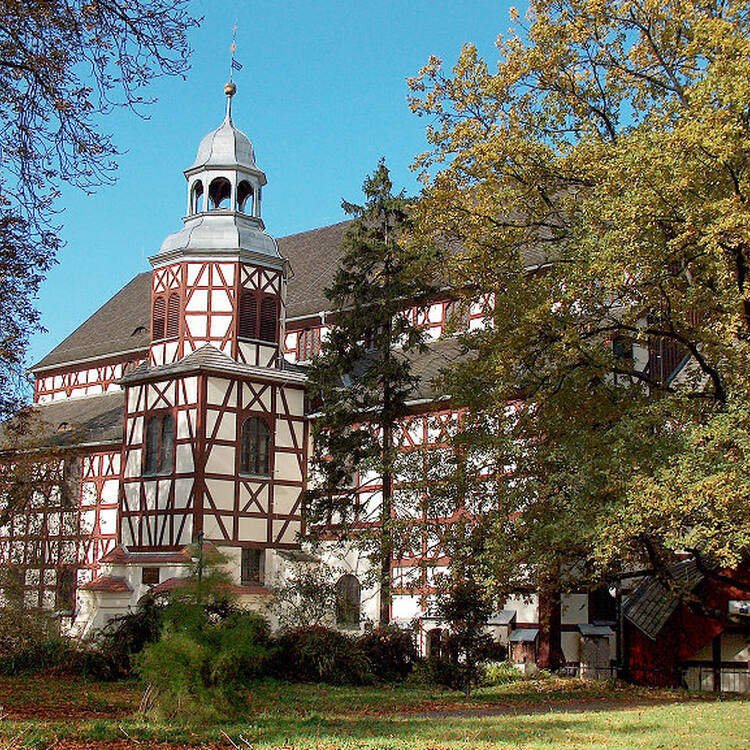
The Churches of Peace in Jawor and Świdnica, the largest timber-framed religious buildings in Europe, were built in the former Silesia in the mid-17th century, amid the religious strife that followed the Peace of Westphalia. Constrained by the physical and political conditions, the Churches of Peace bear testimony to the quest for religious freedom and are a rare expression of Lutheran ideology in an idiom generally associated with the Catholic Church.Description is available under license CC-BY-SA IGO 3.0
Églises de la Paix à Jawor et Świdnica
Les églises de la Paix à Jawor et à Świdnica, les plus grands bâtiments religieux à charpente de bois d'Europe, ont été construites dans l'ancienne Silésie, au milieu du XVIIe siècle, à l'époque du conflit religieux qui suivit la paix de Westphalie. Modelées par des facteurs physiques et politiques, elles témoignent de la quête de liberté religieuse et mettent en œuvre des formes architecturales généralement associées à l'église catholique mais très peu courantes s'agissant de la religion luthérienne.Description is available under license CC-BY-SA IGO 3.0
كنائس السلام في جافور وسودنيكا
بُنيت كنائس السلام في جافور وسويدنيكا، وهي أكبر المباني الدينية الخشبية الأوروبية، في سيليزيا القديمة في أوساط القرن السابع عشر في حقبة الصراع الديني الذي عقب السلام في ويستفاليا. بالرغم من تعديل العوامل الطبيعيّة والسياسيّة فيها، هي تشهد على السعي إلى الحرية الدينية وتستخدم أشكالاً هندسية تعود في الإجمال إلى الكنيسة الكاثوليكية، لكنّها تبقى نادرةً وهي تعود إلى الديانة اللوثرية.
source: UNESCO/CPE
Description is available under license CC-BY-SA IGO 3.0
扎沃尔和思维得尼加的和平教堂
扎沃尔和思维得尼加的和平教堂是欧洲最大的木制结构宗教建筑,始建于17世纪中期的原西里西亚,当时正值威斯特伐利亚和平条约签订之后宗教运动兴起之时。由于受到物质和政治上的压制,和平教堂宣布接受人们对于宗教自由的要求,表达了路德教派的思想,这在当时以天主教为主的地区是很少见的。
source: UNESCO/CPE
Description is available under license CC-BY-SA IGO 3.0
Церкви Мира в Яворе и Свиднице
Церкви Мира в Яворе и Свиднице – это крупнейшие в Европе деревянные религиозные здания, которые были построены в бывшей Силезии в середине XVII в. во время религиозных споров, последовавших после заключения Вестфальского мира. Создание церквей Мира в условиях физических и политических ограничений является свидетельством поиска религиозной свободы и редким проявлением идеологии лютеранства в формах, ассоциируемых обычно с католической церковью.
source: UNESCO/CPE
Description is available under license CC-BY-SA IGO 3.0
Iglesias de la Paz en Jawor y Swidnica
Las iglesias de la Paz de Jawor y Swidnica son los edificios religiosos de entramado de madera más grandes de toda Europa. Fueron erigidas en la antigua Silesia a mediados del siglo XVII, en el periodo de conflictos religiosos subsiguiente a la Paz de Westfalia. Construidos en función de una serie de imperativos de índole material y política, estos dos templos luteranos constituyen un testimonio de la búsqueda de la libertad religiosa y presentan características arquitectónicas generalmente vinculadas a los edificios de culto católico, que muy raras veces se dan en las iglesias protestantes.
source: UNESCO/CPE
Description is available under license CC-BY-SA IGO 3.0
ヤヴォルとシフィドニツァの平和教会群
ヤヴォルとシフィドニツァはポーランド南西部のバゥブジフ州北部にあり、共に13世紀初期の建設でポーランド最古の都市に属する。この2つの都市の平和教会はヨーロッパ最大の木造宗教建築物で、17世紀中期頃の宗教紛争の時期に、シュレジエンで最大の塔をもつゴシック様式の寺院として建設された。宗教的・政治的な制約の中で宗教的自由を探求した平和教会は、カトリック教会様式にルター的イデオロギーを表現した稀有な例証である。source: NFUAJ
Vredeskerken in Jawor en Świdnica
De Vredeskerken in Jawor en Świdnica zijn de grootste houten religieuze gebouwen in Europa. Beide kerken zijn ontworpen door de architect Albert von Sabisch. Ze werden halverwege de 17e eeuw gebouwd in het voormalige Silezië, te midden van de religieuze strijd die volgde op de Vrede van Westfalen. De kerken getuigen van de zoektocht naar godsdienstvrijheid en zijn een zeldzame uiting van Lutherse ideologie in een vormentaal die over het algemeen geassocieerd wordt met de Katholieke Kerk. Een blijk van uitzonderlijke tolerantie van de katholieke Habsburgse keizer richting de protestantse gemeenschappen in Silezië in de periode na de Dertigjarige Oorlog in Europa.
Source: unesco.nl


Outstanding Universal Value
Brief synthesis
The Churches of Peace located in the towns of Jawor and Świdnica in the Silesia region of south-western Poland are the largest timber-framed Baroque ecclesiastical buildings in Europe. They were built in the mid-17th century to a scale and complexity unknown in European wooden architecture before or since, following the provisions of the Peace of Westphalia, which concluded the Thirty Years’ War in 1648. The terms of the peace treaty effectively eradicated the Evangelical Church in the Silesian hereditary principalities directly controlled by the Holy Roman Emperor, Ferdinand III. The Evangelicals, who constituted the majority of the population in these areas, were deprived of the religious freedom they had hitherto enjoyed and lost almost all of their churches. It was only courtesy of Swedish diplomatic intervention that permission was granted to build three churches.
Lengthy and expensive efforts were made to secure imperial consent, which, when issued, imposed exceptionally strict conditions: the churches were to be located beyond town boundaries, within an area strictly defined by imperial officials; they were to be built of wood and clay; they could not feature a tower; and their construction was to be completed within one year. The architect and engineer Albrecht von Säbisch had to reconcile these requirements with the expectations of a large Evangelical community for whom these were to be the only churches. Using traditional materials and technologies, the architect created a set of buildings that represented the pinnacle of timber-framing construction technology. The centuries-long timber-frame tradition allowed carpenters to erect buildings that could survive for hundreds of years, in spite of the impermanence of the materials used. The Church of the Holy Spirit in Jawor was built in 1654–1655 as a rectangular three-aisled basilica with a three-sided chancel of reduced form. The Church of the Holy Trinity in Świdnica was built in 1656–1657 as a three-aisled basilica with a Greek cross ground plan. The third of the Churches of Peace allowed under the Peace of Westphalia was built in Głogów in 1652, but burned down a hundred years later.
Both of the surviving churches feature multi-tier galleries, thanks to which the capacity of building was extended to about seven thousand people each. The rich décor, which developed over the ensuing decades, integrates exuberant Baroque forms and complex imagery into their architectural framework in a unique way that celebrates the coexistence of Baroque art and Lutheran theology, and reflects the social hierarchy of the time.
An unparalleled tour de force, the Churches of Peace are masterpieces of skilled handicraft. Because of their technological complexity and size, the Churches of Peace were never duplicated elsewhere and remain without peer.
The total area of the serial inscription amounts to 0.23 ha and the total area of the buffer zones amounts to 12 ha.
Criterion (iii): The Churches of Peace are outstanding testimony to an exceptional act of tolerance on the part of the Catholic Habsburg Emperor towards Protestant communities in Silesia in the period following the Thirty Years’ War in Europe.
Criterion (iv): As a result of conditions imposed by the Emperor, the Churches of Peace required the builders to implement pioneering constructional and architectural solutions of a scale and complexity unknown before or since in wooden architecture. The success may be judged by their survival to the present day.
Criterion (vi): The Churches of Peace bear exceptional witness to a particular political development in Europe in the 17th century of great spiritual power and commitment.
Integrity
Within the boundaries of the serial property are located all the elements necessary to sustain the Outstanding Universal Value of the Churches of Peace in Jawor and Świdnica, including the original structures of the wooden frameworks in-filled with clay panels (which are integrally combined with the historical extensions that were added over time), and the elements of the interior décor and furnishings. In the vicinity of each church but outside the property are located the parish buildings essential for the functioning of the church community, and a cemetery. The historically shaped spatial integrity between each church and its surroundings has been preserved. The silhouette of the entire architectural complex is clearly visible in each townscape. The property does not suffer from adverse effects of development and/or neglect.
Authenticity
The Churches of Peace survive in fully authentic form, particularly regarding their locations and settings, forms and designs, materials and substances, and function, as evidenced by their unaltered emplacement, the structural system and materials used in their construction, and the preservation of the original function of these Evangelical-Augsburg parish churches. Architectural features (such as galleries and guild and family box pews), interior décor, and furnishings that were added after the initial construction are consistent with the original architectural forms and maintain a cohesive artistic unity. Renovation and conservation work (including preventive conservation measures) carried out on the churches has preserved their Outstanding Universal Value and authenticity by slowing down the processes of deterioration. A full programme of conservation is applied solely to individual elements of the décor and furnishings. The only new technological elements introduced in both buildings are alarm and fire prevention systems. There are no potential threats and risks identified for the property.
Protection and management requirements
The Churches of Peace in Jawor and Świdnica, which are regularly used for religious services, are legally protected under the regulations on the protection of monuments, implemented by the national monument protection services. Responsibility for their guardianship and management lies with their owners, the Evangelical-Augsburg parishes in Jawor and Świdnica, which are legally entitled to carry out and finance conservation works. Renovation and conservation tasks in each case require approval of the planned work and relevant permission from the state conservation services.
Sustaining the Outstanding Universal Value, authenticity, and integrity of the property over time will require the development of a Management Plan as a strategic document in order to ensure the effective protection of the churches and their surroundings.