Cueva de las Manos, Río Pinturas
Cueva de las Manos, Río Pinturas
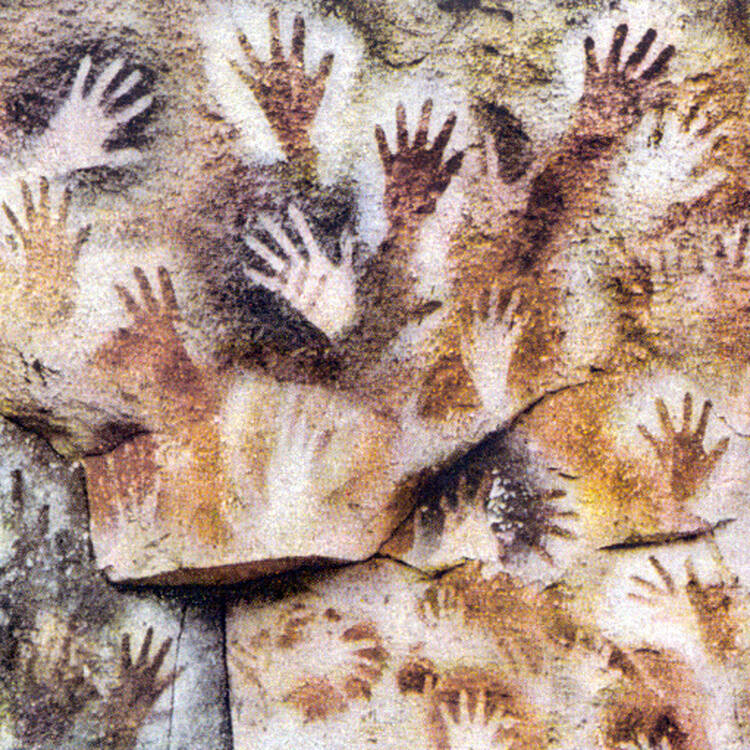
The Cueva de las Manos, Río Pinturas, contains an exceptional assemblage of cave art, executed between 13,000 and 9,500 years ago. It takes its name (Cave of the Hands) from the stencilled outlines of human hands in the cave, but there are also many depictions of animals, such as guanacos (Lama guanicoe ), still commonly found in the region, as well as hunting scenes. The people responsible for the paintings may have been the ancestors of the historic hunter-gatherer communities of Patagonia found by European settlers in the 19th century.
Description is available under license CC-BY-SA IGO 3.0
Cueva de las Manos, Río Pinturas
La Cueva de las Manos, Río Pinturas, renferme un ensemble exceptionnel d’art rupestre exécuté il y a de cela 13 000 à 9 500 ans. Elle doit son nom (grotte aux mains) aux impressions de mains – comme au pochoir – réalisées sur ses parois, mais comprend aussi de nombreuses représentations d’animaux, notamment de guanacos (Lama guanicœ ) qui sont toujours présents dans cette région, ainsi que des scènes de chasse. Les auteurs de ces peintures pourraient avoir été les ancêtres des communautés historiques de chasseurs-cueilleurs de Patagonie rencontrées par les colons européens au XIXe siècle.
Description is available under license CC-BY-SA IGO 3.0
كويفا دي لاس مانوس، ريو بينتوراس
تشتمل كويفا دي لاس مانوس في ريو بينتواس على مجموعة استثنائية من الفنون الصخرية التي يعود إنجازها إلى ما بين 13000و9500 سنة. ويعود اسمها (مغارة اليدين) إلى آثار اليدين – التي هي على غرار الرواسم- على جدرانها وهي تشتمل أيضاً على الكثير من الرسوم التمثيلية للحيوانات لا سيما حيوان الغواناكو (لاما غوانيكو) الموجود في المنطقة، بالإضافة إلى الرسوم التمثيليّة للصيد. وقد يكون واضعو هذه الرسوم قدامى الجماعات التاريخية من صيادين- قطّافين من باتاغونيا أجدادأولئك الذين التقى بهم المستوطنون الأوروبيون في القرن التاسع عشر.
source: UNESCO/CPE
Description is available under license CC-BY-SA IGO 3.0
洛斯马诺斯岩画(1999年)
洛斯马诺斯岩画所体现的卓越洞窟艺术可追溯到9 500至13 000年以前。“手洞”的名字取自洞窟中人手的雕画形象。此外还有很多当地常见动物的形象描绘,例如美洲驼,以及一些狩猎场景。创作这些岩画的人很可能是巴塔哥尼亚人(Patagonia)的祖先。19世纪,欧洲殖民者发现了这些以狩猎和采集为生的部落。
source: UNESCO/CPE
Description is available under license CC-BY-SA IGO 3.0
Пещера Куэва-де-лас-Манос (район Рио-Пинтурас, провинция Санта-Крус)
Пещера Куэва-де-лас-Манос содержит выдающееся собрание пещерных росписей, возраст которых составляет от 13 тыс. до 9,5 тыс. лет. Свое название, переводимое как «пещера рук», Куэва-де-лас-Манос получила по обнаруженным здесь раскрашенным отпечаткам человеческих ладоней. В пещере можно увидеть и изображения животных, таких как гуанако, которые до сих пор типичны для этого района, а также сцены охоты. Люди, которые создали эти росписи, вероятно, были предками охотников-собирателей Патагонии, обнаруженных европейскими поселенцами в ХIХ в.
source: UNESCO/CPE
Description is available under license CC-BY-SA IGO 3.0
Cueva de las Manos del Río Pinturas
La Cueva de las Manos del Río Pinturas alberga un conjunto excepcional de arte rupestre, ejecutado entre los años 13.000 y 9.500 a.C. La cueva debe su nombre a las huellas de manos estampadas en sus paredes con una técnica similar a la de impresión con plantilla. Además de estas figuras, la cueva posee numerosas representaciones de especies aún vivas de la fauna local, y más concretamente de guanacos (lama guanicoe). Los autores de las pinturas bien podrían haber sido los antepasados de las comunidades de cazadores-recolectores de Patagonia descubiertas por los colonizadores europeos en el siglo XIX.
source: UNESCO/CPE
Description is available under license CC-BY-SA IGO 3.0
リオ・ピントゥラスのクエバ・デ・ラス・マノス
アルゼンチン南部のサンタ・クルス州、パタゴニア地方。人口の最も希薄な寒冷・乾燥気候地帯。リオ・ピントゥラス峡谷の両岸にみられるクエバ・デ・ロス・マノス(「手の洞窟」の意)の壮麗な絵画群は、先史時代の岩絵の集成としては顕著な価値を有するものであり、南アメリカ最古の人類文化の証跡を示すものといえる。これらは古くは1万2000年前からの狩猟民族によって描かれ続けてきたものである。source: NFUAJ
Cueva de las Manos in Río Pinturas
De Cueva de las Manos bevat een uitzonderlijke verzameling van grotkunst die ergens tussen 13.000 en 9.500 jaar geleden is aangebracht. De Cueva dankt zijn naam – Grot van de Handen – aan de gestencilde contouren van menselijke handen in de grot. Maar er zijn ook veel afbeeldingen te vinden van jachttaferelen en dieren, zoals de guanaco (wilde lama) die nog steeds veel voorkomt in de regio. Het zou goed kunnen dat de mensen die de grotschilderingen maakten, de voorouders waren van de historische jager-verzamelaargemeenschappen van Patagonië. De regio Patagonië werd in de 19e eeuw gevonden door Europese kolonisten.
Source: unesco.nl

Outstanding Universal Value
Brief synthesis
The Cueva de las Manos, Río Pinturas, contains an exceptional assemblage of cave art, with many painted rock shelters, including a cave, with magnificent pictographies surrounded by an outstanding landscape, with the river running through a deep canyon, which were executed between 9,300 and 1,300 years ago.
It takes its name (Cave of the Hands) from the stencilled outlines of human hands in the cave, but there are also many depictions of animals, such as guanacos (Lama guanicoe ), still commonly found in the region, as well as hunting scenes that depict animals and human figures interacting in a dynamic and naturalistic manner. The entrance to the Cueva is screened by a rock wall covered by many hand stencils. Within the rock shelter itself there are five concentrations of rock art, later figures and motifs often superimposed upon those from earlier periods. The paintings were executed with natural mineral pigments - iron oxides (red and purple), kaolin (white), and natrojarosite (yellow), manganese oxide (black) - ground and mixed with some form of binder.
The artistic sequence, which includes three main stylistic groups, began as early as the 10th millennium BP [Before Present]. The sequence is a long one: archaeological investigations have shown that the site was last inhabited around AD 700 by the possible ancestors of the first Tehuelche people of Patagonia. The Cueva is considered by the international scientific community to be one of the most important sites of the earliest hunter-gatherer groups in South America during Early Holocene that still maintains a good state of preservation and has a singular environment formation, unique at Santa Cruz province.
The rock art, its natural environment and the archaeological sites on this region are some of the very important reasons that made this area a focus for archaeological research for more than 25 years. They made an impact on the observer due not only the deep gorge walls surrounded by a privileged landscape, but also by the artistic compositions, variety of motifs and its polychromies. These scenes represent a unique evidence to know aboutthe first Patagonian hunters’ behaviour and their hunting techniques. Cueva de las Manos, Río Pinturas contains an exceptional assemblage of cave art, unique in the world, for its age and continuity throughout time, the beauty and the preservation conditions of the paintings, the magnificence of the collection of stencilled outlines of human hands and the hunting scenes, as well as the environment that surrounds the place of exciting beauty and for being part of the cultural value of the site itself.
Criterion (iii): The Cueva de las Manos contains an outstanding collection of prehistoric rock art which bears witness to the culture of the earliest human societies in South America.
Integrity
The inscribed property encompasses 600 ha with a buffer zone of 2,338 ha. The attributes of the property, represented by the archaeological site, the surrounding setting, and its artistic depictions, that convey the Outstanding Universal Value of the Cueva de las Manos, Río Pinturas, are fully present both in the nuclear and buffer zones and have not been altered and do not face any imminent threats due to development or negligence.
The habitat surrounding the archaeological site remains intact and has the same animal species depicted through cave art approximately 10,000 years ago. This also applies to plant species. As mentioned above, this is a particular, unique, and a typical setting, both at a provincial and regional level, with great value for the preservation of the Argentine natural systems. The favourable conditions (very low humidity, no water infiltration, stable rock strata) at the rock shelter have ensured that the state of conservation of all but the most exposed paintings is excellent. However, the increase of tourism to Patagonia in recent years has resulted in damage from human vandalism. These has included graffiti, removal of fragments of painted rock, touching of painted surfaces, accumulation of dust and refuse, etc. although measures undertaken have reduced impacts from these factors.
Authenticity
The authenticity of the rock art of the Cueva de los Manos is unquestionable. It has survived several millennia untouched and no restoration has been carried out since it became widely known to the scientific community in the second half of the 20th century. The archaeological excavations have been very restricted, so as to obtain the maximum cultural information for dating the art with the minimum disturbance to archaeological layers or to the appearance of the rock shelter.
Scientific excavations have made it possible to relate the cave depictions located in the site to the communities living in the region since the 10th millennium Before Present. The evidence of the excavations made in the cave area led to the establishment of context links between the cultural levels and paintings. The authenticity of the pictorial sequence was also verified by in-depth research. The art sequence of the Cueva de las Manos is based on a detailed study of overlapping, the different use of hues, its various states of conservation, and the location of the depictions along different defined sectors. Its relation to the various cultural levels of the site is supported by carbon dating and indicators showing a direct association with them, such as mineral pigments or remains of painted fragments that came off the wall and found in the excavations.
These elements, along with research evidence and interdisciplinary analyses, strongly support the authenticity of the Cueva de las Manos site as a unique example of one of the earliest hunter-gatherer communities living in the South American region in the Early Holocene.
Protection and management requirements
In 1975 the Province of Santa Cruz issued the law N° 1024 for the conservation of historic, archaeological and paleontological heritage. At the provincial level, the Government of the Province of Santa Cruz declared the City of Perito Moreno as the Archaeological Capital of Santa Cruz, because of the importance of the archaeological site of the Cueva de los Manos, by Decree No 133 of 13 May 1981. The National Congress of the Argentine Republic declared the Cueva de los Manos a Historic National Monument by Law No 24.225 of 20 July 1993. In 1997, the Government of the Province of Santa Cruz promulgated the law N°2472 for the protection of the provincial cultural heritage. In 2003 National Law N°25743 for protection of archaeological and paleontological heritage was promulgated.
In 1997 a management plan was presented for the global administration of the site. It proposed many specific actions that had been carried out along the last 10 years of management: local permanent custody, visitor management strategies and an interpretation centre at the reception area. Additionally, assessments of the state of conservation of the site and natural deterioration causes were implemented, along with geomorphologic and geotechnical studies of the area and rock art conservation surveys.
The Cuevas de las Manos Site Committee was formed in March of 2006. It requires strengthening for the implementation of its activities and to ensure its operation and continuity. It would be very important to have a permanent presence of the Committee at Perito Moreno, closest village. This would facilitate decision-making when it is needed to solve concrete problems.



The Nomination files produced by the States Parties are published by the World Heritage Centre at its website and/or in working documents in order to ensure transparency, access to information and to facilitate the preparations of comparative analysis by other nominating States Parties.
The sole responsibility for the content of each Nomination file lies with the State Party concerned. The publication of the Nomination file, including the maps and names, does not imply the expression of any opinion whatsoever of the World Heritage Committee or of the Secretariat of UNESCO concerning the history or legal status of any country, territory, city or area or of its boundaries.