Routes of Santiago de Compostela: Camino Francés and Routes of Northern Spain
Routes of Santiago de Compostela: Camino Francés and Routes of Northern Spain
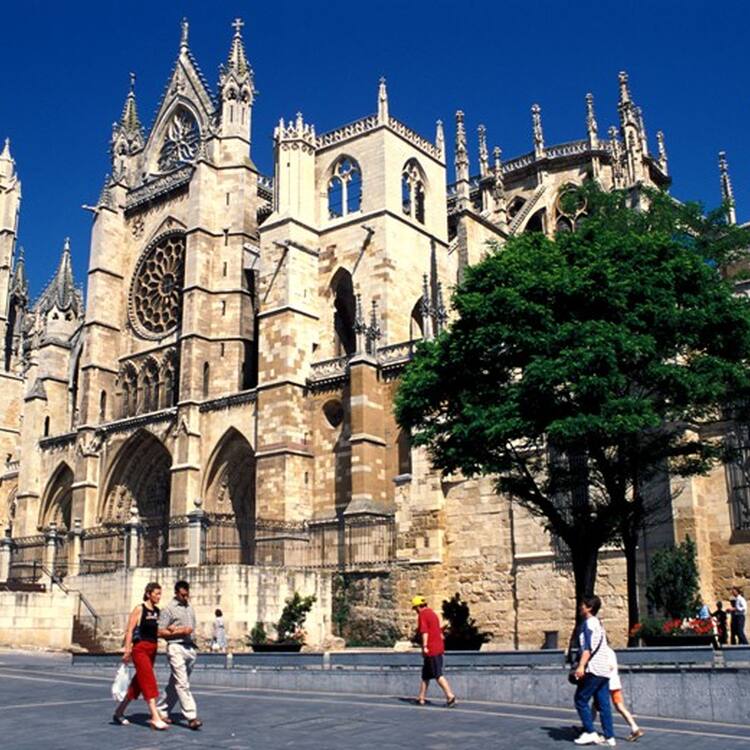
A network of four Christian pilgrimage routes in northern Spain, the site is an extension of the Route of Santiago de Compostela, a serial site inscribed on the World Heritage List in 1993. The extension represents a network of almost 1,500 km: coastal, interior of the Basque Country–La Rioja, Liébana and primitive routes. It includes a built heritage of historical importance created to meet the needs of pilgrims, including cathedrals, churches, hospitals, hostels and even bridges. The extension encompasses some of the earliest pilgrimage routes to Santiago de Compostela, following the discovery in the 9thcentury of a tomb believed to be that of St. James the Greater.
Description is available under license CC-BY-SA IGO 3.0
Chemins de Saint-Jacques-de-Compostelle : Camino francés et chemins du nord de l’Espagne
Ce réseau de quatre itinéraires de pèlerinage chrétien au nord de l’Espagne est une extension du bien en série « Chemin de Saint-Jacques-de-Compostelle », inscrit en 1993 sur la Liste du patrimoine mondial. Ce faisceau d’itinéraires de près de 1500 km se compose du Chemin côtier, du Chemin de l’intérieur du Pays basque–La Rioja, du Chemin de la Liébana et du Chemin primitif. Le site comprend un ensemble de patrimoine bâti d’importance historique créé pour répondre aux besoins des pèlerins, notamment des cathédrales, des églises, des hôpitaux, des hôtels ou encore des ponts. L’extension englobe certains des premiers chemins de pèlerinage à Saint-Jacques de Compostelle, nés après la découverte au IXe siècle d’un tombeau attribué à l’apôtre Jacques le Majeur.
Description is available under license CC-BY-SA IGO 3.0
طرق سان جاك دو كومبوستيل في شمال إسبانيا [توسيع نطاق موقع
تمثل هذه الشبكة التي تضم أربعة طرق للحجاج المسيحيين في شمال إسبانيا امتداداً للموقع المتسلسل المعروف باسم "طرق سان جاك دو كومبوستيل" والذي أُدرج في قائمة التراث العالمي في عام 1993. وتتألف شبكة الطرق هذه التي يقارب طولها 500 1 كلم من الطريق الساحلي والطريق الداخلي لإقليم الباسك-لا ريوخا، وطريق لا لييبانا والطريق الأصلي. ويتخلل الموقع مجموعة من المباني والمنشآت التراثية ذات الأهمية التاريخية التي شيِّدت للاستجابة لاحتياجات الحجاج، تشمل عدداً من الكاتدرائيات والكنائس والمستشفيات والفنادق والجسور. والغرض من اقتراح توسيع نطاق الموقع هو ضم بعض من طرق الحج الأولى التي استُخدمت للوصول إلى سان جاك دو كومبوستيل، وهي طرق أصبحت قائمة في حد ذاتها بعد اكتشاف قبر نُسب إلى القديس يعقوب الكبير، في القرن التاسع.
source: UNESCO/CPE
Description is available under license CC-BY-SA IGO 3.0
圣地亚哥康波斯特拉之路:法兰西之路和北西班牙之路
北部西班牙的四条基督教朝圣者之路,这是对1993年列入世界遗产名录的圣地亚哥康波斯特拉之路的扩展。扩展包括了位于巴斯克自治区拉里奥哈(La Rioja),利艾巴纳(Liébana )境内近1,500公里的道路,还包括一些具有历史意义的遗址如教堂、医院、旅馆以及桥梁,都是为满足朝圣者需要而建的建筑。这次扩展纳入了九世纪时发现据信是圣雅各之墓后,通往圣地亚哥康波斯特拉最早的朝圣之路。
source: UNESCO/CPE
Description is available under license CC-BY-SA IGO 3.0
Дороги в Сантьяго-де-Компостела: Camino francés и дороги на севере Испании
Объект, расположенный на севере Испании, является расширением кластерного объекта Всемирного наследия «Дороги в Сантьяго-де-Компостела», включенного в Список в 1993 году. Это сеть, состоящая из четырех маршрутов христианских паломников общей протяженностью около 1500 км. Она включает, в частности, Северный путь (Camino del Norte), который также именуют Прибрежным (Ruta de la Costa), Французский путь или Дорогу французских королей, ведущую из Страны Басков в Ла-Риоха (Camino francés), Дорогу в Льебану и изначальный Примитивный (также Оригинальный) путь (Camino Primitivo). В состав объекта входят постройки архитектурно-исторической ценности, созданные для нужд паломников, в их числе: соборы, церкви, больницы, постоялые дворы и мосты. Расширение объекта имеет в виду включение некоторых из самых ранних путей паломничества в Сантьяго-де-Компостела, проложенных после обнаружения в IX веке могилы, признанной как захоронение апостола Иакова Старшего.
source: UNESCO/CPE
Description is available under license CC-BY-SA IGO 3.0
Caminos de Santiago de Compostela: Camino francés y Caminos del Norte de España
Se trata de una extensión del bien cultural en serie denominado “Camino de Santiago de Compostela”, que se inscribió en la Lista del Patrimonio Mundial en 1993. Esta extensión comprende una red de cuatro itinerarios de peregrinación cristiana –el Camino costero, el Camino interior del País Vasco y La Rioja, el Camino de Liébana y el Camino primitivo– que suman unos 1.500 kilómetros y atraviesan el norte de la Península Ibérica. El bien cultural ampliado posee un rico patrimonio arquitectónico de gran importancia histórica, compuesto por edificios destinados a satisfacer las necesidades materiales y espirituales de los peregrinos: puentes, albergues, hospitales, iglesias y catedrales. También cuenta con algunas de las rutas primigenias de peregrinación a Santiago de Compostela, creadas después de que en el siglo IX se descubriera en el territorio de esta localidad un sepulcro que, según se cree, encierra los restos mortales del apóstol Santiago el Mayor.
source: UNESCO/CPE
Description is available under license CC-BY-SA IGO 3.0
サンティアゴ・デ・コンポステーラの巡礼路:カミーノ・フランセスとスペイン北部の巡礼路群
1993年に登録された「サンティアゴ・デ・コンポステーラの巡礼路」は、ガリシア州のサンティアゴ・デ・コンポステーラにある聖ヤコブの棺を目指す、スペイン国内の複数の巡礼路からなる。エルサレム、ローマと並ぶキリスト教徒の最も重要な巡礼地である。今回、それまでの内陸ルートに新たに海岸沿いのルートが追加され、同時に名称も変更された。source: NFUAJ
Routes naar Santiago de Compostela: Camino Francés en routes van Noord-Spanje
In 1987 riep de Raad van Europa Santiago de Compostela uit tot de eerste Europese Culturele route. Deze route langs de Frans-Spaanse grens was – en is nog steeds – de pelgrimsroute naar Santiago de Compostela. Langs de route liggen ongeveer 1.800 religieuze en seculiere gebouwen die historisch interessant zijn. De route speelde tijdens de middeleeuwen een fundamentele en stimulerende rol bij de culturele uitwisseling tussen het Iberisch schiereiland en de rest van Europa. De Route naar Santiago de Compostela getuigt van de kracht van het christelijk geloof onder mensen van alle rangen en standen in heel Europa. In 2015 werd de site uitgebreid met een aantal zeer oude routes naar de pelgrimstad.
Source: unesco.nl


Outstanding Universal Value
Brief synthesis
The Route of Santiago de Compostela is an extensive interconnected network of pilgrimage routes in Spain whose ultimate destination is the tomb of the Apostle James the Greater in Santiago de Compostela, in Galicia. According to Saint Jerome, the apostles were to be interred in the province where each had preached the gospel. The tomb believed to be that of James the Greater was discovered in Galicia in the 9th century, a period when Spain was dominated by Muslims. Its discovery was of immense importance for the Christian world, and Compostela soon became a place of Christian pilgrimage comparable in importance to Jerusalem and Rome.
The almost 1500-km-long network of four Northern Routes (Primitive, Coastal, Interior of the Basque Country-La Rioja, and Liébana) are at the origin of the Jacobean pilgrimage. They are directly linked to the discovery of the Apostle’s tomb, and to its promotion by the Kingdom of Asturias. It was not until the 11th century that the Northern Routes were surpassed by the 738-km-long French Route, which was less difficult to traverse and became the primary Way of Saint James across the Iberian peninsula to Compostela.
The Route of Santiago has been a meeting place for its pilgrims ever since it emerged some eleven centuries ago. It has facilitated a constant cultural dialogue between the pilgrims and the communities through which they pass. It was also an important commercial axis and conduit for the dissemination of knowledge, supporting economic and social development along its itineraries. Constantly evolving, this serial property includes a magnificent ensemble of built heritage of historical importance created to fill the needs of pilgrims, including churches, hospitals, hostels, monasteries, calvaries, bridges, and other structures, many of which testify to the artistic and architectural evolution that occurred between the Romanesque and Baroque periods. Outstanding natural landscapes as well as a rich intangible cultural heritage also survive to the present day.
Criterion (ii): The Route of Santiago de Compostela played a crucial role in the two-way exchange of cultural advances between the Iberian Peninsula and the rest of Europe, especially during the Middle Ages, but also in subsequent centuries. The wealth of cultural heritage that has emerged in association with the Camino is vast, marking the birth of Romanesque art and featuring extraordinary examples of Gothic, Renaissance, and Baroque art. Moreover, in contrast with the waning of urban life in the rest of the Iberian Peninsula during the Middle Ages, the reception and commercial activities emanating from the Camino de Santiago led to the growth of cities in the north of the Peninsula and gave rise to the founding of new ones.
Criterion (iv): The Route of Santiago de Compostela has preserved the most complete material registry of all Christian pilgrimage routes, featuring ecclesiastical and secular buildings, large and small enclaves, and civil engineering structures.
Criterion (vi): The Route of Santiago de Compostela bears outstanding witness to the power and influence of faith among people of all social classes and origins in medieval Europe and later.
Integrity
The property contains all the key elements necessary to express the Outstanding Universal Value of Route of Santiago de Compostela: French Route and Routes of Northern Spain, including the routes themselves and the ecclesiastical and secular buildings, large and small enclaves, and civil engineering structures necessary to sustain the act of pilgrimage. The serial property is of adequate size to ensure the complete representation of the features and processes that convey the property’s significance, and it does not suffer unduly from adverse effects of development or neglect. An added layer of protection for this extensive serial property is provided by buffer zones.
Authenticity
Route of Santiago de Compostela: French Route and Routes of Northern Spain is substantially authentic in its forms and designs, materials and substances, and use and function. The majority of the routes themselves follow their historic trajectories, and many retain their historical characteristics; along the five itineraries, the various built components included in this serial property are characterized by a high level of conservation. The property’s function and use as a pilgrimage route has continued for more than a millennium. The links between the Outstanding Universal Value of the routes and their attributes are therefore truthfully expressed, and the attributes fully convey the value of the property.
Protection and management requirements
Pursuant to the First Additional Provision of the Spanish Historical Heritage Act, Law 16/1985 of 25 June 1985, the Camino de Santiago was registered in the category of Historical Complex as a Property of Cultural Interest (Bien de Interés Cultural), the highest level of cultural heritage protection in Spain. In exercise of their competences, the Autonomous Communities through which the routes pass have each defined the protection of this serial property in their respective territories. The routes are Crown property, and the built components are under a mixture of private, institutional, and public sector ownership, as are the buffer zones. The serial property is managed by the Jacobean Council (Consejo Jacobeo), which was created for the purpose of collaborating on programmes and actions to protect and conserve it; to further its promotion and cultural dissemination; to conserve and restore its historical-artistic heritage; to regulate and promote tourism; and to assist pilgrims.
Notwithstanding these arrangements, systematic actions will be needed to address the potential threats posed by industrial and urban growth and development, new transportation infrastructure such as motorways and railways, pressure from increased tourism and the number of pilgrims, and rural depopulation. Enforcement of regulatory measures and legislation will be crucial, as well as the development of environmental and heritage impact studies for new construction. In addition, urban development schemes of the municipalities along the routes will need to ensure protection of the attributes that sustain the Outstanding Universal Value of the property.
Links
-
Galicia (in Spanish)
-
Basque Country (in Spanish)
-
Principality of Asturias (in Spanish)
-
Google Arts & Culture: Story
-
Camino de Santiago del Norte
-
Regional Government of Navarra (in Spanish)
-
Junta de Castilla y León
-
Patrimonio Cultural de Castilla y León (in Spanish)
-
Regional Government of Aragon (in Spanish)
-
Xacobe
-
Jacobean Council (Consejo Jacobeo)
-
Biblioteca Jacobea de Carrión de los Condes (Palencia)
-
Web site of the Camino de Santiago in Navarre (Gobierno de Navarra)
 2
2

The Nomination files produced by the States Parties are published by the World Heritage Centre at its website and/or in working documents in order to ensure transparency, access to information and to facilitate the preparations of comparative analysis by other nominating States Parties.
The sole responsibility for the content of each Nomination file lies with the State Party concerned. The publication of the Nomination file, including the maps and names, does not imply the expression of any opinion whatsoever of the World Heritage Committee or of the Secretariat of UNESCO concerning the history or legal status of any country, territory, city or area or of its boundaries.
Protections
by other conservation instruments
1 protection / 1 element
2003 Convention for the Safeguarding of the Intangible Cultural Heritage (1 element)