Classical Gardens of Suzhou
Classical Gardens of Suzhou
Classical Chinese garden design, which seeks to recreate natural landscapes in miniature, is nowhere better illustrated than in the nine gardens in the historic city of Suzhou. They are generally acknowledged to be masterpieces of the genre. Dating from the 11th-19th century, the gardens reflect the profound metaphysical importance of natural beauty in Chinese culture in their meticulous design.
Description is available under license CC-BY-SA IGO 3.0
Jardins classiques de Suzhou
Le paysagisme classique chinois, qui cherche à recréer des paysages naturels en miniature, est représenté de façon exceptionnelle dans les neuf jardins de la ville historique de Suzhou, universellement reconnus comme étant des chefs-d'œuvre du genre. Aménagés du XIe au XIXe siècle, ils reflètent dans leur conception méticuleuse la grande importance métaphysique de la beauté naturelle dans la culture chinoise.
Description is available under license CC-BY-SA IGO 3.0
حدائق سوتشو الكلاسيكيّة
يتجسّد المنحى الطبيعي الكلاسيكي الصيني الذي يحرص على إعادة ابتكار المناظر الطبيعيّة مصغّرةً خير تجسيد في حدائق مدينة سوتشو التاريخيّة التسع التي يذيع صيتها عبر العالم على أنّها تحف فنيّة فريدة من نوعها. شيّدت بين القرنين الحادي عشر والتاسع عشر وهي تعكس في ذاتها أهميّة الجمال ما وراء الطبيعي في الثقافة الصينية.
source: UNESCO/CPE
Description is available under license CC-BY-SA IGO 3.0
苏州古典园林
没有任何地方比历史名城苏州的九大园林更能体现中国古典园林设计“咫尺之内再造乾坤”的理想。苏州园林被公认是实现这一设计思想的杰作。这些建造于11至19世纪的园林,以其精雕细琢的设计,折射出中国文化取法自然而又超越自然的深邃意境。
source: UNESCO/CPE
Description is available under license CC-BY-SA IGO 3.0
Классические сады в городе Сучжоу
Традиционное садово-парковое искусство Китая, которое ставит своей целью воссоздание естественного ландшафта в миниатюре, в наши дни может быть наилучшим образом проиллюстрировано на примере девяти садов в историческом городе Сучжоу. Они являются общепризнанными шедеврами подобного жанра. Сады, датируемые XI-XIХ вв., своей тщательной разработкой подтверждают важность опоры на естественную красоту в китайской культуре.
source: UNESCO/CPE
Description is available under license CC-BY-SA IGO 3.0
Jardines clí¡sicos de Suzhu
El arte paisajístico clí¡sico de China, que trata de recrear paisajes naturales en miniatura, estí¡ excepcionalmente representado en los nueve jardines de la histórica ciudad de Suzhu. Acondicionados entre los siglos XI y XIX, estos jardines son obras maestras del paisajismo universalmente reconocidas y su meticuloso diseño refleja la trascendencia metafísica que tiene la belleza de la naturaleza en la cultura china.
source: UNESCO/CPE
Description is available under license CC-BY-SA IGO 3.0
蘇州古典園林
自然景観を縮景のかたちで再現しようとする中国の古典園林は、江蘇省、蘇州の4大名園(滄浪亭、獅子林、拙政園、留園)が、この分野における大傑作として世界に知られる。16~18世紀に造られたこれらの庭園は、その細心な設計のなかに、中国文化における自然美の深遠な形而上学的な重要性を表現している。留園、拙政園、網獅園、環秀山荘に加えて、滄浪亭、獅子林、芸圃、藕園、退思園が追加された。source: NFUAJ
Klassieke tuinen van Suzhou
Het klassieke Chinese tuinontwerp is gericht op het in miniatuur recreëren van natuurlijke landschappen. Dit wordt nergens beter geïllustreerd dan in de negen tuinen in de historische stad Suzhou. Ze worden zelfs algemeen erkend als meesterwerken binnen het genre. Suzhou ligt in het lager Yangtze bekken grenzend aan het Tai meer en werd in 514 voor Christus opgericht als hoofdstad van het koninkrijk Wu. Tijdens de Ming en de Qing dynastieën werden er ruim 200 tuinen aangelegd. Vanwege de hoge kwaliteit en de uitbundigheid van de tuinen wordt Suzhou in de volksmond ook wel ‘het aardse paradijs’ genoemd.
Source: unesco.nl


Outstanding Universal Value
Brief synthesis
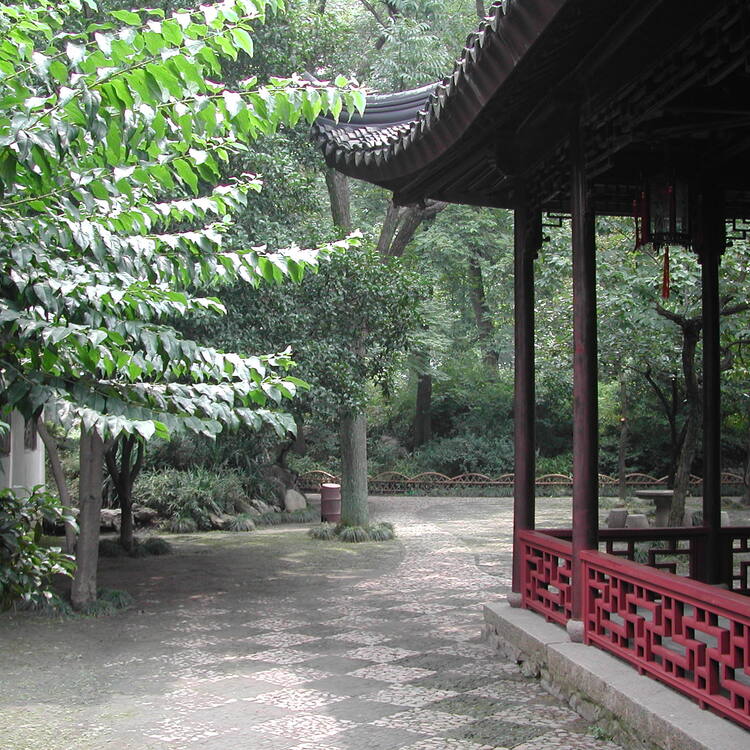
The classical gardens of Suzhou, Jiangsu Province, China date back to the 6th century BCE when the city was founded as the capital of the Wu Kingdom. Inspired by these royal hunting gardens built by the King of the State of Wu, private gardens began emerging around the 4th century and finally reached the climax in the 18th century. Today, more than 50 of these gardens are still in existence, nine of which, namely the Humble Administrator’s Garden, Lingering Garden, Net Master’s Garden, the Mountain Villa with Embracing Beauty, the Canglang Pavilion, the Lion Grove Garden, the Garden of Cultivation, the Couple’s Garden Retreat, and the Retreat & Reflection Garden, are regarded as the finest embodiments of Chinese “Mountain and Water” gardens. The earliest of these, the Canglang Pavilionwas built in the early 11th century on the site of an earlier, destroyed garden. Conceived and built under the influence of the unconstrained poetic freehand style originally seen in traditional Chinese landscape paintings, they are noted for their profound merging of exquisite craftsmanship, artistic elegance and rich cultural implications. These gardens lend insight into how ancient Chinese intellectuals harmonized conceptions of aestheticism in a culture of reclusion within an urban living environment.
Garden masters from each dynasty adapted various techniques to artfully simulate nature by skillfully adapting and utilizing only the physical space available to them. Limited to the space within a single residence, classical Suzhou gardens are intended to be a microcosm of the natural world, incorporating basic elements such as water, stones, plants, and various types of buildings of literary and poetic significance. These exquisite gardens are a testament to the superior craftsmanship of the garden masters of the time. These unique designs that have been inspired but are not limited by concepts of nature have had profound influence on the evolution of both Eastern and Western garden art. These garden ensembles of buildings, rock formations, calligraphy, furniture, and decorative artistic pieces serve as showcases of the paramount artistic achievements of the East Yangtze Delta region; they are in essence the embodiment of the connotations of traditional Chinese culture.
Criterion (i): The classical gardens of Suzhou that have been influenced by the traditional Chinese craftsmanship and artistry first introduced by the freehand brushwork of traditional Chinese paintings, embody the refined sophistication of traditional Chinese culture. This embodiment of artistic perfection has won them a reputation as the most creative gardening masterpieces of ancient China.
Criterion (ii): Within a time span of over 2,000 years, a unique but systematic form of landscaping for these particular types of gardens was formed. Its planning, design, construction techniques, as well as artistic effect have had a significant impact on the development of landscaping in China as well as the world.
Criterion (iii): The classical gardens of Suzhou first originated from the ancient Chinese intellectuals' desire to harmonize with nature while cultivating their temperament. They are the finest remnants of the wisdom and tradition of ancient Chinese intellectuals.
Criterion (iv): The classical gardens of Suzhou are the most vivid specimens of the culture expressed in landscape garden design from the East Yangtze Delta region in the 11th to 19th centuries. The underlying philosophy, literature, art, and craftsmanship shown in the architecture, gardening as well as the handcrafts reflect the monumental achievements of the social, cultural, scientific, and technological developments of this period.
Criterion (v): These classical Suzhou gardens are outstanding examples of the harmonious relationship achieved between traditional Chinese residences and artfully contrived nature. They showcase the life style, etiquette and customs of the East Yangtze Delta region during the 11th to 19th centuries.
Integrity
The settings and features of the heritage property cover all essential elements and key values of the classic gardens of Suzhou. Archives ranging from the 11th to the 20th century, such as in Chronicle of Suzhou Municipality, Chronicle of Wu County, Chronicle of Tongli Town, and Record of Jiangnan Gardens by Tong Jun in 1937, Inscription of Pingjiang Map, Ying zao fa yuan (Rules of Traditional Architecture) by Yao Chengzu in 1937, and Classical Gardens of Suzhou by Liu Dunzhen in 1979, are records of detailed surveys, maps and drawings of these classic gardens. These gardens preserved varied architectural features such as structure and layout, architectural forms such as rock and plant configurations, plaques, couplets, and furniture. Within the borders of the buffer zone, essential elements including rivers, streets, alleys, vernacular residences as well as a cultural atmosphere, all have been preserved. These essential elements holistically feature the styles, vista, atmosphere, and artistic mood of the “urban scenery” around the classic gardens of Suzhou.
Authenticity
The style evolution of classic gardens of Suzhou has been recorded in detailed volumes of reminiscent verses, poems, paintings and maps of each historical period from the 11th Century. Information about the gardens in each historical period is found in the ancient trees, plaques, couplets, brick and stone carvings, inscriptions and other precious immovable cultural relics in these areas. Local traditional gardening techniques and values have been handed down from generation to generation, always adhering to design concepts that strive to create miniature worlds in limited spaces, and gardening practices that strive to simulate nature with meticulous details while adapting to local conditions. Garden masters of each dynasty consistently used traditional materials and techniques in the repairing and maintenance of these gardens. The local government has insisted on minimum intervention in conservation work for the purpose of respecting the historic condition of these heritage sites and controls the impact of modern urbanization around them, keeping intact the charm of these classical Suzhou gardens.
Protection and management requirements
The classical gardens in Suzhou on the World Heritage List are all listed by the State Council as State Priority Protected Sites, and therefore subject to strict conservation and management laws and regulations including the Law of People’s Republic of China on the Protection of Cultural Relics. The government of the Suzhou municipality established an agency for the conservation and management of the gardens and cultural heritage in 1949. The Suzhou Municipal Garden and Landscape Administration Bureau, which includes the Heritage Supervision Department, Heritage Monitoring and Conservation Centre and site management office, is the responsible managerial entity for each garden.
So far the classical gardens of Suzhou have been well preserved. Management and Protection Regulations of Suzhou Garden and the Conservation Plan for the World Heritage Classical Gardens of Suzhou have been issued, in which the property area and buffer zone are clearly defined. The protection of these gardens has been incorporated into the framework of the Master Plan of Suzhou City. Conservation and management institutions at all levels have determined and will focus on the formulation and enforcement of all respective laws and regulations, and interim and long term conservation plans. All measures serve a common purpose: to minimize the impact of urbanization by strictly monitoring and supervising various factors that could potentially affect these gardens, including through regulating approved procedures for construction projects within the buffer zone; reducing population density; improving living conditions and heritage awareness of residents around the area, and mitigating the pressures that arise from commercial activities and tourism. The ultimate goal is to guarantee the scientific, orderly conservation and management of these classical gardens of Suzhou.
 View photos from OUR PLACE the World Heritage collection