Bauhaus and its Sites in Weimar, Dessau and Bernau
Bauhaus and its Sites in Weimar, Dessau and Bernau
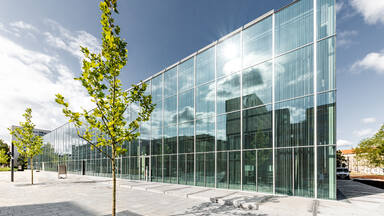
Between 1919 and 1933 the Bauhaus movement revolutionized architectural and aesthetic thinking and practice in the 20th century. The Bauhaus buildings in Weimar, Dessau and Bernau are fundamental representatives of Classical Modernism, directed towards a radical renewal of architecture and design. This property, which was inscribed on the World Heritage List in 1996, originally comprised buildings located in Weimar (Former Art School, the Applied Art School and the Haus Am Horn) and Dessau (Bauhaus Building, the group of seven Masters' Houses). The 2017 extension includes the Houses with Balcony Access in Dessau and the ADGB Trade Union School in Bernau as important contributions to the Bauhaus ideas of austere design, functionalism and social reform.
Description is available under license CC-BY-SA IGO 3.0
Bauhaus et ses sites à Weimar, Dessau et Bernau
Entre 1919 et 1933, le Mouvement du Bauhaus révolutionna la pensée et la pratique architecturales et esthétiques au XXe siècle. Les bâtiments du Bauhaus à Weimar, Dessau et Bernau sont des représentants fondamentaux du modernisme classique, orienté vers un renouveau radical de l’architecture et de la conception. Ce bien, inscrit sur la Liste du patrimoine mondial en 1996, comprenait à l’origine les bâtiments situés à Weimar (l’ancienne école d’art du Bauhaus, l’école d’arts appliqués et la maison am Horn) et Dessau (le bâtiment du Bauhaus, le groupe de sept maisons de maîtres). L’extension de 2017 inclut les maisons avec accès aux balcons à Dessau et l’École de la Confédération syndicale ADGB à Bernau, comme des contributions importantes aux idées du Bauhaus en matière de conception épurée, de fonctionnalisme et de réforme sociale.
Description is available under license CC-BY-SA IGO 3.0
الباوهاوس والمواقع في فايمار وديساو وبيرناو (امتداد لموقع الباوهاوس والمواقع في فايمار وديساو)
كان الموقع الذي أدرج عام 1996 في قائمة التراث العالمي يتألف في الأساس من مجموعات من المباني والمواقع الأثريّة الواقعة في فايمار وديساو والتي بنيت بأكملها تحت إشراف والتر غروبيوس، أول مدير لمدرسة الباوهاوس. وقد جاء التعديل الحدودي ليضم المنازل التي تمتلك شرفة في مدخلها في ديساو، والمباني التي تتألف من ثلاثة طوابق اسمنتيّة والتي كانت مخصصة لاستقبال الأشخاص منخفضي الدخل و ADGB Trade Union School في بيرناو والتي بنيت تحت إشراف هاينس ماير، سلف غروبيوس حتى عام 1930. ويجسّد هذا الامتداد للموقع مساهمة قسم الهندسة المعماريّة في أناقة التصميم والإصلاح الاجتماعي في الباوهاوس وهي حركة شكّلت ثورة في الفكر والممارسات المعماريّة في القرن العشرين.
source: UNESCO/CPE
Description is available under license CC-BY-SA IGO 3.0
La Bauhaus y sus sitios en Weimar, Desau y Bernau
Entre 1919 y 1933, el movimiento de la Bauhaus revolucionó el pensamiento y la práctica arquitectónicos y estéticos del siglo XX. Los edificios de la Bauhaus en Weimar, Dessau y Bernau son representantes fundamentales del modernismo clásico, dirigido hacia una renovación radical de la arquitectura y el diseño. El sitio, inscrito en la Lista del Patrimonio Mundial en 1996, comprendía en su origen edificios situados en Weimar (antigua Escuela de Artes, Escuela de Artes Aplicadas y Haus Am Horn) y Desau (Edificio Bauhaus, Grupo de las siete casas de maestros). La ampliación de 2017 incluye cinco bloques de viviendas sociales de tres pisos –con acceso por balcón– edificados con ladrillo en Desau, y la Escuela de la Confederación General de Sindicatos de Alemania (ADGB) construida en Bernau, como contribuciones importantes a los ideales de la Bauhaus de diseño depurado, funcionalismo y reforma social.
source: UNESCO/CPE
Description is available under license CC-BY-SA IGO 3.0
Bauhaus en zijn locaties in Weimar, Dessau en Bernau
De Bauhaus School, eerst gevestigd in Weimar en later in Dessau, ontketende tussen 1919 en 1933 een revolutie in architectonische en esthetische concepten en praktijken. De gebouwen die opgetrokken en ingericht zijn door de professoren van de school – Walter Gropius, Hannes Meyer, Laszlo Moholy-Nagy en Wassily Kandinsky – waren de aanzet van de Moderne Beweging, die een groot deel van de architectuur van de 20e eeuw heeft gevormd. Het gebouw van de Bauhaus School in Weimar is representatief voor de progressieve architectonische concepten van de Jugendstil in de overgangsfase tussen historisme en het modernisme. Het gebouw werd in 1923 versierd met muurschilderingen van Herbert Beyer. In 1925 moest de school om politieke redenen sluiten. In Dessau vond Bauhaus nieuw onderdak en beleefde een korte maar zeer invloedrijke periode. In 1933 werd Bauhaus definitief gesloten. In 2017 is de werelderfgoedsite uitgebreid met gebouwen die tot stand kwamen onder de leiding van Hannes Meyer, de opvolger van Gropius tot 1930. Het gaat om diverse galerijflats in Dessau en de ADGB Handelsschool in Bernau. De uitbreiding laat de bijdrage zien van Bauhaus aan sobere ontwerpen, functionalisme en sociale hervormingen. Bauhaus veroorzaakte een revolutie in het denken over en in de praktijk brengen van architectuur in de 20ste eeuw.
Source: unesco.nl


Outstanding Universal Value
Brief synthesis
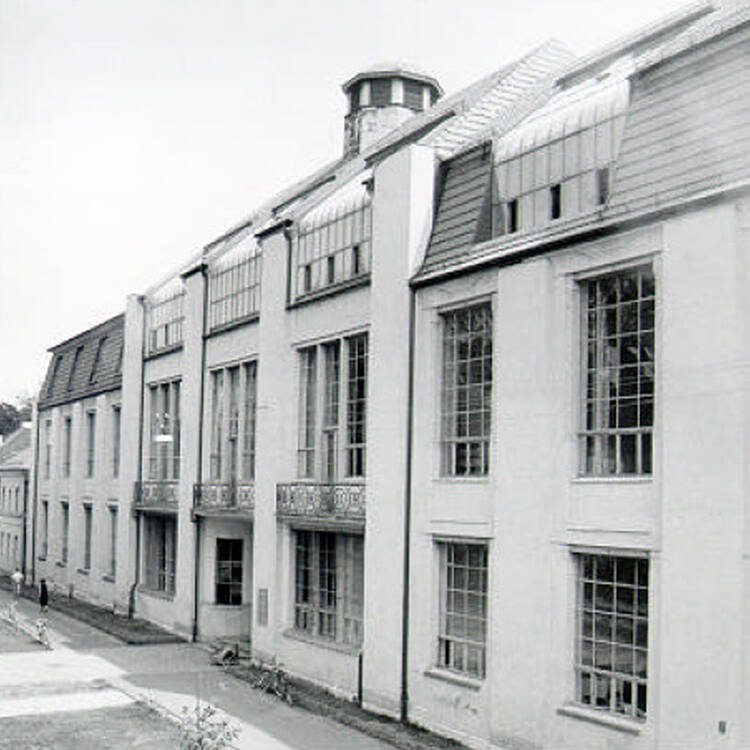
Between 1919 and 1933, the Bauhaus School, based first in Weimar and then in Dessau, revolutionized architectural and aesthetic concepts and practices. The buildings created and decorated by the School’s professors (Henry van de Velde, Walter Gropius, Hannes Meyer, Laszlo Moholy-Nagy and Wassily Kandinsky) launched the Modern Movement, which shaped much of the architecture of the 20th century and beyond. Component parts of the property are the Former Art School, the Applied Art School and the Haus am Horn in Weimar, the Bauhaus Building, the group of seven Masters’ Houses and the Houses with Balcony Access in Dessau, and the ADGB Trade Union School in Bernau. The Bauhaus represents the desire to develop a modern architecture using the new materials of the time (reinforced concrete, glass, steel) and construction methods (skeleton construction, glass facades). Based on the principle of function, the form of the buildings rejects the traditional, historical symbols of representation. In a severely abstract process, the architectural forms – both the subdivided building structure and the individual structural elements – are reduced to their primary, basic forms; they derive their expression, characteristic of Modernist architecture, from a composition of interconnecting cubes in suggestive spatial transparency.
The Bauhaus was a centre for new ideas and consequently attracted progressive architects and artists. The Bauhaus School has become the symbol of modern architecture, both for its educational theory and its buildings, throughout the world, and is inseparable from the name of Walter Gropius. Hannes Meyer, his successor as director of the Bauhaus, realized the idea of collective work on a building project within the framework of training in the Bauhaus’s building department. These buildings stand for an architectural quality that derives from the scientifically-based design methodology and the functional-economic design with social objectives. The Bauhaus itself and the other buildings designed by the masters of the Bauhaus are fundamental representatives of Classical Modernism and as such are essential components, which represent the 20th century. Their consistent artistic grandeur is a reminder of the still-uncompleted project for “modernity with a human face“, which sought to use the technical and intellectual resources at its disposal not in a destructive way but to create a living environment worthy of human aspirations.
For this reason, they are important monuments not only for art and culture, but also for the historic ideas of the 20th century. Even though the Bauhaus philosophy of social reform turned out to be little more than wishful thinking, its utopian ideal became reality through the form of its architecture. Its direct accessibility still has the power to fascinate and belongs to the people of all nations as their cultural heritage.
Criterion (ii): The Bauhaus buildings in Weimar, Dessau and Bernau are central works of European modern art, embodying an avant-garde conception directed towards a radical renewal of architecture and design in a unique and widely influential way. They testify to the cultural blossoming of Modernism, which began here, and has had an effect worldwide.
Criterion (iv): The Bauhaus itself and the other buildings designed by the masters of the Bauhaus are fundamental representatives of Classical Modernism and as such are essential components which represent the 20th century. The Houses with Balcony Access in Dessau and the ADGB Trade Union School are unique products of the Bauhaus’s goal of unity of practice and teaching.
Criterion (vi): The Bauhaus architectural school was the foundation of the Modern Movement which was to revolutionize artistic and architectural thinking and practice in the 20th century.
Integrity
The Bauhaus and its Sites in Weimar, Dessau and Bernau includes all elements necessary to express the Outstanding Universal Value of the property, reflecting the development of Modernism, which was to have worldwide influence in the visual arts, applied art, architecture, and urban planning. The seven component parts are of adequate size to ensure protection of the features and processes which convey the significance of the property.
Authenticity
Although the three buildings in Weimar have undergone several alterations and partial reconstructions, their authenticity is attested (apart from the reconstructed murals in the two Schools). Similarly, despite the level of reconstruction, the Bauhaus Building in Dessau preserves its original appearance and atmosphere, largely thanks to the major restoration work carried out in 1976. As for the Masters’ Houses, the restoration work carried out was based on thorough research and may be considered as meeting the conditions of authenticity. The Houses with Balcony Access and the ADGB Trade Union School largely preserve their original state in terms of form, design, material and substance and thereby provide authentic evidence of the sole architectural legacies of the Bauhaus building department.
Protection and management requirements
The two former Art Schools, the Applied Art School and the Haus am Horn in Weimar are protected by listing in the Register of Historical Monuments of the Free State of Thuringia as unique historical monuments under the provisions of the Thuringian Protection of Historic Monuments Act of 7 January 1992. The Bauhaus, the Masters’ Houses and the Houses with Balcony Access are listed in the equivalent Register of the State of Saxony-Anhalt (Protection of Historical Monuments Act of 21 October 1991). The ADGB Trade Union School is registered on the monuments list of the Federal State of Brandenburg and is therefore protected by its law for the protection and conservation of historical monuments of 22 July 1991.The Bauhaus Building and the Masters’ Houses are used by the Bauhaus Dessau Foundation, a public foundation. In Weimar, Dessau and Bernau the status of registered historic monuments guarantees that the requirements for monument protection will be taken into account in any regional development plans. There is also a buffer zone, reflecting a monument zone, for the protection of the World Heritage property.
Overall responsibility for protection of the Weimar monuments is with the State Chancellery of the Free State of Thuringia, for those in Dessau with the Ministry of Culture of the State of Saxony-Anhalt, and in Bernau with the Ministry of Science, Research and Culture of the State of Brandenburg, in all cases operating through their respective State Offices for the Preservation of Historical Monuments.
Direct management is assigned to the appropriate State and municipal authorities, operating under their respective protection regulations. In Dessau, the site of the Bauhaus itself and the Masters’ Houses are managed by the Foundation Bauhaus Dessau (Stiftung Bauhaus Dessau). The respective monument protection acts of the Federal States ensure the conservation and maintenance of the objects and clarify areas and means of action. The largely identical aims, regulations and principles of these acts establish a uniform legislative basis for the management of the components at the different sites. A steering group with representatives of the owners and the authorities involved acts as a communication platform and coordinates overarching activities concerning compliance with the World Heritage Convention or the research into and the presentation of World Heritage.
Links
-
Pinterest account
-
Facebook page
-
Instagram page
-
Bauhaus and its Sites in Weimar, World Heritage site
-
The New Dessau Master´s Houses (in English only)
-
ADGB Trade Union School Bernau
-
Houses with Balcony Access Dessau
-
Haus Am Horn (in German)
-
The Dessau Master's Houses (in English only)
-
The Bauhaus-Universität Weimar
-
Dessau-Roßlau (in German)
-
UNESCO Commission of Germany
-
Bauhaus Dessau Foundation
 5
5