jump to the content

Paris, Banks of the Seine

NHK World Heritage 100 Series

Narration Text

Welcome to the beautiful city of Paris!

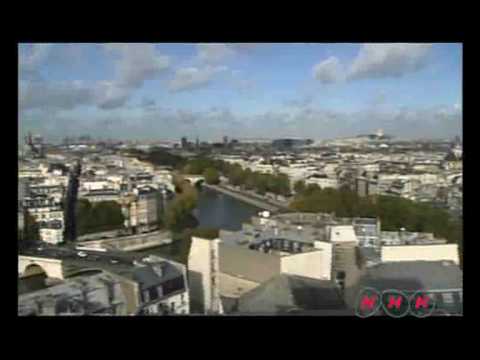
On the right is the famous Orsay Museum. Once a railway station, it now houses masterpieces by artists such as Monet, Renoir and Van Gogh. Ahead is the Ile de la Cité, Cité Island. The city of Paris first developed from the Island and along the left bank of the Seine. Next, we go past Notre Dame Cathedral, a symbol of Paris. "Notre Dame" means "Our Lady". The Cathedral was dedicated to the Virgin Mary. This is the Louvre Museum, formally a palace for French kings. Exhibits inside include Leonardo Da Vinci’s Mona Lisa and the statue, the Venus de Milo.

There is a reason why Paris’s skyline is so beautifully maintained. It is due to legislation known as "Les Fuseaux", which protects the cityscape. This map shows details of Les Fuseaux regulated areas in Paris. This is a view taken from the apex of the triangle-shaped regulated area. The regulation is designed to protect the landscape within this field of vision. If we take the Les Invalides as an example, the scope of view one would have of Les Invalides from the front façade would be like this. Les Fuseaux is based upon this field of vision, and outlaws building construction within that area which would spoil the view. Les Fuseaux regulations are also applied to the World Heritage list inscribed River Seine. Nevertheless, application of Les Fuseaux itself doesn’t guarantee eternal protection of the Paris landscape. For example, the view from Place de la Concorde to Arc de Triomphe is regulated by Les Fuseauxm, however when we look closer there are buildings in the background beside the Arc de Triomphe. The buildings stand outside the Paris city boundary where Les Fuseaux regulation was not applicable.

We hope that the beauties and pleasures of the city of Paris will be preserved and remain with us forever.