Konso Cultural Landscape
Konso Cultural Landscape
Konso Cultural Landscape is an arid property of stone walled terraces and fortified settlements in the Konso highlands of Ethiopia. It constitutes a spectacular example of a living cultural tradition stretching back 21 generations (more than 400 years) adapted to its dry hostile environment. The landscape demonstrates the shared values, social cohesion and engineering knowledge of its communities. The site also features anthropomorphic wooden statues - grouped to represent respected members of their communities and particularly heroic events - which are an exceptional living testimony to funerary traditions that are on the verge of disappearing. Stone steles in the towns express a complex system of marking the passing of generations of leaders.
Description is available under license CC-BY-SA IGO 3.0
Paysage culturel du pays konso
Le Paysage culturel du pays konso est un site aride avec des terrasses en pierre et des fortifications, situé sur les hauts plateaux d'Ethiopie. Il constitue un exemple spectaculaire d'une tradition culturelle vivante remontant à vingt-et-une générations (plus de 400 ans) et adaptée à un environnement sec et hostile. Le paysage témoigne du partage des valeurs, de la cohésion sociale et des connaissances en ingénierie de ses communautés. Le site présente également des statues de bois anthropomorphiques, disposées en groupe pour représenter les membres respectés de leurs communautés et les événements héroïques de leurs vies. Elles sont un témoignage exceptionnel et vivant de traditions funéraires sur le point de disparaître. Les stèles de pierre présentes dans les villes expriment un système complexe marquant la disparition de générations de chefs.
Description is available under license CC-BY-SA IGO 3.0
المشهد الثقافي لبلاد كونسو
هي أرض قاحلة حجرية منبسطة تبلغ مساحتها كيلومترًا مربعًا، تضم مسلات في مرتفعات كونسو في إثيوبيا، وتشكل نموذجًا مذهلاً للتقاليد الثقافية الحية التي ترقى إلى 21 جيلاً (أكثر من 400 سنة) وتتكيف مع البيئة الجافة القاسية. ويشهد المكان على القيم المشتركة والتضامن الاجتماعي والمعارف الهندسية لهذه الجماعات. ويتضمن أيضًا تماثيل خشبية – عبارة عن مجسمات توضع على مدافن زعماء هذا المجتمع القبلي تجسيدًا لأعمال بطولية - في شهادة حية استثنائية لتقاليد الجنازات التي هي على وشك الزوال. والتماثيل الحجرية في المدن هي تعبير عن نظام مركب يحيي تعاقب أجيال من القادة.
source: UNESCO/CPE
Description is available under license CC-BY-SA IGO 3.0
孔索文化景观
占地面积平方公里,位于干旱的埃塞俄比亚孔索高地,在这片高地上,除了石墙梯田构成的景观外,还分布着人类的定居点。作为人类克服干燥恶劣的自然环境,顽强生存下来的杰出范例,孔索文化景观代表着一个已传承了21代(即400多年)并依然具有活力的文化传统,并展现出各社区的共同价值观、社会凝聚力及其所拥有的工程知识。这里还保存有具有人格化特征的木雕,这些木雕相互组合在一起,代表着受到尊敬的各社区成员,特别是英雄事件,对正处消失边缘的丧葬传统而言,它们是特殊的活生生的见证。矗立在城镇中的石碑则共同构成了一种纪念一代代逝去的领导人的复杂体系。
source: UNESCO/CPE
Description is available under license CC-BY-SA IGO 3.0
Культурный ландшафт Консо
Объект занимает территорию площадью нагорье Консо в Эфиопии. Его ландшафт образуют поддержанные каменными стенами террасы с разбросанными среди них укреплёнными поселениями. Здесь сохранился наглядный пример живой культурной традиции, сложившейся в этой суровой и засушливой среде обитания на протяжении 21 поколения (более 4000 лет). Культурный ландшафт этих мест демонстрирует прверженность общим ценностям, социальную сплоченность и инженерные навыки местных жителей. Объект замечателен также группами деревянных статуй, изображающих уважаемых членов общин и события, отмеченные особым героизмом. Они свидетельствуют о дошедших до наших дней погребальных традициях, которые находятся на грани исчезновения. Каменные стелы, установленные в поселениях, представляют сложную систему,памяти об ушедших поколениях лидеров.
source: UNESCO/CPE
Description is available under license CC-BY-SA IGO 3.0
Paisaje cultural de Konso
Es un sitio árido que contiene terrazas y muros de piedra y asentamientos fortificados en el altiplano de Konso, en Etiopía. Constituye un ejemplo espectacular de una tradición cultural viva desde hace 21 generaciones (más de 400 años) adaptada a un ambiente seco y hostil. El paisaje demuestra los valores comunes, la cohesión social y los conocimientos en ingeniería de sus comunidades. También contiene estatuas antropomórficas de madera, agrupadas para representar a miembros respetables de las comunidades y simbolizar acontecimientos particularmente heroicos, que son testimonios vivos excepcionales de tradiciones funerarias que están desapareciendo. Algunas estelas en los pueblos expresan un complejo sistema para simbolizar las defunciones de generaciones de líderes.
source: UNESCO/CPE
Description is available under license CC-BY-SA IGO 3.0
コンソの文化的景観
石垣を備えた段畑と、要塞化された集落からなり、乾燥したコンソ高原地域に広がっている。21世代、400年以上の歴史を有し、乾燥した厳しい環境に適応した伝統文化の顕著な例である。この遺跡は、この地域社会における共通の価値観や社会的結束、土木的知識を表している。また、崇敬された人物や英雄たちの死後、木像にしてたたえられるという葬儀の習俗が、消滅の危機に瀕しながらも例外的に続いている。集落の中にある石碑は、亡くなった数多くの指導者の世代交代の複雑な制度を示している。source: NFUAJ
Cultuurlandschap Konso
Het cultuurlandschap Konso omvat aan met steen ommuurde terrassen en versterkte nederzettingen in de Konso hooglanden van Ethiopië. Het landschap weerspiegelt een levende culturele traditie die 21 generaties teruggaat (meer dan 400 jaar) en aangepast is aan de droge vijandige omgeving. Het toont gedeelde waarden, sociale cohesie en de technische kennis van z'n gemeenschappen. In het gebied zijn ook antropomorfe houten beelden te vinden, gegroepeerd naar gerespecteerde leden van de gemeenschap en heroïsche gebeurtenissen. De beelden getuigen van begrafenistradities die op het punt van verdwijnen staan. De stenen stèles in de steden tonen een complex systeem dat de doorloop van generaties leiders markeert.
Source: unesco.nl


Outstanding Universal Value
Brief Synthesis
The Konso Cultural Landscape is characterized by extensive dry stone terraces bearing witness to the persistent human struggle to use and harness the hard, dry and rocky environment. The terraces retain the soil from erosion,collect a maximum of water, discharge the excess, and create terraced fields that are used for agriculture. The terraces are the main features of the Konso landscape and the hills are contoured with the dry stone walls, which at places reach up to 5 meters in height.
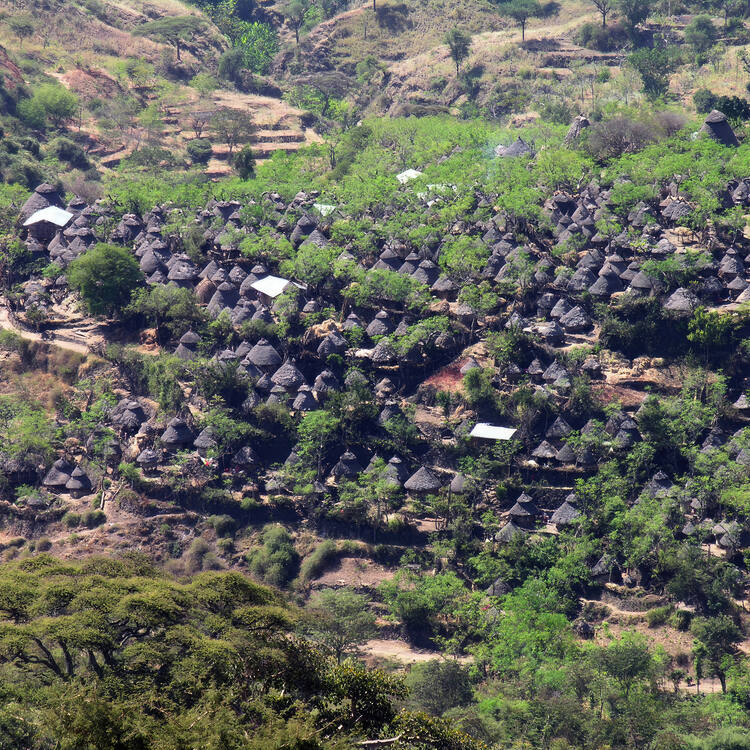
The walled towns and settlements (paletas) of the Konso Cultural Landscape are located on high plains or hill summits selected for their strategic and defensive advantage. These towns are circled by between one and six rounds of dry stone defensive walls, built of locally available rock. The cultural spaces inside the walled towns, called moras, retain an important and central role in the life of the Konso. Some walled towns have as many as 17 moras. The tradition of erecting generation marking stones called daga-hela, quarried, transported and erected through a ritual process, makes the Konso one of the last megalithic people.
The traditional forests are used as burial places for ritual leaders and for medicinal purposes. Wooden anthropomorphic statues (waka), carved out of a hard wood and mimicking the deceased, are erected as grave markers. Water reservoirs (harda) located in or near these forests, are communally built and are, like the terraces, maintained by very specific communal social and cultural practices.
Criterion (iii): The Konso Cultural Landscape integrates spectacularly executed dry stone terrace works, which are still actively used by the Konso people, who created them. They bear testimony to the enormous efforts required to use the otherwise hostile environment in an area that covers over 230 square km, an effort which stands as an example of major human achievement.The association between these stone terraces and the fortified towns in their midst are features of an exceptional cultural landscape, which also bears testimony toa living tradition of stele erection. The Konso erect stone steles to commemorate and mark the transfer of responsibility from the older generation to the younger. Konso are among the last stele-erecting people and thus their continuous practice presents an exceptional testimony to an ongoing cultural tradition.
Criterion (v): The relation of the stone terraces and the fortified towns of Konso Cultural Landscape, and its highly organized social system, illustrates an outstanding example of a traditional human settlement and land-use, based on common values that have resulted in the creation of the Konso cultural and socio-economic fabric.The dry stone terraces show a sophisticated adaptive strategy to the environment and the labor needed to construct these terraces necessitated a strong cohesion and unified bond among the clans. This interaction with the environment is based on indigenous engineering knowledge and requires traditional work divisions, which are still utilized to consistently perform maintenance and conservation works.
Integrity
The boundaries of the Konso Cultural Landscape coincide with natural features, like rivers or edges of densely terraced landscape, and are demarcated by the cultural and socio-economic history of the Konso people. All components relevant to the understanding of the traditional system have been included, such as the key tangible attributes of terraces, walled settlements, sacred forests, shrines and burial sites. The clear distinctive character of the landscape is vulnerable to dispersal of the fortified settlements, in case houses are built outside the town walls.
Authenticity
The Konso Cultural Landscape still largely retains its original form and design. The materials used for the construction of the terraces and the town walls are original and their conservation continues following traditional practices, executed by the community members. The terraces continue in their original arrangements, use and function. The walled towns are still inhabited by the communities and remain organized following the traditional system. The traditionally protected forests are still protected and used for ritual and burial and the water reservoirs remain in use and are periodically conserved. Associated traditions, which continue shaping the landscape, such as the ritual erection of generation and man-hood stones and generation trees continues to be actively practiced. The same applies for the use of the moras and the erection of wakas on the graves. The communities nurture the traditional code of respect to the culture and adherence to the age group (hela) and the ward (kanta), which is responsible for the protection and conservation of the attributes and continues the traditional guardianship.
Protection and management requirements
The property is protected by traditional, regional and federal laws. The regional ‘Proclamation to provide for the protection of Konso Cultural Landscape Heritage’ (2010) gives protection to the nominated area including the 12 walled towns and endorses the traditional management system. The traditional code of management is practiced side by side with the modern administrative system and elected community members and elders ensure the protection and management of the cultural properties. In addition, management committees are formed at different levels – community and district – and a Konso Cultural Landscape Management Office with governmental personnel has been established on-site, to address primarily planning, funding, supervision and conservation tasks. Development is strictly regulated in the 2010 proclamation and no development may occur within 50 meters of the outermost walls of the fortified towns.
A management plan sets out in detail the current management structures and explains how the Konso community, through its recognized village committees and the district management committee, will endeavour to ensure the necessary standards of conservation. Presentation and visitor management strategies could yet be better addressed by the community to be of more benefit to the community itself. Supportive funds, including through international cooperation, could contribute to the long-term viability of the traditional management system.