The World Heritage Centre is at the forefront of the international community’s efforts to protect and preserve. From emergency assistance to safeguard properties in danger, to long term conservation, management planning, technical assistance, professional training, public and youth education, and awareness-building, the World Heritage Centre and its partners have developed a series of initiatives and have been actively involved in the implementation of projects, participatory workshops, seminars and training courses.
Towards a balanced, credible and representative World Heritage List
Why "Astronomy" and "World Heritage"
Implementation activities
Portal to the ...
In recent years, the framework for training and research in the field of World Heritage has changed significantly. Among the factors that have contributed to these ...
The issue of the impacts of climate change on World Heritage natural and cultural properties was brought to the attention of the 29th session of the World Heritage ...
There exist a great variety of Landscapes that are representative of the different regions of the world. Combined works of nature and humankind, they express a long ...
Human Evolution related properties represent a process of evolutionary accretion that took place over a vast period of time, offering vital insight to scientific, ...
"As cultures encompass lifestyles, different ways of living together, value systems, traditions and beliefs, the protection and promotion of their rich diversity ...
At the start of 2001 the UNESCO World Heritage Centre, ICOMOS (International Council on Monuments and Sites) and DOCOMOMO (Working Party for the Documentation and ...
Garamba National Park, Democratic Republic of the Congo © Nuria Ortega
UNESCO has been taking action in the Congo Basin since 2000 in order to improve ...
World Heritage properties, as with all heritage properties, are exposed to natural and man-made disasters which threaten their integrity and may compromise their ...
The World Heritage Capacity Building Strategy, adopted by the World Heritage Committee in 2011, responds to the identified needs of a diverse and growing ...
From 10 to 14 January 2005 the United Nation's "International Meeting to Review the Implementation of the Barbados Programme of Action for the Sustainable ...
For the past 40 years the UNESCO World Heritage Convention has conserved, protected and presented the Outstanding Universal Value of our shared heritage.World ...
In October 2006 the World Heritage Centre published the UNESCO World Heritage Centre's Natural Heritage Strategy, which was endorsed by the World Heritage Committee. ...
The World Heritage Cities Programme is one of six thematic programmes formally approved and monitored by the World Heritage Committee. It aims to assist States ...
Earthen architecture is one of the most original and powerful expressions of our ability to create a built environment with readily available resources. It includes ...
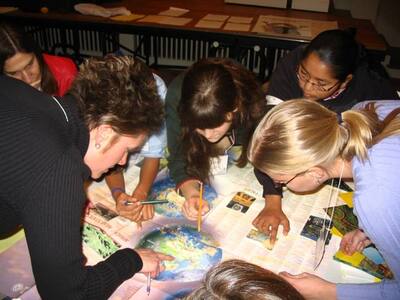
The UNESCO Young People's World Heritage Education Programme (WHE Programme) seeks to encourage and enable tomorrow's decision-makers to participate in heritage ...
Ranging in size from 18 hectares (Vallée de Mai, Seychelles), to 8.8 million hectares (Lake Baikal, Russian Federation), World Heritage forest sites now ...
Facts & Figures
46 World Heritage sites
Located in 35 countries
Covering ¼ of all marine protected areas on the planet
Recognized for ...
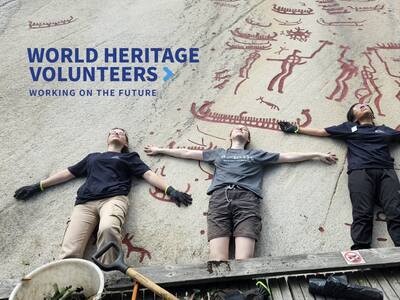
The World Heritage Volunteers campaign is coordinated by the UNESCO World Heritage Centre in cooperation with Coordinating Committee for International Voluntary ...
A World Heritage Youth Forum gives young people and their teachers an opportunity to exchange experiences and ideas on how to become involved in heritage ...