
The Information System offers you a trove of reliable data on the state of conservation of World Heritage properties since 1979 and the threats they have faced in the past, or are currently facing. Through this tool, you can get access to thousands of reports and decisions adopted by the World Heritage Committee, as part of one of the most comprehensive monitoring systems of any international convention.
Search and Filter
Statistics
Get a statistical insight of the conservation of World Heritage since 1979
Number of properties examined each year
Distribution of the properties examined since 1979, per region
Distribution of the properties examined since 1979, per category of heritage
Numbers
Statistical analysis
1979-2013
Analysis of the factors having
a negative impact on World Heritage properties
States Parties and Regions
Search by Region
Africa Arab States Asia and the Pacific Europe and North America Latin America and the CaribbeanSearch by State Party
Afghanistan Albania Algeria Andorra Angola Antigua and Barbuda Argentina Armenia Australia Austria Azerbaijan Bahamas Bahrain Bangladesh Barbados Belarus Belgium Belize Benin Bhutan Bolivia (Plurinational State of) Bosnia and Herzegovina Botswana Brazil Brunei Darussalam Bulgaria Burkina Faso Burundi Cabo Verde Cambodia Cameroon Canada Central African Republic Chad Chile China Colombia Comoros Congo Cook Islands Costa Rica Côte d'Ivoire Croatia Cuba Cyprus Czechia Democratic People's Republic of Korea Democratic Republic of the Congo Denmark Djibouti Dominica Dominican Republic Ecuador Egypt El Salvador Equatorial Guinea Eritrea Estonia Eswatini Ethiopia Fiji Finland France Gabon Gambia Georgia Germany Ghana Greece Grenada Guatemala Guinea Guinea-Bissau Guyana Haiti Holy See Honduras Hungary Iceland India Indonesia Iran (Islamic Republic of) Iraq Ireland Israel Italy Jamaica Japan Jordan Kazakhstan Kenya Kiribati Kuwait Kyrgyzstan Lao People's Democratic Republic Latvia Lebanon Lesotho Liberia Libya Lithuania Luxembourg Madagascar Malawi Malaysia Maldives Mali Malta Marshall Islands Mauritania Mauritius Mexico Micronesia (Federated States of) Monaco Mongolia Montenegro Morocco Mozambique Myanmar Namibia Nepal Netherlands (Kingdom of the) New Zealand Nicaragua Niger Nigeria Niue North Macedonia Norway Oman Pakistan Palau Panama Papua New Guinea Paraguay Peru Philippines Poland Portugal Qatar Republic of Korea Republic of Moldova Romania Russian Federation Rwanda Saint Kitts and Nevis Saint Lucia Saint Vincent and the Grenadines Samoa San Marino Sao Tome and Principe Saudi Arabia Senegal Serbia Seychelles Sierra Leone Singapore Slovakia Slovenia Solomon Islands Somalia South Africa South Sudan Spain Sri Lanka State of Palestine Sudan Suriname Sweden Switzerland Syrian Arab Republic Tajikistan Thailand Timor-Leste Togo Tonga Trinidad and Tobago Tunisia Türkiye Turkmenistan Tuvalu Uganda Ukraine United Arab Emirates United Kingdom of Great Britain and Northern Ireland United Republic of Tanzania United States of America Uruguay Uzbekistan Vanuatu Venezuela (Bolivarian Republic of) Viet Nam Yemen Zambia ZimbabweMaps
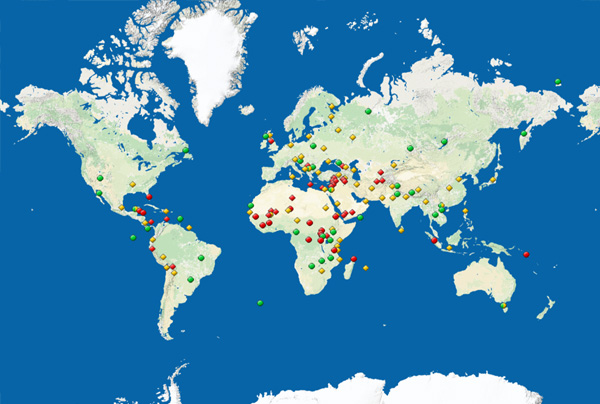
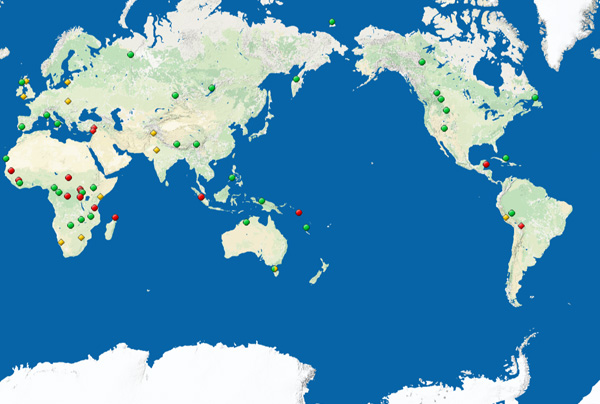
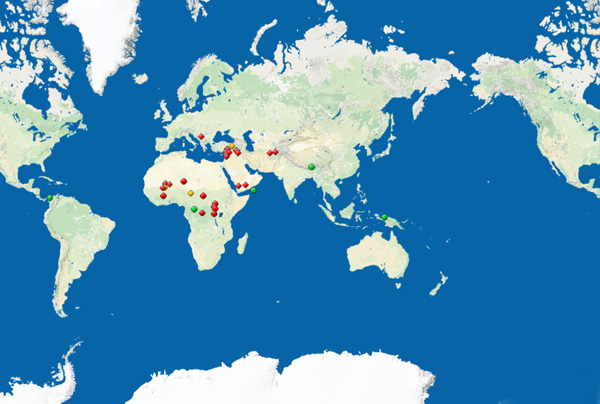
Get geographical visualization of the conservation of World Heritage since 1979

Reactive Monitoring process
What is Reactive Monitoring?
It is the reporting by the World Heritage Centre and the Advisory Bodies to the World Heritage Committee on the state of conservation of specific World Heritage properties that are under threat.
Which properties are reported upon?
The properties to be reported upon are selected, among all those inscribed on the World Heritage List, according to the following considerations...
How are the state of conservation reports elaborated?
The World Heritage Centre and the Advisory Bodies review all information available on the state of conservation of the properties foreseen for examination by the World Heritage Committee at its next session...
What are the decisions of the World Heritage Committee?
Subsequently to the examination of the SOC report during its ordinary session, the World Heritage Committee adopts a decision, which may take one or more of the following steps...
Why were some properties examined by the Bureau of the World Heritage Committee?
Since the early years of the World Heritage Convention (1979) until 2002, the Bureau had a substantial role in the coordination of the work of the Committee to the extent of examining all the reports on the state of conservation...
Don’t confuse Reactive Monitoring with the Periodic Reporting exercise
World Heritage properties are also reported on through the Periodic reporting exercise. Indeed...
Threats
The standard list of threats/factors affecting the Outstanding Universal Value of World Heritage properties consists of a series of 14 primary factors, encompassing each a number of secondary factors.
Useful tools and Guidance
Guidance and Advice notes

Resource Manuals
World Heritage Paper Series
Some useful Recommendations / Policies /
Strategies and Statements
- Recommendation concerning the Protection, at National Level, of the Cultural and Natural Heritage (1972)
- Policy Document for the Integration of a Sustainable Development Perspective into the Processes of the World Heritage Convention (2015)
- Policy Document on Impacts of Climate Change and World Heritage (2007)
- Strategy for Reducing Risks from Disasters at World Heritage properties (2007)
- Recommendation on the Historic Urban Landscape, including a glossary of definitions (2011)
- International Council on Mining and Metals (ICMM) - Mining and protected areas; Position statement (2003)
Reporting formats

Format for the submission of State of conservation reports
by the States Parties
Other useful online tools
Partners
Advisory Bodies to the World Heritage Committee
- ICCROM (International Centre for the Study of the Preservation and Restoration of Cultural Property)
- ICOMOS (International Council on Monuments and Sites)
- IUCN (International Union for Conservation of Nature)
Other UNESCO Conventions and Programmes
- Convention for the Protection of Cultural Property in the Event of Armed Conflict (1954) and its Second Protocol (1999)
- Convention on the Means of Prohibiting and Preventing the Illicit Import, Export and Transfer of Ownership of Cultural Property (1970)
- Intergovernmental Committee for Promoting the Return of Cultural Property to its Countries of Origin or its Restitution in case of Illicit Appropriation (1978)
- Convention on the Protection of the Underwater Cultural Heritage (2001)
- Convention for the Safeguarding of Intangible Cultural Heritage (2003)
- UNESCO Global Geoparks
- Man and the Biosphere Programme (MAB)
Other conventions and agreements
- Convention on Biological Diversity (CBD)
- Convention on International Trade in Endangered Species of Wild Fauna and Flora (CITES)
- Convention on the Conservation of Migratory Species of Wild Animals (CMS)
- International Treaty on Plant Genetic Resources for Food and Agriculture
- International Plant Protection Convention (IPPC)
- Ramsar (Convention on Wetlands)
- International Whaling Commission (IWC)
- Agreement on the Conservation of African-Eurasian Migratory Waterbirds (AEWA)
- United Nations Convention to Combat Desertification (UNCCD)
- United Nations Framework Convention on Climate Change (UNFCCC)
- International Council on Mining & Metals (ICMM) - Mining and Protected Areas
Donors




















Decisions (32)
The World Heritage Committee,
Climate Action for World Heritage
- Having examined Document WHC/23/45.COM/7,
- Recalling Decisions 40 COM 7 and 44 COM 7C adopted at its 40th session (Istanbul/UNESCO, 2016) and at its extended 44th session (Fuzhou/online, 2021),
- Notes that the Panel of experts in relation to Decision 44 COM 7C concerning climate change and World Heritage met by end of March 2022 and made recommendations on the amendments proposed by the Members of the World Heritage Committee and provided a report to the Open-ended Working Group of States Parties to the World Heritage Convention on Climate Change;
- Also notes that the Open-ended Working Group of States Parties to the World Heritage Convention on Climate Change has met seven times to discuss the proposed amendments and the recommendations of the Panel of experts;
- Recognizes Climate Action for World Heritage as an important thematic area of work, thanks the Governments of Australia, Azerbaijan and the Netherlands for their generous financial support and invites States Parties to contribute towards this thematic area to enable the Secretariat to support activities related to the development of the updated Policy Document on Climate Action for World Heritage and its dissemination;
- Recalls again Decision 41 COM 7 in which the Committee ‘reiterate[d] the importance of States Parties undertaking the most ambitious implementation of the Paris Agreement adopted under the United Nations Framework Convention on Climate Change (UNFCCC) by “holding the increase in the global average temperature to well below 2°C above pre-industrial levels and by pursuing efforts to limit the global average temperature increase to 1.5°C above pre-industrial levels, recognizing that this would significantly reduce the risks and impacts of climate change” ’, again strongly urges all States Parties to undertake actions to address Climate Change under the Paris Agreement consistent with their common but differentiated responsibilities and respective capabilities, in the light of different national circumstances, that are fully consistent with their obligations within the World Heritage Convention to protect the Outstanding Universal Value of all World Heritage properties;
Improving the perception of the List of World Heritage in Danger
- Recalling Decision 40 COM 7 adopted at its 40th session (Istanbul/UNESCO, 2016),
- Reaffirming the need to promote a better understanding of the implications and benefits of properties being inscribed on the List of World Heritage in Danger,
- Takes note with appreciation of the thorough study on the perceptions of the List of World Heritage in Danger, together with its recommendations that could form the basis of a communication strategy and thanks the State Party of Norway for its financial support;
- Expresses its gratitude to all the stakeholders of the 1972 World Heritage Convention who have actively contributed to this study;
- Takes note with satisfaction of the recommendations formulated in the study on possible approaches to reverse negative perceptions and to raise the profile of the List of World Heritage in Danger as a positive tool, enhancing understanding and highlighting its importance for the protection of the Outstanding Universal Value of World Heritage properties and requests all stakeholders of the Convention to take them on-board and implement them at their level as soon as possible;
Enhancing dialogue among States Parties, Advisory Bodies and the World Heritage Centre - Recommends that the World Heritage Centre and the Advisory Bodies ensure the following steps regarding the monitoring of state of conservation of the inscribed properties:
- Whenever an expert mission takes place within the framework of the reactive monitoring process, the draft mission report will be shared, prior to its publication, with the concerned State Party to allow them to review the report and to propose corrections on any factual inaccuracies and comment on other critical issues and/or misunderstandings, and consultations will be held, if necessary, between the concerned State Party and relevant Advisory Body/ies;
- Whenever an expert mission takes place within the framework of the reactive monitoring process and the inscription of the concerned property on the List of World Heritage in Danger is recommended in the mission report, consultations will be held between the concerned State Party and relevant Advisory Body/ies, and the State Party’s view will be referred to in the mission report or in its annex in the event that the views of both parties do not converge in the consultations;
- Whenever the inscription of the property on the List of World Heritage in Danger is proposed in a working document on state of conservation produced by the World Heritage Centre and the Advisory Bodies to be examined by the Committee, consultations will be held, within the available deadlines, prior to the distribution of the document, between the concerned State Party, relevant Advisory Body/ies and the World Heritage Centre, and the State Party’s view will be referred to in the working document such as in its annex in the event that the views of the concerned parties do not converge;
- Recommends that States Parties enhance dialogue among themselves regarding properties that are or may be proposed for inscription on the List of World Heritage in Danger, in particular cases in which causes of the danger are transboundary;
- Recommends that the World Heritage Centre and the Advisory Bodies continue to work on knowledge sharing of best practice cases in which the property was removed from the List of World Heritage in Danger, and also encourage them to enhance providing capacity building for the States Parties who have properties on the List of World Heritage in Danger;
- Recommends that the budget of the World Heritage Centre and Advisory Bodies be adjusted in proportion with the additional workload generated by the additional dialogue and consultations as well as for capacity building for States Parties with properties on the List of World Heritage in Danger.
The World Heritage Committee,
- Having examined Document WHC/23/45.COM/7,
- Recalling Decisions 40 COM 7, 41 COM 7, 42 COM 7, 43 COM 7.2, and 44 COM 7.2 adopted at its 40th (Istanbul/UNESCO, 2016), 41st (Krakow, 2017), 42nd (Manama, 2018), 43rd (Baku, 2019) and extended 44th (Fuzhou/online, 2021) sessions respectively,
- Also recalling that all proposed major interventions in and around World Heritage properties should be subject to rigorous impact assessments, as outlined in Paragraph 118bis of the Operational Guidelines, in line with the Guidance and Toolkit for Impact Assessments in a World Heritage Context, and that both the proposals and the impact assessment-related documentation be submitted, in accordance with Paragraph 172 of the Operational Guidelines, to the World Heritage Centre for review by the Advisory Bodies, before any intervention for new construction, demolition, modification, recovery or reconstruction commences or decisions made that cannot be reversed;
Emergency situations resulting from conflicts
- Expresses utmost concern that conflicts (including armed conflict and civil unrest) continue to represent a major threat to World Heritage properties and remain one of the major reasons for the inscription of properties on the List of World Heritage in Danger;
- Regrets the loss of human life and the degradation of humanitarian conditions resulting from the prevailing conflict situations in several countries, including threats to the personnel and local communities, as well as the continuing threats facing cultural and natural heritage in regions of armed conflict where there are significant concerns regarding security in and around World Heritage properties;
- Welcomes protection and conservation efforts being undertaken by the concerned States Parties at World Heritage properties and that the States Parties are progressively proceeding with the development of corrective measures and the definition of the Desired state of conservation for the removal of the properties from the List of World Heritage in Danger (DSOCR) for some cultural properties following due process;
- Urges again all parties associated with conflicts to ensure the protection of cultural and natural heritage, including to avoid their use for military purposes and also urges States Parties to fulfil their obligations under international law, including the 1954 Convention and its two Protocols, by taking all possible measures to protect such heritage, including of World Heritage properties and sites included in Tentative Lists;
- Reiterates its utmost concern about the continuing threats of wildlife poaching and illegal trafficking of wildlife and timber products linked to impacts of armed conflict and organized crime, which is eroding the biodiversity and Outstanding Universal Value of World Heritage properties around the world, and further urges States Parties to take the necessary measures to curb this problem, including through the implementation of the Convention on International Trade in Endangered Species of Wild Fauna and Flora (CITES);
- Also reiterates its utmost concern at the increase in illicit trafficking of cultural objects, resulting from armed conflicts, and appeals to all States Parties to cooperate in the fight against these threats, and for cultural heritage protection in general, including through the ratification of the 1970 Convention and the 1954 Convention and its two Protocols, as well as the implementation of United Nations Security Council Resolutions 2199 (2015), 2253 (2015) and 2347 (2017), and the implementation of the UNESCO Recommendations on Museums and Collections (2015);
- Welcomes the World Heritage Centre and the Advisory Bodies’ continued actions in responding to emergencies and conflicts threatening cultural and natural heritage, including the Outstanding Universal Value, including through the Revive the Spirit of Mosul and the Li Beirut initiatives, the Heritage Emergency Fund (HEF) and the Rapid Response Facility (RRF) and also UNESCO actions in Ukraine and emergency programmes in Sudan, Syria, Yemen, Iraq, Libya, Democratic Republic of the Congo, Benin, Burkina Faso, Niger, Mali, Central African Republic, Palestine, and other countries;
- Reiterates its call upon the international community to further support the safeguarding of the cultural and natural heritage of countries affected by conflict, through earmarked funds or through contributions to the UNESCO World Heritage Fund, HEF and RRF;
Recovery and Reconstruction
- Recalls that reconstruction is justifiable only in exceptional circumstances, and should be based on thorough documentation, guided by conservation plans and policies that support the Outstanding Universal Value (OUV), and as outlined in Paragraph 86 of the Operational Guidelines;
- Takes note of the various programmes initiated and implemented by the World Heritage Centre and the Advisory Bodies and other international partners to respond to the destruction of heritage through documentation, emergency response, recovery and reconstruction;
- Welcomes the continued efforts by States Parties in responding to post-conflict and post-disaster recovery and reconstruction, including the various reconstruction projects nearing completion, as well as their positive social and community interlinkages and thanks France, Germany, Japan, Norway, the Republic of Korea, Spain, the Sultanate of Oman, the United Arab Emirates, the European Union, the International Alliance for the Protection of Heritage in Conflict Areas (ALIPH), the Heritage Emergency Fund and the Arab Regional Centre for World Heritage (ARC-WH) for their generous support, including for the reconstruction of the House of Wonder, an emblematic building in East Africa, in the Stone Town of Zanzibar, United Republic of Tanzania;
- Encourages all State Parties to prepare comprehensive risk preparedness strategies and emergency response plans for World Heritage properties that are exposed to risk from natural disasters;
- Requests States Parties to ensure the integrity of the OUV of World Heritage properties and that all recovery and reconstruction projects be guided by thorough and comprehensive recovery proposals, including plans and drawings, integrated and aligned with the needs of local communities and subject to rigorous impact assessments as noted in Paragraph 3 above;
Kunming-Montreal Global Biodiversity Framework
- Welcomes the adoption of the Kunming-Montreal Global Biodiversity Framework (GBF) during the fifteenth meeting of the Conference of the Parties (COP-15) to the Convention on Biological Diversity (CBD) in December 2022 to set the global pathway to halt and reverse biodiversity loss by 2030, in line with the 2030 Agenda for Sustainable Development;
- Requests the States Parties to fully harness the World Heritage Convention in supporting the goals and targets of the GBF, including through effective collaboration among convention focal points, and by integrating World Heritage-related objectives within their National Biodiversity Strategies and Action Plans (NBSAPs);
- Also requests the World Heritage Centre, in collaboration with the Advisory Bodies, to identify and develop coordinated actions on World Heritage and the GBF, including specific guidance on how the World Heritage Convention might contribute to the aims of the Joint Programme of Work on the Links between Biological and Cultural Diversity, subject to the availability of resources, and to integrate reporting on progress regarding contributions of World Heritage to the GBF under the Committee’s item on Sustainable Development and invites States Parties to contribute financially for this purpose;
Urban pressure
- Notes that pressures on historic urban areas arising from inappropriate urban development interventions and inadequate development controls, rapid and inadequately planned development, including large development projects, additions that are incompatible in their volume, tourism and transportation infrastructure, as well as the accumulated impact of incremental changes, have continued within numerous World Heritage properties and in their buffer zones and settings, and considers that these present significant potential and ascertained major threats to the Outstanding Universal Value of properties, including their integrity and authenticity, and increase their vulnerability to disasters, such as those resulting from climate change;
- Also noting that the findings of the UNESCO Third Member State Consultation on the Implementation of the 2011 Recommendation on the Historic Urban Landscape (2011 Recommendation) request States Parties to implement the 2011 Recommendation in urban World Heritage properties and, with technical assistance from the World Heritage Centre and the Advisory Bodies, to integrate it as a tool in the monitoring processes of the state of conservation, and the preparation and updating of management plans concerning nomination process for World Heritage properties in cities and settlements including with the support of the World Heritage Urban Heritage Atlas tool;
- Recalls the essential contribution of local communities, and the importance of their participation in decision-making processes, as well as the need to support sustainable, compatible, and inclusive livelihoods for local communities and further requests States Parties to embed stakeholder engagement in management systems and processes, in line with Paragraph 12 of the Operational Guidelines, with the 2011 Recommendation and the Policy on the Integration of a Sustainable Development Perspective into the Processes of the World Heritage Convention (2015);
- Invites all States Parties to establish governance mechanisms for urban heritage that support coordination and coherence across different sectors such as infrastructure, tourism, transport, and urban development to integrate heritage management into the plans and processes of the settlement and the region;
- Stresses the importance of carrying out impact assessments to evaluate and thereby avoid or manage potential threats to the OUV of properties, including their authenticity and integrity, arising from new urban development projects in line with paragraph 3 above;
- Also emphasizes the need to enhance resilience of World Heritage properties in urban areas vulnerable to climate change-related impacts, in line with the 2011 Recommendation and the outcomes of the activities of the UNESCO World Heritage Cities Programme;
Infrastructure development - Notes with concern the growing pressure of infrastructure development, such as extractive mining activities, dams, hydropower, transportation infrastructure, and the expansion of tourism infrastructure, on the Outstanding Universal Value of World Heritage properties;
- Welcomes the commitment announced by the International Hydropower Association (IHA) that no new hydropower projects should be developed in World Heritage properties, and a duty of care pledge to implement high standards of performance and transparency for any hydropower projects outside of but affecting protected areas such as World Heritage properties;
- Strongly urges all States Parties, development proponents and financiers to incorporate the Guidance and Toolkit for Impact Assessments in a World Heritage Context into planning and decision-making processes to contribute to safeguarding the OUV of World Heritage properties, in line with Paragraph 3 above;
- Requests all States Parties to:
- Inform the World Heritage Centre of any planned developments located within a World Heritage property, its buffer zone or in its wider setting that may impact on its OUV, prior to making any decision that would be difficult to reverse, in conformity with Paragraph 172 of the Operational Guidelines,
- Ensure that the potential impacts of developments on the OUV are appropriately assessed, in line with Paragraph 3 above,
- Ensure that no proposed developments proceed that would negatively impact on the OUV,
- Ensure that no deliberate measures are taken, which might damage directly or indirectly the inscribed properties situated on the territory of other States Parties to the Convention, in conformity with Article 6 of the World Heritage Convention;
Corporate Sector and the World Heritage ‘no-go’ commitment -
Welcomes the launch of the UNESCO Guidance for the World Heritage ‘No-Go’ Commitment: Global standards for corporate sustainability as a means to assist the corporate sector to develop or update their policies and strategies to safeguard World Heritage, and thanks the Government of Flanders (Belgium) for its financial support;
-
Requests the World Heritage Centre, in collaboration with the Advisory Bodies, to continue its collaboration with the corporate sector in view of supporting the adoption and implementation of World Heritage safeguard policies, and invites companies and relevant organisations to develop and update their corporate sustainability policies in line with the UNESCO guidance, and lodge them with UNESCO;
Rights-based Issues
- Recalling Article 5 of the Convention that each State Party shall adopt for each country a general policy, which aims to give the cultural and natural heritage a function in the life of the community, and the integration of the protection of that heritage into comprehensive planning programmes are means of ensuring effective protection, conservation and presentation of cultural and natural heritage,
- Also recalling the Universal Declaration of Human Rights, the International Covenant on Economic, Social and Cultural Rights, the International Covenant on Civil and Political Rights, and the United Nations Declaration on the Rights of Indigenous Peoples,
- Further recalling the various provisions of the Operational Guidelines that encourage States Parties to adopt a human rights-based approach to the nomination and subsequent effective management of inscribed World Heritage properties,
- Bearing in mind that specific and significant spiritual meanings are mentioned to justify the Outstanding Universal Value of a large number of the World Heritage properties to be found in most countries around the world, also recalling a number of research studies and analyses of religious heritage and sacred sites carried out by the Advisory Bodies,
- Underlining that living religious and sacred sites require specific approach and policies for protection and management that take into account their distinct spiritual nature, crucial to their Outstanding Universal Value, as a key factor in their conservation and that such policies cannot be sustainable without in-depth consultation with the appropriate stakeholders;
- Calls upon all States Parties to ensure that human rights, including cultural rights, are protected as an integral part of the management of World Heritage properties by establishing equitable and participatory governance arrangements;
- Strongly condemns all forms of human rights violations and abuses towards indigenous peoples and local communities (IPLCs), including any forced eviction;
- Notes with utmost concern the reported cases of alleged human rights abuses towards IPLCs in and around World Heritage properties and therefore, strongly urges the States Parties concerned to urgently investigate the allegations and take appropriate actions to address their findings, following an equitably governed consultative process with the participation and decision making of all rightsholders and stakeholders;
- Reminds States Parties of their obligations to ensure that the management of World Heritage properties follows a rights-based approach that includes full involvement of all rightsholders and stakeholders, in particular IPLCs, in line with the 2015 Policy on World Heritage and Sustainable Development, the UNESCO Policy on Engaging with Indigenous Peoples and the 2030 Agenda for Sustainable Development and international human rights standards;
- Requests the Secretariat, with the Advisory Bodies, to enhance activities in the framework of the Initiative on Heritage of Religious Interest and to resume elaboration of the thematic paper proposing to the States Parties general guidance regarding the management of their cultural and natural heritage of religious interest, and in compliance with the national specificities, and invites the States Parties to provide voluntary contributions to this end;
Earth observation and spatial data for World Heritage conservation
- Welcomes the development of the World Heritage Online Mapping Platform to provide a comprehensive, complete, accurate and geo-referenced dataset for the World Heritage properties that, in the pilot phase of the project, are in the Europe and North America region, and thanks the Government of Flanders (Belgium) for the support provided to the pilot phase of the project;
- Also welcomes the Urban Heritage Atlas platform and tool for geo-referenced cultural mapping of the attributes of urban heritage and invites States Parties to use the tool for better managing their World Heritage properties and takes note with satisfaction of the continued activities of the Urban Heritage Climate Observatory applying earth observation tools for World Heritage cities;
- Invites States Parties to contribute to the above-mentioned platforms and tools with already available GIS data, complementary narrative and visual analysis, expertise, networks, and financial resources;
- Reiterates its request to States Parties, the World Heritage Centre and the Advisory Bodies, to strengthen collaborative partnerships with UNESCO Category 2 Centres and other relevant institutions with a view to furthering the necessary institutional and individual capacity needed to make full use of spatial data, Earth observation satellite technologies and analysis tools for the monitoring of the state of conservation of World Heritage properties.
The World Heritage Committee,
- Having examined Document WHC/21/44.COM/7,
- Recalling Decisions 40 COM 7, 41 COM 7, 42 COM 7 and 43 COM 7.1, adopted at its 40th (Istanbul/UNESCO, 2016), 41st (Krakow, 2017), 42nd (Manama, 2018) and 43rd (Baku, 2019) sessions respectively,
Evaluation of the Reactive Monitoring process
- Taking note with appreciation of the recommendations of the evaluation of the Reactive Monitoring process, as prioritized in line with Decision 43 COM 7.1, requests all stakeholders of the Convention to implement them at their level as soon as possible;
- Welcomes the matrix structure developed by the World Heritage Centre in consultation with the Advisory Bodies, which provides a clear framework to report back to the Committee on the implementation of the priority recommendations, and requests them to prepare an Implementation Plan;
- Also requests the World Heritage Centre, in consultation with the Advisory Bodies, and in line with Recommendation 34 of the evaluation, to present a progress report on the implementation of the recommendations, for examination at its 47th session;
Issues related to the List of World Heritage in Danger
- Reaffirming the need to promote a better understanding of the provisions of the World Heritage Convention and in particular of the implications and benefits of properties being inscribed on the List of World Heritage in Danger and the need to underline that removal of a World Heritage property from the List of World Heritage in Danger is a significant ‘success story’,
- Mindful of its Decision 43 COM 8C.3, which recalled that the inscription of a property on the List of World Heritage in Danger aims to marshal international support to help the State Party effectively address the challenges faced by the property by engaging with the World Heritage Centre and the Advisory Bodies to develop a program of corrective measures to achieve the desired state of conservation for the property, as provided for under Paragraph 183 of the Operational Guidelines; and noting that inscription on the List of World Heritage in Danger also alerts the State Party about the international community’s concern on the state of conservation of the property, provides a timely reminder of obligations that arise under the World Heritage Convention, highlights threats to the attributes of a property which contribute to its Outstanding Universal Value (OUV), and, importantly, initiates a process and pathway to address those threats, including the availability of additional funding,
- Also noting that the development of a Desired state of conservation for the removal of a property from the List of World Heritage in Danger (DSOCR) and a programme for corrective measures is a critical part of the procedure for managing and addressing threats to the OUV of properties inscribed on the List of World Heritage in Danger,
- Takes note with appreciation of the information contained in Document WHC/21/44.COM/7 (Part I.B.) and recognizes that the existing monitoring processes are leading over time to a significant improvement in the conservation status of properties inscribed on the List of World Heritage in Danger;
- Also recalling its previous request for States Parties to develop and submit DSOCRs for all properties included in the List of World Heritage in Danger by its 40th session in 2016 at the latest, expresses its concern however that less than half of the properties inscribed on the List of World Heritage in Danger have a DSOCR and therefore strongly urges all States Parties concerned to:
- Use the 2013 Guidance to develop and submit DSOCRs with quantifiable indicators to track progress for all remaining properties as soon as practicable, with a view to having them all in place by its46th session, with the support of the World Heritage Centre and Advisory Bodies;
- Ensure that for any property newly inscribed on the List of World Heritage in Danger, a DSOCR is developed and submitted no later than one year following inscription;
- Acknowledging initial pilot activities to explore possible approaches and methodologies for costed action plans, requests these efforts to continue and calls upon all interested States Parties to support a workshop to develop a common methodology and guidelines for when and how corrective measures might be supported by costed action plans;
- Also strongly urges States Parties, NGOs, private sector and donors to redouble efforts to prioritize attention to those World Heritage properties, which have been on the List of World Heritage in Danger for 10 years or longer;
- Thanks the State Party of Romania for having hosted a multi-stakeholders international workshop in September 2019, providing a unique space for discussions and networking of professionals regarding the preservation of cultural and natural World Heritage facing dangers, including exchange of good practice, and highlighting the benefits of the List of World Heritage in Danger;
- Expresses its gratitude to the State Party of Norway for its generous support for a project that aims to improve the perception of the List of World Heritage in Danger, and also requests the World Heritage Centre to present a progress report on this activity to its 45th session.
The World Heritage Committee,
- Having examined Document WHC/21/44.COM/7,
- Recalling Decisions 40 COM 7, 41 COM 7, 42 COM 7, 43 COM 7.2 and 43 COM 7.3, adopted at its 40th (Istanbul/UNESCO, 2016), 41st (Krakow, 2017), 42nd (Manama, 2018) and 43rd (Baku, 2019) sessions respectively,
Emergency situations resulting from conflicts
- Deplores the loss of human life and the degradation of humanitarian conditions resulting from the prevailing conflict situations in several countries, and continues to express its utmost concern at the devastating damage sustained and the continuing threats facing cultural and natural heritage in regions of armed conflict;
- Urges again all parties associated with conflicts to refrain from any action that would cause further damage to cultural and natural heritage, including their use for military purposes, and also urges States Parties to fulfil their obligations under international law by taking all possible measures to protect such heritage, in particular the safeguarding of World Heritage properties and sites included in Tentative Lists;
- Reiterates its utmost concern about the continuing threats of wildlife poaching and illegal trafficking of wildlife and timber products linked to impacts of armed conflict and organized crime, which is eroding the biodiversity and Outstanding Universal Value (OUV) of many World Heritage properties around the world, and further urges States Parties to take the necessary measures to curb this problem, including through the implementation of the Convention on International Trade in Endangered Species of Wild Fauna and Flora (CITES);
- Also reiterates its utmost concern at the increase in illicit trafficking of cultural objects, resulting from armed conflicts, and appeals to all States Parties to cooperate in the fight against these threats, and for cultural heritage protection in general, including through the ratification of the 1970 Convention and the 1954 Convention and its two Protocols, as well as the implementation of United Nations Security Council Resolutions 2199 (2015), 2253 (2015) and 2347 (2017);
- Reiterates its call upon the international community to further support the safeguarding of the cultural and natural heritage of countries affected by conflict, through earmarked funds or through contributions to the UNESCO Heritage Emergency Fund;
Recovery and Reconstruction
- Welcomes the continued reflection on recovery and reconstruction and the broad dissemination of the Warsaw Recommendation in multiple languages as a basis for further reflections and also welcomes the dedicated webpage established by the World Heritage Centre;
- Expresses its gratitude to the Polish authorities for the organization of the webinar “The invincible city: Society in cultural heritage recovery” in October 2020 and to the Arab Regional Centre for World Heritage (ARC-WH) for the “Conference on heritage reconstruction - its economic, social, and psychological aspects in the process of post-trauma recovery” (Bahrain, March 2021);
- Takes note of the various resources already published and in the process of publication;
- Noting the value of accurate pre-existing documentation in the recovery of built and other heritage following destruction, strongly encourages the States Parties and all other stakeholders of the Convention to stimulate the documentation of heritage structures, including through cutting-edge digital technologies, to create databases of documentation for future reference;
Post-2020 Global Biodiversity Framework
- Notes with utmost concern the results of the Intergovernmental Science-Policy Platform on Biodiversity and Ecosystem Services (IPBES) Global Assessment Report on Biodiversity and Ecosystem Services, which shows that nature is declining globally at rates unprecedented in human history and that no significant progress has been achieved on most of the 20 Aichi Biodiversity Targets, and encourages the Parties of the Convention on Biological Diversity (CBD) to adopt an ambitious post-2020 Global Biodiversity Framework (GBF), which can bring about the transformative change needed to halt the loss in biodiversity;
- Considers that the post-2020 GBF should provide a common framework for all Biodiversity-related Conventions and build on the strengths of each convention, and strongly encourages the Parties of CBD to take into account the recommendations of the expert meeting “Harnessing the power of World Heritage for a better future: World Heritage and the post-2020 Global Biodiversity Framework” in the post-2020 GBF to recognize and better integrate the contribution of the World Heritage Convention to global biodiversity conservation;
- Requests the World Heritage Centre and IUCN to continue to engage with the preparatory process of the post-2020 GBF, in order to advance consideration of the World Heritage Convention;
- Also requests the States Parties to ensure that there is effective liaison between the respective national focal points for the CBD and the World Heritage Convention, to ensure that considerations relevant for the Convention are integrated in the GBF, and that the contributions of natural and cultural World Heritage properties, sites on national Tentative Lists, and other internationally designated sites are fully integrated and supported within National Biodiversity Strategy and Action Plans (NBSAPs);
- Further requests the World Heritage Centre and IUCN to report back at its 46th session, with recommended policies and actions to support the adopted post-2020 GBF be taken into account in the processes of the World Heritage Convention;
- Requests furthermore the World Heritage Centre and the Advisory Bodies to consider how the relevance of these proposals for mixed, cultural landscapes and other relevant cultural World Heritage properties, including those cultural properties that overlap with Key Biodiversity Areas, might contribute to the anticipated Joint Programme of Work on the Links between Biological and Cultural Diversity to ensure further integration of nature and culture in the post-2020 GBF and to help achieve its vision of living in harmony with nature by 2050, and report to its 46th session on the approved Programme and how the World Heritage Convention can contribute to its implementation;
- Takes note of the need for additional funding to be provided to support the achievement of biodiversity goals within World Heritage properties, in order to address their contribution to the GBF, and invites the Conference of the Parties of the CBD, in accordance with its decision XIII/21, to take these resourcing needs into account in formulating strategic guidance for the eight replenishment of the Global Environment Facility (GEF) Trust Fund and other international finance mechanisms to support the GBF, considering all elements provided in Section II.C of Document WHC/21/44.COM/7;
Buffer zones
- Noting that a number of World Heritage properties lack formal buffer zones, in particular those on the List of World Heritage in Danger, reaffirms the increasing importance of effective buffer zones to support the protection and management of Outstanding Universal Value (OUV) and building greater resilience of properties to external threats,
- Recalling Decision 32 COM 7.1 and the 2008 expert workshop on World Heritage and Buffer Zones with its specific recommendations to improve guidance, enhance capacity and refine the Operational Guidelines concerning buffer zones,
- Urges States Parties, with the support of the World Heritage Centre and the Advisory Bodies, to:
- Incorporate well-designed buffer zones based on a holistic understanding of natural as well as human induced factors affecting the property, supported by reinforcing relevant legal, policy, awareness and incentive mechanisms, into new nominations and where appropriate into existing properties to ensure enhanced protection of World Heritage properties,
- Place particular emphasis on strategic environmental assessment and impact assessments for potential projects within buffer zones to avoid, negative impacts on OUV from developments and activities in these zones,
- Develop buffer zone protection and management regimes that optimize the capture and sharing of benefits to communities to support the aspirations of the 2015 Policy for the integration of a Sustainable Development Perspective into the processes of the World Heritage Convention,
- Ensure buffer zones are supported by appropriate protection and management regimes in line with the property’s OUV, that build connectivity with the wider setting in cultural, environmental and landscape terms;
- Encourages the States Parties, the World Heritage Centre and the Advisory Bodies, through extra-budgetary support, to revisit and update the recommendations arising from the 2008 expert workshop to enhance capacity through the development of best practice guidelines for designing, establishing, protecting and managing World Heritage buffer zones;
“No-Go” commitment
- Welcomes the continued efforts of the World Heritage Centre, IUCN and other partners to expand the “No-go” commitment to other extractive companies, the banking and insurance sector, the hydropower industry and other relevant companies, commends ENGIE and bp for subscribing to the commitment, and takes note of the initial commitment of Eni, noting the need to strengthen it in order to meet the requests made in previous Committee decisions;
- Reiterates its request to all relevant private and public sector companies to integrate into their sustainability policies, provisions for ensuring that they are not financing or implementing projects that may negatively impact World Heritage properties and that the companies they are investing in subscribe to the “No-go” commitment, and invites these companies to lodge their adopted policies with the UNESCO World Heritage Centre;
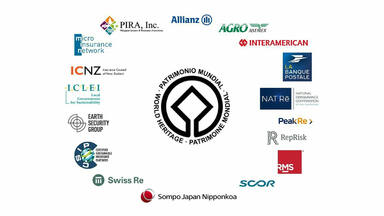
- Also welcomes the global insurance industry Statement of commitment to protect the Outstanding Universal Value of World Heritage properties, developed with the UNEP Finance Initiative Principles for Sustainable Insurance (PSI), also commends the 17 major insurance companies and other supporting institutions of the insurance sector that have so far adhered to the Statement and invites other insurance companies to do so;
- Further welcomes the guidance provided by the International Finance Cooperation (IFC) of the World Bank on Performance Standard 6 on Biodiversity Conservation and Sustainable Management of Living Natural Resources that investment projects in natural and mixed World Heritage properties will not be acceptable for financing, with the possible exception of projects specifically designed to contribute to the conservation of the area;
- Acknowledges with appreciation the financial support of the Government of Flanders (Belgium) for this work and reiterates its request to the World Heritage Centre, in cooperation with the Advisory Bodies, to continue the fruitful dialogue with extractive industries the hydropower industry and other industries, the banking, insurance and investment sector, in line with its Decision 40 COM 7;
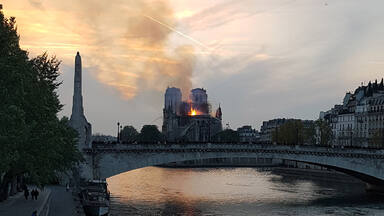
Fire: impacts and management
- Acknowledging the extensive damage of fires to natural and cultural World Heritage properties since 2019, and the growing threat of forest and bushfires to certain natural properties and their cultural values, including as a result of climate change impacts,
- Requests States Parties to implement best practice fire management strategies to ensure the protection and management of Outstanding Universal Value (OUV) including, where appropriate, to:
- Prepare site-level fire vulnerability and risk assessments, mitigation, Risk Preparedness, response and recovery plans in the event of potential severe fire impacts on heritage values,
- Incorporate fire research, monitoring of impact, emergency response and mitigation and preparedness measures into management decisions,
- Work with stakeholders to raise awareness on fire risks among communities and build greater capacity to respond and recover following fires,
- Consider customised approaches and strategies that reflect the characteristics and circumstances of naturally and anthropogenically generated fires,
- Explore the potential of new technologies for application in fire managing strategies, including monitoring, and firefighting systems, that will not have negative impact on OUV of the properties,
- Take strong actions to address human-induced climate change in line with global United Nations Framework Convention on Climate Change (UNFCCC) commitments;
Urban pressures on cultural World Heritage properties
- Notes that the pressures on historic urban areas arising from inappropriate or inconsistent development controls, rapid, uncontrolled and planned development, including large development projects, additions that are incompatible in their volume, mass tourism, as well as the accumulated impact of incremental changes have continued within numerous World Heritage properties and in their buffer zones and settings, and considers that these present potential and actual major threats to the Outstanding Universal Value (OUV) of properties, including their integrity and authenticity, as well as increasing their vulnerability to disasters, including those resulting from climate change;
- Also notes the unrelenting pressures of urbanization and urban development in recent years, the essential contribution of local communities, and the consequent need to support sustainable, compatible, and inclusive livelihoods for local communities and embed stakeholder engagement in management systems and processes, with a view to seeking solutions to protecting heritage in the framework of sustainable urban development to counter and manage the impacts of this ever-present threat;
- Notes with appreciation the outcomes of the International Workshop on Historic Urban Contexts in Fukuoka, Japan, in January 2020 (Fukuoka Outcomes) as well as the World Heritage City Lab in June 2020 that proposed several useful recommendations;
- Calls on States Parties to implement the 2011 UNESCO Recommendation on the Historic Urban Landscape (HUL) in World Heritage properties with urban characteristics, in particular, following the methodology and recommendations of the Fukuoka Outcomes and the World Heritage City Lab, and use the opportunity of the 10th anniversary of the HUL Recommendation in 2021 to support key actions to implement the HUL Recommendation also in line with the 2030 Agenda and the New Urban Agenda;
- Stresses the importance of carrying out Heritage Impact Assessments to evaluate and thereby avoid or manage potential threats to the OUV of the property arising from new urban development projects;
- Also emphasizes the need to enhance resilience and recovery of World Heritage properties in urban areas vulnerable to climate change related impacts, in line with the HUL Recommendation and the World Heritage City Lab outcomes, while also enhancing the livability of the properties and their surrounding for their inhabitants;
Heritage Impact Assessments / Environmental Impact Assessments
- Welcomes the new Guidance and Toolkit for Impact Assessment in a World Heritage context through collaboration between the Advisory Bodies and the World Heritage Centre, and thanks the State Party of Norway for supporting this work through the ICCROM-IUCN World Heritage Leadership Programme;
- Requests States Parties to carry out subsequent Environmental Impact Assessment/Heritage Impact Assessment in line with the new guidance;
- Calls upon States Parties and organizations to provide additional funding and support for compiling the guidance on Strategic Environmental Assessment and support other capacity building activities on impact assessments;
Conservation of fabric, skills and traditional and contemporary technologies
- Recognizes that repair after disasters as well as continued maintenance over time of the integrity and authenticity of the fabric that contributes to the Outstanding Universal Value (OUV) of cultural and mixed World Heritage properties require specific and specialist skills-sets and crafts, knowledge sets and systems often based in cultural-specific technologies developed over many generations;
- Notes that the challenges encountered in the maintenance and restoration of the physical fabric of cultural and mixed World Heritage properties often arise from the lack of appropriate knowledge and skills among craftspeople, as well as a lack of appropriate historically developed and utilised materials;
- Encourages the States Parties and all other stakeholders of the Convention to:
- Stimulate existing (and develop new) research programmes on traditional methods, technologies and materials, and encourage (and, where necessary support) the intergenerational transmission of traditional and contemporary restoration and maintenance skills, and also embed these in management systems, thereby supporting viable professions for the maintenance of physical human-made attributes that contribute to the OUV of cultural and mixed World Heritage properties,
- Facilitate the development of innovative bespoke technical approaches that enable the long-term sustainable physical conservation of significant fabric, where traditional practices can no longer address changing circumstance,
- Assist in the global dissemination of traditional knowledge, skills and methods for restoration and maintenance of physical fabric through exchanges, publications, digital and other media to benefit the maintenance and restoration of the physical fabric of cultural and mixed World Heritage properties;
Earth observation for World Heritage conservation
- Recalling that Earth observation satellite technologies, spatial data and analysis tools have tremendously improved over the past decade and that they provide powerful additional means for decision-makers and stakeholders of the Convention to find comprehensive solutions to today’s global challenges for World Heritage properties,
- Takes note with satisfaction that the World Heritage Centre, in collaboration with the Group on Earth Observation (GEO) Secretariat and GEO Greek Office, has recently launched the Urban Heritage Climate Observatory (UHCO) as a GEO Community Activity that applies earth observation tools to understand and document the impacts of climate change on World Heritage cities and invites States Parties to contribute to the UHCO with data, expertise, networks, and financial resources;
- Requests States Parties, the World Heritage Centre, the Advisory Bodies, UNESCO Category 2 Centres and other relevant institutions to continue exploring collaborative partnerships, which apply innovative technological advances in remote sensing to the improved monitoring and protection of World Heritage properties;
- Reiterates its encouragements to States Parties to invest in the necessary institutional and individual capacity needed to make full use of such Earth observation technologies for the early detection of activities potentially harmful to the Outstanding Universal Value of World Heritage properties and to better understand trends and respond appropriately.
The World Heritage Committee,
- Having examined Document WHC/21/44.COM/7C,
- Recalling Decisions 40 COM 7, 41 COM 7, 42 COM 7 and 43 COM 7.2, adopted at its 40th (Istanbul/UNESCO, 2016), 41st (Krakow, 2017), 42nd (Manama, 2018) and 43rd (Baku, 2019) sessions respectively,
- Takes note with satisfaction of the wide range of climate change-related activities undertaken by the World Heritage Centre, in collaboration with the Advisory Bodies;
- Thanks the State Party of the Netherlands for having funded the project to update the 2007 Policy Document on the impacts of Climate Change on World Heritage properties, and expresses its gratitude to all the experts and representatives of States Parties, of the World Heritage Centre and of the Advisory Bodies who contributed to the meetings of the Technical Advisory Group;
- Takes note with appreciation that a wide diversity of stakeholders of the World Heritage Convention (States Parties, site managers, Advisory Bodies, World Heritage Centre and representatives of local communities, indigenous peoples, academics, NGOs and civil society) were able to contribute to the updating process through the online consultation launched by the World Heritage Centre;
- Takes note of the new title proposed for the updated Policy Document to become “Policy Document for Climate Action for World Heritage”;
- Endorses the draft "Policy Document on Climate Action for World Heritage”, as presented in Annex 1 of Document WHC/21/44.COM/7C, and requests the World Heritage Centre, in consultation with the Advisory Bodies, to revise it by incorporating views expressed and amendments submitted during the extended 44th session and, as appropriate, to consult Committee members, especially concerning the following points:
- the fundamental principle of common but differentiated responsibilities and respective capabilities (CBDR-RC), which is one of the basic pillars of United Nations Framework Convention on Climate Change (UNFCCC),
- the alignment of climate change mitigation actions with the CBDR-RC and the Nationally Determined Contributions accepted under the UNFCCC and the Paris Agreement, except on an entirely voluntary basis,
- the need for support and capacity-building assistance, as well as the encouragement of technology transfer and financing from developed to developing countries;
- Recalls Decision 41 COM 7 and reiterates the importance of States Parties undertaking the most ambitious implementation of the Paris Agreement of the UNFCCC, and strongly invites all States Parties to ratify the Paris Agreement at the earliest possible opportunity and to undertake actions to address Climate Change under the Paris Agreement consistent with their common but differentiated responsibilities and respective capabilities, in light of different national circumstances, that are fully consistent with their obligations within the World Heritage Convention to protect the Outstanding Universal Value (OUV) of all World Heritage properties;
- Decides to transmit the draft "Policy Document on Climate Action for World Heritage”, following final revisions, for review and adoption at the 23rd session of the General Assembly of States Parties to the Convention in 2021;
- Also requests the World Heritage Centre, jointly with the Advisory Bodies, once the "Policy Document on Climate Action for World Heritage” is adopted by the General Assembly of the States Parties and within the available resources, to elaborate proposals for specific changes to the Operational Guidelines that would be required to translate the principles of this Policy Document into actual operational procedures, and to develop education and capacity-building initiatives that would be needed to enable wide implementation of this Policy Document, and calls on States Parties to contribute financially to this end;
- Further requests the World Heritage Centre, in parallel with the processes outlined in Paragraph 10, to convene a panel of experts drawn from the ad-hoc Working Group, World Heritage Centre, the Advisory Bodies and other qualified experts in the field of climate science and heritage to meet by March 2022 and also calls on State Parties to contribute financially to this end;
- Requests furthermore the World Heritage Centre, jointly with the Advisory Bodies, and subject to available resources, to consider preparing a Guidance Document to facilitate effective implementation of, and support for, the actions, goals and targets of this Policy Document, which could include indicators and benchmarking tools for measuring and reporting progress towards achieving the World Heritage Climate Action Goals, and further calls on States Parties to support this activity through extrabudgetary funding;
- Encourages the States Parties, the World Heritage Centre and the Advisory Bodies to disseminate widely the "Policy Document on Climate Action for World Heritage”, once adopted, through appropriate means to the World Heritage community and the broader public, including in local languages, and to promote its implementation;
- Recommends that the "Policy Document on Climate Action for World Heritage” be interpreted in the context of the UNFCCC, the Paris Agreement (2015) and the United Nations 2030 Agenda for sustainable development, and in conjunction with the Policy Document for the integration of a sustainable development perspective into the processes of the World Heritage Convention (2015);
- Urges States Parties and all stakeholders of the Convention to urgently integrate climate change mitigation and adaptation actions in risk preparedness policies and action plans, in order to protect the OUV of all World Heritage properties, in line with the "Policy Document on Climate Action for World Heritage”;
- Further recommends that World Heritage-related Category 2 Centres and UNESCO Chairs prioritize issues related to the implementation of the "Policy Document on Climate Action for World Heritage” within their capacity-building and research initiatives;
- Finally requests the World Heritage Centre, in consultation with the Advisory Bodies, to present a progress report on the implementation status of the "Policy Document on Climate Action for World Heritage” at its 48th session, after four years of implementation.
The World Heritage Committee,
- Having examined the state of conservation reports of properties inscribed on the List of World Heritage in Danger (WHC/19/43.COM/7A, WHC/19/43.COM/7A.Add, WHC/19/43.COM/7A.Add.2, WHC/19/43.COM/7A.Add.3 and WHC/19/43.COM/7A.Add.3.Corr),
- Decides to remove the following properties from the List of World Heritage in Danger:
- Chile, Humberstone and Santa Laura Saltpeter Works (Decision 43 COM 7A.49)
- Palestine, Birthplace of Jesus: Church of the Nativity and the Pilgrimage Route, Bethlehem (Decision 43 COM 7A.28)
- Recalls that the inscription of a property on the List of World Heritage in Danger, aims to marshal international support to help the State Party effectively address the challenges faced by the property by engaging with the World Heritage Centre and the Advisory Bodies to develop a program of corrective measures to achieve the Desired state of conservation for the property as provided for under Paragraph 183 of the Operational Guidelines.
The World Heritage Committee,
- Having examined Documents WHC/19/43.COM/7,
- Recalling Decisions 40 COM 7, 41 COM 7, and 42 COM 7, adopted at its 40th (Istanbul/UNESCO, 2016), 41st (Krakow, 2017) and 42nd (Manama, 2018) sessions respectively,
- Thanks the State Party of Azerbaijan, Host Country of the 43rd session of the World Heritage Committee (Baku, 2019), for having organized the third World Heritage Site Managers’ Forum, as a capacity-building exercise aimed at increasing the understanding of the World Heritage decision-making process among site managers, in order to achieve more effective protection of Outstanding Universal Value (OUV), takes note with appreciation of the 2019 World Heritage Site Managers’ Forum Statement and encourages the future Host Countries to continue this initiative in conjunction with the World Heritage Committee session;
Evaluation of the Reactive Monitoring process - Taking note with appreciation of the evaluation of the Reactive Monitoring process launched by the World Heritage Centre, thanks the State Party of Switzerland for its financial support, as well as the experts tasked with this evaluation, for their thorough analysis of this process, instrumental in achieving the objectives of the World Heritage Convention;
- Expresses its gratitude to all the stakeholders of the Convention who have actively contributed to this evaluation;
- Notes that the recommendations formulated in the evaluation refer to improvements of the current practices and do not call for structural changes nor amendments to the statutory documents, and requests all stakeholders of the Convention to take them on-board and implement them at their level as soon as possible;
- Agrees that the World Heritage Centre should prioritize implementation of the high priority recommendations, with an initial focus on those relevant to communication, capacity-building, including for site managers, and finance;
- Also requests the World Heritage Centre to present a progress report on the implementation of the recommendations, for examination by the World Heritage Committee at its 44th session in 2020;
Issues related to the List of World Heritage in Danger - Reaffirming the need to promote a better understanding of the implications and benefits of properties being inscribed on the List of World Heritage in Danger,
- Thanks the State Party of Romania for its initiative to host a multi-stakeholder international workshop focusing on the List of World Heritage in Danger, including exchange of good practice, promotion of the properties inscribed on this List and the conservation needs to improve their state of conservation, such as Costed Action Plans;
- Requests the World Heritage Centre to present a report on this workshop and other initiatives related to the List of World Heritage in Danger at the 44th session in 2020;
Selection of the World Heritage properties to be proposed for discussion - Reaffirming the importance of focusing the debates on those properties and global conservation issues of greatest concern during the World Heritage Committee sessions, and taking into account the results of the evaluation of the Reactive Monitoring process,
- Supports the outcomes of the reflection conducted by the World Heritage Centre and the Advisory Bodies regarding the elaboration of the list of state of conservation reports to be proposed for discussion by the Committee, as well as the current practice allowing Committee members to add to this list the reports they wish to discuss, by providing a written request to the Chairperson of the Committee, through the World Heritage Centre, sufficiently in advance of the session, and indicating the reason why the reports are requested to be opened for discussion;
- Recognizes that the selection of the state of conservation reports to be discussed by the Committee during its sessions should be based on clear and objective criteria, including the level of threat to the property, rather than being based on representativity.
The World Heritage Committee,
- Having examined Documents WHC/19/43.COM/7, WHC/19/43.COM/7A, WHC/19/43.COM/7A.Add, WHC/19/43.COM/7A.Add.2, WHC/19/43.COM/7A.Add.3, WHC/19/43.COM/7B, WHC/19/43.COM/7B.Add, WHC/19/43.COM/7B.Add.2 and WHC/19/43.COM/7A.Add.3,
- Recalling Decisions 40 COM 7, 41 COM 7, and 42 COM 7, adopted at its 40th (Istanbul/UNESCO, 2016), 41st (Krakow, 2017) and 42nd (Manama, 2018) sessions respectively,
Emergency situations resulting from conflicts - Deplores the loss of human life as well as the degradation of humanitarian conditions resulting from the prevailing conflict situations in several countries, and expresses its utmost concern at the devastating damage sustained and the continuing threats facing cultural and natural heritage in general;
- Expresses its deep concern at the inter-community conflicts observed in Mali between the Dogon and Fulani communities, which have caused considerable loss of human life and significant damage to the cultural heritage, particularly within the World Heritage property of the Cliffs of Bandiagara (Land of the Dogons);
- Thanks the State Party of Mali for the urgent actions that have been put in place to ensure the safety of communities in and around the property, and encourages the State Party, to also take into account in its actions the protection of the property’s rich cultural heritage, and to do so in collaboration with the stakeholders involved in the establishment of long-term peace in Mali;
- Welcomes the dispatch of a UNESCO mission to assess the damage caused to the property, and identify the needs related to the built and intangible cultural heritage and the objects and practices associated with the Cliffs of Bandiagara, in order to propose an Action Plan for the rehabilitation of the villages concerned;
- Urges again all parties associated with conflicts to refrain from any action that would cause further damage to cultural and natural heritage and to fulfill their obligations under international law by taking all possible measures to protect such heritage, in particular the safeguarding of World Heritage properties and the sites included in the Tentative List;
- Also urges again States Parties to adopt measures against using World Heritage properties for military purposes and to stop related uncontrolled development and impact;
- Reiterates its utmost concern about the continuing threats of wildlife poaching and illegal trafficking of wildlife products linked to impacts of conflict and organized crime, which is eroding the biodiversity and Outstanding Universal Value (OUV) of many World Heritage sites across the world, and urges States Parties to take the necessary measures to curb this problem, including through the implementation of the Convention on International Trade in Endangered Species of Wild Fauna and Flora (CITES);
- Calls upon the international community to further support the safeguarding of the cultural and natural heritage of countries affected by conflict, through earmarked funds or through contributions to the UNESCO Heritage Emergency Fund;
- Appeals to all Member States of UNESCO to cooperate in the fight against the illicit trafficking of cultural objects, as well as cultural heritage protection in general, including through the implementation of United Nations Security Council Resolutions 2199 (2015), 2253 (2015) and 2347 (2017);
Reconstruction - Thanks the State Party of Poland for the efforts to widely disseminate the Warsaw Recommendation on Recovery and Reconstruction of Cultural Heritage, as well as the proceedings of the international conference "The Challenges of World Heritage Recovery" held in Warsaw in May 2018;
- Welcomes the policy document "Culture in the reconstruction and rehabilitation of cities", published by UNESCO and the World Bank, which contributes to the reflection launched on the challenges related to the reconstruction of World Heritage properties;
- Requests the World Heritage Centre, ICOMOS and ICCROM and the States Parties to the World Heritage Convention, to continue the reflection on the recovery and reconstruction of World Heritage properties, and requests the World Heritage Centre and the Advisory Bodies report back to the World Heritage Committee on the progress made in improving advice in this regard;
Climate Change - Notes with appreciation the initiatives taken by the World Heritage Centre and the Advisory Bodies to advance work on updating the Policy Document on the Impacts of Climate Change on World Heritage properties, including through a planned widespread online consultation with States Parties, Advisory Bodies and civil society;
- Requests that the development of the updated Policy Document be completed for consideration by the Committee at its 44th session in 2020;
- Welcomes the initiative taken by the World Heritage Centre together with a global private-public consortium of partners, to build climate adaptation strategies across five marine World Heritage sites in Australia, Belize, France and Palau;
- Urges all States Parties to step up action toward better understanding the climate vulnerability of World Heritage properties and put in place adaptation strategies that strengthen the resilience of properties and ensure the conservation of their Outstanding Universal Value.
The World Heritage Committee,
- Having examined Documents WHC/19/43.COM/7, WHC/19/43.COM/7A, WHC/19/43.COM/7A.Add, WHC/19/43.COM/7A.Add.2, WHC/19/43.COM/7A.Add.3, WHC/19/43.COM/7B, WHC/19/43.COM/7B.Add, WHC/19/43.COM/7B.Add.2 and WHC/19/43.COM/7A.Add.3,
- Recalling Decision 42 COM 7, adopted at its 42nd (Manama, 2018),
Management Plans in the context of urban development - Noting that the many Management Plans and management systems for urban properties are not adequately anchored in the legal mechanisms, systems, and processes for urban development,
- Also noting that the pressures of high investment urban development projects in and around properties are increasingly a threat to their Outstanding Universal Value (OUV), and that in contrast, the OUV could provide a valuable opportunity for the property and its wider setting to define a new urban vision that integrates and valorizes the OUV with new needs and aspirations,
- Recalling that the approach of the 2011 UNESCO Recommendation on the Historic Urban Landscape has highlighted the need for urban areas to be well integrated into their wider social, economic and cultural context, calls on all States Parties to prepare and deliver Management Plans, for properties in and around urban areas, so that their planning elements can be integrated directly into the planning and development policies, plans, processes and instruments; regardless of whether the property is inscribed for its urban values or not;
- Requests the World Heritage Centre and the Advisory Bodies to continue reflecting on the mechanisms and tools needed to assess and guide interventions in and around urban properties to sustain the OUV of the properties and to promote sustainable development and actively engage with the wider development processes that could over time impact the appearance, use, and meaning of buildings and spaces in properties and their settings;
- Notes with appreciation the International Union of Architects Forum (UIA) on “Mass Tourism in Historic Cities”, which was held in Baku, Azerbaijan, on 7-9 June 2019 and welcomes the proposal of the UIA to prepare, in close cooperation with the World Heritage Centre and the Advisory Bodies, guidelines for architectural competitions in and around World Heritage urban properties that will recognise their Outstanding Universal Value;
- Welcomes the offer of the Government of Japan to host an international experts meeting in January 2020 to provide further guidelines for the integration of the assessment of the impacts for interventions in the wider processes of urban management by applying the 2011 Recommendation on the Historic Urban Landscape to address the challenges of increased urbanization in close cooperation with the World Heritage Centre and the Advisory Bodies;
- Calls on the UNESCO Secretariat to develop measures to address the inherently limited nature of institutional capacity in SIDS, acting as an impediment in identifying, inventorying and proposing potential cultural and natural heritage sites for listing;
Tourism - Acknowledging the contribution of sustainable tourism to the 2030 Agenda on Sustainable Development and the positive impact it can have on local communities and the protection of World Heritage properties, nevertheless notes with concern that the number of properties negatively affected by overcrowding, congestion and tourism infrastructure development continues to increase;
- Noting that the protection of Outstanding Universal Value (OUV) must be a central objective for all World Heritage properties, requests States Parties to develop visitor management plans and strategies that address the seasonality of tourism (smoothing visitor numbers over time and spreading visitors across sites), encourage longer more in-depth experiences promoting tourism products and services that reflect natural and cultural values, and limit access and activities to improve visitor flows and experiences, while reducing pressures on the attributes which underpin OUV ;
- Encourages the States Parties to support UNESCO in its efforts to assist heritage and tourism managers with system development and data collection to help destinations understand their specific situations and early warning signs, provide incentives for sustainable tourism development and raise awareness to change visitor behaviour;
- Calls on UNESCO Secretariat to recognize opportunities for forging synergies between core UNESCO activities that could be harnessed to strengthen heritage sites: youth, heritage tourism training, sustainable heritage tourism and biodiversity, and relate it directly to SIDS;
Heritage Impact Assessments / Environmental Impact Assessments (HIAs/EIAs) - Notes the progress of revising the guidance on impact assessment for World Heritage undertaken by the ICCROM/IUCN World Heritage Leadership Programme together with the World Heritage Centre and ICOMOS.
The World Heritage Committee,
- Having examined Documents WHC/18/42.COM/7, WHC/18/42.COM/7A, WHC/18/42.COM/7A.Add, WHC/18/42.COM/7A.Add.2, WHC/18/42.COM/7B and WHC/18/42.COM/7B.Add and WHC/18/42.COM/7B.Add.2,
- Recalling Decisions 40 COM 7 and 41 COM 7, adopted at its 40th (Istanbul/UNESCO, 2016) and 41st (Krakow, 2017) sessions respectively,
- Thanks the State Party of Bahrain for having organized a World Heritage Site Managers Forum (Manama, 2018), as a capacity-building exercise aiming at increasing the understanding of the World Heritage decision-making process among site managers, in order to achieve a more effective protection of the Outstanding Universal Value (OUV); acknowledges the importance and benefit of this Forum and considers that it should be convened in conjunction with all future sessions of the World Heritage Committee;
- Takes note of the Statement of Participants to the Forum and encourages States Parties to support the participation of their respective site managers to future fora and other capacity-building opportunities in order to enable them to provide appropriate information with regard to the management of their respective sites;
Statutory matters related to Reactive Monitoring
Reactive Monitoring evaluation -
Takes note with appreciation that the World Heritage Centre has launched an evaluation of the Reactive Monitoring process and thanks the State Party of Switzerland for its financial support to this activity;
- Notes with concern that some properties have remained on the List of World Heritage in Danger for more than ten years; this raises questions on whether the OUV has been maintained and requests the World Heritage Centre to establish an inclusive working mechanism for assessing the OUV of these sites, and to present a report during the 44th session;
- Urges States Parties along with other stakeholders to actively contribute to the evaluation of the Reactive Monitoring process to ensure this mechanism remains a valuable indicator and overview of the state of conservation of heritage;
- Also takes note that the Secretariat has prepared audio-visual communication and outreach material related to the List of World Heritage in Danger;
- Encourages all stakeholders of the World Heritage Convention to engage in the promotion of a better understanding of the implications and benefits of properties being inscribed on the List of World Heritage in Danger, and to develop appropriate information material in this regard with a view to overcome the negative perceptions of the List of World Heritage in Danger;
- Requests that the Reactive Monitoring Evaluation includes options for process improvements for sites on the List of World Heritage in Danger, in particular how actions recommended by Reactive Monitoring missions to assist States Parties meet their Desired state of conservation should be incorporated into the costed Action Plans decided by the World Heritage Committee in its Decision 41 COM 14;
- Further requests the World Heritage Centre develop a proposal, for sharing in the World Heritage Market Place, for funds to support a workshop to assist States Parties with sites on the List of World Heritage in Danger to develop and implement prioritized, staged and costed actions plans, and notes that these plans can be linked to requests for international assistance and shared in the Market Place;
- Recognizing the importance of focusing on those properties of greatest concern, recommends that, with effect from the 43rd session of the Committee, the World Heritage Centre considers geographical and thematic distribution of properties as additional criteria when determining which properties to open for discussion under Agenda items 7A and 7B;
Dialogue with civil society - Welcomes the continued interest of civil society organizations in the Convention, acknowledging the important contribution that can be made to the promotion and conservation of heritage on the ground and to capacity-building;
- Also welcomes the initiative of the World Heritage Centre to open the consultation processes related to the Convention to a larger number of stakeholders, including civil society;
- Takes note of the World Heritage Civil Society Workshop organized further to the initiative of World Wildlife Fund (WWF) in March 2018, which discussed how civil society participation in the Convention, and specifically in World Heritage Committee sessions, can be further improved;
- Encourages again States Parties and civil society organizations to continue to explore possibilities to further civil society engagement in the Convention, both by contributing to enhanced conservation of heritage on the site and national level and by providing relevant input to the heritage related debate at the global level;
Emergency situations resulting from conflicts - Deplores the loss of human life as well as the degradation of humanitarian conditions resulting from the conflict situations prevailing in several countries, and expresses its utmost concern at the devastating damage sustained and the continuing threats facing cultural and natural heritage in general;
- Urges all parties associated with conflicts to refrain from any action that would cause further damage to cultural and natural heritage and to fulfill their obligations under international law by taking all possible measures to protect such heritage, in particular the safeguarding of World Heritage properties and the sites included in the Tentative List;
- Also urges the States Parties to adopt measures against World Heritage properties being used for military purposes and to stop uncontrolled development;
- Also expresses its utmost concern about the impacts of conflicts causing an escalation of the already severe poaching crisis in central Africa, as armed groups are financing their activities through illegal wildlife trade, which is having a severe impact on wildlife populations, thereby degrading the Outstanding Universal Value (OUV) of natural World Heritage properties;
- Appeals to all Member States of UNESCO to cooperate in the fight against the illicit trafficking of cultural objects and illegal wildlife trade, as well as cultural heritage protection in general, including through the implementation of the Convention on International Trade in Endangered Species of Wild Fauna and Flora (CITES), and of United Nations Security Council Resolutions 2199 (2015), 2253 (2015) and 2347 (2017) and of the 1970 Convention on the Means of Prohibiting and Preventing the Illicit Import and Export and Transfer of Ownership of Cultural Property;
Emergency situations resulting from natural disasters
- Welcomes the efforts undertaken by the World Heritage Centre to implement the Strategy for Reducing Risks from Disasters at World Heritage Properties;
- Urges States Parties, in coordination with the World Heritage Centre, to give priority within international assistance in implementing emergency measures to mitigate significant damages resulting from natural disasters that are likely to affect the Outstanding Universal Value of World Heritage properties;
- Encourages States Parties and other stakeholders to further strengthen international cooperation aiming at mitigating impacts of major natural disasters affecting World Heritage properties and reducing vulnerabilities on lives, properties and livelihoods;
Other conservation issues
Reconstruction - Thanks the Government of Poland for hosting the International Conference on Reconstruction “The Challenges of World Heritage Recovery” (Warsaw, 6-8 May 2018), providing a forum for review of specific case studies and understanding of the role of reconstruction in recovery, especially in post-conflict and post-disaster situations;
- Welcomes the Warsaw Recommendation providing clear principles on reconstruction and recovery and requests the World Heritage Centre and the Advisory Bodies to broadly disseminate it among States Parties, World Heritage stakeholders and partner organizations;
- Also requests the World Heritage Centre and the Advisory Bodies to continue the reflection and report back to its 43rd session in 2019 on the implementation of the Warsaw Recommendation;
- Encourages the ongoing cooperation with the World Bank and with United Nations agencies in addressing the challenges of World Heritage recovery and reconstruction;
Climate Change
- Expresses its continued concern about the impacts of climate change on the Outstanding Universal Value (OUV) of World Heritage properties and reiterates the importance of States Parties undertaking the most ambitious implementation of the Paris Agreement of the United Nations Framework Convention on Climate Change (UNFCCC), by holding the increase in the global average temperature to well below 2 °C above pre-industrial levels and by pursuing efforts to limit the global average temperature increase to 1.5 °C above pre-industrial levels, recognizing that this would significantly reduce the risks and impacts of climate change;
- Notes with appreciation the initiatives taken by the World Heritage Centre and the Advisory Bodies to advance work on the updating of the Policy Document on the impacts of climate change on World Heritage properties;
- Requests that the development of the updated Policy Document include consultation with States Parties, the Advisory Bodies and civil society, and be completed for consideration by the Committee at its 43rd session in 2019;
- Expresses its gratitude to the State Party of Germany for the organization of a workshop on World Heritage and Climate Change (Vilm, October 2017), to the State Party of the Netherlands for its generous support to the updating of the Policy Document and to the State Party of France for its generous support to the first global scientific assessment of climate change impacts on World Heritage-listed coral reefs;
- Thanks the Secretariat of the UNFCCC for its active participation in the above-mentioned workshop and inputs into the forthcoming broader Policy Document updating process;
Absent or unclear boundaries
- Urges States Parties that still have properties with unclear boundaries and/or buffer zones to undertake the necessary mapping exercises to clarify their boundaries and buffer zones of properties at the time of their inscription, and submit those to the World Heritage Centre for subsequent examination by the World Heritage Committee;
- Reminds States Parties that any change to existing boundaries and buffer zones must be approved by the World Heritage Committee through the applicable procedures, as outlined in paragraphs 163-167 of the Operational Guidelines;
Heritage Impact Assessments/Environmental Impact Assessments (HIAs/EIAs) - Welcomes the increasing use of Heritage Impact Assessments (HIAs) to assess the potential impact of proposed development projects on the Outstanding Universal Value (OUV) of cultural World Heritage properties, and encourages States Parties to use the HIA methodology for all developments within or otherwise affecting cultural World Heritage properties, as part of the accepted decision-making process;
- Stresses the necessity for HIAs and Environmental Impact Assessments (EIAs) to be proportionate to the scope and scale of projects, with simpler assessments being undertaken for smaller projects and Strategic Environmental Assessments (SEAs) for very large projects, and the necessity for assessments to be undertaken in a timely fashion and submitted to the World Heritage Centre for review by the Advisory Bodies, as part of notifications made under Paragraph 172 of the Operational Guidelines;
- Reiterates that HIAs and EIAs should include a dedicated section examining the potential impact of the project on the OUV of the World Heritage property, in accordance with the existing ICOMOS Guidance and IUCN Advice Note;
- Notes that HIAs cannot be assessed as stand-alone documents and requests States Parties to ensure that when HIAs are submitted to the World Heritage Centre for review by the Advisory Bodies that they are accompanied by full details of the project to which they refer;
- Also welcomes the initiative of IUCN and ICCROM to develop further advice on impact assessment for cultural and natural heritage in the framework of the World Heritage Leadership programme with the support of Norway;
Large scale development projects and Strategic Environmental Assessments - Noting with concern that an increasing number of properties are threatened by large-scale development projects including dams, extractive industries, and transportation infrastructure, located both inside and outside their boundaries,
- Also noting that Environmental Impact Assessments (EIAs) and Heritage Impact Assessments (HIAs) do not always allow for a broad enough assessment of the potential impact of these large-scale developments, nor an assessment of a broad enough range of options at an early enough stage in the planning process,
- Requests States Parties to ensure that the potential impacts of such large-scale developments on the Outstanding Universal Value (OUV) of World Heritage properties directly affected or located within their zone of influence are assessed through Strategic Environmental Assessments (SEAs) at an early stage in the development of the overall project, before locations/routes have been fixed and prior to any approvals being given;
- Recalling Article 6 of the Convention, also requests States Parties to systematically inform the World Heritage Centre, in accordance with Paragraph 172 of the Operational Guidelines, of any planned large-scale development projects in their territories that may impact on the OUV of a property, even if the property concerned is situated on the territory of other States Parties, and to ensure that these impacts are assessed as part of the SEA of the project concerned;
Tourism and Visitor Management - Acknowledging the contribution of sustainable tourism to the 2030 Agenda on Sustainable Development and the positive impact it can have on local communities and the protection of World Heritage properties, nevertheless notes with concern that the number of properties negatively affected by inadequate visitor management and tourism infrastructure development continues to increase;
- Requests States Parties to develop Visitor Management Plans that assess appropriate carrying capacity of properties for visitors and address the issue of unregulated tourism;
- Encourages the States Parties to support UNESCO in its effort to develop an overall Visitor Management Strategy for World Heritage, with policy recommendations to assist States Parties in addressing the issues of unregulated and unsustainable tourism use and development, and to provide resources to UNESCO for the implementation of the Strategy;
Impact of sports facilities and activities on World Heritage properties - Welcomes the continued agreement between IUCN and the International Olympic Committee (IOC) aiming at integrating biodiversity considerations in IOC’s processes, and takes note of the Sport and Biodiversity guide launched by IUCN as the first in a series of reports that will provide guidance to the sports sector regarding its potential impacts on nature, including on World Heritage properties
- Also welcomes the World Rowing Federation (FISA) commitment to respect and preserve the Outstanding Universal Value (OUV) of natural and mixed World Heritage properties, and calls on other Sport Federations to consider making similar commitments, including for all types of World Heritage, both natural and cultural;
Dialogue with the extractive industries and the finance sector on the “No-go Commitment” - Takes note of the continued dialogue between the World Heritage Centre and the extractive industries on extending the “No-go” commitment to other companies;
- Welcomes the growing interest from the investment sector for the conservation of World Heritage properties and strongly encourages all banks, investment funds, the insurance industry and other relevant private and public sector companies to integrate into their sustainability policies, provisions for ensuring that they are not financing projects that may negatively impact World Heritage properties and that the companies they are investing in subscribe to the “No-go commitment”, and invites them to lodge these policies with the UNESCO World Heritage Centre;
- Requests the World Heritage Centre, in cooperation with the Advisory Bodies, to continue the fruitful dialogue with extractive industries and the investment sector, including reflections on how to make these commitments and policies publically available online to inspire other companies in these sectors to follow suit;
Earth Observation technologies - Noting that Earth Observation satellite technologies and spatial analysis tools have tremendously improved over the past decade and that they provide powerful additional means for decision-makers and stakeholders of the Convention to find comprehensive solutions to today’s global challenges for World Heritage properties,
- Encourages States Parties to make full use of such Earth Observation technologies for the early detection of activities potentially harmful to the Outstanding Universal Value (OUV) of World Heritage properties, such as deforestation, mining, illegal fisheries, agricultural encroachment, etc. and to better understand trends and respond appropriately;
Illegal trade in endangered species and the cooperation with the CITES Convention
- Reiterates its utmost concern about the growing impacts of the illegal trade in endangered species, which is affecting many natural World Heritage properties;
- Welcomes the increased attention to this threat and launches an appeal to all Member States of UNESCO to fully implement Resolution 71/326 of United Nations General Assembly on “Tackling illicit trafficking in wildlife”, including through the implementation of the Convention on International Trade in Endangered Species of Wild Fauna and Flora (CITES), and with the full engagement of transit and destination countries;
- Also welcomes the continued fruitful cooperation between the World Heritage Centre, IUCN and the CITES Secretariat and invites the World Heritage Centre and IUCN to further strengthen this cooperation;
Invasive species - Notes with concern the important number of properties significantly affected by invasive alien species (IAS);
- Recalls its encouragement to States Parties to develop adequately-resourced IAS strategies that emphasize prevention and early warning and rapid response in World Heritage properties;
- Strongly encourages States Parties to incorporate IAS response strategies into climate change mitigation policies for World Heritage properties.
The World Heritage Committee,
- Having examined Documents WHC/17/41.COM/7, WHC/17/41.COM/7A, WHC/17/41.COM/7A.Add, WHC/17/41.COM/7A.Add.2, WHC/17/41.COM/7B and WHC/17/41.COM/7B.Add and WHC/17/41.COM/7B.Add.2,
- Recalling Decision 40 COM 7, adopted at its 40th session (Istanbul/UNESCO, 2016),
- Thanks the State Party of Poland, Host Country of the 41st session of the World Heritage Committee (Krakow, 2017), for having organized the first World Heritage Site Managers Forum, as a capacity-building exercise aiming at increasing the understanding of the World Heritage decision-making process among site managers, in order to achieve a more effective protection of the Outstanding Universal Value (OUV), takes note with appreciation of the World Heritage Site Managers’ Forum Statement and encourages the future Host Countries to continue this initiative and organize World Heritage Site Managers Forums in conjunction with the World Heritage Committee session;
Statutory matters related to Reactive Monitoring - Takes note of the practices of the Secretariat to address mass campaigns on state of conservation issues;
- Recalling the importance of Paragraph 172 of the Operational Guidelines and its adequate implementation, further recalls Decision 40 COM 7, which requests the World Heritage Centre, in cooperation with the Advisory Bodies to evaluate the effectiveness of the Reactive Monitoring including procedures and case studies and to present a preliminary report for the consideration by the World Heritage Committee at its 42nd session in 2018, if funds are available;
Emergency situations resulting from conflicts - Deplores the conflict situation prevailing in several countries, the loss of human life as well as the degradation of humanitarian conditions and expresses its utmost concern at the damage sustained and the threats facing cultural and natural heritage in general;
- Urges all parties associated with conflicts to refrain from any action that would cause further damage to cultural and natural heritage and to fulfill their obligations under international law by taking all possible measures to protect such heritage, in particular the safeguarding of World Heritage properties and the sites included in the Tentative List;
- Also urges States Parties to adopt measures against using World Heritage properties for military purposes;
- Takes note of the progress made by the World Heritage Centre and the Advisory Bodies to launch a reflection on a post-conflict recovery strategy, and of the support extended so far through technical assistance, capacity-building, and exchange of best practices in this regard, and recommends that further support for threatened or damaged World Heritage properties be pursued;
- Notes with concern that the conflict situation in several countries in the world has increased considerably the workload of the World Heritage Centre staff, and that an adequate implementation of the Action Plans for the Emergency Safeguarding of Cultural Heritage in Mali, Syria, Iraq, Libya and Yemen requires additional financial and human resources at the World Heritage Centre and in the UNESCO field offices; also notes the increased demands on the resources of the Advisory Bodies;
- Calls on the international community to provide financial support for the implementation of the UNESCO Action Plans for the Emergency Safeguarding of Cultural Heritage in Syria, Iraq, Libya and Yemen, including for additional human resources at the World Heritage Centre and in the UNESCO field offices;
- Also expresses its utmost concern about the impacts of conflicts causing an escalation of the already severe poaching crisis, as armed groups are financing their activities through illegal wildlife trade, which is having a severe impact on African wildlife, and uncontrolled development, threatening the very survival of species and the Outstanding Universal Value (OUV) of natural World Heritage properties;
- Launches an appeal to all Member States of UNESCO to cooperate in the fight against the illicit trafficking of cultural heritage objects (UNESCO 1970 Convention) and illegal wildlife trade, including through the implementation of the Convention on International Trade in Endangered Species of Wild Fauna and Flora (CITES), and to pursue the implementation of the United Nations Security Council Resolutions regarding cultural heritage protection in conflict areas, especially Resolution 2199 and 2347;
Other conservation issues
Reconstruction - Noting the continued need to address the issue of reconstruction in World Heritage properties following conflicts or disasters, expresses its satisfaction that several international meetings have taken place or are being planned on recovery at large, and reconstruction in particular, and welcomes the offer of the Government of Poland to host an international conference on Reconstruction to provide guidelines to the World Heritage Committee to be held in Warsaw in March 2018;
- Encourages the World Heritage Centre and the Advisory Bodies to continue, with all relevant stakeholders, the reflection on reconstruction within World Heritage properties as a complex multi-disciplinary process, towards developing new guidance to reflect the multi-faceted challenges that reconstruction brings, its social and economic context, the short- and long-term needs of properties, and the idea of reconstruction as a process that should be undertaken within the framework of the Outstanding Universal Value (OUV) of the properties;
- Urges States Parties to include risk mitigation measures in the management plans of World Heritage properties to address the potential effects of conflicts or disasters on their integrity;
- Also encourages the inclusion of capacity-building initiatives in the framework of recovery plans;
- Requests the States Parties involved in reconstruction projects to maintain dialogue and close consultation and cooperation with the World Heritage Centre and the Advisory Bodies;
Climate change - Recalls its Decision 40 COM 7 in relation to Climate Change, and requests the World Heritage Centre and the Advisory Bodies to pursue the implementation of this Decision as a priority, within available resources;
- Expresses its utmost concern regarding the reported serious impacts from coral bleaching that have affected World Heritage properties in 2016-17 and that the majority of World Heritage Coral Reefs are expected to be seriously impacted by Climate Change;
- Noting that the World Heritage Centre, in consultation with IUCN, has initiated a scientific assessment by independent experts to better understand the impacts of Climate Change on coral reef World Heritage properties, also requests the World Heritage Centre and IUCN, as resources allow, to complete this assessment as soon as possible, and to ensure its findings are communicated effectively, and further requests the World Heritage Centre and Advisory Bodies to further study the current and potential impacts of Climate Change on the OUV of World Heritage properties;
- Reiterates the importance of States Parties undertaking the most ambitious implementation of the Paris Agreement of the United Nations Framework Convention on Climate Change (UNFCCC) by “holding the increase in the global average temperature to well below 2°C above pre-industrial levels and by pursuing efforts to limit the global average temperature increase to 1.5°C above pre-industrial levels, recognizing that this would significantly reduce the risks and impacts of climate change” and strongly invites all States Parties to ratify the Paris Agreement at the earliest possible opportunity and to undertake actions to address Climate Change under the Paris Agreement consistent with their common but differentiated responsibilities and respective capabilities, in the light of different national circumstances, that are fully consistent with their obligations within the World Heritage Convention to protect the OUV of all World Heritage properties;
- Takes note with satisfaction of the updated UNESCO Strategy for Action on Climate Change, approved by the UNESCO Executive Board at its 201st session in April 2017 (201 EX/Decision 5.I.B), and invites all States Parties to engage fully with the World Heritage Centre and the Advisory Bodies, for its effective implementation;
- Also recalls the need for all States Parties to continue, and where necessary to strengthen all efforts to build resilience of World Heritage properties to Climate Change, including by further reducing to the greatest extent possible all other pressures and threats, and by developing and implementing climate adaptation strategies for properties at risk of Climate Change impacts;
- Requests furthermore the World Heritage Centre and the Advisory Bodies to report on progress in relation to action on World Heritage and Climate Change, and to present, subject to available time and resources, a proposed update to the “Policy Document on the Impacts of Climate Change on World Heritage Properties”, for possible consideration by the World Heritage Committee at its 42nd session in 2018, and notes with appreciation the willingness of civil society groups to engage in this process;
Urban pressure - Noting that the increasing urban pressure in and around numerous World Heritage properties has become a major threat to their Outstanding Universal Value (OUV),
- Taking note of the outcomes of the Habitat III Conference and notably the adoption of the “New Urban Agenda”,
- Also taking note of the necessity to pursue the application of the Historic Urban Landscape approach towards a more effective and durable conservation and management of the urban heritage inscribed on the World Heritage List, and requests the States Parties to fully consider the 2011 UNESCO Recommendation on Historic Urban Landscape (HUL) ;
- Calls on States Parties to take into account the recommendations of the Global Report on Culture for Sustainable Urban Development and take the necessary measures to integrate the role of culture in sustainable urban development in order to achieve SDG 11 – Target 4;
Vandalism - Notes with concern increasing vandalism at World Heritage properties and encourages States Parties to improve monitoring and security measures as well as awareness raising on the detrimental effects of vandalism, and to consider introducing creative solutions to allow visitors to express themselves without leaving permanent marks or damage;
Disasters Risk Reduction - Welcomes the Action Plan for the implementation of the Strategy for reinforcing UNESCO’s action for the protection of culture and the promotion of cultural pluralism in the event of armed conflict (hereafter the Strategy), adopted by the UNESCO General Conference in 2015 (38 C/Res.48), whose implementation would be of great importance for the protection of World Heritage in situations of armed conflicts and disasters associated with natural and human-made hazards;
- Encourages States Parties to provide support to the implementation of the Strategy and its Action Plan, including through contributions to the Heritage Emergency Fund, as well as in kind contributions and advocacy at the highest international levels for the integration of a concern for culture in key international humanitarian, development, and peacekeeping operations;
Invasive species - Recalling its Decision 39 COM 7, adopted at its 39th session (Bonn, 2015),
- Noting with concern the continued threat posed by invasive alien species on natural World Heritage properties, strongly encourages the States Parties to develop adequately resourced invasive alien species strategies that emphasize prevention and early warning and rapid response in World Heritage properties;
Illegal trade of wildlife species - Reiterates its utmost concern about the continued impacts of poaching and illegal logging on World Heritage properties driven primarily by the illegal trade of wildlife species and its products, and requests the World Heritage Centre and IUCN to take action, as resources permit, to strengthen the collaboration between the Convention on International Trade in Endangered Species of Wild Fauna and Flora (CITES) and the World Heritage Convention;
- Reiterates its appeal to all Member States of UNESCO to cooperate in the fight against the illicit trade in wildlife and its products, including through the implementation of the CITES, and with the full engagement of transit and destination countries;
Integrated approaches for the conservation of natural and cultural heritage - Recalling that the World Heritage Convention explicitly links the concepts of cultural and natural heritage, highlights the importance of promoting integrated approaches that strengthen holistic governance, improve conservation outcomes and contribute to sustainable development;
- Notes with appreciation the growing interest and efforts by the States Parties and heritage practitioners to develop and apply integrated approaches to conservation of natural and cultural heritage, and encourages the States Parties, the World Heritage Centre and the Advisory Bodies, in cooperation with universities and other relevant actors, to continue and expand these efforts, in accordance with the Policy Document for the integration of a Sustainable Development Perspective into the Processes of the Convention (2015);
List of World Heritage in Danger - Reiterates its request to the World Heritage Centre, in consultation with the Advisory Bodies and States Parties, to promote better understanding of the implications and benefits of properties being inscribed on the List of World Heritage in Danger, and to develop appropriate information material in this regard with a view to overcome the negative perceptions of the List of World Heritage in Danger. The information material should highlight the importance of the protection of the Outstanding Universal Value;
Other issues - Takes note with appreciation of the Chairperson of the 41st session of the World Heritage Committee’s initiative on structured dialogue with civil society and encourages States Parties and civil society organizations to continue exploring possibilities how civil society can further contribute to enhanced conservation of heritage on the site and national level and provide relevant input to the heritage related debate at the global level;
- Notes, in conformity with Resolution 20 GA 13 of the General Assembly of the World Heritage Convention and the Decision 39 COM 11 (Bonn, 2015) of the World Heritage Committee, the establishment of the International Indigenous Peoples Forum on World Heritage as an important reflection platform on the involvement of Indigenous Peoples in the identification, conservation and management of World Heritage properties, with a particular focus on the nomination process.
The World Heritage Committee,
- Having examined Documents WHC/16/40.COM/7, WHC/16/40.COM/7A, WHC/16/40.COM/7A.Add, WHC/16/40.COM/7A.Add.2, WHC/16/40.COM/7B, WHC/16/40.COM/7B.Add and WHC/16/40.COM/7B.Add.2,
- Recalling Decision 39 COM 7, adopted at its 39th session (Bonn, 2015),
Emergency situation resulting from conflicts - Deplores the conflict situation prevailing in several countries, the loss of human life as well as the degradation of humanitarian conditions and expresses its utmost concern at the damage sustained and the threats facing cultural and natural heritage in general;
- Urges the States Parties to ratify international instruments such as the Convention for the Protection of Cultural Property in the Event of Armed Conflict and implores States Parties associated with conflicts to refrain from any action that would cause further damage to cultural and natural heritage and to fulfil their obligations under international law by taking all possible measures to protect such heritage, in particular the safeguarding of World Heritage properties and the sites included in the Tentative List;
- Also urges the States Parties to adopt measures that oppose World Heritage properties being used for military purposes;
- Takes note of the progress made by the World Heritage Centre and the Advisory Bodies to launch a reflection on a post-conflict recovery strategy, and of the support extended so far through technical assistance, capacity-building, and exchange of best practices in this regard, and recommends that further support for threatened or damaged World Heritage properties be pursued;
- Notes with concern that the conflict situation in several countries in the world has increased considerably the work load of the World Heritage Centre staff, and that an adequate implementation of the Action Plans for the Emergency Safeguarding of Cultural Heritage in Mali, Syria, Iraq, Libya and Yemen requires additional financial and human resources at the World Heritage Centre and in the UNESCO field offices; also notes the increased demands on the resources of the Advisory Bodies;
- Calls on the international community to provide financial support for the implementation of the UNESCO Action Plans for the Emergency Safeguarding of Cultural Heritage in Syria, Iraq, Libya and Yemen, including for additional human resources at the World Heritage Centre and in the UNESCO field offices;
- Also expresses its utmost concern about the impacts of conflicts causing an escalation of the already severe poaching crisis, as armed groups are financing their activities through illegal wildlife trade, which is having a severe impact on African wildlife, threatening the very survival of species and the Outstanding Universal Value (OUV) of World Heritage properties;
- Launches an appeal to all Member States of UNESCO to cooperate in the fight against the illicit trafficking of cultural heritage objects and illegal wildlife trade, including through the implementation of the Convention on International Trade in Endangered Species of Wild Fauna and Flora (CITES), the ratification of the 1970 Convention on the Means of Prohibiting and Preventing the Illicit Import, Export and Transfer of Ownership of Cultural Property and to pursue the implementation of the United Nations Security Council Resolution 2199 of February 2015 regarding Syria and Iraq;
Other conservation issues
Reconstruction
- Noting that the recent and wide-ranging deliberate destruction of World Heritage properties as a result of armed conflict in Syria, Yemen, Libya, Iraq, Mali and Nigeria, and the devastating earthquakes in Nepal, have brought sharply into focus the issue of reconstruction in World Heritage properties; that several international meetings have taken place or are being planned on reconstruction; and that guidance within the Operational Guidelines is currently inadequate,
- Recommends that more in depth reflection is needed on reconstruction within World Heritage properties as a complex multi-disciplinary process, and that consideration should be given to developing new guidance to reflect the multi-faceted challenges that reconstruction brings, its social and economic context, the short- and long-term needs of properties, and the idea of reconstruction as a process that should be undertaken within the framework of the Outstanding Universal Value (OUV) of the properties;
- Welcomes the offer of the Government of Poland to host an international conference on Reconstruction to provide guidelines to the World Heritage Committee;
Climate Change - Taking note of the agreement reached during the 21st conference (COP21) of the United Nations Framework Convention on Climate Change (UNFCCC) held in 2015, requests the World Heritage Centre and the Advisory Bodies to assist States Parties to implement appropriate management responses to the adverse effects of Climate Change;
- Recommends that the World Heritage Centre strengthen its relations with other organizations working on Climate Change, particularly with the UNFCCC and the Intergovernmental Panel on Climate Change (IPCC) secretariats, and specifically with regard to the effect of Climate Change on World Heritage properties, and also requests the States Parties, the World Heritage Centre and the Advisory Bodies to work with IPCC with the objective of including a specific chapter on natural and cultural World Heritage in future IPCC assessment reports;
- Further requests the World Heritage Centre and the Advisory Bodies to periodically review and update the “Policy Document on the Impacts of Climate Change on World Heritage properties”, so as to make available the most current knowledge and technology on the subject to guide the decisions and actions of the World Heritage community;
Dams - Notes with significant concern that an increasing number of properties are facing potential threats from major dam projects, considers that the construction of dams with large reservoirs within the boundaries of World Heritage properties is incompatible with their World Heritage status, and urges States Parties to ensure that the impacts from dams that could affect properties located upstream or downstream within the same river basin are rigorously assessed in order to avoid impacts on the Outstanding Universal Value (OUV);
Extractive industries - Noting with significant concern that World Heritage properties are increasingly threatened by extractive industries, as confirmed by the 2014 IUCN World Heritage Outlook report, by the World Heritage Centre’s analysis of issues reported in state of conservation reports also revealing the potential threat from extractive activities to cultural properties, and by the 2016 report by the World Wide Fund for Nature (WWF), welcomes the “No-go” commitments to World Heritage properties made by Tullow Oil plc and CEMEX in November 2015 and April 2016 respectively, and reiterates its call on other extractive industry companies and investment banks to follow these examples to further extend the “No-go” commitment;
- Recalling Decision 37 COM 7, once again urges all States Parties to the Convention and leading industry stakeholders to respect the “No-go” commitment by not permitting extractive activities within World Heritage properties, and by making every effort to ensure that extractives companies located in their territory cause no damage to World Heritage properties, in line with Article 6 of the Convention;
Environmental Impact Assessments (EIAs)/Heritage Impact Assessments (HIAs) - Notes with concern that a majority of properties potentially affected by proposed development projects, proposed legal instruments, and proposed management systems have not benefited from an assessment of impacts on their Outstanding Universal Value (OUV) in line with IUCN’s World Heritage Advice Note on Environmental Assessment and ICOMOS’ Guidance on Heritage Impact Assessments for Cultural World Heritage Properties, and requests all States Parties to the Convention to ensure that potential direct, indirect and cumulative impacts on the OUV, including from projects located outside the boundaries of natural and/or cultural World Heritage properties, are specifically assessed within the framework of the EIA and HIA required by the applicable laws and regulations, and that reports of such assessments are submitted to the World Heritage Centre for review by the Advisory Bodies, in accordance with Paragraph 172 of the Operational Guidelines;
- Recalls Article 6 of the Convention according to which “Each State Party to this Convention undertakes not to take any deliberate measures which might damage directly or indirectly the cultural and natural heritage […] situated on the territory of other States Parties to this Convention”, and also requests all States Parties to the Convention to ensure that EIAs and HIAs include an assessment of impacts on the OUV of World Heritage properties situated on the territory of other States Parties, as appropriate;
- Further requests the Advisory Bodies, in consultation with the World Heritage Centre, to consider opportunities to streamline their guidance on impact assessment in order to develop one single guidance document for the assessment of impacts on both natural and cultural properties;
Integrated management, Decision making, Governance - Noting with concern that the lack of an integrated management approach is reported to cause challenges to the coordination of management and decision making processes of properties where different authorities are involved, in particular in the cases of mixed, serial, and transboundary properties, urges States Parties to establish appropriate mechanisms in order to facilitate a coordinated approach to the management of all properties, in line with the requirements of the Operational Guidelines as laid out in Paragraphs 112, 114, and 135, and encourages States Parties with contiguous natural properties on either side of their international borders, which are not listed as transboundary properties, to establish appropriate mechanisms for cooperation between their respective management authorities and ministries;
- Also encourages States Parties to promote recognition and awareness across all relevant national and regional agencies of the World Heritage status of the properties on their territory, and to develop mechanisms to ensure consideration of impacts on Outstanding Universal Value (OUV) in the decision making processes of relevant ministries, before permits are issued for developments that could negatively impact the OUV;
Ground transport infrastructures - Notes with concern that the number of cases of ground transport infrastructure having potential impact on the Outstanding Universal Value (OUV) of World Heritage properties is continuing to grow, and calls upon States Parties to carry out Strategic Environmental Assessments (SEAs) early in the process of transportation planning to allow for potential impacts of the OUV, including those resulting from foreseeable associated future developments, to be identified prior to the development of specific projects;
- Encourages States Parties to carry out Environmental Impact Assessments (EIAs) and Heritage Impact Assessments (HIA) on ground transport projects, once they are designed, with multiple options to ensure that transportation needs can be met with minimal impacts on the OUV of World Heritage properties;
List of World Heritage in Danger - Takes note of its discussions under agenda items 7A and 7B, and requests the World Heritage Centre, in consultation with the Advisory Bodies and States Parties, to promote better understanding of the implications and benefits of properties being inscribed on the List of World Heritage in Danger, and to develop appropriate information material in this regard with a view to overcome the negative perceptions of the List of World Heritage in Danger. The information material should highlight the importance of the protection of the OUV;
Reactive Monitoring - Requests the World Heritage Centre, in cooperation with the Advisory Bodies to evaluate the effectiveness of the Reactive Monitoring including procedures and case studies and to present a preliminary report for the consideration by the World Heritage Committee at its 42nd session in 2018, if funds are available.
- Having examined Document WHC-15/39.COM/7,
- Recalling Decision 38 COM 7, adopted at its 38th session (Doha, 2014), and the Bonn Declaration on World Heritage adopted on 29 June 2015,
- Deplores the conflict situation prevailing in Syria, Iraq, Libya and Yemen, the loss of human life as well as the degradation of humanitarian conditions and expresses its utmost concern at the damage sustained and the threats facing these properties and cultural heritage in general;
- Urges all parties associated with conflicts to refrain from any action that would cause further damage to cultural heritage and to fulfil their obligations under international law by taking all possible measures to protect such heritage, in particular the safeguarding of World Heritage properties and the sites included in the Tentative List;
- Also urges the States Parties to adopt measures for the evacuation of World Heritage properties being used for military purposes;
- Launches an appeal to all Member States of UNESCO to cooperate in combatting the illicit trafficking of cultural heritage, in particular coming from Syria and Iraq as per the United Nations Security Council Resolution 2199 of February 2015;
- Recommends that the World Heritage Centre and Advisory Bodies develop a post-conflict strategy, including means to extend support for reconstruction of damaged World Heritage properties through technical assistance, capacity-building, and exchange of best practices taking into account the conclusions made by the two seminars recently held by World Heritage Centre and ICOMOS on this subject;
- Takes note of the increasing number of State of Conservation reports due to inadequate management systems or plans and urges States Parties to ensure that management systems and plans are in place at the time of inscription;
- Notes with utmost concern, the continuously increasing pressure associated with and the growing impacts from poaching on the Outstanding Universal Value of many natural World Heritage properties and the increasing involvement of organized crime, and reiterates its call for strong international collaboration and coordination inter alia with the Secretariat of the Convention on International Trade in Endangered Species of Wild Fauna and Flora (CITES) and with the full engagement of transit and destination countries to control the illicit trade in wildlife and its products;
- Notes with concern the significant threat posed by invasive species to natural World Heritage properties, strongly encourages States Parties to develop adequately resourced strategies to eradicate invasive species in World Heritage properties and prevent their (re-)introduction and/or establishment, and also calls on the international community to support invasive species eradication campaigns in affected properties;
- Taking note of the benefits to States Parties of systematically utilizing Heritage Impact Assessments (HIAs) and Environmental Impact Assessments (EIAs) in the review of development projects, encourages States Parties to integrate the EIA/HIA processes into legislation, planning mechanisms and management plans, and reiterates its recommendation to States Parties to use these tools in assessing projects, including assessment of cumulative impacts, as early as possible and before any final decision is taken, and, taking into account the need for capacity-building in this regard, requests the States Parties to contribute financially and technically towards the development of further guidance regarding EIA/HIA implementation, by the Advisory Bodies and the World Heritage Centre, based on case studies and field experience;
- Acknowledging that World Heritage properties are being increasingly affected by Climate Change, also strongly encourages States Parties to participate in the 21st Conference of the Parties (COP21) to the United Nations Framework Convention on Climate Change (UNFCCC) in December 2015, with a view to achieving a universal climate agreement and mobilize global climate action on the ground, and recalls its Decision 31 COM 7.1, adopted at its 31st session (Christchurch, 2007) in which it adopted a carbon neutral policy, in view of its application for all future sessions, to the extent feasible;
- Appreciates the constructive dialogue, which has taken place between the International Olympic Committee (IOC), the World Heritage Centre and IUCN, and also requests that this dialogue be extended to the other Advisory Bodies to ensure that cultural aspects are also taken into account in the future;
- Urges States Parties to submit to the Committee through the Secretariat, by the statutory deadline set and in one of the working languages of the World Heritage Convention (English or French), their reports on the state of conservation of specific properties (Paragraph 169 of the Operational Guidelines), in order to allow for sufficient time for consultation and informed decision making at the Committee sessions;
- Adopts the revised format below for the submission of state of conservation reports by the States Parties, decides that this revised format is compulsory and applies with immediate effect, and that it should be included in the Operational Guidelines, and reminds States Parties that these reports must be submitted in one of the working languages of the Convention (English or French):
- Executive Summary of the report
[Note: each of the sections described below should be summarized. The maximum length of the executive summary is 1 page.] - Response to the Decision of the World Heritage Committee
[Note: State(s) Party(ies) are requested to address the most recent Decision of the World Heritage Committee for this property, paragraph by paragraph.]
If the property is inscribed on the List of World Heritage in Danger
Please also provide detailed information on the following:- Progress achieved in implementing the corrective measures adopted by the World Heritage Committee
[Note: please address each corrective measure individually, providing factual information, including exact dates, figures, etc.]
If needed, please describe the success factors or difficulties in implementing each of the corrective measures identified - Is the timeframe for implementing the corrective measures suitable? If not, please propose an alternative timeframe and an explanation why this alternative timeframe is required.
- Progress achieved towards the Desired state of conservation for the removal of the property from the List of World Heritage in Danger (DSOCR)
- Progress achieved in implementing the corrective measures adopted by the World Heritage Committee
- Other current conservation issues identified by the State(s) Party(ies) which may have an impact on the property’s Outstanding Universal Value
[Note: this includes conservation issues which are not mentioned in the Decision of the World Heritage Committee or in any information request from the World Heritage Centre] - In conformity with Paragraph 172 of the Operational Guidelines, describe any potential major restorations, alterations and/or new construction(s) intended within the property, the buffer zone(s) and/or corridors or other areas, where such developments may affect the Outstanding Universal Value of the property, including authenticity and integrity.
- Public access to the state of conservation report
[Note: this report will be uploaded for public access on the World Heritage Centre’s State of conservation Information System (https://whc.unesco.org/en/soc). Should your State Party request that the full report should not be uploaded, only the 1-page executive summary provided in point (1.) above will be uploaded for public access]. - Signature of the Authority
-
Notes with appreciation the high number of States Parties which have authorized the public upload of their state of conservation reports, facilitating their consultation by all stakeholders of the Convention and contributing to an improved transparency of the reactive monitoring process, and reiterates its encouragement to all States Parties to continue do so in the future.
The World Heritage Committee,
- Having examined Document WHC-15/39.COM/15,
- Recalling its decision 35 COM 12 B adopted at its 35th session to establish a Budget Working Group as a Standing Consultative Body of the Committee,
- Takes note of the statement of accounts of the World Heritage Fund for 2014-2015 and the situation of the reserves and contributions as at 31 December 2014;
- Recalls that the payment of assessed compulsory and voluntary contributions is, as per Article 16 of the World Heritage Convention, an obligation incumbent on States Parties having ratified the Convention;
- Thanks the States Parties, who have already made their contributions, and with deep concern for the sustainability of the World Heritage Fund strongly calls upon the other States Parties, who have not yet paid the totality of their assessed contributions, including voluntary contributions in accordance with Article 16.2 of the Convention, to ensure that their contributions are paid as soon as possible, bearing in mind the repercussions for non-payment which include the inability to access International Assistance;
- Also recognizes that States Parties have an obligation to fulfil the objectives of the Convention and have a responsibility to provide sufficient funding for statutory processes and International Assistance;
- Notes with concern the impact of the budget reduction of the UNESCO regular budget on programme activities, and appreciates the continuing efforts undertaken to manage and mitigate the challenges brought about by this situation;
- Also recalls with deep concern the current financial situation of the World Heritage Fund which has hampered its ability to provide for activities related to the Convention, including conservation and management of properties which are a top priority, as well as nominations, and further recognizes the necessity to urgently achieve the sustainability of the Fund, is required to underpin the Convention as a flagship of UNESCO;
- Notes that the World Heritage Fund will not increase significantly in future due to the universality of the Convention, as well as the provisions of the Convention that determine the statutory funding of the World Heritage Fund, while at the same time the number of properties inscribed on the World Heritage List and, subsequently, the workload of the World Heritage Centre and the Advisory Bodies will continue to increase;
- Recognizing the urgent need to ensure the sustainability of the World Heritage Fund and having considered the options for voluntary contributions to this end, again calls upon all States Parties to allocate voluntary contributions to the World Heritage Fund, especially to the sub-accounts for International Assistance and Human Capacities, and making voluntary contributions, including by choosing among the options described in Resolution 19 GA 8 as follows:
- Option 1: Increasing the standard percentage used in the calculation of the contributions to the World Heritage Fund from 1% to 2%,
- Option 3.1: Increasing the contributions by a flat rate of US$3,300 per property inscribed,Option 3.2: Increasing the contributions by an additional 4% of the current assessed contribution per property inscribed,
- Option 3.3: Increasing the contributions by an additional amount per property inscribed, according to a percentage increasing with the number of properties inscribed,
- Option 3.4: Increasing the contributions by an additional amount per property inscribed, according to a percentage decreasing with the number of properties inscribed,
- Option 4: Increasing the contributions on the basis of the number of tourists arrivals at World Heritage Sites,
- Option 5: Contributing per activity;
- Noting that without additional contributions being made to the World Heritage Fund, the financial resources will not be sufficient to provide for the statutory processes as well as International Assistance and its delivery through the reduced staff of the World Heritage Centre, thereby threatening the credibility of the Convention and the fulfilment of its mandate,
- Expressing its deep concern that the resources available to the World Heritage Centre and the Advisory Bodies are not sufficient to implement the statutory activities required by the Convention and recommending the workload requested of the Secretariat and Advisory Bodies be reduced and prioritized more systematically to align with the financial and human resources available,
- Approves the budget adjustments within the World Heritage Fund to fund International Assistance requests in an amount of US$ 60,000, to be covered by the budget lines of Information Management and Retrospective Inventory (US$ 30,000 each);
- Accepts that the Operating Reserve of the World Heritage Fund cover the request from ICOMOS for additional funding in the amount of US$ 57,180;
- Also approves the budget for the World Heritage Fund for the biennium 2016-2017 and its corresponding breakdown as shown in Annex V;
- Authorizes the Director-General to make transfers between Action lines and reserves up to an amount of 20% of the initial budget/Expenditure Plan approved, to a maximum amount of US$ 250,000, each biennium in order to allow the execution of the Committee’s decisions and to respond to emergency needs, informing the Members of World Heritage Committee in writing, at the session following such action, of the details and reasons for these transfers;
- Notes with appreciation the supplementary costs covered by the German Authorities as host of the 39th session of the World Heritage Committee, in addition to those listed in the Statement of Requirements;
- Considers that without additional contributions being made to the World Heritage Fund, financial resources will not be sufficient to provide for statutory processes, and also notes that there have already been significant cuts to key Convention processes and activities, which affect the delivery of International Assistance and capacity building, as well as cuts in implementation of the Periodic Reporting, development of thematic studies, Information Management and Retrospective Inventory;
- Decides to continue to explore appropriate ways to ensure the sustainability of the Fund, including through extrabudgetary resource mobilization opportunities and additional fundraising possibilities, in collaboration with the World Heritage Centre, other UNESCO competent services, the Advisory Bodies and States Parties, and to develop recommendations in this regard;
- Requests the World Heritage Centre in collaboration with the Advisory Bodies to hold a budget briefing as part of the information session prior to each session of the Committee;
- Also recalling its welcome of the suggestion to reduce the duration and agenda of the sessions as stated in decision 38 COM 5F1,
- Taking note of the emphasis placed by the World Heritage Committee on conservation and management which are top priorities, and considering that the actual stand of expenses/budgeting does not reflect this prioritization, recommends that the World Heritage Centre, in its implementation of the budget for the next biennium (2016-2017), gives priority to conservation and monitoring activities, and therefore calls for increasing the proportion of the World Heritage Fund dedicated to conservation and decides to keep the number of 150 SOC reports per annum;
- Having taken note of the dire budgetary situation of the World Heritage Fund, and the fact that the biggest savings could be achieved through combined efforts to reduce the number of nominations (25/year), through considering opportunities to have different state of conservation (SOC) reporting cycles depending on urgency of situation at site and through considering the frequency of the annual cycle of the World Heritage Committee meetings,
- Requests the World Heritage Centre in collaboration with the Advisory Bodies to prepare an annual decision document on the number of new nominations to be examined in the following year according to Document INF.8B3 including cost estimates for each nomination and – if necessary – a prioritization according to Operational Guidelines 61 c;
- Also requests the World Heritage Centre, in collaboration with the Advisory Bodies to:
- explore and report on options to extend the reporting cycle for SOC sites depending on the degree of urgency at the site; and
- prepare an analysis on the financial and operational implications of transferring to a 2-year meeting cycle, to be presented in the 40th session of the World Heritage Committee in order to provide basis for the World Heritage Committee to have an informed discussion on the merits of changing the frequency of the meeting cycle;
- Decides that cost savings will be reallocated to International Assistance directed towards the conservation and management of World Heritage properties and capacity building, given the number of countries which need support to establish/maintain a presence on the World Heritage List;
- Also thanks the Secretariat for providing the comparative analysis of options for further efficiency and cost saving measures and resource mobilisation that could contribute to the sustainability of the World Heritage Fund;
- Further requests the World Heritage Centre to report on the implementation of this Decision at the 40th session in 2016.
The World Heritage Committee,
1. Having examined Document WHC-14/38.COM/7,2. Recalling Decisions 35 COM 12B, 35 COM 12E and 37 COM 7C adopted at its 35th (UNESCO, 2011) and 37th (Phnom Penh, 2013) sessions respectively,
Issues emerging from the 2014 state of conservation reports
3. Noting with regret that issues related to Management Plan / System remain a serious cause for concern, requests all States Parties to ensure that all World Heritage properties are managed in such a manner that their Outstanding Universal Value (OUV) is not put at risk and, whenever necessary, develop/update and fully implement Management Plans or Systems;4. Taking note of the benefits to States Parties of systematically utilizing Heritage and Environmental Impact Assessments in the review of development projects, recommends that States Parties use these tools in assessing projects before they reach a point where the World Heritage reactive monitoring process comes into play;
5. Also noting that tourism development in and around World Heritage properties is a key issue for their management, strongly encourages States Parties to ensure sustainable planning and management of tourism at World Heritage properties and to contribute to the implementation of the World Heritage Centre’s World Heritage and Sustainable Tourism Programme;
6. Reiterating its utmost concern about the continued impacts on World Heritage properties due to the rising pressure from poaching, particularly of elephant, rhinoceros, and valuable timber species, linked to a growing illicit trade, and the increasing involvement of organized crime in this lucrative business, reiterates its request to the World Heritage Centre and IUCN to strengthen their cooperation with the Secretariat of the Convention on International Trade in Endangered Species (CITES) to assist States Parties to implement the measures taken by the 16th Conference of the Parties of the CITES, and urges States Parties to ensure strong international collaboration and coordination to control the illicit trade in flora and fauna and their products;
7. Takes note with concern of the continuing threat posed to World Heritage properties by disasters and conflicts, of the widespread lack of adequate preparedness, and of the need to integrate a concern for heritage within international policies and programmes for disaster risk reduction, and calls on States Parties to ensure that their delegations to the 3rd World Conference on Disaster Risk Reduction (WCDRR), due to take place in March 2015 in Sendai (Japan), are sensitized to this question and promote heritage as an essential consideration in disaster risk reduction;
8. Also requests that States Parties with an interest in the promotion of capacity building on the issues of management, impact assessments, disaster risk management, sustainable tourism management, and poaching and wildlife crimes to liaise with the Advisory Bodies, World Heritage Centre, and UNESCO Category 2 Centres, and support regional or international courses, workshops, and other capacity building activities to improve the capacity of States Parties and site managers to develop and implement these important planning instruments;
Updates on previously reported issues
9. Welcomes the commitment made by TOTAL in June 2013 not to explore or exploit oil or gas inside sites inscribed on the World Heritage List as well as the new policy on World Heritage Sites adopted by the investment bank HSBC not to knowingly provide financial services to support projects which threaten the special characteristics of World Heritage properties and, also taking note of the discussions held between the World Heritage Centre, IUCN and International Petroleum Industry Environmental Conservation Association (IPIECA), calls on other companies in extractive industries and investment banks to follow these examples to further extend the “No go” commitment;10. Also welcomes the progress in the dialogue between the World Heritage Centre, the Advisory Bodies and the International Olympic Committee (IOC) and encourages the development of a mechanism that would allow to identify potential impacts of future Olympic Games on World Heritage properties early on in the process of attributing the Games in order to ensure that these impacts can be avoided or adequately mitigated by the organizing country;
Strategic issues related to the state of conservation of World Heritage properties
11. Also recalling that States Parties concerned shall submit by 1 February to the Committee through the Secretariat, their reports on the state of conservation of specific properties (Paragraph 169 of the Operational Guidelines ),12. Acknowledging that the established minimum two-year cycle for the examination of state of conservation reports for individual properties (except for cases of utmost urgency and for properties inscribed on the List of World Heritage in Danger), associated to a postponed deadline for the submission of the States Parties’ reports would provide an opportunity for improved dialogue between the States Parties, the World Heritage Centre and the Advisory Bodies, decides that States Parties concerned shall submit their state of conservation reports to the World Heritage Centre by 1 December of the year preceding the examination of the property by the World Heritage Committee, with immediate effect, except for properties inscribed on the List of World Heritage in Danger and for cases of utmost urgency, and further requests the World Heritage Centre and the Advisory Bodies to draft a proposal in view of including this new statutory deadline in the Operational Guidelines , for examination by the World Heritage Committee at its 39th session, in 2015;
13. Reminds States Parties of the importance of submitting their state of conservation reports to the World Heritage Centre in one of the working languages of the World Heritage Convention, English or French;
14. Notes with appreciation the high number of States Parties which have authorized the public upload of their state of conservation reports, facilitating their consultation by all stakeholders of the Convention and contributing to an improved transparency of the reactive monitoring process, and reiterates its encouragement to all States Parties to continue do so in the future. Read more about the decision
The World Heritage Committee,
1. Having examined Document WHC-13/37.COM/7A.Add,
2. Recalling Decision 35 COM 7C , adopted at its 35th session (UNESCO, 2011),
3. Welcomes the publication of the Guidance on the Desired State of conservation for the removal of a property from the List of World Heritage Danger (DSOCR);
4. Requests the World Heritage Centre and Advisory Bodies to continue supporting States Parties in developing and submitting DSOCRs for all properties included in the List of World Heritage in Danger, by its 40th session in 2016 at the latest, and considers that properties should be retained on the List of World Heritage in Danger until the Desired state of conservation for removal is met.
Read more about the decisionThe World Heritage Committee,
1. Having examined Document WHC-13/37.COM/7C,
2. Recalling Decisions 35 COM 7C and 36 COM 7C , adopted at its 35th (UNESCO, 2011) and 36th (Saint-Petersburg, 2012) sessions respectively,
3. Expresses its appreciation to the Flemish Government for its support in establishing the online “State of Conservation Information System of World Heritage properties”;
4. Welcomes the contribution of the Information System to the improved transparency of World Heritage Reactive Monitoring and informed decision-making processes;
5. Encourages States Parties to make public the reports submitted on the state of conservation of World Heritage properties in order to facilitate their consultation by all stakeholders and contribute to an improved transparency of the reactive monitoring process and, in this case, requests the World Heritage Centre to make them publicly accessible through the State of Conservation Information System;
6. Also encourages the World Heritage Centre to continue exploring opportunities to link the Information System to other existing relevant databases as part of a wider Information and knowledge management system, in order to improve the synergies between the World Heritage Convention and other international conventions or programmes;
7. Calls upon all States Parties to the Convention to support the activities proposed to contribute towards the improvement of the Information System and its access for the international community.
Read more about the decisionThe World Heritage Committee,
1.Having examined document WHC-12/36.COM/7C,
2.Recalling Decisions 35 COM 7C and 35 COM 12E adopted at its 35th session (UNESCO, 2011),
Significant factors negatively impacting the Outstanding Universal Value
3.Takes note of the statistical analysis and encourages the World Heritage Centre to continue with the production of such informative data, including regional analyses;
Recurrent conservation issues
4.Also takes note of the completion of the independent review process on extractive industries and World Heritage properties as a contribution to the Policy Guidelines development and invites the World Heritage Centre to disseminate this review as widely as possible;
Disaster risk reduction
5.Requests States Parties to make every endeavor to take into consideration disaster risks, including from human-induced hazards, in the management plans and systems for the World Heritage properties located in their territories;
6.Also requests the World Heritage Centre, with the support of the Advisory Bodies, to continue working with global and regional institutions involved in disaster risk management, with an aim to mainstream a concern for heritage within their policies and programmes as well as in UN-led processes such as the Post-Disaster-Needs-Assessment (PDNA);
Follow-up to decisions 35 COM 7C and 35 COM 12E
7.Further takes note of the information provided regarding the recognition for the protectors of World Heritage properties in conflict and post-conflict zones, including through the use of blue/green berets or other appropriate insignia;
8.Takes note furthermore of the correspondence process in place to increase dialogue between the States Parties, the World Heritage Centre and the Advisory Bodies regarding conservation issues at World Heritage properties;
9.Thanks the Government of Flanders for its support to the establishment of a “state of conservation information system” hosted on the World Heritage Centre’s website and further requests the World Heritage Centre to present a progress report on the database and its access online, during the 37th session of the World Heritage Committee in 2013;
Other conservation issues not reported on at the 36th session under Items 7A and 7B
10. Expresses its concern with regard to the state of conservation of World Heritage property of “Archaeological Areas of Pompei, Herculaneum and Torre Annuziata” and urges the State Party of Italy to intensify its efforts towards implementing the Committee’s decision taken at its 35th session (UNESCO, 2011);
11. Extends its sympathy to the victims of the earthquake in northern Italy; also encourages the State Party of Italy to continue its important efforts for the assessment of the damage occurred and for the planning and implementation of the necessary remedial measures, including with a view to strengthening the overall resilience of the three properties in the future against all possible hazards; and requests furthermore the State Party of Italy to provide to the World Heritage Centre updated information on the situation and to coordinate with the World Heritage Centre and the Advisory Bodies possible initiatives for the recovery and restoration of the three affected properties;
12. Finally requests the State Party of the United Kingdom of Great Britain and Northern Ireland to halt the proposed development of a golf resort at the World Heritage property “Giant’s Causeway and Causeway Coast” until its potential impact on the Outstanding Universal Value of the World Heritage property has been assessed.
Read more about the decisionThe World Heritage Committee,
1. Having examined Documents WHC-11/35.COM/7C, WHC-11/35.COM/INF.7C and WHC-11/35.COM/7B,
2. Recalling Decision 34 COM 7C, adopted at its 34th session (Brasilia, 2010),
3. Thanks the States Parties of Senegal and Australia for the organization of the Expert meeting on the global state of conservation challenges for World Heritage properties (Dakar, Senegal, 13-15 April 2011);
4. Endorses the recommendations of the Expert meeting on the global state of conservation challenges for World Heritage properties presented in Document WHC-11/35.COM/INF.7C and invites States Parties to the Convention, the World Heritage Centre and the Advisory Bodies to develop plans to implement them, and identify the required resources;
5. Considering the need for more systematic monitoring of threats, calls upon the States Parties to the Convention to support the establishment of a comprehensive "state of conservation information system" to support analytical studies and assist all stakeholders in site-management, with the target to make this system available, on the World Heritage Centre's website, before the 37th session of the World Heritage Committee in 2013;
6. Requests the World Heritage Centre, in consultation with the Advisory Bodies, to prepare clear modalities and guidance for the drafting and adoption of the Desired state of conservation for the removal of properties from the List of World Heritage in Danger, for examination by the World Heritage Committee at its 36th session in 2012;
7. Decides to amend paragraph 183 of the Operational Guidelines to read: "When considering the inscription of a property on the List of World Heritage in Danger, the Committee shall develop, and adopt, as far as possible, in consultation with the State Party concerned, a Desired state of conservation for the removal of the property from the List of World Heritage in Danger, and a programme for corrective measures";
8. Also requests the World Heritage Centre and Advisory Bodies to prepare a progress report on the issues mentioned above, for examination by the World Heritage Committee at its 36th session in 2012.
Read more about the decisionThe World Heritage Committee,
1. Having examined Document WHC-11/35.COM/12B,
2. Recalling Decision 32 COM 10 adopted at its 32nd session (Quebec City, Canada, 2008), Decision 33 COM 14A.2 adopted at its 33rd session (Seville, Spain, 2009), 34 COM 12 adopted at its 34th session (Brasilia, Brazil, 2010) and Resolution 17 GA 9 adopted at the 17th General Assembly of States Parties (UNESCO Headquarters, 2009);
3. Expresses its appreciation to the States Parties of Bahrain and Australia and the UNESCO World Heritage Centre for organizing the expert meeting on the decision-making procedures of the statutory organs of the World Heritage Convention (Manama, Bahrain, 15-17 December 2010), and notes the report provided by the participants (Document WHC-11/35.COM/12B);
Amendments to Rules of Procedure
4. Adopts the following amendments to its Rules of Procedure:
Rule 8.3. The United Nations and organizations of the United Nations system, as well as, upon written request, at least 15 days prior to the date of the session of the Committee, other international governmental and non-governmental organizations, permanent observer missions to UNESCO and non profit-making institutions having activities in the fields covered by the Convention, [according to criteria defined by the World Heritage Committee,] may be authorized by the Committee to participate in the sessions of the Committee as observers.
Rule 14. Duties of the Chairperson, [Vice-Chairpersons and Rapporteur]
14.1 In addition to exercising the powers which are conferred upon him elsewhere by the present Rules, the Chairperson shall open and close each plenary meeting of the Committee. He shall direct the discussions, ensure observance of these Rules, accord the right to speak, put questions to the vote and announce decisions. He shall rule on points of order and, subject to the present Rules, shall control the proceedings and the maintenance of order. He shall not vote, but he may instruct another member of his delegation to vote on his behalf. [He shall work, with the assistance of the vice-chairpersons at his discretion, to anticipate and address potentially contentious issues, including out of session.] He shall exercise all other functions given to him by the Committee.
14.2 [Should the Chairperson be absent during a meeting, or any part thereof, he shall be replaced by a Vice-Chairperson.] A Vice-Chairperson acting as Chairperson shall have the same powers and duties as the Chairperson.
14.3 The Chairperson and Vice-Chairperson, or Vice-Chairpersons, of a subsidiary body of the Committee shall have the same duties with regard to the bodies over which they are called upon to preside as the Chairperson and the Vice-Chairpersons of the Committee.
[14.4 In addition to exercising the powers which are conferred upon him elsewhere by the present Rules, the Rapporteur shall certify that the Secretariat has accurately recorded the Committee's decisions. He shall work with the Secretariat to monitor and record Committee debate on amendments.]
Rule 22. Order and time-limit of speeches
22.1 The Chairperson shall call upon speakers in the order in which they signify their wish to speak.
22.2 The Chairperson may limit the time allowed to each speaker if the circumstances make this desirable.
[22.3 The Chairperson, at his discretion, shall call on speakers from the Advisory Bodies and the Secretariat prior to the Committee taking a final decision.]
22.4 The representatives of organizations, individuals and observers referred to in Rules 6, 7 and 8 may address the meeting with the prior consent of the Chairperson.
[22.5 The Chairperson shall put Committee members' questions to a State Party once at the end of the Committee's debate on the property]
[22.6 Committee members shall not speak to World Heritage properties in their own territories, except at the explicit invitation of the Chairperson and in response to specific questions posed. Advocacy in favour of a particular proposal will not be entertained.]
22.7 Representatives of a State Party, whether or not a member of the Committee, shall not speak to advocate the inclusion in the World Heritage List of a property nominated, [the state of conservation of a property on their territory] or the approval of an assistance request submitted by that State Party, but only to deal with a point of information in answer to a question. This provision also applies to other observers mentioned in Rule 8.
Responsibilities of Statutory Organs
5. Requests the World Heritage Centre to present a study, for consideration at the 36th session of the World Heritage Committee (2012), on options for:
a) oversight and monitoring mechanisms for the statutory organs of the World Heritage Convention to ensure that actions associated with priority policy issues are implemented, and
b) enhancing the role of the Bureau in facilitating the work of the Committee (without it assuming a decision-making role);
Expert meetings
6. Also requests the World Heritage Centre to develop and present annually a consolidated list of all proposed meetings in order for the Committee to decide which to sanction on the basis of priorities and available resources (human and financial), and encourages the option to hold virtual meetings where appropriate;
7. Requests the World Heritage Centre to clarify the different types and categories of expert meetings and decides that all meetings attended by the Secretariat should be documented in the Report on the Secretariat's activities to the Committee;
Conduct of statutory meetings
8. Decides that policy discussions in the Committee should be organised to enable participation by all States Parties through the use of Consultative Groups, or the recognition of requests for interventions from non-members of the Committee on policy agenda items, at the discretion of the Chair;
9. Decides that three regular (not extended) sessions of the Committee should be held each biennium as follows:
a) Even years - host country; agenda: reports, budget, nomination and state of conservation reports,
b) Odd years - host country; agenda: reports, budget, nomination and state of conservation reports, and
c) Odd years - UNESCO Headquarters immediately after the General Assembly, (which should be held within the period of UNESCO's General Conference ); agenda: strategic and policy issues and as necessary, reports on the state of conservation needing urgent examination;
10. Recognizes the need to improve processes for monitoring the state of conservation of World Heritage properties as a means of reducing workload, and decides to default to a minimum two-year cycle for the examination of state of conservation reports for individual properties on the World Heritage List, and for the discussion of those inscribed on the List of World Heritage in Danger, except for cases of utmost urgency;
11. Decides to establish a four-year cycle for updating the Operational Guidelines and that the Operational Guidelines should be restricted to operational guidance, and that a new document, "Policy Guidelines", be developed as a means to capture the range of policies that the Committee and the General Assembly adopt;
12. Decides to develop "Policy Guidelines" for the implementation of the World Heritage Convention, drawing in part on the results of expert meetings and consultative bodies;
13. Decides to establish a standing consultative body for review of the Committee's biennial budget;
14. Recommends Committee members consider refraining from bringing forward new nominations that might be discussed during their term serving on the Committee, without prejudice to nomination files already submitted, deferred or referred during previous Committee sessions, or nominations from least represented States Parties and that this provision be implemented on an experimental basis and be reviewed at its 38th session in 2014;
15. Also recommends that States Parties already well represented on the World Heritage List should exercise restraint in bringing forward new nominations in order to achieve a better balance of the List;
16. Requests States Parties to consider refraining from providing additional information regarding nominations and/or state of conservation issues after the deadlines indicated in the Operational Guidelines, as this information is not able to be evaluated by the Advisory Bodies;
Capacity building for participation in statutory meetings
17. Requests the World Heritage Centre and Advisory Bodies to:
a) Include the orientation/induction session for Committee members on the annual Committee agenda and invite the direct participation of the Chairperson and Rapporteur,
b) Cooperate to develop tools to support Committee members, including a guide to standard language adopted in decisions, an updated searchable database of decisions, simple explanations of key procedures (especially voting procedures) and a republished edition of the Basic Texts,
c) Assess the advantages and disadvantages of merging the referral and deferral options for consideration of a nomination into a single mechanism, and give consideration to elaborating a proposal for draft amendments to paragraphs 159 and 160 of the Operational Guidelines in this regard,
d) Provide a simple explanation for consideration at the 36th session of the Committee of the processes and methods used to evaluate nominations and the state of conservation of World Heritage properties,
e) Develop further capacity building activities for the Chairperson, Rapporteur and Committee members, including through the systematic explanation of documents to States Parties;
Guidance on draft decisions
18. Also requests the World Heritage Centre to ensure that draft decisions:
a) Are concise and focused on issues central to the Convention (notably on matters related to Outstanding Universal Value),
b) Be limited to consideration of priority issues, and
c) Include, for inscription of properties on the List of World Heritage in Danger, a costed programme of operations needed, as relevant, based on the desired state of conservation for the removal of the property of the List of World Heritage in Danger, as required in article 11.4 of the Convention and encourages the use of the international assistance in meeting these needs;
19. Also decides to enhance consistency, and as a standard practice, draft decisions addressing:
a) Development threats, recommend use of Environmental Impact Assessment/Heritage Impact Assessment,
b) Lack of capacity, recommend assessments of management effectiveness,
c) Funding required for particular actions, recommend applications for International Assistance from the World Heritage Fund;
20. Requests the World Heritage Centre to develop standard modular costs for core activities for consideration at the 36th session of the World Heritage Committee, to enable the Committee to assess the costs and workload implications of decisions for all stakeholders (States Parties, Committee, Secretariat, Advisory Bodies) prior to adoption;
Transparency of documents and statutory meetings
21. Requests the World Heritage Centre and Advisory Bodies to continue the reflection on the best way for the States Parties to engage in a constructive dialogue with the Advisory Bodies during the assessment of the nominations processes, and with the Advisory Bodies and the Secretariat during the reactive monitoring process;
22. Decides that World Heritage Committee meetings should be live-streamed over the web and requests the World Heritage Centre to strengthen relations with media, including through media briefings prior to the opening of Committee sessions, capacity building for journalists on World Heritage matters, regular interface between the media and the Chairperson during Committee sessions and media training for the Chairperson and representatives of the Advisory Bodies and decides to open the meetings to accredited journalists;
23. Requests the World Heritage Centre to transmit Advisory Body evaluation reports to the relevant States Parties as soon as they are finalised, to allow time for proper dialogue and to make working documents public, at the time of their distribution to the States Parties.
Read more about the decisionThe World Heritage Committee,
1. Having examined Document WHC-11/35.COM/INF.7C,
2. Recalling Decision 32 COM 10 adopted at its 32nd session (Quebec City, 2008), Decision 33 COM 14A.2 adopted at its 33rd session (Seville, 2009), 34 COM 12 adopted at its 34th session (Brasilia, 2010) and Resolution 17 GA 9 adopted at the 17th General Assembly of States Parties (UNESCO Headquarters, 2009),
3. Expresses its appreciation to the States Parties of Australia and Senegal and the UNESCO World Heritage Centre for organising the expert meeting on global state of conservation challenges of World Heritage properties (Dakar, Senegal, 13-15 April 2011);
4. Notes the report provided by the participants at the above-mentioned expert meeting;
5. Invites contributions of relevant expertise and financial resources to assist States Parties implement decisions on the state of conservation of World Heritage properties;
6. Reiterates that nominations of properties for inscription on the World Heritage List must demonstrate Outstanding Universal Value in line with the criteria for inscription and comply with integrity/authenticity, protection and management requirements, as set out in the Operational Guidelines;
7. Requests the World Heritage Centre and the Advisory Bodies to develop guidance, for consideration at the 36th session of the World Heritage Committee, to clarify:
a) The uses, limits and documentation requirements for traditional management (paragraphs 108 and following),
b) The need for Environmental Impact Assessments/Heritage Impact Assessments of potential developments' impact on Outstanding Universal Value, the range of proposed activities with a likely impact on Outstanding Universal Value to be reported on and the documentation required by the World Heritage Centre (Paragraph 172), and
c) Buffer zones or other protection mechanisms, noting the recommendations contained in document WHC-08/32.COM/7.1;
8. Requests that aspects concerning partnerships should be dealt with after the report of the external auditor on PACT at the 18th General Assembly of States Parties;
9. Requests the World Heritage Centre and the Advisory Bodies to develop options to strengthen and improve the state of conservation reporting process, in particular to increase dialogue with States Parties about World Heritage properties facing challenges;
10. Also requests the World Heritage Centre to formally notify States Parties of the state of conservation reports on World Heritage properties on their territory which will be the subject of examination by the Committee at the session indicated;
11. Also requests the World Heritage Centre to report at the 36th session of the World Heritage Committee on possible ways to encourage United Nations recognition for the protectors of World Heritage properties in conflict and post conflict zones, including through the use of blue/green berets or other appropriate insignia, and reminds States Parties to include details of Disaster Risk Reduction/Emergency Planning arrangements in their nomination dossiers and management plans;
12. Further requests the World Heritage Centre, in collaboration with the Advisory Bodies, in addition to the presentation of state of conservation reports on individual properties, to prepare a thematic report on significant global and regional factors negatively impacting the Outstanding Universal Value of the properties, grouped according to the five categories of factors affecting the Outstanding Universal Value identified in the Periodic Report questionnaire, Section II, to ensure a greater coherence in the decision making on individual sites;
13. Requests the World Heritage Centre and the Advisory Bodies to provide, in the state of conservation reports on individual properties, a link to an integrated online database compiling all relevant background information concerning the property (previous state of conservation reports and Committee decisions, desired state of conservation, corrective measures, International Assistance requests, etc.) necessary for well-informed decision-making, to be hosted on the World Heritage Centre's website;
14. Also requests the Advisory Bodies to develop a database of existing guidance on key factors negatively impacting on the Outstanding Universal Value of World Heritage properties and tools for best management practice;
15. Recalling that being a signatory to the World Heritage Convention entails certain responsibilities, including a requirement to follow the Operational Guidelines, management of World Heritage properties according to the highest international standards, promotion of good governance and allocation of adequate funding for the protection of World Heritage properties, encourages States Parties to:
a) Develop adequate legislative frameworks to ensure compliance with the Operational Guidelines and set up a collaborative framework between agencies for the conservation of properties, including agencies in charge of the follow up of other conventions and international agreements,
b) Source assistance and support beyond what is available under the UNESCO World Heritage Fund, noting that tools, methodology and guidance are available both internationally and nationally from the Advisory Bodies and the World Heritage Centre and additional support should be sought from other donors, NGOs and international organizations,
c) Be proactive in relation to development and conservation of World Heritage properties by conducting a Strategic Environmental Assessment (SEA) at the time of nomination to anticipate the impact of any potential development on the Outstanding Universal Value,
d) Ensure that EIA/HIA are conducted for development projects which could affect properties and that these specifically assess the impact on the Outstanding Universal Value of properties,
e) Involve indigenous peoples and local communities in decision making, monitoring and evaluation of the state of conservation of the properties and their Outstanding Universal Value and link the direct community benefits to protection outcomes,
f) Respect the rights of indigenous peoples when nominating, managing and reporting on World Heritage sites in indigenous peoples' territories;
g) Establish and promote horizontal cooperation and understanding among various institutions that have an impact on cultural and natural heritage, also including governmental institutions responsible for UNESCO programmes implementation on national level, economy, finance, regional development/ planning, tourism, social welfare as well as local authorities,
h) Follow the Recommendation concerning the Protection, at National Level, of the Cultural and Natural Heritage, adopted simultaneously with the World Heritage Convention, by the General Conference of UNESCO on 16 November 1972.
Read more about the decisionThe World Heritage Committee,
1. Having examined Document WHC-10/34.COM/7C,
2. Recalling Decisions 32 COM 7B.129 and 33 COM 7C, adopted at its 32nd (Quebec City, 2008) and 33rd (Seville, 2009) sessions respectively,
3. Welcomes the analytical summary of the perceived trends, changes and threats to the state of conservation of World Heritage properties over the past five years (2005-2009), as the basis for further reflection and more extensive analysis of this information;
4. Considers that this work highlights the need for more systematic monitoring of threats and of how to identify and react to emerging trends;
5. Suggests that data on the emergence of trends and on the underlying reasons for the emergence of trends could be helpful to States Parties, to the World Heritage Centre and to the Advisory Bodies;
6. Notes that the availability and application of satellite imagery and other remote sensing techniques are continually improving, and also notes that such techniques can provide evidence over time to determine whether some impacts on World Heritage values continue to occur or are being addressed;
7. Requests that the Advisory Bodies, and in particular IUCN, work with the World Heritage Centre, the UNESCO Science Sector, and relevant remote sensing agencies, to examine the feasibility of using remote sensing to help assess the potential contribution that it could make to the monitoring of certain threats to the Outstanding Universal Value of properties;
8. Given the percentage of threats related to development and infrastructure projects and to high-rise buildings, stresses the need for structured heritage impact assessments of major projects to be carried out at the earliest opportunity in order to assess the impact of potential projects on the Outstanding Universal Value of World Heritage properties;
9. Recalls the provisions of Paragraph 172 of the Operational Guidelines and that prompt information on potential development projects and their review for impact on Outstanding Universal Value is a key tool for ensuring the effective conservation of World Heritage properties and the credibility of the Convention;
10. Taking into account the information provided in the introduction of Document WHC-10/34.COM/7B and specifically the impact of natural disasters affecting World Heritage properties, notes the progress made in the implementation of the Strategy for Disaster Risk Reduction at World Heritage properties as indicated in Document WHC-10/34.COM/7.3, as well as the newly published Resource Manual on this subject;
11. Also notes that the World Heritage Centre and the Advisory Bodies have considered the approaches for the selection of properties for state of conservation reports and processes for preparing Desired State of Conservation Statements for the removal of properties from the List of World Heritage in Danger and further notes that these will be subject to a further review at the next World Heritage Centre/Advisory Bodies meeting in September 2010;
12. Acknowledges the inclusion of links to illustrative material in the state of conservation reports which provide information on potential visual impact on the Outstanding Universal Value of a property and encourages the States Parties to share their experiences concerning visual impact studies and simulations by providing to the Word Heritage Centre links to relevant information to be made available through the web-page;
13. Requests the World Heritage Centre and the Advisory Bodies to report back on criteria, thresholds and processes relevant to the initiation of state of conservation reports, the feasibility of improved utilization of remote sensing, and the preparation and review of Desired State of Conservation Statements for the removal of properties from the List of World Heritage in Danger, for examination by the World Heritage Committee at its 35th session in 2011.
Read more about the decisionThe World Heritage Committee,
1. Having examined Documents WHC-09/33.COM/7B and WHC-09/33.COM/7B.Add,
2. Recalling Decision 32 COM 7B.129, adopted at its 32nd session (Quebec City, 2008),
3. Takes note of the process being followed to consult State Parties to ensure the accuracy of the state of conservation reports during their preparation, as presented in the introduction of Document WHC-09/33.COM/7B and requests the World Heritage Centre to make every effort to ensure that States Parties' input is included in these reports before they are distributed;
4. Recognizes the efforts on the inclusion of references in the Working Documents on State of Conservation to the image gallery of the web-pages of the World Heritage Centre and encourages States Parties to provide the World Heritage Centre, whenever possible, with verified electronic illustrative material;
5. Considers that its request, in Decision 32 COM 7B.129, to add a link to illustrative material also aimed at providing background information on cases indicating the potential of visual impact on the Outstanding Universal Value of a property and to make visual impact simulations provided by States Parties available to Members of the Word Heritage Committee;
6. Encourages States Parties to provide electronic illustrations of proposed projects in their State of Conservation Reports and to make these available to the Members of the World Heritage Committee;
7. Acknowledging the increasing number of State of Conservation reports and that reviewing these is a key tool for ensuring the effective conservation and credibility of World Heritage properties,
8. Noting the results of the analytical document on trends provided with Circular Letter CL/WHC-09/03 and the in-depth discussion that took place at the 32nd session of the World Heritage Committee,
9. Also noting the increasing number of natural disasters affecting World Heritage properties, requests the World Heritage Centre and the Advisory Bodies to prepare a report on the progress made in the implementation of the Strategy for Disaster Risk Reduction at World Heritage properties and submit it for the examination by the Committee at its 34th session in 2010,
10. Also considers it desirable to receive from the World Heritage Centre a methodological framework for the processes of:
a) Initiating the consideration of a property in the State of Conservation reports,
b) Requesting a State Party progress or state of conservation report within a defined timeframe, and
c) Evaluating desired State of Conservation Statements submitted by State Parties;
11. Requests the World Heritage Centre to:
a) Prepare, in cooperation with the Advisory Bodies, information on criteria, thresholds and processes applied for the initiation of State of Conservation reports and review of Desired State of Conservation statements for discussion at the 34th session of the World Heritage Committee in 2010;
b) Also prepare, in consultation with the Chairperson of the World Heritage Committee, a summary of the trends, changes and threats based on an analytical summary of the state of conservation of World Heritage properties over 5 years for discussion at the 34th session of the World Heritage Committee in 2010, with a view to make recommendations for prioritizing management efforts in the context of the Global Strategy;
12. Further requests the World Heritage Centre and the Advisory Bodies, when preparing state of conservation reports, to distinguish between issues that impact or have the potential to impact on a site's Outstanding Universal Value from issues that may impact values that are not recognized as being of Outstanding Universal Value;
13. Notes that all reactive monitoring missions proposed in the draft decisions on State of Conservation of properties on the World Heritage List and the List of World Heritage in Danger are currently suggested to be joint missions of the World Heritage Centre and at least one Advisory Body, and considers that this has the potential to increase the overall budgetary requirements for missions and human resources;
14. Requests the World Heritage Centre to introduce a section on proposed missions to the relevant State of Conservation reports which outlines the objectives of a proposed mission as well as the specific roles and tasks of all bodies involved;
15. Also notes the petition on the Role of Black Carbon in the endangering of World Heritage properties and encourages all States Parties to exchange information on existing national policies, regulations and opportunities for immediate voluntary action to control the generation of black carbon that can affect World Heritage properties;
16. Also requests the World Heritage Centre and Advisory Bodies to adopt a consistent approach to reporting on the impact of climate change on World Heritage properties and to ensure that future decisions in this respect are based on the Committee's Strategy to assist States Parties to implement appropriate management responses to climate change;
17. Further noting the profusion of terms used to describe the spatial and functional relationships among World Heritage properties, their buffer zones and the areas around these properties, requests the World Heritage Centre and the Advisory Bodies to develop a glossary of terms in this respect, as well as proposed revisions to the Operational Guidelines regarding buffer zones, taking into account the results of the Expert Meeting on this issue for consideration by the World Heritage Committee at its 34th session in 2010;
18. Also encourages all States Parties to fully implement paragraph 172 of the Operational Guidelines by informing the World Heritage Centre of restorations, constructions and other projects that may affect the Outstanding Universal Value of a property in their territory.
Read more about the decisionThe World Heritage Committee,
1. Having examined documents WHC-08/32.COM/7B, WHC-08/32.COM7B.Add and WHC-08/32.COM7B.Add2,
2. Recognizing that the state of conservation reports are an important tool for sustaining the World Heritage properties; and
3. Noting the discussion that took place at the 32nd session of the World Heritage Committee;
4. Requests the World Heritage Centre to:
a) prepare, after consultation with the Chairperson of the World Heritage Committee, an analytical summary of the state of conservation of the World Heritage discussed at the 32nd session (Québec City, 2008) identifying trends, by 1st November 2008, for distribution to the Committee members and discussion at the 33rd session in 2009;
b) identify issues emanating from the analytical summary, in consultation with the Advisory Bodies, to be discussed on relevant agenda items of the Committee, including the Reinforced Monitoring mechanism;
c) prepare a lexicon of terms and recommendations for their consistent application in state of conservation reports;
d) provide, where available, a printed Statement of Outstanding Universal Value, for properties on the List of World Heritage in Danger and those discussed for in-Danger listing;
e) add a link to illustrative material and relevant statements of Outstanding Universal Value, and attribute information to source and date;
5. Also requests the World Heritage Centre to identify a mechanism for consultation with States Parties during the development of the State of Conservation reports to ensure their accuracy.
Read more about the decisionThe World Heritage Centre,
1. Having examined Documents WHC-07/31.COM/7A, WHC-07/31.COM/7A.Add, WHC-07/31.COM/7A.Add.2, WHC-07/31.COM/7B, WHC-07/31.COM/7B.Add, WHC-07/31.COM/7B.Add.2,
2. Recalling Decisions 27 COM 7B.106 and 29 COM 7C, adopted at its 27th (UNESCO, 2003) and 29th (Durban, 2005) sessions respectively,
3. Invites the States Parties to use the following format for the submission to the World Heritage Centre of their report(s) on the state of conservation of World Heritage properties:
Format for preparing a State Party’s Report for World Heritage properties
(designed following the Advisory Bodies / World Heritage Centre meeting of 25-26 January 2007)
Name of World Heritage property (State Party) (Identification number)
1. Response from the State Party to the World Heritage Committee’s Decision, paragraph by paragraph
[Note: this information has to refer to developments over the past year or since the last decision of the Committee for this property]
or
- In case the property is inscribed on the List of World Heritage in Danger:
a) Corrective measures taken by the State Party in reply to the World Heritage Committee’s Decision(s)
b) Progress towards the removal of the property from the List of World Heritage in Danger
c) If needed, please describe the success factors or difficulties in implementing the corrective measures identified
[Note: please, provide factual information, including exact dates, figures etc. and provide comments separately]
d) Is the timeframe for the implementation of the corrective measures suitable? If not, please propose a justified alternative.
In all cases:
2. Other current conservation issues identified by the State Party
[Note: conservation issues which are not mentioned in the Decision of the World Heritage Committee or any information request from the World Heritage Centre]
3. In conformity with paragraph 172 of the Operational Guidelines, please describe any potential major restorations, alterations and/or new construction(s) within the protected area (core zone and buffer zone and/or corridors) that might be envisaged.
Read more about the decision
The World Heritage Committee,
1. Welcomes the initiatives of States Parties for architectural competitions for new buildings in World Heritage properties where compatible with the Outstanding Universal Value, including in historic neighbourhoods in the spirit of the Vienna Memorandum on "World Heritage and Contemporary Architecture, Managing the Historic Urban Landscape" (2005) ;
2. Encourages the States Parties, in preparing the competition documents, to inform the Secretariat, seek comments from the Advisory Bodies and inform the Committee according to paragraph 172 of the Operational Guidelines.
Read more about the decisionThe World Heritage Committee,
1. Having examined Document WHC-05/29.COM/7B.Rev,
2. Recalling Decision 7 EXT.COM 4B.1, adopted at its 7th extraordinary session (UNESCO, 2004), which invited the Director of the World Heritage Centre, in consultation with the Advisory Bodies, to submit at its 29th session proposals on ways and means of optimizing the interrelation between the results of the periodic reporting cycles and the conclusions derived from the state of conservation reports – in particular in order to ensure consistency and a better conservation of the properties,
3. Noting that discussions have taken place in this regard at a meeting of the Advisory Bodies and the World Heritage Centre (February, 2005) and at a Workshop on “Management Effectiveness, Monitoring for World Heritage Value and Statutory Reporting” (May, 2005),
4. Highlights that there are fundamental differences between the two processes of periodic reporting and reactive monitoring, as indicated in the Operational Guidelines;;
5. Calls for better linkages between both processes in the future, for example, through the following mechanism:
a) the Advisory Bodies and the World Heritage Centre should carefully consider information provided in the periodic reports corresponding to the relevant States Parties, when preparing state of conservation reports -in particular, by using the information provided on threats to the properties to focus the attention of reactive monitoring;
b) States Parties should take into account the content and decisions of previous state of conservation reports when preparing their propertyspecific periodic reports; and, in particular, provide an update on threats highlighted through the reactive monitoring process and on the measures taken by the State Party to mitigate these threats; and
c) A database currently being developed by the World Heritage Centre on World Heritage properties should allow for cross-referencing between state of conservation and periodic reports to enhance consistency in reporting mechanisms and to ensure that follow-up action is taken as necessary;
6. Requests the World Heritage Centre and the Advisory Bodies to take this issue up at the forthcoming meetings leading to and during the “reflection year” for the periodic reporting process.
Read more about the decisionThe World Heritage Committee,
1. Having examined Documents WHC-05/29.COM/7A and WHC-05/29.COM/7B.Rev,2. Wishing to motivate and assist State Parties to get properties removed from the List of World Heritage in Danger,
3. Encouraging greater international cooperation among States Parties in order to reduce the number of properties on the List of World Heritage in Danger,
4. Wishing to improve the consistency and effectiveness of state of conservation reports both with respect to properties on the World Heritage List and the List of World Heritage in Danger,
5. Reiterates that reports of missions to review the state of conservation of properties on the World Heritage List, in conformity with paragraph 173 of the Operational Guidelines, must include:
a) an indication of threats or significant improvement in the conservation of the property since the last report to the World Heritage Committee;
b) any follow-up to previous decisions of the World Heritage Committee to the state of conservation of the property; and
c) information on any threat or damage to or loss of outstanding universal value, integrity and/or authenticity for which the property was inscribed on the World Heritage List;
6. Emphasizes that whenever further action is needed, clear benchmarks are set indicating the corrective measures to be taken in order to achieve significant improvement of the conservation as well as a timeframe within which the benchmarks will have to be met;
7. Requests the full cooperation of States Parties, Advisory Bodies and the World Heritage Centre in the state of conservation reporting process;
8. Further requests that in addition to information about the amounts and purposes of international assistance of the World Heritage Fund received by a property, a state of conservation report should also indicate the amount of extra budgetary funds received or needed;
9. Decides to discuss further at its 30th session (Vilnius, 2006) the possibility of deferring the decision to inscribe new properties on the World Heritage List of a State Party that does not submit full reports requested by the Committee for two consecutive ordinary sessions of the Committee;
10. Decides, with respect to properties on the List of World Heritage in Danger, in accordance with Section IV.B of the Operational Guidelines:
a) to clearly identify the threats and dangers for which a property is to be inscribed on the List of World Heritage in Danger and how serious they are,
b) to set at the time of inscription on the List of World Heritage in Danger clear benchmarks indicating the corrective action to be taken to address the ascertained and potential dangers;
c) to set a timeframe within which the benchmarks will have to be met in order for a property to be removed from the List of World Heritage in Danger;
d) to request the World Heritage Centre and the Advisory Bodies for properties already on the List of World Heritage in Danger, for which at the time of inscription no benchmarks were set, to include in future reports regarding those sites benchmarks indicating the corrective action to be taken to address ascertained and potential dangers as well as a timeframe;
e) to request the Advisory Bodies to evaluate upon request of the State Party or of the Committee the impact of the ascertained and potential dangers on the outstanding universal value of World Heritage properties as set out in the Statement of outstanding universal value, referred to in paragraph 155 of the Operational Guidelines; and
f) to request States Parties to submit an annual report on the progress towards meeting the benchmarks within the timeframe set with respect to their properties on the List of World Heritage in Danger;
11. Also decides with respect to properties on the World Heritage List to explicitly discuss all state of conservation reports indicating non-compliance with Committee decisions, non-appliance of corrective measures or otherwise a lack of cooperation on the part of a State Party, as well as reports indicating difficulties encountered by a State Party in its efforts to conserve its sites (List A).
Read more about the decisionThe World Heritage Committee,
1. Requests the Secretariat in consultation with the Advisory Bodies, to ensure that all properties included in the future state of conservation documents, are treated in compliance with the procedures set out in the Operational Guidelines for the implementation of World Heritage Convention for reactive monitoring (paragraph 68, July 2002);
2. Requests that reports of missions to review the state of conservation of World Heritage properties include, as appropriate:
(a) an indication of threats or significant improvement in the conservation of the property since the last report to the World Heritage Committee,
(b) any follow-up to previous decisions of the World Heritage Committee on the state of conservation of the property,
(c) information on any threat or damage to or loss of outstanding universal value, integrity and/or authenticity for which the property was inscribed on the World Heritage List;
3. Further requests that the reports are categorized as follows:
(a) reports with recommended decisions which, in the judgment of the World Heritage Centre in consultation with the Advisory Bodies, require discussion by the World Heritage Committee,
(b) reports which, in the judgment of the World Heritage Centre in consultation with the Advisory Bodies, can be noted without discussion,
Reports in category (b) will not be discussed unless a request is made to the Chairperson of the World Heritage Committee in advance of the discussion of this agenda item;
4. Invites the World Heritage Centre to present all information on the state of conservation of properties inscribed on the World Heritage List in the following manner:
(a) the report on each property should start on a new page,
(b) the identification number of the property allocated at the time of its nomination should be used in the document,
(c) an index of all properties should also be included,
(d) the decisions should have a standard layout, draft recommendation, and should be concise and operational;
5. Reaffirms that the deadline to receive reports by the World Heritage Centre from States Parties is 1 February of each year.
Read more about the decisionThe World Heritage Committee,
1. Noting with concern, during the examination of the state of conservation of the properties inscribed on the World Heritage List, the multiplication of inappropriate pastiche buildings which falsify history,
2. Invites, in consequence, the States Parties to encourage a contemporary architecture of quality, respectful of the past, which integrates harmoniously with its environment.
Read more about the decisionThe World Heritage Committee,
Invites the Director-General to seek further coordination, and possibly the establishment of a permanent mechanism of consultation, with the World Bank on projects related to World Heritage properties.
Read more about the decisionThe World Heritage Committee,
Invites the Director-General to present a report and statistics on the state of conservation reports of properties inscribed on the World Heritage List and the List of World Heritage in Danger at its extraordinary session in March 2003.
Read more about the decision