Ichkeul National Park
Factors affecting the property in 2005*
- Management systems/ management plan
- Water infrastructure
Factors* affecting the property identified in previous reports
Dam construction resulting in changes in the hydrological regime, vegetation and disappearance of bird populations.
International Assistance: requests for the property until 2005
Total amount approved : 140,000 USD
| 2002 | Elaboration d'un plan d'urgence pour la sauvegarde du ... (Approved) | 50,000 USD |
| 1991 | Consultancy, equipment, design and construction costs ... (Approved) | 40,000 USD |
| 1989 | Financial contribution to the preparation of exhibits ... (Approved) | 20,000 USD |
| 1981 | Study on Ichkeul National Park (Approved) | 30,000 USD |
Missions to the property until 2005**
UNESCO/IUCN/Ramsar mission in 1999, IUCN/Ramsar mission in 2000, IUCN mission in 2002.
Conservation issues presented to the World Heritage Committee in 2005
An annual scientific monitoring report prepared by the management authority, “Agence nationale de protection de l’environnement (ANPE)”, was submitted by the State Party in March 2005. The report provides a detailed description of the current state of conservation of the property and describes progress in the implementation of the scientific monitoring programme which was set up to assist in the rehabilitation of the park following the decision by the Committee at its 27th session (UNESCO, 2003).
Following the favourable climatic conditions in winter 2002-2003 and the resulting positive impacts on the property, as reported to the 28th session of the Committee (Suzhou, 2004), another winter of ample rain and water supply in 2003-2004 helped continue the rehabilitation of the ecosystem.
The State Party notes that:
a) 120 million cubic metres of water was released from the dams in 2003 - 2004, that is the annual amount recommended for the rehabilitation of the property, which helped prolong the benefits of the extremely wet season the previous year;
b) The level of water was subsequently maintained at an appropriate level for at least half of the year, resulting in very low levels of salinity (6 g/l during the 4 winter months) representing normal winter levels.
c) Nearly the entire surface of the marshes was flooded at the end of January 2004, with persistent flooding over all the lower areas of the marshes for at least 6 months.
The maintenance of these favourable ecological conditions has been followed by the continued regeneration of some of the vegetation. The lower salinity has created the necessary conditions for the germination of the pondweeds (Potamogeton pectinatus) for the second year in a row, reaching the same coverage as in 1993. Wintering and breeding aquatic birds are also reported to return, although far from reaching the numbers before the dams were constructed. The report also confirmed the reappearance of eels.
The State Party also notes that the preliminary results of the winter 2004-2005 are encouraging with approximately 120 million cubic meters of water being released from the dams by the end of January 2005, the level of water already reaching 2 m and the level of salinity already as low as 4 to 5 g/l.
Since the 28th session (Suzhou, 2004), the State Party was able to complete the work to install automatic sluice gates at Tinja, as recommended by the 2000 mission, to better manage the water flow to the lake. ANPE has developed an inter-annual management programme for sluice gates, in order to balance the different ecological requirements (guaranteeing low but variable salinity levels and appropriate water level for water birds and fish migration).
The report of the State Party does not provide information on the progress achieved in the preparation of the participatory management plan and the establishment of an autonomous and permanent management structure for the property, as requested by the Committee at its 28th session (Suzhou, 2004). The State Party did not either provide a clear commitment on the status of Ichkeul National park as a “net consumer of water” and on an average annual release of 80 to 120 million cubic metres of water into the lake as requested by the Committee at its 27th and 28th sessions.
The ongoing efforts of the State Party to rehabilitate this World Heritage property and the second consecutive year of favourable climatic conditions have allowed this ecosystem to begin recovery. The monitoring and research work carried out by ANPE is important and should be continued in order to ensure the full rehabilitation of the property.
A significant factor in the rehabilitation efforts so far has been the confluence of dam releases, favourable climatic conditions and the reparation to the sluice. IUCN reiterates that in order to ensure that regeneration is maintained, a guarantee is required from the State Party that in the case of a year of low rainfall, the recommended amount of water will still be released from the dams. Focus now also needs to shift towards month to month management of the sluice and of the human activities within the park, especially grazing. These are issues that should be addressed in the management plan for the park. Bird populations, while increasing, remain significantly lower than values at property declaration, and the range of species present is also less diverse. This can be expected to improve as the marshes and lake regenerate and such a lag time is normal in rehabilitation processes.
Summary of the interventions
Decisions adopted by the Committee in 2005
29 COM 7A.8
Ichkeul National Park (Tunisia)
The World Heritage Committee,
1. Having examined Document WHC-05/29COM 7A,
2. Recalling its Decisions 28 COM 15A.9 and 27 COM 7(a) 8 respectively adopted at its 28th session (Suzhou, 2004) and its 27th session (UNESCO, Paris, 2003),
3. Takes note of the progress achieved in the ecological restoration of the property, as detailed in the scientific monitoring report submitted by the State Party;
4. Notes that the last two hydrological years (2002-2003 and 2003-2004) have provided very favourable climatic conditions for the rehabilitation of the park, allowing an adequate release of fresh water from the dams and resulting in the beginnings of the recovery of the ecosystem;
5. Commends the State Party of Tunisia for its commitment to the rehabilitation of the property;
6. Urges the State Party to report on the status of the management plan for the park and on the process of development of an autonomous and permanent management structure which would ensure an efficient implementation of this plan for the park;
7. Reiterates its request to the State Party to confirm officially its commitment to an average annual release of 80 to 120 million cubic metres of freshwater into the Ichkeul National Park, in view of consideration by the Committee, based on the outcomes of a monitoring mission, of the possible removal of the property from the List of World Heritage in Danger;
8. Requests the State Party to report on progress made on the state of conservation of the property by 1 February 2006, for examination by the Committee at its 30th session (Vilnius, 2006);
9. Decides to retain Ichkeul National Park (Tunisia) on the List of World Heritage in Danger.29 COM 8C.2
New World Heritage List in Danger
The World Heritage Committee,
1. Having examined the of state of conservation reports of properties on the List of World Heritage in Danger (WHC-05/29.COM/7A and WHC-05/29.COM/7A.Add),
2. Decides to maintain the following properties on the List of World Heritage in Danger:
- Minaret and Archaeological Remains of Jam (Afghanistan)(Decision 29 COM 7A.20)
- Cultural Landscape and Archaeological Remains of the Bamiyan Valley (Afghanistan)(Decision 29 COM 7A.21)
- Tipasa (Algeria) (Decision 29 COM 7A.16)
- Walled City of Baku with the Shirvanshah's Palace and Maiden Tower (Azerbaijan) (Decision 29 COM 7A.28)
- Royal Palaces of Abomey (Benin) (Decision 29 COM 7A.13)
- Manovo-Gounda St Floris National Park (Central African Republic)(Decision 29 COM 7A.1)
- Comoé National Park (Côte d'Ivoire) (Decision 29 COM 7A.2)
- Mount Nimba Strict Nature Reserve (Côte d'Ivoire/Guinea) (Decision 29 COM 7A.3)
- Okapi Wildlife Reserve (Democratic Rep. of the Congo) (Decision 29 COM 7A.5)
- Kahuzi-Biega National Park (Democratic Rep. of the Congo) (Decision 29 COM 7A.5)
- Virunga National Park (Democratic Rep. of the Congo) (Decision 29 COM 7A.5)
- Garamba National Park (Democratic Rep. of the Congo) (Decision 29 COM 7A.5)
- Salonga National Park (Democratic Rep. of the Congo) (Decision 29 COM 7A.5)
- Abu Mena (Egypt) (Decision 29 COM 7A.17)
- Simien National Park (Ethiopia) (Decision 29 COM 7A.4)
- Cologne Cathedral (Germany) (Decision 28 COM 7A.29)
- Río Plátano Biosphere Reserve (Honduras) (Decision 29 COM 7A.12)
- Group of Monuments at Hampi (India) (Decision 29 COM 7A.22)
- Manas Wildlife Sanctuary (India) (Decision 29 COM 7A.9)
- Bam and its Cultural Landscape (Islamic Republic of Iran) (Decision 29 COM 7A.23)
- Ashur (Qal'at Sherqat) (Iraq) (Decision 29 COM 7A.18)
- Old City of Jerusalem and its Walls (Jerusalem) (Decision 29 COM 7A.31)
- Kathmandu Valley (Nepal ) (Decision 29 COM 7A.24)
- Air and Ténéré Natural Reserves (Niger) (Decision 29 COM 7A.6)
- Fort and Shalamar Gardens in Lahore (Pakistan) (Decision 29 COM 7A.25)
- Chan Chan Archaeological Zone (Peru) (Decision 29 COM 7A.30)
- Rice Terraces of the Philippine Cordilleras (Philippines) (Decision 29 COM 7A.26)
- Djoudj National Bird Sanctuary (Senegal) (Decision 29 COM 7A.7)
- Ichkeul National Park (Tunisia) (Decision 29 COM 7A.8)
- Ruins of Kilwa Kisiwani and Ruins of Songo Mnara (United Republic of Tanzania) (Decision 28 COM 7A.15)
- Everglades National Park (United States of America) (Decision 29 COM 7A.10)
- Historic Town of Zabid (Yemen) (Decision 29 COM 7A.19)
Draft Decision: 29 COM 7A.8
The World Heritage Committee,
1. Having examined Document WHC-05/29COM 7A,
2. Recalling its Decisions 28 COM 15A.9 and 27 COM 7(a)8 respectively adopted at its 28th session (Suzhou, China) and its 27th session (Paris),
3. Takes note of the progress achieved in the ecological restoration of the property, as detailed in the scientific monitoring report submitted by the State Party;
4. Notes that the last two hydrological years (2002-2003 and 2003-2004) have provided very favourable climatic conditions for the rehabilitation of the park, allowing an adequate release of fresh water from the dams and resulting in the beginnings of the recovery of the ecosystem;
5. Commends the State Party for its commitment for the recovery of the property;
6. Urges the State Party to report on the status of the management plan for the park and on the process of development of an autonomous and permanent management structure which would ensure an efficient implementation of this plan for the park;
7. Reiterates its request to the State Party to confirm officially its commitment to an average annual release of 80 to 120 million cubic metres of freshwater into the Ichkeul National Park, in view of consideration by the Committee, based on the outcomes of a monitoring mission, of the possible removal of the property from the List of World Heritage in Danger;
8. Requeststhe State Party to report on the progress made on the conservation status of the property by 1 February 2006, for examination by the Committee at its 30th session in 2006
9. Decides to retain Ichkeul National Park on the List of World Heritage in Danger.
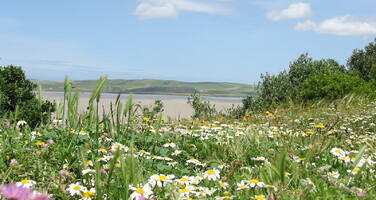
 Tunisia
Exports
* :
The threats indicated are listed in alphabetical order; their order does not constitute a classification according to the importance of their impact on the property.
Furthermore, they are presented irrespective of the type of threat faced by the property, i.e. with specific and proven imminent danger (“ascertained danger”) or with threats which could have deleterious effects on the property’s Outstanding Universal Value (“potential danger”).
** : All mission reports are not always available electronically.