British Aqueduct and Canal inscribed on UNESCO’s World Heritage List, French Saltworks extended
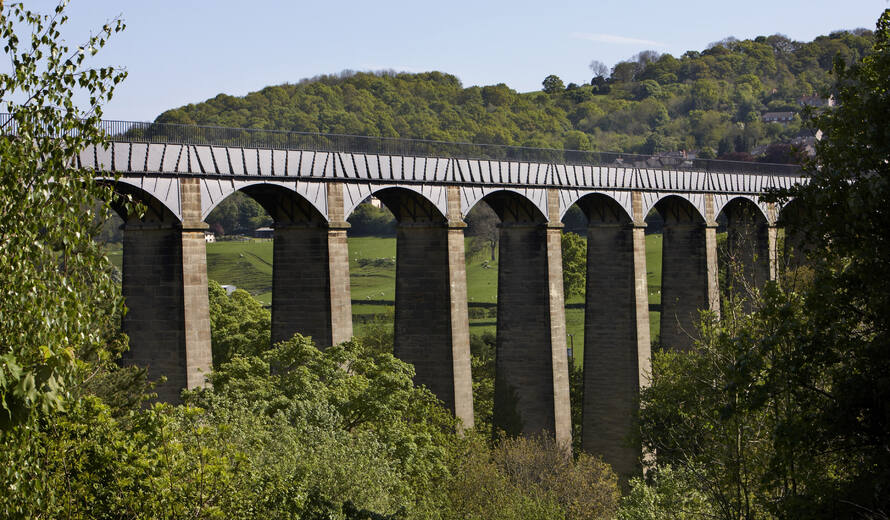
The World Heritage Committee, chaired by María Jesús San Segundo, the Ambassador and Permanent Delegate of Spain to UNESCO, has inscribed Pontcysyllte Aqueduct and Canal (United Kingdom) on UNESCO’s World Heritage List and added France’s Great Saltworks of Salins-les-Bains as an extension to the site of Royal Saltworks of Arc-et-Senans, which was inscribed in 1982 and now becomes From Great Saltworks of Salins-les-Bains to the Royal Saltworks of Arc-et-Senans, the production of open-pan salt.
Situated in north-eastern Wales, the 18 kilometre long Pontcysyllte Canal is a feat of civil engineering of the Industrial Revolution, completed in the early years of the 19th century. Covering a difficult geographical setting, the building of the canal required substantial, bold civil engineering solutions, especially as it was built without using locks. The aqueduct is a pioneering masterpiece of engineering and monumental metal architecture, conceived by the celebrated civil engineer Thomas Telford. The use of both cast and wrought iron in the aqueduct enabled the construction of arches that were light and d strong, producing an overall effect that is both monumental and elegant. The property is inscribed as a masterpiece of creative genius, and as a remarkable synthesis of expertise already acquired in Europe. It is also recognized as an innovative ensemble that inspired many projects all over the world.
The Great Saltworks of Salins-les-Bains, where brine has been extracted since the Middle Ages if not earlier, features three buildings above ground: salt stores, the Amont well building and a former dwelling. It is linked to Claude-Nicolas Ledoux’s Royal Saltworks of Arc-et-Senans and bears testimony to the history of salt extraction in France.
The World Heritage Committee will continue examining proposed nominations and the state of properties already included on the List over coming days. It remains in session until 30 June.



 France
 United Kingdom of Great Britain and Northern Ireland