Réserve de la biosphère Río Plátano
Facteurs affectant le bien en 2008*
- Activités illégales
- Espèces envahissantes/exotiques terrestres
- Habitat
- Infrastructures hydrauliques
- Production de semences
- Système de gestion/plan de gestion
- Élevage de bétail / pacage d’animaux domestiques
Facteurs* affectant le bien identifiés dans les rapports précédents
a) Installations illégales;
b) Pacage illégal de bétail et intrusions agricoles
c) Exploitation forestière illégale;
d) Braconnage;
e) Espèces exogènes envahissantes;
f) Lacunes de gestion;
g) Impacts potentiels du projet d'infrastructure hydroélectrique Patuca II.
Fonds extrabudgétaires de l’UNESCO jusqu'en 2008
Montant total accordé au bien: 80.00 dollars EU dans le cadre du projet "Mise en valeur de notre patrimoine" d'évaluation de l'efficacité de la gestion
Assistance internationale : demandes reçues pour le bien jusqu'en 2008
Montant total approuvé : 198 000 dollars E.U.
| 1996 | Conservation strategy and preparation of a management ... (Approuvé) | 30 000 dollars E.U. |
| 1988 | Equipment for Rio Platano Biosphere Reserve (Approuvé) | 20 000 dollars E.U. |
| 1987 | Consultant services, training and equipment for ... (Approuvé) | 30 000 dollars E.U. |
| 1985 | Strengthen protection and management of Rio Platano ... (Approuvé) | 20 000 dollars E.U. |
| 1983 | Implementation of protective measures, of training ... (Approuvé) | 26 000 dollars E.U. |
| 1982 | Financial contribution towards ecodevelopment ... (Approuvé) | 67 025 dollars E.U. |
| 1982 | Rio Platano Biosphere Reserve (Approuvé) | 4 975 dollars E.U. |
Missions sur le bien jusqu'en 2008**
1995 et 2000: missions de suivi de l'UICN; 2003 et 2006: missions de suivi Centre du patrimoine mondial / UICN
Problèmes de conservation présentés au Comité du patrimoine mondial en 2008
Comme demandé par la décision 31 COM 7A.13, l'Etat partie a remis un rapport sur la mise en œuvre des recommandations faites par la mission de suivi Centre du patrimoine mondial/UICN de 2006. Le rapport a été établi sur la base de données recueillies auprès de toutes les institutions impliquées dans la gestion du bien, et, est complété de 4 annexes que donnent des informations détaillées sur les points évoqués dans le rapport. L'accent est mis sur les progrès accomplis dans la mise en œuvre de chacune des recommandations de la mission de suivi de 2006, comme suit:
Recommandation No 1: Assurer une rapide et stricte application de la loi dans le domaine de l'occupation et de l'usage illégal de terres, ainsi que de l'exploitation forestière illégale, en s'assurant de l'application complète et totale de tous les aspects de la loi.
Le survol aérien de la zone centrale du bien a permis de constater que des zones occupées précédemment par des occupants illégaux sont désormais vides et que le processus de revégétalisation naturelle est en cours. L'Etat partie continue de prendre des mesures, aidé en cela par l'Office Forestier et l'Armée, afin de faire partir onze familles qui élevaient illégalement du bétail au sud-est de la zone centrale. Aucune échéance n'a cependant été donnée quant à leur départ définitif.
En ce qui concerne le changement d'affectation des terres, un projet a été mis en place pour évaluer ce changement. Il utilise des images satellites datant de 2002-2005. L'évaluation a conclu que la couverture forestière a augmenté de plus de 1.000 hectares dans la zone centrale autrefois occupée par des activités agricoles. Dans la zone tampon du bien, où 80% de la superficie était dédiée à l'agriculture, un travail plus approfondi est encore à faire pour que les terres retrouvent leur affectation d'origine, la régénération forestière occupe pourtant 14.500 hectares, soit 7% de la zone tampon, qui étaient auparavant des zones d'activité agricole. Afin de réduire la pression exercée par les communautés locales sur les ressources naturelles du bien, un certain nombre de projets concernant des pratiques économiques durables, auxquels s'ajoute un renforcement des capacités, sont actuellement mis en œuvre.
Avec l'aide de l'Armée et de la Marine nationale, l'Etat partie a amélioré le contrôle et intensifié les patrouilles afin de réduire l'exploitation forestière illégale et le trafic de bois. 1.297 m3 de bois ont été confisqués, quatre plaintes ont été déposées et sont instruites par la justice. En outre, des accords de gestion de la forêt ont été mis en place auprès des populations locales et d'autres intervenants majeurs afin de réduire encore plus l'exploitation forestière illégale.
Recommandation No 2: Achever le relevé cadastral de toutes les terres aux alentours du bien et donner des titres officiels de propriété aux propriétaires de ces terres.
L'Etat partie a achevé le relevé cadastral dans la zone tampon du bien. Les titres officiels de propriété sont remis aux communautés locales et aux populations indigènes, ce qui facilite la résolution des problèmes d'occupation des terres et favorise l'engagement plus actif des communautés locales et des populations indigènes à la conservation et à la gestion du bien.
Recommandation No 3: Mettre en valeur la participation effective des organisations locales et des communautés dans les processus de gestion du bien.
L'Etat partie fait état de progrès significatifs accomplis dans la mise en œuvre de cette recommandation avec (a) le développement d'un processus participatif de co-gestion des ressources naturelles dans le bien et sa zone tampon, (b) la signature de onze accords dans la zone tampon pour la gestion des zones forestières par des coopératives communautaires locales, deux autres accords sont en préparation, (c) la signature d'accord de co-gestion pour sept bassins versants sous statut protégé dans la zone tampon, et (d) la négociation du projet GEF (Global Environment Facility) visant à aider la co-gestion des ressources naturelles avec les communautés locales.
Recommandation No 4: Prouver que le bois confisqué n'est pas réintroduit sur le marché, mais éliminé afin de décourager toute velléité de profit.
L'Etat partie déclare que cette recommandation ne s'applique pas au cas du Honduras. Il est précisé que selon la Loi forestière nationale, tout bois confisqué doit être introduit sur le marché au moyen d'enchères publiques et que les fonds tirés de cette vente servent à aider l'Office national des Forêts. La nouvelle Loi forestière nationale, actuellement en discussion, propose de modifier cette disposition afin d'éviter que tout bois confisqué ne se retrouve sur le marché. L'Etat partie remarque cependant que les inquiétudes concernant la vente de ce bois ne sont pas fondées car de telles ventes ne se sont déroulées qu'en 2006 et que depuis le problème a été réglé car la situation est désormais sous contrôle.
Recommandation No 5 : Identifier rapidement toute nouvelle intrusion sur le bien et prendre les mesures nécessaires au plus vite afin de décourager toute récidive.
Afin de mettre en œuvre cette recommandation, l'Office national des forêts et l'Armée ont identifié douze points géographiques de contrôle qui sont déterminants pour stopper et empêcher toute nouvelle intrusion dans le bien. Une infrastructure existe déjà dans huit de ces points et des équipements temporaires seront installés dans les quatre autres. L'armée a amélioré son système de communications dans le périmètre du bien afin que les actions menées soient efficaces et bien coordonnées. La création d'une "Armée verte" a été proposée, elle recevrait une formation spécifique afin de résoudre les conflits, de faire de la prévention et de traiter les délits environnementaux sur le territoire du bien. L'Office forestier national et l'Armée recueillent actuellement les données et les informations nécessaires à l'élaboration d'un Plan d'action intégré pour encore améliorer le contrôle du bien et l'expulsion des occupants illégaux dans la zone centrale du bien.
Recommandation No 6: Etablir une carte délimitant précisément les limites du bien et de sa zone tampon.
Une carte a été remise, elle établit les limites de la Réserve de la biosphère telles que définies lors du décret de création de 1980. Il est cependant à noter que les limites de la zone centrale n'étaient pas, à l'époque, définies précisément. L'Etat partie est actuellement en train de mettre ses cartes à jour afin de définir plus précisément les limites de la zone centrale du bien. Une fois cette tâche accomplie, une carte révisée sera soumise au Centre du patrimoine mondial. L'Etat partie n'a cependant donné aucune échéance quant à l'achèvement du travail lié à cette recommandation.
Alors que le rapport fait état des efforts accomplis par l'Etat partie afin d'améliorer la protection et la gestion du bien du patrimoine mondial, l'UICN reçoit un certain nombre d'informations émanant d'ONG et d'experts sur place qui décrivent la situation sur le territoire du bien comme très fragile et expriment leurs préoccupations quant à l'attitude du Gouvernement qui, après le retrait du bien de la Liste du patrimoine mondial en péril, pourrait ne pas accorder la même priorité et la même aide à la conservation du bien.
Résumé des interventions
Décisions adoptées par le Comité en 2008
32 COM 7B.38
Réserve de la biosphère Rio Platano (Honduras) (N 196)
Le Comité du patrimoine mondial,
1. Ayant examiné le document WHC-08/32.COM/7B.Add,
2. Rappelant la décision 31 COM 7A.13, adoptée à sa 31e session (Christchurch, 2007),
3. Félicite l'État partie pour les efforts accomplis dans la mise en oeuvre des recommandations de la mission de suivi de 2006 et encourage les donateurs internationaux et les partenaires impliqués dans la conservation et la gestion de ce bien à maintenir l'aide apportée aux efforts de l'État partie pour la mise en oeuvre efficace de ces recommandations;
4. Prie instamment l'État partie d'intensifier ses efforts visant à achever le plan d'action demandé dans le cadre de la mise en oeuvre effective de la Recommandation N° 5 du rapport de la mission de suivi de 2006 et à finaliser l'établissement d'une carte détaillée délimitant précisément le bien, et de soumettre au Centre du patrimoine mondial, d'ici le 1er décembre 2008, la carte finalisée, pour examen par le Comité du patrimoine mondial à sa 33e session en 2009;
5. Demande à l'État partie de soumettre au Centre du patrimoine mondial, d'ici le 1er février 2009, un rapport sur les progrès supplémentaires accomplis dans la mise en oeuvre des recommandations faites par la mission de suivi de 2006, pour examen par le Comité du patrimoine mondial à sa 33e session en 2009.
Projet de décision : 32 COM 7B.38
Le Comité du patrimoine mondial,
1. Ayant examiné le document WHC-08/32.COM/7B.Add,
2. Rappelant la décision 31 COM 7A.13, adoptée à sa 31e session (Christchurch, 2007),
3. Félicite l'Etat partie pour les efforts accomplis dans la mise en œuvre des recommandations de la mission de suivi de 2006 et encourage les donateurs internationaux et les partenaires impliqués dans la conservation et la gestion de ce bien à maintenir l'aide apportée aux efforts de l'Etat partie pour la mise en œuvre efficace de ces recommandations;
4. Prie instamment l'Etat partie d’intensifier ses efforts visant à achever le plan d'action demandé dans le cadre de la mise en œuvre effective de la Recommandation N° 5 du rapport de la mission de suivi de 2006 et à finaliser l'établissement d'une carte détaillée du bien, délimitant précisément sa zone centrale, et de soumettre au Centre du patrimoine mondial, d’ici le 1er décembre 2008, la carte finalisée, pour examen par le Comité du patrimoine mondial à sa 33e session en 2009;
5. Demande à l'Etat partie de soumettre au Centre du patrimoine mondial, d’ici le 1er février 2009, un rapport sur les progrès supplémentaires accomplis dans la mise en œuvre des recommandations faites par la mission de suivi de 2006, pour examen par le Comité du patrimoine mondial à sa 33e session en 2009.
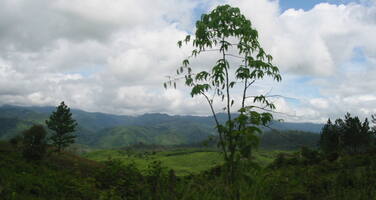
 Honduras
Exports
* : Les menaces mentionnées sont présentées par ordre alphabétique ; cet ordre ne constitue nullement un classement selon l’importance de leur impact sur le bien. De plus, elles sont présentées de manière indifférenciée, que le bien soit menacé par un danger prouvé, précis et imminent (« péril prouvé ») ou confronté à des menaces qui pourraient avoir des effets nuisibles sur sa valeur universelle exceptionnelle (« mise en péril »).
** : Tous les rapports de mission ne sont pas toujours disponibles électroniquement.