Old and New Towns of Edinburgh
Old and New Towns of Edinburgh
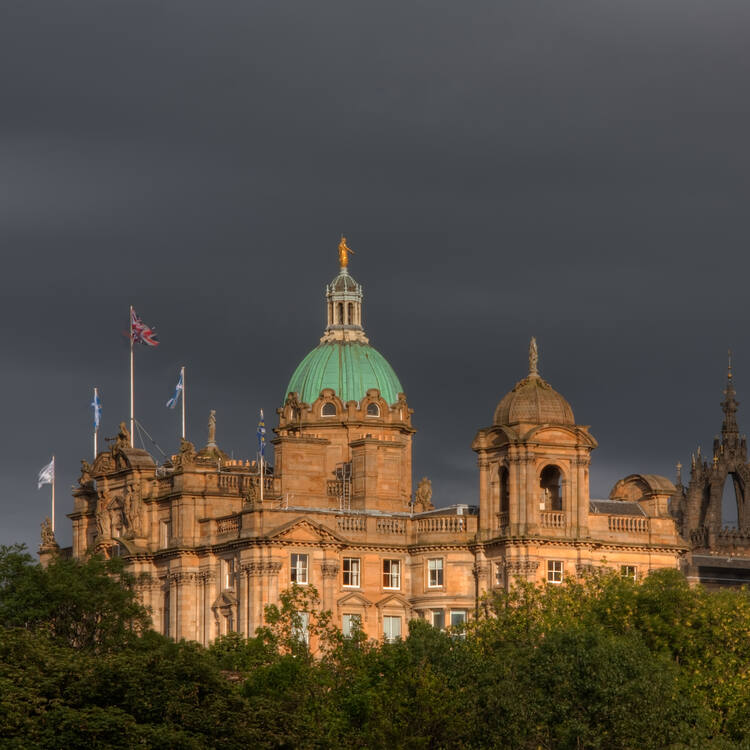
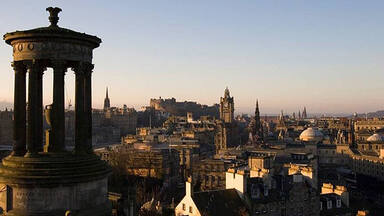
Edinburgh has been the Scottish capital since the 15th century. It has two distinct areas: the Old Town, dominated by a medieval fortress; and the neoclassical New Town, whose development from the 18th century onwards had a far-reaching influence on European urban planning. The harmonious juxtaposition of these two contrasting historic areas, each with many important buildings, is what gives the city its unique character.
Description is available under license CC-BY-SA IGO 3.0
Vieille ville et Nouvelle ville d'Edimbourg
Capitale de l'Écosse depuis le XVe siècle, Édimbourg offre le double visage d'une vieille ville dominée par une forteresse médiévale et d'une ville nouvelle néoclassique dont l'aménagement, à partir du XVIIIe siècle, exerça une profonde influence sur l'urbanisme européen. Le voisinage harmonieux de ces deux ensembles urbains si contrastés, riches chacun en bâtiments de grande valeur, confère à la ville son caractère unique.
Description is available under license CC-BY-SA IGO 3.0
مدينتا ادينبرة القديمة والجديدة
تقدّم مدينة ادينبرة التي اصبحت عاصمة اسكتلنده في القرن الخامس عشر الوجه المزدوج لمدينة قديمة تشرف عليها قلعة من القرون الوسطى ومدينة جديدة نيوكلاسيكية خلّف تنظيمها منذ القرن الثامن عشر تأثيراً عميقاً في التتنظيم المدني الأوروبي. ويضفي هذا التجاور المتناغم لمدينتين شديدتي التناقض وغنيتين بأبنية قيّمة طابعاً فريداً على المدينة.
source: UNESCO/CPE
Description is available under license CC-BY-SA IGO 3.0
爱丁堡的新镇、老镇
从15世纪起,爱丁堡就是苏格兰的首都。目前这座城市由两个部分组成,一个是以中世纪堡垒风格占据主要地位的老城和一个从18世纪发展而来具有新古典主义形式的城市,它对欧洲城市建筑具有广泛的影响。这两个历史城区都有许多重要的建筑物,其风格既统一和谐又对比分明,给这座城市赋予了独特魅力。
source: UNESCO/CPE
Description is available under license CC-BY-SA IGO 3.0
Старый город и Новый город в Эдинбурге
Эдинбург, начиная с XV в., является столицей Шотландии. Здесь находятся две ярко выраженных территории: Старый город с доминирующей над ним средневековой крепостью и Новый город в стиле классицизма, развивающийся с XVIII в. и оказавший большое влияние на градостроительство в Европе. Гармоничное соединение этих двух контрастирующих исторических территорий, имеющих большое число выдающихся зданий, придает городу уникальность.
source: UNESCO/CPE
Description is available under license CC-BY-SA IGO 3.0
Ciudad vieja y ciudad nueva de Edimburgo
Capital de Escocia desde el siglo XV, Edimburgo ofrece la doble faz de su ciudad antigua, dominada por una fortaleza medieval, y de su ciudad nueva, construida en estilo neoclásico a partir del siglo XVIII. El trazado de esta última ejerció una gran influencia en el urbanismo de otras ciudades europeas. La abundancia de edificios de gran valor en estas dos zonas históricas tan diferentes, así como su armoniosa yuxtaposición, confieren a la ciudad su carácter único.
source: UNESCO/CPE
Description is available under license CC-BY-SA IGO 3.0
エディンバラの旧市街と新市街
スコットランド王国のかつての首都。中世の要塞がそびえる旧市街と、18世紀以降ヨーロッパの都市計画に大きな影響を与えた新古典主義様式の新市街とがある。対照的な地区ながら、どちらにも歴史的価値のある建築物を多く残し、調和を保っている。source: NFUAJ
Oude en Nieuwe stad Edinburgh
Sinds de 15e eeuw is Edinburgh de hoofdstad van Schotland. Het heeft twee verschillende gebieden: de Oude stad, gedomineerd door een middeleeuwse vesting en de neoklassieke Nieuwe stad. De architectuurkwaliteit hiervan zette de standaard voor Schotland en daarbuiten en oefende in de 18e en 19e eeuw grote invloed uit op de ontwikkeling van de stedelijke architectuur en stedenbouw in heel Europa. Het contrast tussen de organische middeleeuwse Oude stad en de geplande Georgische Nieuwe stad laat een in Europa ongeëvenaarde helderheid van stedelijke structuur zien. De twee contrasterende stadsgezichten liggen harmonieus naast elkaar, verbonden door het stedelijk viaduct North Bridge en de Mound.
Source: unesco.nl


Outstanding Universal Value
Brief synthesis
The remarkable juxtaposition of two clearly articulated urban planning phenomena. The contrast between the organic medieval Old Town and the planned Georgian New Town of Edinburgh, Scotland, provides a clarity of urban structure unrivalled in Europe. The juxtaposition of these two distinctive townscapes, each of exceptional historic and architectural interest, which are linked across the landscape divide, the "great arena" of Sir Walter Scott's Waverley Valley, by the urban viaduct, North Bridge, and by the Mound, creates the outstanding urban landscape.
The Old Town stretches along a high ridge from the Castle on its dramatically situated rock down to the Palace of Holyrood. Its form reflects the burgage plots of the Canongate, founded as an "abbatial burgh" dependent on the Abbey of Holyrood, and the national tradition of building tall on the narrow "tofts" or plots separated by lanes or "closes" which created some of the world's tallest buildings of their age, the dramatic, robust, and distinctive tenement buildings. It contains many 16th and 17th century merchants' and nobles' houses such as the early 17th century restored mansion house of Gladstone's Land which rises to six storeys, and important early public buildings such as the Canongate Tolbooth and St Giles Cathedral.
The Old Town is characterized by the survival of the little-altered medieval "fishbone" street pattern of narrow closes, wynds, and courts leading off the spine formed by the High Street, the broadest, longest street in the Old Town, with a sense of enclosed space derived from its width, the height of the buildings lining it, and the small scale of any breaks between them.
The New Town, constructed between 1767 and 1890 as a collection of seven new towns on the glacial plain to the north of the Old Town, is framed and articulated by an uncommonly high concentration of planned ensembles of ashlar-faced, world-class, neo-classical buildings, associated with renowned architects, including John and Robert Adam (1728-92), Sir William Chambers (1723-96), and William Playfair (1790-1857). Contained and integrated with the townscape are gardens, designed to take full advantage of the topography, while forming an extensive system of private and public open spaces. The New Town is integrated with large green spaces. It covers a very large area of 3,288 ha, is consistent to an unrivalled degree, and survives virtually intact.
Some of the finest public and commercial monuments of the New-classical revival in Europe survive in the city, reflecting its continuing status as the capital of Scotland since 1437, and a major centre of thought and learning in the 18th century Age of Enlightenment, with its close cultural and political links with mainland Europe.
The successive planned extensions from the first New Town, and the high quality of the architecture, set standards for Scotland and beyond, and exerted a major influence on the development of urban architecture and town planning throughout Europe.
The dramatic topography of the Old Town combined with the planned alignments of key buildings in both the Old and the New Town, results in spectacular views and panoramas and an iconic skyline.
The renewal and revival of the Old Town in the late 19th century, and the adaptation of the distinctive Baronial style of building for use in an urban environment, influenced the development of conservation policies for urban environments.
Criterion (ii): The successive planned extensions of the New Town, and the high quality of its architecture, set standards for Scotland and beyond, and exerted a major influence on the development of urban architecture and town planning throughout Europe, in the 18th and 19th centuries.
Criterion (iv): The Old and New Towns together form a dramatic reflection of significant changes in European urban planning, from the inward looking, defensive walled medieval city of royal palaces, abbeys and organically developed burgage plots in the Old Town, through the expansive formal Enlightenment planning of the 18th and 19th centuries in the New Town, to the 19th century rediscovery and revival of the Old Town with its adaptation of a distinctive Baronial style of architecture in an urban setting.
Integrity
The property encompasses significant town-planning components, including layout, buildings, open spaces and views, that demonstrate the distinctiveness between the organic growth of the Old Town and the planned terraces and squares of the New Town with the wide landscaped valley between. Overall the property forms a remarkably consistent and coherent entity which has developed and adapted over time. It has largely preserved its skyline and extensive views in and out of the property, although as with any modern, living city these have altered and developed over time, while preserving the key attributes of Outstanding Universal Value within the property. The vulnerability of the skyline and the views in and out of the property has been addressed by the introduction of a Skyline Policy.
Authenticity
The level of authenticity in Edinburgh is high. Individually the high-quality buildings of all dates have been conserved to a high standard and the layout of streets and squares maintain their intactness. The property also continues to retain its historic role as the administrative and cultural capital of Scotland, while remaining a vibrant economic centre.
Protection and management requirements
World Heritage properties in Scotland are protected through the following legislation. The Town and Country Planning (Scotland) Act 1997 and The Planning etc. (Scotland) Act 2006 provide a framework for local and regional planning policy and act as the principal primary legislation guiding planning and development in Scotland. Additionally, individual buildings, monuments and areas of special archaeological or historic interest are designated and protected under The Planning (Listed Building and Conservation Areas) (Scotland) Act 1997 and the 1979 Ancient Monuments and Archaeological Areas Act. The Old Town, New Town, Dean Village and West End Conservation Areas provide adequate protection by covering the majority of the World Heritage property, whilst around 75% of buildings within the property are category A, B or C listed buildings.
The Scottish Historic Environment Policy (SHEP) is the primary policy guidance on the protection and management of the historic environment in Scotland. Scottish Planning Policy (SPP) sits alongside the SHEP and includes the Government’s national planning policy on the historic environment. It provides for the protection of World Heritage properties by considering the impact of development on the Outstanding Universal Value, authenticity and integrity. Local policies specifically protecting the property are contained within The City of Edinburgh Local Plan and cite the Management Plan as a material consideration for decisions on planning matters. The immediate setting of the property is protected by a Skyline Policy that has been adopted by City of Edinburgh Council. This defines key views across the city with the aim of providing planning control that will safeguard them. This control of tall buildings that might impact on the city centre provides appropriate protection to the setting of the property, safeguarding its world-renown silhouette and views from the property outwards to such crucial topographic features as Arthur’s Seat and the Firth of Forth. The Skyline policy combined with existing listed buildings and conservation area designations provides a comprehensive and sophisticated tool to protect the Outstanding Universal Value of the property. This method of protection is being monitored on an ongoing basis.
Management of the property is indirectly influenced by a large number of organisations, communities and interest groups. The Management Plan was the subject of detailed stakeholder engagement, the results of which informed its vision, objectives and actions. The property is a living capital city centre. It has a rich cultural and intellectual life, which is part of its Outstanding Universal Value and which is vital to sustain. This rich cultural life, in such a magnificent setting, attracts tourists in great numbers. An Edinburgh Tourism Strategy acknowledges the value of World Heritage status in its strategic priorities for managing a world class city.
Historic Scotland and the City of Edinburgh Council work closely on the management of the property. Edinburgh World Heritage was established by the City of Edinburgh Council and Historic Scotland through a merger between the Edinburgh New Town Conservation Committee and the Edinburgh Old Town Renewal Trust. Its role includes promoting the property, grant dispersal and community engagement across the property. It is also a key partner in the execution of the Management Plan. The World Heritage Site Co-ordinator is responsible for coordinating the implementation of the Management Plan.



The Nomination files produced by the States Parties are published by the World Heritage Centre at its website and/or in working documents in order to ensure transparency, access to information and to facilitate the preparations of comparative analysis by other nominating States Parties.
The sole responsibility for the content of each Nomination file lies with the State Party concerned. The publication of the Nomination file, including the maps and names, does not imply the expression of any opinion whatsoever of the World Heritage Committee or of the Secretariat of UNESCO concerning the history or legal status of any country, territory, city or area or of its boundaries.